Stories (611)
Filter by community
Medieval Monks: Secrets of Power, Knowledge, and Rebellion
In the dimly lit halls of medieval monasteries, a hidden world of power, knowledge, and rebellion thrived. Many thought monks were just pious and devoted. But the truth was more complex. These religious figures had a big influence that lasted for centuries.
By Marveline Merababout a year ago in History
Bizarre Medical Treatments from History: When Cures Were Deadlier Than Diseases
Imagine a time when treatments were more dangerous than the illnesses they aimed to cure. Welcome to the world of bizarre medical practices from the past. A young woman once sought relief for a headache and got a "cure" that involved drilling a hole in her skull. Sadly, the outcome was devastating.
By Marveline Merababout a year ago in History
Women Warriors: WWII's Untold Story
During World War II, a group of women made history by breaking gender barriers. They became key players in the fight for freedom. These women, from fighters to pilots, were often left out of history books. But their bravery and sacrifice are crucial to the story of WWII.
By Marveline Merababout a year ago in History
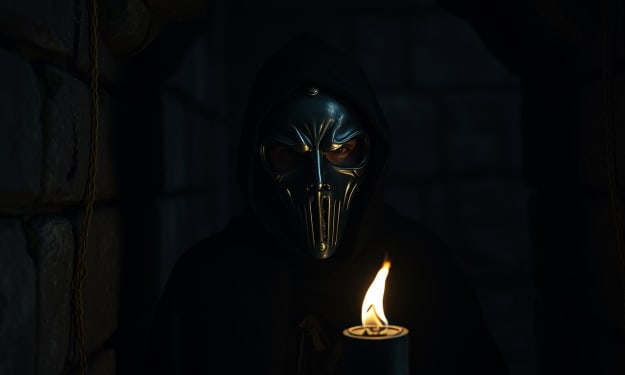
Unraveling the Mystery: The Man in the Iron Mask
Imagine a prisoner so mysterious that his true identity is still unknown, even after all these years. This is the story of the Man in the Iron Mask, a figure from history that has captured the world's imagination for generations. His tale is full of intrigue and has become a key part of our cultural history.
By Marveline Merababout a year ago in History
When a Pope's Corpse Was Put on Trial: The Cadaver Synod. AI-Generated.
The Cadaver Synod, a macabre and controversial event in the history of the Catholic Church, unfolded in 897 AD under the papacy of Pope Stephen VI. This bizarre episode, known for its grotesque spectacle, involved the posthumous trial of Pope Formosus, who had passed away in 896 AD, and marked a dramatic moment of political and ecclesiastical turmoil in medieval Rome.
By Marveline Merababout a year ago in History
Thou Shalt not suffer a Cat to Live: Pope Gregory IX's Cat Extermination. AI-Generated.
Pope Gregory IX's declaration regarding black cats as instruments of Satan represents a poignant and consequential episode in medieval history, showcasing the intersection of religious superstition, societal fear, and unintended consequences. Gregory IX, who reigned as pope from 1227 to 1241, issued a papal bull known as Vox in Rama in 1233, which condemned the supposed association of black cats with witchcraft and devilry. This decree, influenced by prevailing beliefs and fears of the time, set off a chain of events that had profound implications for both human society and the natural world.
By Marveline Merab2 years ago in History
Carried a lantern in daylight, claiming to search for an honest man. AI-Generated.
Diogenes of Sinope, the ancient Greek philosopher, stands out in history not only for his profound philosophical teachings but also for his eccentric and provocative public behavior. Born in Sinope around 412 or 404 BCE, Diogenes became one of the most famous and controversial figures of the Cynic school of philosophy, which espoused a simple and ascetic lifestyle in pursuit of virtue and wisdom.
By Marveline Merab2 years ago in History
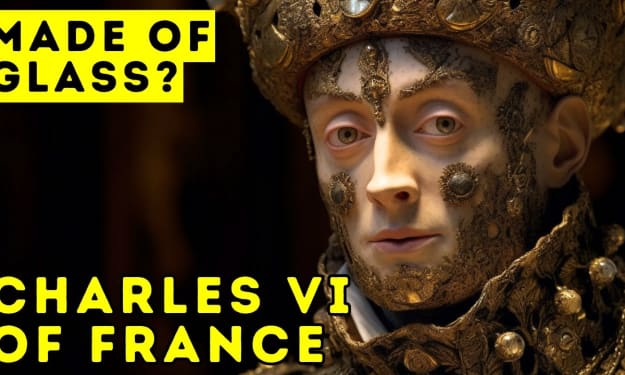
The French king who thought he was made of glass. AI-Generated.
King Charles VI of France, known to history as "The Mad," presided over one of the most tumultuous periods in medieval European history. His reign, which began in 1380 at the tender age of eleven, was marked not only by political intrigue and warfare but also by his tragic descent into mental illness. Among the many peculiarities of his condition, perhaps the most bizarre and poignant was his belief that he was made of glass—a delusion that shaped both his personal life and his reign as king.
By Marveline Merab2 years ago in History
Which Greek philosopher taught at the lyceum?. AI-Generated.
In the annals of ancient Greek philosophy, one figure stands out for his profound impact on Western thought, his rigorous methods of inquiry, and his enduring influence across centuries of intellectual discourse. His teachings spanned ethics, metaphysics, politics, and the natural sciences, shaping the foundations of modern philosophical inquiry and scientific methodology. Born in Stagira, a Greek colony in the Macedonian region, he studied under Plato at the Academy in Athens and later established his own school, known as the Lyceum, where he delved deeply into the nature of existence and the pursuit of knowledge.
By Marveline Merab2 years ago in History
What was the Inca terrace agriculture?. AI-Generated.
Inca terrace agriculture, also known as Andean or mountain agriculture, was a sophisticated agricultural system developed by the Inca Empire in the Andean region of South America. This innovative method of farming allowed the Inca to cultivate crops such as maize (corn), potatoes, quinoa, and various root vegetables in the steep and rugged terrain of the Andes Mountains.
By Marveline Merab2 years ago in History
How did the Romans build their domes?. AI-Generated.
The Romans were masters of engineering and architecture, and their construction of domes represents a pinnacle of ancient architectural achievement. The techniques they developed and refined allowed them to create some of the most iconic and enduring structures in history, showcasing both their ingenuity and their understanding of materials and structural mechanics.
By Marveline Merab2 years ago in History
Egyptian Scrolls Reveal HANGOVER Cure. AI-Generated.
The discovery of ancient Egyptian scrolls revealing a remedy for hangovers provides a fascinating glimpse into the medical practices and daily life of one of history’s most advanced civilizations. These scrolls, written in hieratic script and dating back over 2,000 years, offer valuable insights into the ingenuity and resourcefulness of ancient Egyptian medicine.
By Marveline Merab2 years ago in History