Mahgol Nikpayam
Stories (21)
Filter by community
Hazardous Products Are Everywhere
Most companies don’t intend to sell hazardous products. They design something useful, source parts from reputable suppliers, and assume that if the product looks fine and works, it’s “safe.” But chemical compliance doesn’t work like that. A product can be perfectly functional and still be considered “hazardous” in a regulatory sense—because it contains restricted substances above legal limits, triggers consumer exposure risks without required warnings, or lacks the documentation needed to prove compliance during an inspection.
By Mahgol Nikpayam11 days ago in Earth
EMRT 2.1
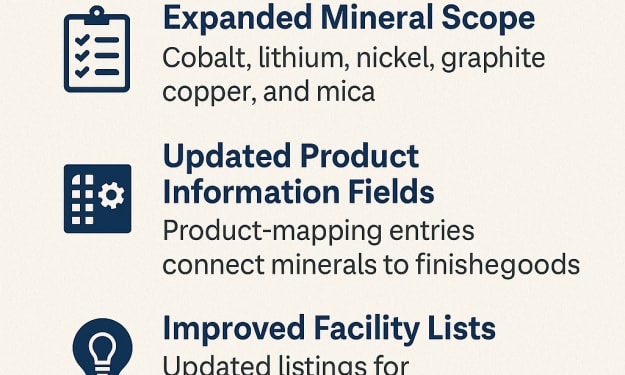
The Extended Minerals Reporting Template (EMRT) is becoming an essential tool for companies seeking greater transparency in their mineral supply chains. With the release of EMRT 2.1, organizations now have an updated and more refined template to help them collect, organize, and communicate information on minerals used in their products. This new version strengthens due-diligence practices and expands visibility across global supply chains.
By Mahgol Nikpayam2 months ago in Earth
PFAS Ban Australia 2025
Australia is taking a bold step toward protecting public health and the environment by implementing a nationwide ban on several notorious PFAS chemicals in 2025. These so-called “forever chemicals” have been used for decades in products that resist heat, water, and oil. However, growing scientific evidence now links them to long-term environmental contamination and serious health concerns.
By Mahgol Nikpayam3 months ago in Earth
Latex in Electronics
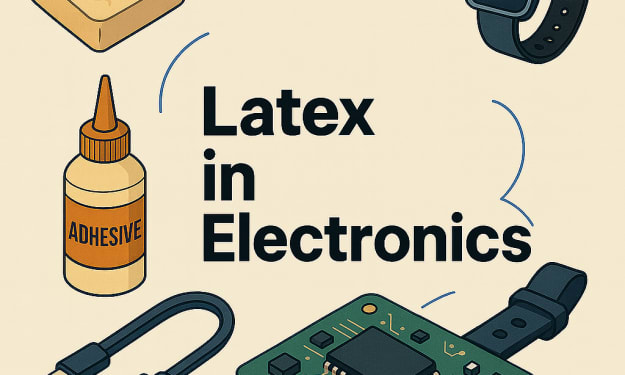
Latex is a versatile material that finds its way into many industries—and electronics is no exception. In electronic device manufacturing, latex (both natural and synthetic) plays key roles thanks to its flexibility, adhesion, film-forming ability, and other useful properties. But its use also brings considerations around compatibility, safety, and regulation. Let’s walk through what latex is, where you’ll see it in electronics, why knowing about it matters, and how manufacturers can manage its use.
By Mahgol Nikpayam3 months ago in Earth
Recycling Electronic Equipment
In our rapidly evolving digital age, electronic devices are everywhere — in homes, offices, factories, and schools. Every year, entire generations of smartphones, tablets, computers, and industrial systems become obsolete as technology marches forward. The result is a staggering accumulation of electronic waste, or “e-waste,” that poses serious environmental, health, and resource risks.
By Mahgol Nikpayam3 months ago in Earth
Microplastic Pollutants
Microplastics are everywhere—on mountaintops, in deep-sea trenches, and increasingly, in our bodies. These particles are smaller than 5 millimeters (often much smaller), but their footprint is massive: they shed from clothing, tire wear, packaging, paints, electronics, and even from the breakdown of larger plastic items in sunlight and saltwater. While the science on health effects is still developing, we already know enough to act—both as individuals and as organizations designing and selling products.
By Mahgol Nikpayam3 months ago in Earth
Is There Lead in Your Cookware?
You probably know your pots and pans better than some of your neighbors. They’ve seen weeknight pasta, midnight brownies, and your best-ever chili. But here’s a question most of us never think to ask: could any of that cookware be leaching lead into your food?
By Mahgol Nikpayam3 months ago in Earth
Québec E-Waste
If you live or do business in Québec, e-waste is closer than you think. It’s the drawer full of tangled chargers. The laptop that “still works… if you jiggle the cable.” The office shelf with retired routers and printers waiting for “someday.” We all have this stuff, and it piles up faster than we expect.
By Mahgol Nikpayam3 months ago in Earth
Hazardous Substances in Products
Whether you design electronics, source jewelry, package cosmetics, or simply want safer goods at home, “hazardous substances” show up everywhere in the product world. They’re part of alloys, platings, solders, coatings, plastics, adhesives, inks, and even labels. The good news: you don’t need to be a chemist to manage the risk. You need a simple plan, the right tests, and clear documentation.
By Mahgol Nikpayam4 months ago in Earth
QC 080000 Made Practical
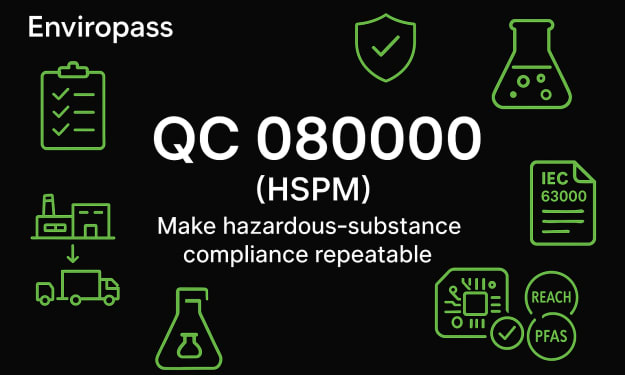
If you build or source electronics, you already live with a alphabet soup of rules—RoHS, REACH, Prop 65, TSCA-PBT, ELV, battery and packaging directives, and more. Each one asks a version of the same question: What’s in your product, and how do you know? The IECQ QC 080000 Hazardous Substance Process Management (HSPM) standard turns that question into a repeatable management system—so compliance becomes a controlled process, not a last-minute scramble.
By Mahgol Nikpayam4 months ago in Earth
GADSL, RoHS, and REACH
If you build, buy, or certify automotive parts, the Global Automotive Declarable Substance List (GADSL) is the foundation of chemical transparency across the supply chain. It tells you which substances must be declared (D) and which are prohibited (P) in vehicle components at the time of sale. GADSL is also the bridge to broader chemical regimes such as RoHS, REACH, ELV, and emerging reporting frameworks. This guide shows you—step by step—how to make GADSL work in real life: how to collect supplier data, how to use IMDS effectively, how to manage engineering changes, how to design safer parts, and how to use compliance as a competitive advantage.
By Mahgol Nikpayam4 months ago in Earth
Smarter Packaging, Fewer Headaches
Packaging is the first thing your customer touches, and often the last thing regulators look at before your product ships. It has to protect, inform, comply, and—ideally—delight. That’s a lot to ask from cardboard, plastics, inks, and labels. Add in shifting environmental rules and supplier documentation, and even simple projects can feel complicated fast.
By Mahgol Nikpayam4 months ago in Earth