
Is There Lead in Your Cookware?
A Friendly Guide to Cooking Safer
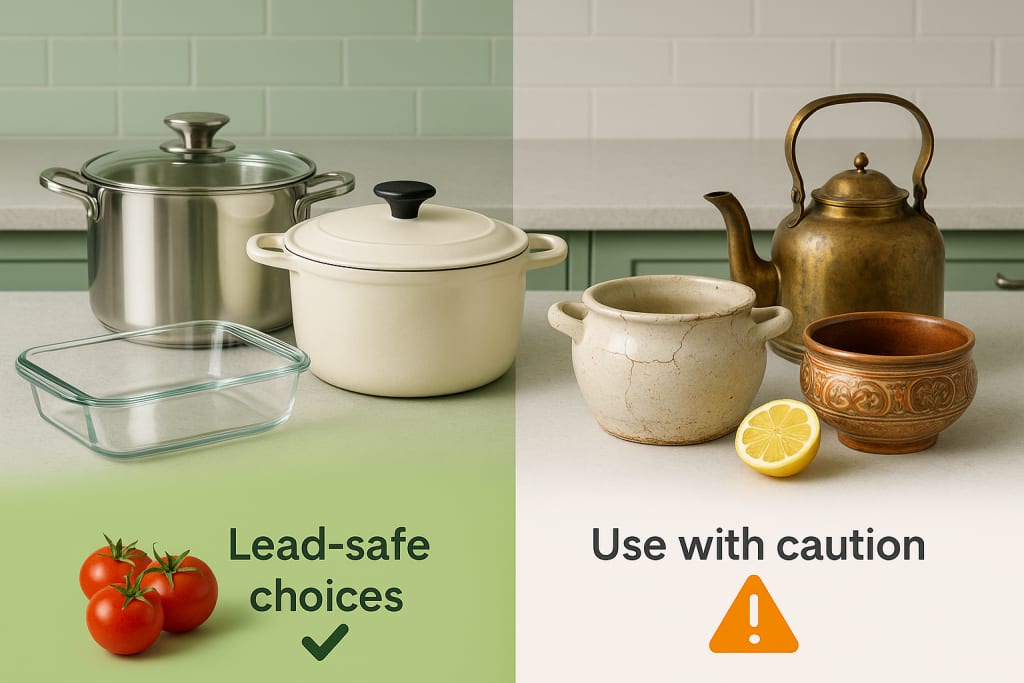
You probably know your pots and pans better than some of your neighbors. They’ve seen weeknight pasta, midnight brownies, and your best-ever chili. But here’s a question most of us never think to ask: could any of that cookware be leaching lead into your food?
The honest answer: sometimes. The good news: a few simple choices can make your kitchen much safer—without giving up the tools you love.
If you want the deep-dive with testing options, see Enviropass’ practical guide: Lead in Cookware
Why lead in the kitchen matters
Lead is sneaky. Your body doesn’t use it and flush it out; it builds up over time. Even small, repeated exposures add up—especially for kids and during pregnancy. We often think of paint or old pipes, but food-contact items can be a source too, especially when glazes, solders, or alloys aren’t tightly controlled.
Where lead can hide
Not all cookware is risky. But give these categories a closer look:
Ceramic & pottery with decorative glazes
Gorgeous, yes. But if the glaze isn’t properly formulated or fired, acidic foods (think tomato sauce or lemony dishes) can pull lead into your meal.
Handmade, artisanal, or antique pieces
Thrift-store finds and heirlooms may predate today’s rules. Chips, cracks, or crazing (tiny lines in the glaze) increase the chance of leaching.
Enameled cookware
Quality enamel from reputable brands is designed for food contact, but once it’s chipped or deeply scratched, retire it from cooking.
Brass/bronze parts and kettles
If leaded brass is used and hot water sits for a long time, migration can happen.
Soldered seams & older aluminum
Some older or low-quality pieces used leaded solder. Modern controls reduce this risk—but “grandma’s pot” may still be in circulation.
How lead moves into food (a 30-second explainer)
Three things drive migration:
- Acidity – Tomato, citrus, vinegar, wine, pickling brine.
- Heat + time – Long simmering or baking.
- Surface damage – Chips, cracks, worn glazes.
Short, non-acidic use? Lower risk. Hours of hot, acidic cooking? Higher risk.
“Is my cookware safe?” Easy checks you can do
Give it a once-over. Chips, cracks, crazing, peeling interiors? Retire it.
Know the brand. Look for clear statements like “lead-free glaze” or “food-contact compliant.”
Use the right tool for the job. Love handmade pottery? Use it to serve dry foods, not simmer Bolognese.
Swabs help but aren’t perfect. Hardware-store lead swabs can miss problems, so don’t rely on them alone for food-contact decisions.
Need certainty? Test. For restaurants, schools, businesses—or peace of mind—consider migration testing (simulated use with acid and heat) and/or XRF screening. Details here: Lead in Cookware
Safer choices that actually cook well
No single pan handles everything, but these are solid, low-risk picks when well made and used properly:
- Stainless steel (304/316) – Durable, versatile, great for daily cooking. Multi-ply helps with even heat.
- Cast iron & carbon steel – Seasoning forms a protective layer; fantastic for searing and baking.
- High-quality enameled cast iron – Perfect for acidic stews—as long as the enamel is intact.
- Borosilicate glass & quality stoneware – Good for baking and storage; verify they’re intended for food contact.
- Food-grade silicone – Handy for bakeware and utensils at moderate temps; buy from reputable brands.
Use and care tips that cut risk fast
Cook acidic foods in low-risk vessels. Stainless, undamaged enamel, or glass are your friends for tomato or lemon dishes.
Don’t store leftovers long-term in ceramic or enameled ware; move to glass or stainless.
Treat your cookware gently. Wood or silicone utensils, soft sponges, and follow the maker’s care instructions.
When in doubt, swap it out. Damage is your cue to retire a piece from cooking.
For brands, restaurants, and importers (quick playbook)
Design right – Specify lead-free glazes, compliant alloys, and approved enamels.
Get the paperwork – Collect material disclosures and food-contact declarations.
Test smart – Pair XRF screening with migration tests on representative products and worst cases.
Track lots – Link batches to test results.
Manage changes – Re-test after any supplier or formulation change.
Give clear care guidance – Help customers keep surfaces intact.
Need a practical, budget-minded program? A lab and compliance partner can set this up without slowing your launch.
What to do with “maybe” items
Avoid cooking acidic foods in them for now.
Repurpose as decor, or retire them.
Replace with safer, documented options.
Test if it’s mission-critical (restaurant ware or a beloved heirloom you actually use).
The bottom line
You don’t have to panic—or toss your whole kitchen. Most modern cookware from reputable makers is designed with safety in mind. The bigger risks are older, damaged, or poorly controlled products used for long, hot, acidic cooking. Choose well, care for your tools, and retire anything that’s seen better days.
Curious about testing or building a simple safety plan? Start here: Lead in Cookware — Enviropass
Cook boldly. Cook safely. Let the flavor—not unwanted metals—be the star. 🍝🥘
About the Creator
Keep reading
More stories from Mahgol Nikpayam and writers in Earth and other communities.
Québec E-Waste
If you live or do business in Québec, e-waste is closer than you think. It’s the drawer full of tangled chargers. The laptop that “still works… if you jiggle the cable.” The office shelf with retired routers and printers waiting for “someday.” We all have this stuff, and it piles up faster than we expect.
By Mahgol Nikpayam3 months ago in Earth
Dezeen Magazine: How a London Blog Became the World’s Most Influential Design Voice
f you’re into architecture, interiors, or cutting-edge design, chances are you’ve spent time on Dezeen Magazine. But do you know how it became one of the most influential voices in the design world? What started as a small London blog in 2006 has grown into a global hub for designers, architects, and creative enthusiasts. Today, it’s not just a magazine—it’s a community, an awards platform, and a go-to source for design inspiration. Let’s take a closer look at the story behind Dezeen, what makes it unique, and why it continues to matter. From Blog to Global Brand Dezeen was launched in November 2006 by Marcus Fairs, a journalist with a passion for design. Back then, online coverage of architecture and interiors was sparse, and most publications were still print-based. Fairs spotted a gap: why not create a platform that could deliver fast, high-quality, visually rich stories about design? What started as a simple WordPress blog quickly caught attention. By focusing on curated content, sharp photography, and meaningful commentary, Dezeen attracted both professionals and enthusiasts. It wasn’t about clickbait—it was about setting the agenda for the design world. Going Global Fast forward to today, and Dezeen is no longer just a blog. It has offices in London, New York, and Shanghai, with millions of readers every month from all corners of the globe. Over three million unique visitors per month Millions of followers on Instagram, Twitter, Facebook, and Pinterest Readers in the US, UK, Germany, India, Australia, and more Dezeen doesn’t just inform—it connects people. Designers, architects, and fans engage with the stories, debates, and projects shared every day. What Sets Dezeen Apart So, why does Dezeen stand out in a world full of media outlets? Here’s the secret: Curated, High-Quality Content Dezeen’s stories are more than news—they’re experiences. You’ll find: Features on groundbreaking architecture and interiors Interviews with leading designers Thoughtful opinion pieces on sustainability, innovation, and culture Stunning photography that makes projects feel alive This combination of visual storytelling and sharp writing keeps readers coming back. Awards and Community Impact In 2018, Dezeen launched the Dezeen Awards, a global competition celebrating excellence in design. Winning—or even being shortlisted—can catapult a designer’s career, making this award highly respected in the industry. Diversified Digital Platforms Dezeen is more than articles. It has created tools and platforms to support the design community: Dezeen Jobs: Connecting professionals with global opportunities Dezeen Showroom: Highlighting products for the design industry Dezeen Day: Events and conferences fostering learning and networking These initiatives strengthen Dezeen’s role as a hub for designers, not just a publication. Editorial Vision and Legacy Marcus Fairs, who passed away in 2022, left a legacy of passion, clarity, and commitment to design excellence. His vision lives on: Dezeen continues to produce thoughtful, inspiring content while nurturing a global community of creative professionals. Why Dezeen Matters Today In a rapidly evolving world, design shapes how we live, work, and interact. Dezeen: Bridges ideas across countries and disciplines Showcases innovation from every corner of the world Sparks conversations about sustainability and cultural impact Connects professionals and enthusiasts through shared inspiration For anyone curious about design—whether professional or casual—Dezeen offers a window into the best work happening globally. Looking Ahead The story of Dezeen shows the power of clear vision, community focus, and high-quality content. From a small London blog to a global authority, it proves that thoughtful media can influence industries, spark dialogue, and connect people. Whether you’re looking for your next design obsession, inspiration for a project, or insights into architecture and interiors, Dezeen Magazine remains the place to go. It’s more than a magazine—it’s a creative compass, guiding us through the world of design, one story at a time. If you want, I can also add Vocal Media-ready categories and tags so this blog is fully prepped for publication and discoverable by the right audience.
By Muhammad Hassan7 days ago in Earth
New Snow and Ice Warning for Friday and Saturday: What You Need to Know
The UK is bracing for another round of disruptive winter weather as meteorologists issue fresh snow and ice warnings for Friday and Saturday. Across England, Scotland, and Wales, residents are being advised to prepare for hazardous conditions, with local authorities urging people to limit travel and stay safe. The latest forecasts indicate a combination of heavy snowfall, freezing temperatures, and icy patches, all of which could affect daily routines, public transport, and emergency services.
By Fiaz Ahmed 3 days ago in Earth
📢 Raise Your Voice Thread: 01/08/2026
Our “Raise Your Voice Threads” are hosted most alternating Thursdays at 12PM ET to offer creators more avenues to uncover exceptional stories on Vocal. As we are continuously searching for fresh creators and inspiring stories, this thread provides an opportunity to exchange and discuss the stories that have moved and motivated us on Vocal.
By Raise Your Voice by Vocal4 days ago in Resources




Comments
There are no comments for this story
Be the first to respond and start the conversation.