
Québec E-Waste
What It Means for You (and how to make it simple)
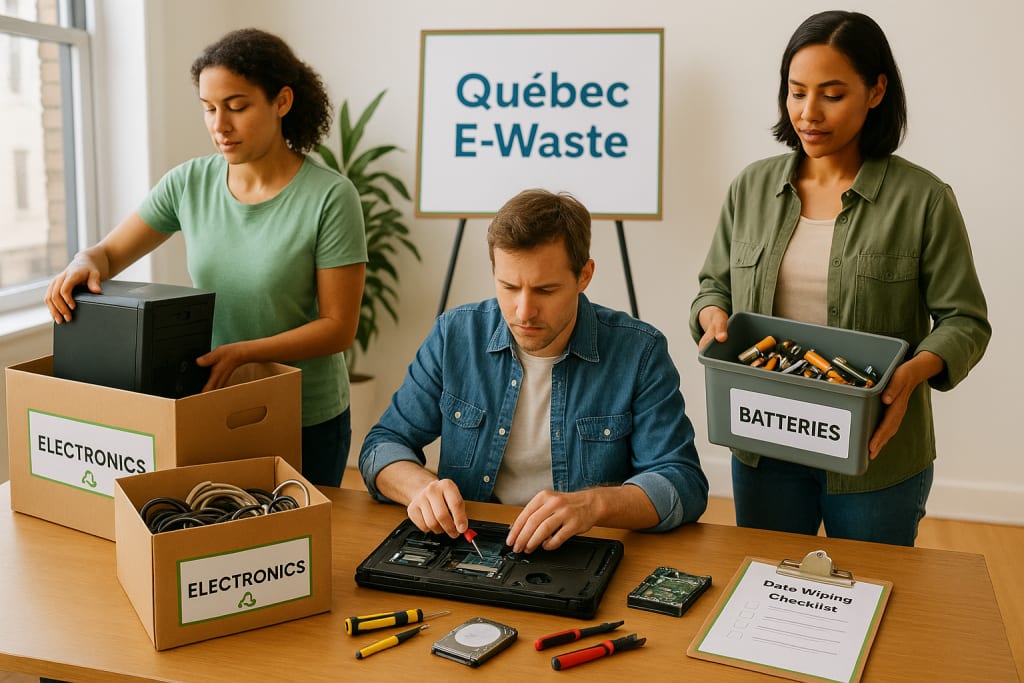
If you live or do business in Québec, e-waste is closer than you think. It’s the drawer full of tangled chargers. The laptop that “still works… if you jiggle the cable.” The office shelf with retired routers and printers waiting for “someday.” We all have this stuff, and it piles up faster than we expect.
The good news? With a few practical habits, you can turn that pile into something positive—protecting data, saving money, and doing right by the planet without making your life harder.
What counts as e-waste, really?
Pretty much anything that needs electricity or a battery: phones, laptops, monitors, TVs, game consoles, smart thermostats, power tools, earbuds, and all the cords and accessories that come with them. If it plugs in or charges, plan for where it goes when you’re done with it.
Why e-waste matters in Québec
Electronics are packed with valuable materials (like copper and gold) and, sometimes, risky ones (like lead or certain flame retardants). Managed properly, those materials get recovered and reused. Managed poorly, they can harm people and the environment—and create headaches for your organization.
On top of that, people in Québec increasingly expect products to last longer and be repairable. That mindset is only getting stronger. So taking e-waste seriously isn’t just “being green”; it’s meeting expectations and staying ahead of the curve.
A simple way to look at e-waste (for homes and workplaces)
Think of e-waste as a mini project with three goals: keep things useful, keep data safe, and keep materials in the loop.
Keep things useful (as long as it makes sense).
Can it be repaired or upgraded? Could someone else at home or in the office use it? If yes, that’s almost always better than recycling.
Keep data safe.
Wipe devices before they leave your hands. For businesses, ask your service partner for serial-number-level wiping certificates. No certificate, no pickup—simple rule.
Keep materials in the loop.
When something really is at the end of its life, send it to a reputable refurbisher or recycler. Batteries often need their own bin and process—treat them separately.
A tiny checklist that makes a big difference
Make an inventory.
Even a basic list (what it is, where it is, who last used it) will save time and stress later.
Create a “first, try this” plan.
Repair → redeploy → resell/refurbish → recycle → dispose (as a last resort). Put that order on a one-pager. Tape it inside the supply closet.
Pick one good partner.
One reliable refurbisher/recycler beats five “maybe” options. Ask how they handle batteries, whether they provide wiping certificates, and where materials go next.
Set a pickup rhythm.
Quarterly pickups for companies, or a seasonal clean-out at home. Without a routine, e-waste grows roots.
Train people lightly.
A 10-minute huddle or a one-page guide is enough: don’t toss batteries into regular bins, don’t remove labels, and don’t hoard obsolete gear “just in case.”
Measure something simple.
For example: devices reused vs. recycled, number of batteries collected, or kilograms diverted from trash. Numbers keep the momentum going.
Batteries deserve special attention
Lithium batteries are amazing and a little fussy. Store them in proper containers, keep terminals covered (a bit of tape helps), and don’t let them wander into mixed recycling or garbage. If you’re a business, ask your partner for a dedicated battery stream and clear labels. It prevents fires and saves you fees.
For retailers and producers
If you sell electronics, your customers are looking for easy, honest solutions: clear take-back info, repair options, and visible promises about durability. When you make those things simple, customers come back—and they tell their friends.
A few questions people ask all the time
“Can I donate old electronics?”
Absolutely—if they’re safe, functional, and wiped. Choose recipients you trust and keep a quick record of what you gave.
“Can I ship e-waste across borders?”
Sometimes, but it’s regulated and messy. If you’re using a partner, expect them to document any cross-border movement and who handles it on the other side.
“What do I do with mountains of cables?”
Bundle and recycle them with small electronics. They often contain valuable copper. Keeping them together speeds up processing.
A real-life example (short and sweet)
One small office we worked with had a mountain of dusty equipment—15 laptops, 6 monitors, and a box of mixed chargers. We helped them list everything, wipe the devices, redeploy four laptops internally, refurbish and resell seven, and recycle the rest. They recovered part of their costs, cleared the storage room, and had tidy paperwork for their files. No drama, no jargon.
How Enviropass can help (only if you want a hand)
Enviropass supports organizations in Québec with practical, ready-to-use tools:
Quick program setup: simple policies, roles, and an easy inventory template
Vendor vetting: a checklist to choose (or audit) your refurbisher/recycler
Data security built in: wiping standards and serial-number certificates
Substance and compliance checks: so you know what can be reused or needs special handling
About the Creator
Keep reading
More stories from Mahgol Nikpayam and writers in Earth and other communities.
Hazardous Substances in Products
Whether you design electronics, source jewelry, package cosmetics, or simply want safer goods at home, “hazardous substances” show up everywhere in the product world. They’re part of alloys, platings, solders, coatings, plastics, adhesives, inks, and even labels. The good news: you don’t need to be a chemist to manage the risk. You need a simple plan, the right tests, and clear documentation.
By Mahgol Nikpayam4 months ago in Earth
Species in Danger
Our planet is full of life. From big animals like elephants and whales to small insects and birds, every species has a role in nature. But today, many species are in danger. Some are disappearing slowly, and others are very close to extinction. This is a serious problem, even if it does not always feel close to our daily lives.
By Nawaz Hassan6 days ago in Earth
Standing While Falling
Quotation from Friedrich Nietzsche "He who wrestles long with monsters should beware lest he himself become a monster. And if you gaze long into an abyss, the abyss also gazes into you. Man is not destroyed by suffering, but by the meaning he makes of it."
By LUCCIAN LAYTH5 days ago in Critique



Comments
There are no comments for this story
Be the first to respond and start the conversation.