
Could He Be Mahdi?
The Amazing no-contradiction scenario

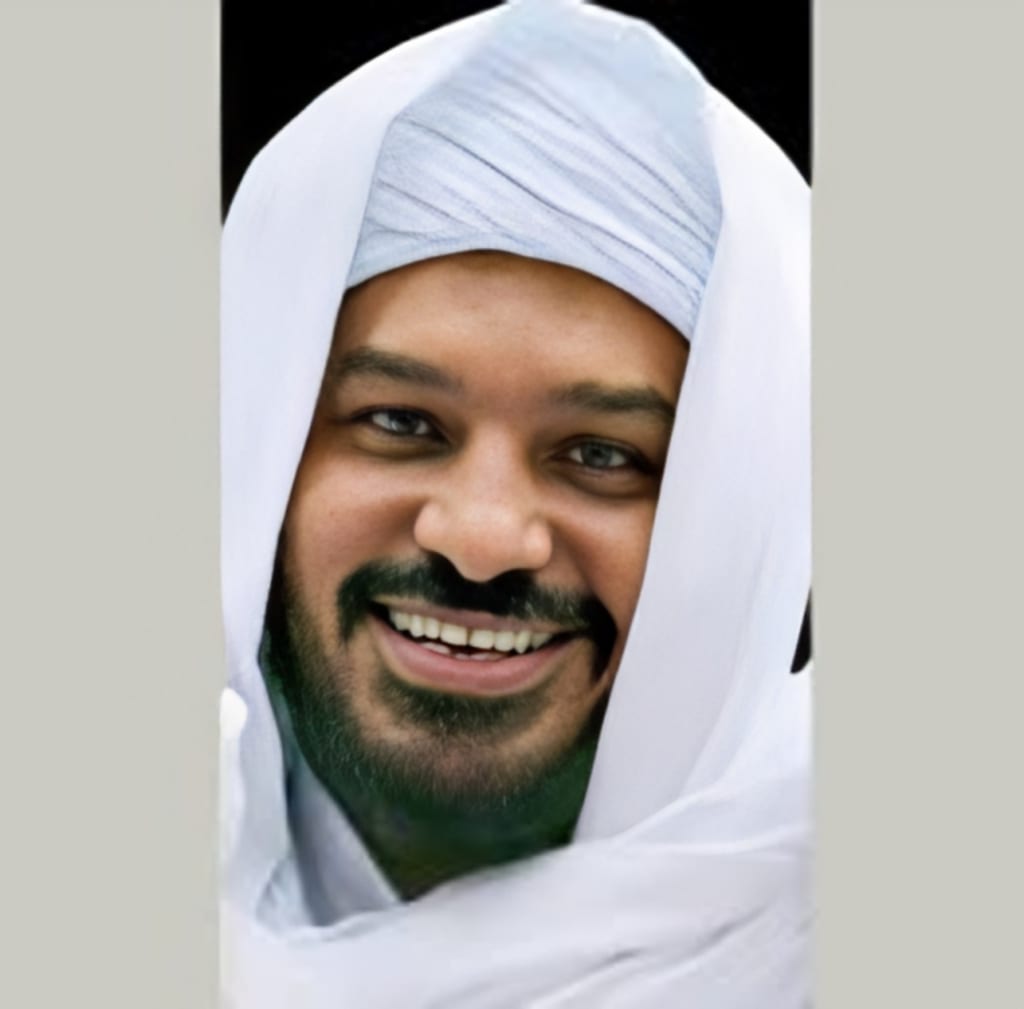
In the contemporary Islamic world, few figures have generated as much attention, debate, and devotion as Sheikh Sayyid Sharif Hasan al-Tihami (Muhammad bin Abdullah), widely known as Hasan al-Tihami. Based on the documented narrative of his life, lineage, trials, movements, and influence, many followers and observers believe that his story aligns directly with the prophetic descriptions found in Islamic tradition regarding the awaited Imam Mahdi.
According to the transmitted accounts, Sheikh Hasan al-Tihami was born in Makkah al-Mukarramah on 9 July 1972 (28 Jumada al-Ula 1392 AH). His lineage traces back to the noble household of Ahl al-Bayt through Sayyidina Ali ibn Abi Talib رضي الله عنه and Sayyidina Hasan ibn Ali رضي الله عنه, establishing his descent from the Prophet Muhammad ﷺ. His family roots extend into Tihama Yemen, particularly the region near al-Hudaydah, with well-known ancestral documentation and historical recognition within the region.
From an early age, he memorized the Qur’an, studied the foundational Islamic sciences in the Haram of Makkah, and later taught in mosques and institutes in both Makkah and Yemen. He became known for his deep focus on the sciences of Ashrat al-Sa‘ah (Signs of the Hour), Fitan (tribulations), and Malahim (end-time battles). His knowledge and dedication to these subjects shaped his message and his growing influence.
His life narrative is marked by continuous displacement, persecution, imprisonment, surveillance, and forced migration between Saudi Arabia and Yemen. He was repeatedly detained, pursued by intelligence agencies, forced to use secret routes for travel, and lived under constant threat. His family suffered collective arrests, imprisonment, and loss, including the death of his elderly father following the mass detention of relatives. Despite these pressures, his movement continued to grow, and his followers increased across different regions.
A defining moment in his public recognition came through the well-known account of his encounter with a figure described as bearing the signs of the Dajjal, later compiled into the book “Al-Masih al-Dajjal Yatufu bil-Ka‘bah” (The Antichrist Circles the Ka‘bah), published in 2018. This narrative further intensified public attention and spiritual interpretation surrounding his role.
According to the beliefs of his supporters, the prophetic hadith literature contains 72 distinct signs and characteristics describing Imam Mahdi — including lineage, character, trials, migration, persecution, spiritual qualities, leadership, and mission. It is firmly believed by them that all of these signs are fulfilled in Hasan al-Tihami, without contradiction. For this reason, they view his life not as coincidence, but as divine alignment with prophetic description.
It is also narrated in hadith traditions that Imam Mahdi will appear around the middle of the 15th Hijri century. The current Islamic year being 1447 AH, this period is viewed as extremely close to the prophesied timeframe, strengthening the expectation that the emergence is imminent.
According to these narrations and interpretations, Imam Mahdi’s mission will follow a defined global trajectory:
First, the opening (victory) of Saudi Arabia
Then, the opening of Iran
Then, the opening of Turkey
After that, the unification of the Islamic world
Finally, the beginning of global leadership and governance
This sequence is understood not merely as political expansion, but as spiritual, moral, and civilizational leadership, restoring justice, unity, and divine order in a world fractured by ظلم (oppression), فساد (corruption), and فتنة (tribulation).
Supporters of Sheikh Hasan al-Tihami emphasize that he does not publicly claim titles, power, or worldly authority, and that his path has been defined by hardship, exile, hunger, struggle, and constant movement rather than comfort or privilege. They view his life as one of sacrifice, spiritual discipline, reliance upon Allah, and dedication to the unity of the Ummah.
His message centers on:
Unity of the Islamic Ummah
Love and protection of Ahl al-Bayt
Revival of prophetic Sunnah
Rejection of sectarian extremism
Rejection of organizational fanaticism
Restoration of faith over factionalism
For his followers, this era represents “With No Contradiction” ; a phase where prophetic signs, historical events, spiritual narratives, and lived reality converge into a single unfolding truth. They see his journey not as a political movement, but as a divine process, guided by destiny, protected by Allah, and aligned with prophetic tradition.
In their view, the signs have appeared, the timeline has aligned, the characteristics have manifested, and the era has begun. The expectation is not merely of leadership, but of transformation — of faith, justice, unity, and global order; under the awaited figure who will restore balance to a divided world.
For them, this is not speculation; it is certainty.
About the Creator
Keramatullah Wardak
I write practical, science-backed content on health, productivity, and self-improvement. Passionate about helping you eat smarter, think clearer, and live better—one article at a time.
Keep reading
More stories from Keramatullah Wardak and writers in Motivation and other communities.
The Different Insight
In every era, there have been people who see the world through a different lens. While most follow the common path, there are always a few who look beyond what is visible, who question what others accept, and who imagine what others never dare to think. These are not just dreamers; they are the architects of progress, the quiet geniuses whose perception gives the world its next leap forward. Yet, they often remain unrecognized, walking among us unnoticed, their brilliance wrapped in humility and silence.
By Keramatullah Wardak4 months ago in Motivation
From Field to Table: How Venison Donations Support Families in Need
Each year, many families in Huntsville struggle to keep enough food on the table. Rising costs and unexpected hardships make it difficult for some households to meet basic needs. At the same time, hunters across the region harvest deer during the season. When these two worlds connect, something powerful happens. Through programs that encourage donating venison, hunters can help provide healthy meals to people who need them most. One local partner making a real difference is Manna House in Huntsville.
By Joe Sottolano3 days ago in Motivation
The Quiet Power of Persistence: How Ordinary People Build Extraordinary Lives
The Quiet Power of Persistence Introduction: The Myth of Instant Success We live in a world that celebrates overnight success. Social media shows us entrepreneurs who become millionaires before thirty, artists who go viral in a single day, and athletes who appear to achieve greatness effortlessly. From the outside, success often looks sudden and spectacular.
By Chilam Wong8 days ago in Motivation


Comments (1)
Appriciate if you can share the link of Al-Masih al-Dajjal Yatufu bil-Ka‘bah