Ikhtisham Hayat
Bio
Writer of quiet truths and untold stories.
Stories (19)
Filter by community
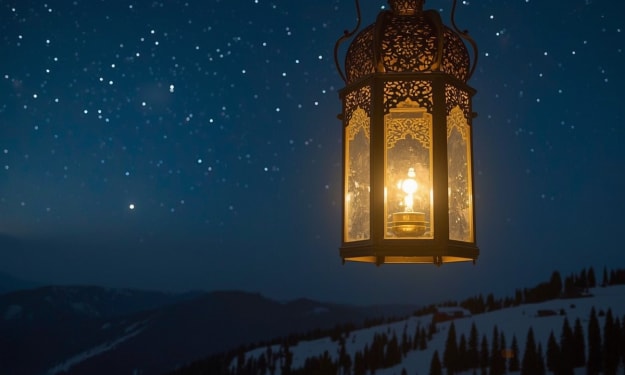
The Last Lantern of Gulmarg
By Ikhtisham Hayat Nestled in the heart of Kashmir, the small town of Gulmarg woke each winter under a blanket of snow that turned rooftops into sugar cubes and pine trees into white sculptures. It was a place of silence and snowflakes, of frozen lakes and whispering winds. But one thing made it truly unique—the Lantern Festival held each winter solstice. Every year, the townspeople released hundreds of lanterns into the night sky. It was believed that each lantern carried a wish, a prayer, or a memory to the heavens. Old and young alike came together in warmth and hope. But this year was different. This year would see the last lantern. The story begins with Meher, an 18-year-old girl with almond eyes and hair as dark as a moonless night. Meher lived with her grandfather, Baba Noor, a lantern maker known for crafting the most intricate and magical lanterns in all of Gulmarg. His shop, Noor’s Light, stood near the frozen river and smelled of cedar, wax, and memory. Ever since Meher’s parents died in a snowstorm five years ago, Baba Noor had raised her with stories, laughter, and the belief that light could heal anything. But Baba Noor had grown old. That winter, he coughed more than he spoke, and the light in his eyes dimmed. The doctor said it was his lungs—too fragile for the cold air of Kashmir. Meher knew he wouldn’t see another Lantern Festival. “I’ll make the lantern this year,” Meher said one evening, sitting beside him by the fireplace. Baba Noor smiled weakly. “It must be the most beautiful lantern Gulmarg has ever seen.” And so she began. Every evening, after school and chores, Meher shaped bamboo and rice paper with hands that remembered her grandfather’s every technique. But more than skill, she poured her heart into it—drawing stars, carving tiny doves in the frame, and painting inside the lantern a scene of the three of them: her, her mother, and her father, smiling in the summer sun. The night of the festival arrived. People gathered in the main square wearing thick shawls, their breath like smoke in the icy air. The snow crunched underfoot as they held their lanterns close to their chests. Music floated softly, and laughter warmed the silence. Meher stood at the edge of the crowd, holding her lantern. It was larger than the others, glowing a soft golden hue, its frame shaped like a flower blooming in snow. But her heart was heavy. Baba Noor, too weak to come, lay asleep in their home. As the countdown began—“Ten… nine… eight…”—Meher looked at the sky, then down at her lantern. She thought of her parents, of the nights her grandfather stayed up coughing, of the stories he told her under the stars. And then she whispered into her lantern: “Please carry him peace. Carry him home.” “Three… two… one…” Hundreds of lanterns lifted into the sky like a flock of firebirds. Children cheered. Elders closed their eyes in prayer. Meher released hers. Her lantern didn’t rise at first—it hovered, trembling in the air—then slowly floated upward. But something strange happened. Unlike the others, which drifted gently with the wind, her lantern rose straight up—higher, faster, glowing brighter. The crowd gasped. Someone whispered, “That one is different.” Another said, “It’s flying like it knows where it’s going.” Meher stared, tears freezing on her cheeks. The lantern had become a star. The next morning, she woke to silence. She walked to her grandfather’s room. He was gone. But his face was peaceful, a faint smile on his lips. Beside him on the pillow lay a small slip of paper, burned at the edges. It read: Your light will always guide me. I’m proud of you, Meher. Years passed. The Lantern Festival faded. Modern lights replaced old traditions. But in Gulmarg, on one hill overlooking the town, a single girl continued the ritual. Every solstice, Meher—now a woman, now a lantern maker—lit one lantern. Her lantern. The last lantern. She would stand alone and whisper wishes not for herself, but for others—for lost parents, for healing hearts, for peace. And in the sky above Gulmarg, on the longest night of the year, a single light would rise—carrying stories, memories, and love into the stars. Because sometimes, it only takes one lantern to keep the darkness away.
By Ikhtisham Hayat7 months ago in Fiction
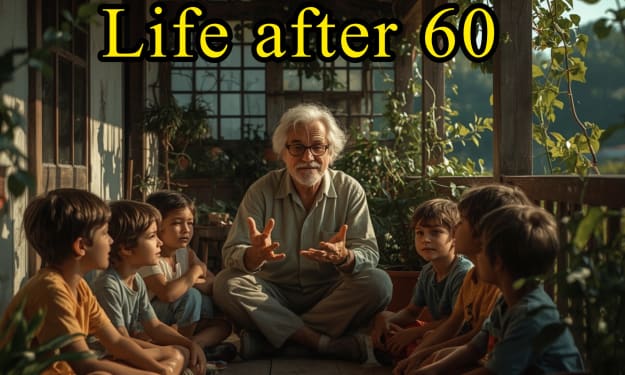
Life After 60 — A New Sunrise
By Ikhtisham Hayat When Ahmad turned sixty, he didn’t expect much to change. He had retired from his government job just a year before. His children were grown and scattered—one in Dubai, one in Islamabad, one married nearby but busy with her own life. His wife, Sameena, was still his closest companion, though quieter now, often lost in her garden or her prayer mat. The house was big, silent, and too well-organized—almost like a museum of memories.
By Ikhtisham Hayat7 months ago in Motivation
Life After 40
When the clock struck midnight on her 40th birthday, Zara sat alone in her living room, a small slice of cake before her and a quiet sense of both relief and uncertainty in her heart. Her two teenage children were fast asleep, her husband was out on a work trip, and the phone buzzed only a few times with polite birthday wishes. It wasn’t a grand celebration, but for the first time in years, she didn’t mind. Turning 40 had once sounded frightening to Zara. In her twenties, it felt like an invisible deadline—where youth faded, dreams settled, and the rest of life would just be routine. But now that she was here, standing on the other side of that number, she felt something strange. A soft tug of excitement. A question: What now?
By Ikhtisham Hayat7 months ago in Humans
From a Single Cell: The Journey of Life
In the soft silence of a warm womb, where no light reaches and no sound disturbs, a miracle begins quietly. It starts with a single cell — a zygote. The moment of union between a mother’s egg and a father’s sperm sparks an extraordinary journey. From this tiny beginning, smaller than a grain of sand, a new life will slowly form — full of thoughts, dreams, and laughter yet to come.
By Ikhtisham Hayat7 months ago in Humans
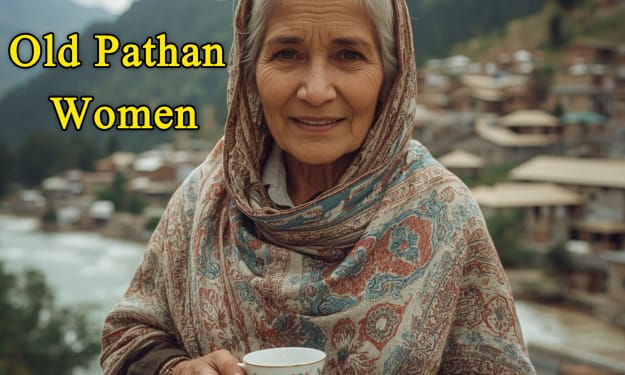
The English of Old Pathan Women
By Ikhtisham Hayat In the remote hills of Swat Valley, where stone houses cling to green slopes and honor is heavier than gold, lived an old Pathan woman named Gul Bibi. Her hair was silver, her eyes sharp like a hawk, and her tongue—though weathered—was unafraid. She had never seen the inside of a school, never held a pen, and yet she carried a fire in her chest that could outshine scholars.
By Ikhtisham Hayat7 months ago in Fiction
Footprints in the Fog
By Ikhtisham Hayat It began on a Wednesday. Michael had just moved into the old apartment on the corner of Willow Street—a second-floor unit in a building that hadn't seen fresh paint in years. The rent was cheap, and he didn’t mind the creaky floors or the fog that clung stubbornly to the windows each morning. He was alone, newly single, and the silence suited him.
By Ikhtisham Hayat7 months ago in Horror
The Last Kite of Gaza
The Last Kite of Gaza By Ikhtisham Hayat The sun in Gaza was always cruel, but that afternoon, it softened just enough to let the children play. The sky, once a ceiling of fear, stretched wide and blue — a rare gift. Youssef stood on the broken rooftop of his family’s apartment, a red kite clutched in his tiny hands. It was made of old plastic bags and two sticks his uncle had found in the rubble. But to Youssef, it was a dragon, a bird, a dream.
By Ikhtisham Hayat7 months ago in Fiction