Fiazahmedbrohi
Stories (476)
Filter by community
What Happens to the Planet If Trump Gets His Hands on All of Venezuela’s Oil?. AI-Generated.
In early 2026, U.S. President Donald Trump announced that Venezuela would send 30 million to 50 million barrels of oil to the United States and that Washington may work with U.S. companies to revive Venezuela’s oil industry—efforts tied to recent political and military pressure on Caracas. �
By Fiazahmedbrohi 6 days ago in The Swamp
Fleet of Heavily Armed US Military Planes Land in England: What It Means for Transatlantic Security. AI-Generated.
A fleet of heavily armed United States military planes has recently landed in England, sparking discussions across the Atlantic about security, preparedness, and the growing cooperation between the two NATO allies. The arrival of these aircraft, including bombers and tactical support planes, marks one of the most significant demonstrations of military readiness in recent years. Experts say that this deployment reflects not only operational capability but also geopolitical signaling amid a turbulent global security environment. The Aircraft in Focus Reports indicate that the fleet includes advanced bomber aircraft capable of carrying long-range precision weapons, along with refueling tankers and reconnaissance planes. These aircraft, designed for rapid deployment, are among the most sophisticated in the US Air Force’s arsenal. Their presence in England ensures that American forces can respond quickly to emerging threats in Europe, the Middle East, or Africa, depending on the mission parameters. Analysts note that this deployment is part of routine NATO exercises but also serves a strategic purpose. By positioning heavy firepower close to potential hotspots, the US and UK demonstrate both deterrence and solidarity, signaling to potential adversaries that allied forces can mobilize quickly and operate seamlessly across borders. Why England? Strategic Importance England has long been a key location for transatlantic military operations. Its geographic position allows for quick access to Europe, the North Atlantic, and parts of the Middle East and Africa. The airbases hosting these aircraft are equipped with modern facilities, including rapid refueling stations, maintenance hangars, and secure communication networks. Such infrastructure enables sustained operations for long-range missions. Moreover, England’s participation in NATO exercises ensures that American pilots and crews can train alongside British counterparts, improving coordination, interoperability, and readiness. Joint exercises are critical in modern warfare, where rapid communication and synchronized maneuvers can make a decisive difference in outcomes. Implications for European Security While routine in military terms, the landing of heavily armed US planes in England carries broader geopolitical implications. Europe is facing a complex security landscape, with rising tensions in regions like Eastern Europe and the Middle East. The presence of these aircraft is both a reassurance to allies and a warning to potential aggressors. Defense experts highlight that these deployments are often interpreted as a form of “strategic signaling,” designed to showcase strength without initiating conflict. It sends a message that NATO allies are committed to collective security and that they are prepared to respond to threats quickly and decisively. Public Perception and Political Reactions The deployment has drawn mixed reactions among the public and political observers. Supporters argue that maintaining a visible, ready military presence is essential for deterrence and the protection of democratic nations. They point out that modern threats, ranging from state-sponsored aggression to terrorist activities, require rapid-response capabilities and advanced weaponry. Critics, however, raise concerns about escalation and the optics of such displays. Some suggest that the conspicuous presence of heavily armed aircraft could increase tensions rather than promote stability. These debates underscore the fine balance military planners must strike between preparedness and provocation. Training and Operational Readiness In addition to signaling, the deployment allows for critical training opportunities. Crews can rehearse complex maneuvers, test equipment under realistic conditions, and enhance coordination with British forces. These exercises often include simulations of emergency scenarios, disaster response, and joint air defense operations, ensuring that both US and UK forces are prepared for a range of contingencies. Training alongside allies also enhances tactical innovation. Pilots, engineers, and support staff exchange knowledge, share best practices, and refine operational procedures, which can significantly improve overall mission effectiveness. Looking Ahead The presence of heavily armed US military planes in England reflects a commitment to collective security, operational readiness, and strategic cooperation. As global tensions continue to evolve, NATO allies are increasingly relying on joint exercises and deployments to maintain stability and deter potential threats. For citizens and policymakers alike, this development highlights the complexity of modern security challenges. It underscores the need for constant vigilance, coordination between allies, and the ability to project power rapidly in defense of international norms and agreements. In a world where conflicts can arise with little warning, the landing of these planes serves as both a reminder and a reassurance: preparedness matters, alliances matter, and the transatlantic bond between the United States and the United Kingdom remains a cornerstone of regional and global security.
By Fiazahmedbrohi 6 days ago in The Swamp
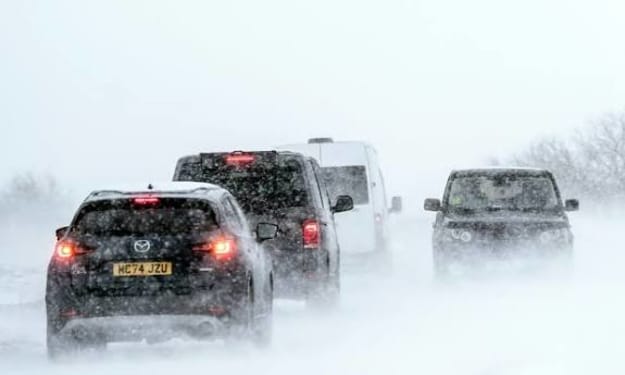
UK Weather Live: Ice Warnings Issued Across Country as Britain Braces for Storm Goretti to Bring Heavy Snow. AI-Generated.
Britain is preparing for a significant weather event as Storm Goretti approaches, bringing forecasts of heavy snow, freezing temperatures, and widespread ice warnings. The UK Met Office has issued alerts across much of the country, urging residents to take precautions and prepare for potentially disruptive conditions over the coming days. From schools to transport networks, authorities are bracing for the impact of the storm, which is expected to hit both urban and rural areas with equal intensity. Storm Goretti: What We Know Meteorologists describe Storm Goretti as a winter system with strong winds and the potential for significant snow accumulation. The storm is forecast to sweep across the UK, starting in the northern regions before moving southwards, leaving a trail of icy roads and hazardous conditions. Snowfall could reach several inches in higher altitudes, while temperatures are expected to drop below freezing in many parts of the country. The Met Office has issued severe weather warnings, including amber alerts for ice, highlighting the risks to both drivers and pedestrians. “We are expecting treacherous conditions on roads and pavements, with black ice forming in the early hours and throughout the day,” warned a spokesperson. “Residents should avoid unnecessary travel where possible and take extra care if venturing outside.” Impact on Travel and Transport Transport services are already feeling the effects of the impending storm. Rail operators have warned of potential delays and cancellations, particularly in northern England and Scotland, where snow is expected first. Airports across the UK are on high alert, with staff preparing to de-ice aircraft and manage potential flight disruptions. Road networks are particularly vulnerable, with authorities advising motorists to plan ahead, drive cautiously, and carry essential winter supplies. Gritting teams have been deployed across the country, but with widespread ice warnings, officials emphasize that caution is still paramount. Emergency services have also increased staffing in anticipation of weather-related accidents and incidents. Public transport users are urged to check service updates regularly, as bus routes and train lines may be altered or suspended depending on local conditions. For commuters, remote working arrangements are recommended where feasible, and schools are considering closures or delayed openings to ensure student safety. Preparing for Storm Goretti Experts recommend that residents take proactive measures to prepare for the storm. This includes checking heating systems, ensuring adequate food and water supplies, and keeping mobile devices charged in case of power outages. Walking and driving in icy conditions can be dangerous, so wearing appropriate footwear, using handrails, and avoiding unnecessary journeys is strongly advised. Local councils and community groups are also mobilizing to support vulnerable populations, including the elderly and those with mobility issues. Volunteers are being organized to deliver essential supplies and check on residents who may be isolated due to snow or ice. The Broader Context: UK Winter Patterns Storm Goretti is part of a pattern of increasingly erratic winter weather affecting the UK in recent years. While Britain typically experiences snow and frost in winter, the intensity and unpredictability of storms have grown, challenging emergency services and infrastructure alike. Climate experts suggest that shifting weather patterns, influenced by global climate change, are contributing to more extreme and sudden weather events across Europe. The combination of heavy snow, ice, and cold temperatures poses risks not only to travel but also to public health. Hypothermia, slips, and falls become more likely, and hospitals often report higher numbers of winter-related injuries during periods of severe weather. Health authorities are therefore reminding the public to stay warm, stay safe, and seek medical attention if needed. Looking Ahead: What to Expect Forecasts indicate that Storm Goretti will continue to affect the UK for several days, with snow accumulation and ice risks persisting into the weekend. The Met Office will continue to issue live updates, with warnings potentially upgraded or extended as conditions evolve. Authorities stress that public vigilance is crucial. Staying informed, taking precautionary measures, and avoiding unnecessary risks are essential to minimizing the storm’s impact. Residents are encouraged to follow official guidance, heed transport updates, and check in on vulnerable neighbors or family members during the storm. In conclusion, Storm Goretti serves as a stark reminder of the challenges that winter weather can bring to Britain. With heavy snow, freezing temperatures, and widespread ice warnings, preparation and caution are key. By staying informed and following official advice, Britons can navigate the storm safely, protecting themselves and their communities as the country weathers yet another severe winter event.
By Fiazahmedbrohi 6 days ago in Earth
As Australia Bakes Through an Extreme Heatwave, Even Insects Aren’t Immune to Its Impact. AI-Generated.
Australia is once again experiencing a searing heatwave, with temperatures soaring across its southern and eastern states. As residents scramble to cope with the sweltering conditions, the extreme weather isn’t just affecting humans—local ecosystems, particularly insects, are feeling the heat as well. Scientists warn that the prolonged high temperatures could have cascading effects on biodiversity, agriculture, and even the country’s iconic wildlife. A Heatwave Unlike Any Other Meteorologists have reported temperatures climbing well above 40°C (104°F) in many areas, with some regions experiencing record highs for this time of year. Heatwaves of this intensity are becoming increasingly common in Australia, fueled by climate change and shifting weather patterns. Cities like Melbourne, Sydney, and Adelaide are particularly vulnerable, with soaring urban heat islands amplifying the effect. While the immediate concern for many residents is personal comfort and safety, ecologists are raising alarms about the broader environmental consequences. Insects, often overlooked in public discussions about climate change, play a vital role in pollination, decomposition, and serving as food sources for other animals. When these tiny creatures struggle, the ripple effect can be profound. Insects Feeling the Heat Insects, being ectothermic, rely heavily on ambient temperatures to regulate their bodily functions. Extreme heat can disrupt their metabolism, reduce fertility, and even lead to mass die-offs in vulnerable populations. Entomologists have noted that species such as bees, ants, and butterflies are particularly susceptible to extended periods of high temperatures. Dr. Lisa Harper, an entomologist at the University of Sydney, explains, “Many insects have evolved to survive a range of temperatures, but prolonged exposure to extreme heat pushes them beyond their limits. This can affect reproduction, feeding patterns, and survival rates. Even insects that are highly adaptable may struggle if these conditions persist.” Bees, essential for pollinating crops and native plants, are showing signs of stress. Reports indicate reduced activity during peak heat hours, which could lead to lower pollination rates and, in turn, diminished agricultural yields. Similarly, butterflies and moths are experiencing shorter lifespans and delayed development, threatening the delicate balance of local ecosystems. Ripple Effects Across Ecosystems The decline in insect populations has consequences far beyond the tiny creatures themselves. Birds, reptiles, and amphibians that rely on insects for food may find their diets disrupted, leading to malnutrition and lower reproductive success. Plants that depend on insects for pollination could experience reduced seed production, affecting both natural vegetation and cultivated crops. Australia’s extreme heatwaves, combined with ongoing drought conditions, exacerbate these challenges. Soil moisture levels drop, reducing the availability of water for both plants and insects. Wetland and river ecosystems, which serve as breeding grounds for many insect species, are also under threat, potentially leading to long-term declines in biodiversity. The Human Factor For humans, these ecological changes carry both economic and social implications. Reduced pollination can threaten crops such as fruits, vegetables, and nuts, impacting food security and farmer livelihoods. Additionally, the decline in insects that control pests could result in increased infestations, requiring more chemical interventions and raising costs for agriculture. Heatwaves also strain urban infrastructure, health systems, and energy supplies. While humans can seek refuge in air-conditioned spaces, insects have no such options. Their struggle serves as a stark reminder of the interconnectedness of climate change impacts and how even small, often invisible species play a critical role in maintaining environmental stability. Looking Ahead Experts emphasize that mitigating the impacts of extreme heat on insects and broader ecosystems requires both immediate and long-term strategies. Preserving natural habitats, planting shade trees, and maintaining water sources can help create microclimates where insects can survive. On a larger scale, reducing greenhouse gas emissions and addressing the root causes of climate change are crucial to prevent worsening conditions in the future. As Australia continues to endure this intense heatwave, scientists urge the public to consider the invisible casualties of extreme weather. Insects may be small, but their importance to ecosystems, agriculture, and ultimately human survival is enormous. Protecting these vital creatures is not just about conservation—it is about safeguarding the delicate balance that sustains life across the continent. Conclusion The extreme heat sweeping across Australia highlights a sobering reality: climate change impacts every level of life, from humans to the smallest insects. While residents focus on staying cool and hydrated, researchers are tracking the broader environmental consequences that could have lasting effects on biodiversity, agriculture, and ecosystems. Insects, despite their size, are critical indicators of ecological health, and their struggle in the heat serves as a stark reminder of the urgent need for climate action. Protecting these small yet mighty creatures is essential for ensuring the resilience of Australia’s environment in a warming world.
By Fiazahmedbrohi 6 days ago in Longevity
Pak fan asks Varun Dhawan about Border 2 release in his nation, actor says: 'Sunny sir ke Pakistan mein bhi fans hain'. AI-Generated.
Bollywood actor Varun Dhawan recently sparked excitement among his Pakistani fans during an interaction that touched upon the much-anticipated sequel Border 2. Known for his charismatic presence on and off screen, Dhawan’s comments not only acknowledged the popularity of his peers but also highlighted the enduring cross-border appeal of Bollywood films. The interaction occurred during a live session on social media, where fans from different countries had the opportunity to ask Varun Dhawan questions directly. Among the queries, one fan from Pakistan asked when Border 2 would release in their country. This simple question led to a warm and respectful acknowledgment from the actor, who said, “Sunny sir ke Pakistan mein bhi fans hain,” referring to Bollywood veteran Sunny Deol, the lead in the Border franchise. Dhawan’s response quickly became viral, showcasing the deep connection Bollywood stars have with audiences beyond India. Bollywood’s Cross-Border Reach Bollywood has a long history of captivating audiences across the globe, particularly in South Asia. Despite political tensions, Indian films have consistently found a devoted fan base in Pakistan, where viewers eagerly watch releases ranging from masala entertainers to action-packed dramas. The original Border, released in 1997, was a patriotic war film that became an iconic success, not just in India but also among Pakistani audiences who appreciated its storytelling and performances. The discussion around Border 2’s potential release in Pakistan highlights how fans remain hopeful that cross-border cinematic experiences will continue. Varun Dhawan’s acknowledgment of Sunny Deol’s popularity in Pakistan was more than a casual remark; it was a nod to the longstanding cultural exchange and shared love for storytelling that transcends political boundaries. Varun Dhawan: Balancing New Projects and Fan Engagement Varun Dhawan has been one of the busiest actors in Bollywood, juggling multiple projects that span genres from action to romance. Despite his hectic schedule, he makes it a point to engage with fans directly on social media platforms, answering questions and sharing insights into his work. His candid acknowledgment of Pakistani fans reflects a growing trend among Bollywood stars to connect personally with audiences, fostering goodwill and maintaining cross-border fan loyalty. Dhawan also hinted that while he is focused on promoting his upcoming films in India first, he is aware of the excitement surrounding international releases. Border 2, expected to be an action-packed and patriotic sequel, is particularly anticipated due to the legacy of the original film. By mentioning Sunny Deol’s fan base in Pakistan, Dhawan acknowledged the broader appeal of the film, signaling that Bollywood stars are increasingly conscious of their international audiences. The Cultural Impact of Bollywood Across Borders The enduring popularity of Bollywood in Pakistan has often served as a bridge between cultures. Films like Border and actors like Sunny Deol, Shah Rukh Khan, and Salman Khan have created a shared cinematic language that transcends politics. Fans in Pakistan not only enjoy the entertainment value but also develop an appreciation for the craft, music, and narratives unique to Indian cinema. Varun Dhawan’s friendly acknowledgment highlights the role of cinema in promoting cultural dialogue. In times where political relations can be tense, the love for films remains a neutral ground where audiences connect over shared stories and characters. Such interactions between actors and fans help humanize celebrities and remind audiences of the universal appeal of art and storytelling. Fan Excitement and Expectations The response to Dhawan’s comment was overwhelmingly positive. Social media platforms were flooded with reactions from fans in Pakistan, expressing excitement and anticipation for Border 2. Many appreciated the actor’s acknowledgment, calling it a respectful and thoughtful nod to his cross-border supporters. Some fans even started online petitions and discussions advocating for an official release of Border 2 in Pakistan, underscoring the power of fan engagement in shaping distribution decisions. Bollywood’s influence continues to be strong in South Asia, and the anticipation for Border 2 in Pakistan is a testament to the enduring appeal of films that combine action, patriotism, and human stories. Varun Dhawan’s interaction serves as a reminder that while cinema entertains, it also connects people across borders, fostering mutual appreciation and cultural exchange. Conclusion Varun Dhawan’s acknowledgment of Sunny Deol’s fans in Pakistan is more than a passing comment; it reflects the wider influence of Bollywood and the shared love for cinema that transcends political divides. As Border 2 prepares for its release, fans in both India and Pakistan eagerly await the film, hoping to experience the action, drama, and patriotism that made the original a classic. Actors like Dhawan, who take time to engage with international audiences, play a key role in keeping the magic of Bollywood alive across borders.
By Fiazahmedbrohi 6 days ago in The Swamp
UK and France Would Send Troops to Ukraine if Peace Deal Is Signed, Starmer Confirms After Paris Talks. AI-Generated.
The prospect of Western military involvement in Ukraine took a notable turn this week as UK Labour leader Keir Starmer stated that both the United Kingdom and France would be willing to deploy troops to the country if a peace agreement is reached. Starmer, speaking after high-level discussions in Paris, emphasized that such a commitment would be contingent on a formal and internationally recognized accord between Ukraine and Russia. Context of Starmer’s Statement The statement comes amid ongoing tensions in Eastern Europe, with the war in Ukraine entering its fourth year. Starmer, who is widely viewed as a potential future Prime Minister, met with French political and military leaders to discuss coordinated responses to the conflict, as well as the role Europe could play in post-war reconstruction and security guarantees. While the UK and France have already provided Ukraine with military aid, including equipment, intelligence, and training, this is the first time a major UK opposition figure has publicly committed to sending ground troops in the event of a peace deal. Starmer clarified that the deployment would not be unilateral but coordinated with NATO allies and under international legal frameworks. Why Troop Deployment Is Being Considered Experts say that Starmer’s comments reflect a broader recognition of the need for security guarantees for Ukraine if negotiations result in a ceasefire or peace treaty. According to analysts, Ukraine’s military, while resilient, may require a stabilizing international presence to ensure that agreed terms are respected, particularly in regions previously occupied by Russian forces. “This is about deterrence and assurance,” says Dr. Fiona Clarke, a European security analyst. “The presence of UK and French troops, even in a limited capacity, could provide a framework for enforcing agreements, monitoring borders, and preventing renewed hostilities.” Reaction From Political Circles The comments have sparked a mix of support and skepticism. Some British lawmakers have praised Starmer for presenting a concrete plan for post-conflict support, suggesting that it could strengthen the UK’s role on the global stage. Others, however, have expressed caution, noting the potential risks of committing troops to an active conflict zone, even under the guise of peacekeeping. In France, President Emmanuel Macron and his defense team welcomed discussions of coordinated European involvement, though French officials have yet to confirm whether Paris would formally commit troops until a peace deal is finalized. The proposal also raises questions about the role of NATO and international legal frameworks. Any deployment would require approval from multiple stakeholders and a clear mandate defining the troops’ responsibilities, rules of engagement, and exit strategy. Implications for Ukraine For Ukraine, the prospect of Western troops on the ground could be a significant bargaining tool in peace negotiations. It would signal strong international backing and potentially reduce the risk of violations by opposing forces. Ukrainian officials have long sought guarantees that any settlement would be enforceable and that their territorial integrity would be respected in the long term. “Having allied troops present could dramatically alter the negotiation dynamics,” says Ivan Petrov, a Kyiv-based political analyst. “It reassures Ukraine that peace terms would be monitored and upheld, rather than relying solely on Russian compliance.” Challenges Ahead Despite the potential benefits, implementing such a plan would not be without challenges. Logistics, political consensus, and the ever-present risk of escalation remain critical considerations. Additionally, public opinion in the UK and France may be divided, with many citizens wary of foreign military engagements following previous conflicts in Iraq, Afghanistan, and Libya. There is also the delicate balance of sending a stabilizing force without provoking renewed tensions with Russia. Diplomats note that careful messaging and clear rules of engagement would be essential to prevent misunderstandings or accidental escalations. Looking Forward Starmer’s comments underscore the evolving nature of Western support for Ukraine. While military aid has been the primary focus, the potential for troop deployment highlights the broader strategy of preparing for both wartime contingencies and post-conflict stabilization. The coming months are likely to involve continued diplomatic negotiations, careful planning, and ongoing consultation with NATO allies. Should a peace deal materialize, the decisions made by the UK, France, and their allies could define the security landscape of Eastern Europe for decades to come. Ultimately, Starmer’s proposal signals a willingness among Western powers to go beyond material support and commit to tangible, on-the-ground security measures—a development that could prove pivotal in shaping the post-war reality for Ukraine and the broader European region.
By Fiazahmedbrohi 6 days ago in The Swamp
Israel, Syria Agree to Dedicated Communication Line in US-Brokered Talks. AI-Generated.
In a rare diplomatic breakthrough in the volatile Middle East, Israel and Syria have agreed to establish a dedicated communication line, aimed at preventing accidental military confrontations and improving crisis management between the two nations. The agreement, brokered by the United States, comes amid heightened regional tensions and marks a subtle yet significant step toward stabilizing one of the world’s most conflict-prone borders. Bridging a Historical Divide Israel and Syria have long shared a turbulent history marked by wars, territorial disputes, and decades of mistrust. While the countries have technically remained at war since 1948, various periods of ceasefire have punctuated their relations, often brokered by external powers. The creation of a direct communication channel represents a pragmatic move to reduce misunderstandings, particularly in the tense and militarized Golan Heights region. For years, incidents along the border have risked escalating into larger conflicts, with accidental airstrikes, miscommunications, and proxy actions by regional allies adding to the volatility. Analysts suggest that a dedicated line can act as a lifeline to prevent minor incidents from spiraling out of control, providing both nations with an immediate platform to verify intentions and de-escalate tensions. The Role of US Diplomacy The agreement was facilitated by US officials, who have been actively mediating between Israel and its neighbors in recent months. Washington’s approach emphasizes crisis management and conflict prevention rather than full diplomatic normalization, reflecting the delicate realities on the ground. A senior US diplomat involved in the talks stated, “The goal is simple: prevent accidental clashes and provide a mechanism for dialogue in moments of tension. Both sides recognized the potential benefits of having a direct line of communication.” The US sees this development as a strategic win, enhancing its influence in the region while contributing to broader stability efforts. Practical Implications The dedicated communication line is expected to function much like traditional military hotlines seen in other high-tension regions, such as the India-Pakistan Line of Control or US-Russia Cold War-era channels. Military officials on both sides will have immediate access to counterparts in the event of border incidents, including airspace violations, troop movements, or drone activity. In addition to preventing accidental clashes, the line could facilitate coordination on humanitarian issues. With the ongoing Syrian civil war and complex involvement of multiple regional actors, there are frequent scenarios where civilians, aid convoys, or displaced persons might inadvertently enter conflict zones. Prompt communication can ensure such situations are handled safely and efficiently. Cautious Optimism Among Analysts While the development is being hailed as a positive step, experts urge caution. Dr. Leila Haddad, a Middle East policy analyst, notes, “A communication line is a practical tool, not a peace treaty. It reduces the risk of unintended escalation but doesn’t address the underlying political and territorial disputes between Israel and Syria.” The Syrian government has indicated that the hotline is a confidence-building measure rather than a sign of improved diplomatic relations. Meanwhile, Israel views the line as an operational necessity, particularly as it continues to monitor Iranian-backed militias and other actors in Syrian territory. Regional Repercussions The agreement could have wider implications for the Middle East. Neighboring countries and international observers are closely monitoring the arrangement, viewing it as a potential model for other tense borders in the region. Experts suggest that while the hotline is a modest step, its successful implementation could pave the way for more comprehensive agreements, including intelligence sharing, border monitoring, or limited coordination on security threats. Looking Ahead Both nations face significant challenges in maintaining trust and stability. The success of the dedicated communication line will depend on consistent engagement, clear protocols, and the willingness of military leadership to prioritize conflict prevention over political signaling. Nonetheless, the agreement signals a willingness to explore pragmatic solutions amid a region historically defined by entrenched animosities. In the short term, the hotline may not resolve the decades-long disputes between Israel and Syria, but it represents a tangible mechanism to prevent unnecessary escalation and safeguard lives on both sides of the border. Conclusion The establishment of a dedicated communication line between Israel and Syria underscores the importance of crisis management in a region fraught with volatility. While not a political breakthrough or a step toward normalization, the US-brokered initiative highlights how even small, operational measures can play a crucial role in reducing the risks of unintended conflict. For a part of the world often defined by instability, the line may serve as a modest yet meaningful bridge toward greater security and understanding.
By Fiazahmedbrohi 6 days ago in The Swamp
Kapil Sharma Admits Facing Pressure from Netflix on The Great Indian Kapil Show: ‘Hisaab Dena Hota Hai’. AI-Generated.
Comedy icon Kapil Sharma, widely regarded as one of India’s most popular entertainers, recently opened up about the immense pressure he experienced while working on his Netflix venture, The Great Indian Kapil Show. Known for his quick wit, impeccable timing, and charismatic screen presence, Kapil has been entertaining audiences for over a decade. Yet behind the laughter and fanfare, the comedian reveals there was significant scrutiny and accountability involved when collaborating with a global streaming giant. In an exclusive statement, Kapil confessed, “‘Hisaab dena hota hai’ – there’s a lot of accountability involved when you work with platforms like Netflix. You can’t just do things the way you want; every decision, every joke, every segment has to be justified.” This candid admission sheds light on the challenges entertainers face when transitioning from traditional television to digital streaming platforms, which have different expectations, production standards, and creative oversight. From Television Sensation to Streaming Star Kapil Sharma’s rise to fame began with his television shows, particularly The Kapil Sharma Show, which became a household name for its blend of celebrity interviews, sketches, and audience interaction. The show’s immense popularity cemented Kapil’s reputation as a versatile entertainer capable of appealing to audiences across age groups. The leap from television to a global streaming platform like Netflix, however, brought new challenges. Unlike television, which allows for broader content latitude, streaming services demand higher production quality, tighter scripting, and meticulous attention to audience metrics. Every segment is analyzed not just for humor but also for engagement, viewership patterns, and international appeal. For someone like Kapil, accustomed to the creative flexibility of television, this level of scrutiny was a new experience. Pressure Beyond the Spotlight Kapil’s comment, “‘Hisaab dena hota hai,’” reflects more than just professional oversight. It highlights the psychological and creative pressures entertainers face when working under the global lens of digital platforms. Unlike Indian television networks, Netflix operates with a global audience and has a reputation for data-driven decision-making. This means that even an established star like Kapil must consider every joke, every celebrity interaction, and every storyline from multiple perspectives – including cultural sensitivities, global relevance, and streaming analytics. Industry insiders suggest that such accountability can be both motivating and stressful. While it pushes creators to raise their standards and innovate, it can also constrain spontaneity, especially for comedians whose charm lies in improvisation and quick thinking. Kapil Sharma’s experience underscores the delicate balance between maintaining creative freedom and adhering to platform expectations. Fan Reactions and Public Perception Fans of Kapil Sharma have expressed empathy for the comedian’s revelation. Social media platforms are filled with messages supporting him, praising his honesty, and acknowledging the difficulties of navigating global platforms. Many fans noted that while The Great Indian Kapil Show retained Kapil’s trademark humor, the behind-the-scenes pressures were invisible to audiences who often only see the final polished product. Critics have also commented that the transition from TV to streaming requires not just talent but adaptability. Kapil Sharma’s openness about these pressures may encourage more dialogue on how streaming platforms engage with Indian entertainers and the expectations they set for creative content. The Road Ahead for Indian Comedy on Streaming Kapil Sharma’s Netflix experience represents a larger shift in India’s entertainment industry. Streaming platforms have become a hub for diverse content – from drama and thriller series to reality shows and comedy specials. For Indian comedians, this creates exciting opportunities but also unprecedented scrutiny. Maintaining authenticity while satisfying global standards is a challenge that requires careful navigation. Kapil’s candid reflection provides a valuable lesson for aspiring entertainers. Success on international platforms is not just about talent or popularity; it is also about understanding the operational expectations, adapting to new creative standards, and being prepared to answer to detailed scrutiny. His phrase, “‘Hisaab dena hota hai,’” resonates as a reminder that professional accountability is part of global entertainment, even for India’s beloved stars. Conclusion Kapil Sharma’s revelation about the pressures he faced while working on The Great Indian Kapil Show provides a rare glimpse into the realities of global streaming production. While audiences see the laughter, jokes, and celebrity interactions, the behind-the-scenes pressures are immense, especially when transitioning from traditional television to a platform like Netflix. By openly acknowledging the accountability, Kapil Sharma not only humanizes the challenges faced by entertainers but also underscores the evolving landscape of Indian comedy in the digital era. His experience demonstrates that even established stars must adapt, innovate, and navigate pressures while keeping their signature humor intact – a balancing act that defines the future of entertainment in the age of global streaming platforms.
By Fiazahmedbrohi 6 days ago in Geeks
Exploring the cultural, religious, and modern celebrations of Epiphany around the world. AI-Generated.
Epiphany, celebrated annually on January 6th, is a festival rich with history, religious meaning, and cultural traditions. Often overshadowed by the grandeur of Christmas and New Year, Epiphany carries profound significance in Christian theology while also inspiring diverse customs and secular celebrations across the globe. Its origins, spanning centuries, reveal a fascinating blend of religious devotion, folklore, and community rituals that continue to evolve in contemporary society. Religious Significance The term “Epiphany” comes from the Greek word epiphaneia, meaning “manifestation” or “appearance.” In Christian tradition, it commemorates the revelation of Jesus Christ to the Gentiles, symbolized by the visit of the Magi, or the three wise men, to the infant Jesus. This event is often referred to as the Feast of the Three Kings in many cultures. For Christians, Epiphany signifies not only Christ’s manifestation to the world but also the broader concept of divine revelation. In the Eastern Orthodox Church, Epiphany primarily celebrates the baptism of Jesus in the Jordan River by John the Baptist, highlighting the moment when the Holy Trinity was revealed. Across denominations, Epiphany is a time for reflection, worship, and acknowledgment of spiritual enlightenment. Many churches hold special masses, blessing ceremonies, and processions to mark the occasion. Traditional Celebrations Around the World Epiphany customs vary widely by region, reflecting local culture and history. In Spain and much of Latin America, the festival is celebrated as Día de los Reyes (Three Kings’ Day). Children eagerly await gifts from the Magi, who are said to leave presents in shoes left by the door, echoing the tradition of Santa Claus in other cultures. Parades, community gatherings, and elaborate nativity reenactments make the day a vibrant public celebration. In Italy, Epiphany is associated with La Befana, a kindly witch who delivers sweets and small gifts to children, combining folklore with Christian teachings. In France, the Galette des Rois is a special pastry shared among family and friends, with a hidden figurine inside—whoever finds it is crowned “king” or “queen” for the day. In Poland and Hungary, traditional church services are followed by the blessing of homes with holy water, chalk markings, and prayers for prosperity in the new year. Secular and Modern Rites While Epiphany has strong religious roots, it has also been embraced in secular ways. In parts of Europe and the Americas, cultural performances, street fairs, and community feasts accompany the religious observances, creating a festival atmosphere accessible to people of all beliefs. Epiphany also marks the official end of the Christmas season in many countries, with public decorations and Christmas trees being taken down on or after January 6th. In contemporary practice, some families have transformed Epiphany into a day for giving back, hosting charity events, or spending time with extended family. Educational institutions may incorporate lessons on the Magi, symbolism, and cultural traditions, allowing children to connect history and faith in meaningful ways. Epiphany in Popular Culture Epiphany’s themes of revelation, wisdom, and generosity have permeated literature, music, and art. Artists have depicted the journey of the Magi in countless paintings, highlighting the universal motif of seeking knowledge and light. Literary works sometimes use Epiphany as a symbol of personal or spiritual awakening, where characters experience a profound moment of insight or transformation. In music, especially in choral and classical traditions, Epiphany inspires compositions that celebrate divine revelation, blending sacred lyrics with melodies designed to evoke both contemplation and joy. Secular adaptations, from festive songs to theater performances, demonstrate how Epiphany continues to influence culture beyond strictly religious contexts. A Festival of Reflection and Connection At its heart, Epiphany is about revelation and connection—whether divine, cultural, or communal. It reminds people of the importance of generosity, insight, and celebration. For many, it serves as a bridge between the sacred and the secular, linking centuries-old traditions with modern interpretations that keep the festival alive and meaningful. From blessing homes in Eastern Europe to sharing pastries in France, from festive parades in Spain to family gatherings around symbolic rituals, Epiphany continues to foster community, joy, and spiritual reflection. It stands as a testament to how ancient religious observances can evolve, embracing cultural diversity while maintaining their essential message of light, wisdom, and generosity. Conclusion Epiphany is much more than a footnote in the holiday calendar. It is a celebration that unites religious devotion, folklore, and communal joy, reminding us of the universal desire for revelation, understanding, and connection. Whether observed in solemn church services, joyous parades, or simple family traditions, Epiphany remains a powerful festival, bridging past and present while inspiring both spiritual reflection and cultural celebration worldwide.
By Fiazahmedbrohi 6 days ago in Longevity
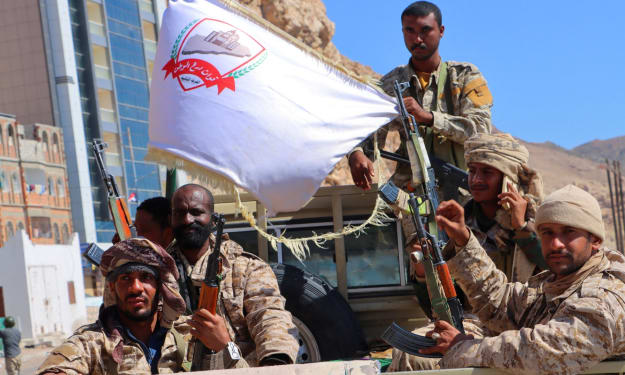
Yemeni Separatists to Attend Saudi Talks After Losing Key Southern Sites. AI-Generated.
In a notable turn of events in Yemen’s protracted conflict, southern separatist leaders have agreed to attend talks in Saudi Arabia following the loss of several strategically significant sites in the south. This development marks a crucial moment in the ongoing efforts to stabilize the region and underscores the growing influence of Saudi-mediated diplomacy in Yemen’s fractured political landscape. The separatists, who have long pursued an independent South Yemen, recently suffered setbacks as government forces, supported by a coalition of regional allies, reclaimed key towns and ports. These losses have not only diminished the separatists’ territorial control but also undermined their leverage in political negotiations. Recognizing the precariousness of their position, the leaders of the Southern Transitional Council (STC) have signaled their willingness to participate in talks hosted in Riyadh, aimed at reaching a more lasting resolution to the conflict. The Context of the Conflict Yemen’s southern separatists, primarily represented by the STC, have been engaged in intermittent clashes with the internationally recognized Yemeni government over control of the south. Their struggle intensified after the 2015 escalation of Yemen’s civil war, which also drew in the Saudi-led coalition against the Iran-aligned Houthi rebels in the north. The STC has consistently maintained that the south deserves autonomy or full independence, citing historical grievances dating back to the 1990 unification of North and South Yemen. However, repeated confrontations with government forces and rival factions have fragmented their influence, leading to strategic vulnerabilities that are now prompting a shift toward negotiation. Saudi Arabia’s Role as Mediator Saudi Arabia has positioned itself as a key mediator in Yemen’s complex political arena. The Kingdom’s role involves balancing the interests of multiple factions, including the Yemeni government, southern separatists, and tribal leaders, while simultaneously countering Houthi expansion in the north. Riyadh’s efforts aim to prevent further destabilization along its southern border and to ensure that Yemen does not become a battleground for regional proxy wars. The upcoming talks will likely focus on territorial disputes, political representation, and power-sharing arrangements. Analysts suggest that the Saudi-led negotiations could pave the way for temporary ceasefires, the consolidation of administrative control in the south, and the potential integration of separatist leaders into formal governance structures. Implications of Separatist Losses The loss of key southern sites has far-reaching implications for the separatist movement. Control over strategic ports, transport hubs, and urban centers is critical not only for military operations but also for economic leverage. With these assets lost, the separatists face reduced revenue streams, limited access to supplies, and a weakened ability to sustain prolonged conflict. Moreover, these territorial setbacks place the separatists in a position where negotiation is no longer optional but necessary. Participating in Saudi-hosted talks allows them to maintain political relevance, protect remaining strongholds, and potentially secure concessions that safeguard the interests of their constituencies. Challenges to the Peace Process While the decision to attend talks is a positive development, significant challenges remain. Mistrust between the separatists and the Yemeni government runs deep, fueled by years of intermittent conflict and competing ambitions. Past negotiation attempts have repeatedly stalled, raising questions about whether Saudi-led diplomacy can achieve durable results this time. Additionally, the presence of multiple local militias, tribal factions, and external actors with divergent goals complicates the negotiation landscape. Any agreement will require careful balancing to ensure that concessions do not embolden rivals or trigger new rounds of violence. Looking Ahead Despite these obstacles, the upcoming discussions in Saudi Arabia offer a rare opportunity to address the fragmentation of southern Yemen and work toward a more stable governance framework. Success in these talks could strengthen Yemen’s path toward a unified political process, reduce the likelihood of renewed clashes, and signal to the international community that diplomacy remains viable even amid ongoing conflict. For the southern separatists, participation in the talks represents a pragmatic acknowledgment that military gains alone are insufficient for long-term objectives. By engaging in dialogue, they may secure political influence, protect civilian populations, and preserve their vision for southern Yemen within a negotiated settlement. Conclusion The announcement that Yemeni separatists will attend Saudi-hosted talks marks a significant shift in the country’s long-running conflict. Following territorial losses, the STC is seeking a pathway to maintain influence through dialogue rather than continued confrontation. While challenges remain, the move highlights the potential of diplomatic intervention to reshape power dynamics in Yemen, offering a glimmer of hope for stability in a region long plagued by unrest and uncertainty.
By Fiazahmedbrohi 6 days ago in The Swamp
Germany News: Merz Issues Business SOS in Letter to Allies. AI-Generated.
Germany, long regarded as the economic engine of Europe, is facing mounting pressures that have prompted an unusually direct appeal from one of its most influential political figures. Friedrich Merz, leader of the Christian Democratic Union (CDU), has reportedly issued what many are calling a “business SOS” in a letter addressed to Germany’s allies. The message is clear: Germany’s economic model is under strain, and without coordinated action and strategic support, the country risks losing its competitive edge in an increasingly fragmented global economy. A Warning From the Heart of Europe Merz’s letter comes at a critical moment. Germany is grappling with sluggish growth, high energy costs, declining industrial output, and growing concerns among businesses about long-term stability. For decades, German prosperity has rested on strong exports, reliable energy supplies, and deep integration into global supply chains. Recent shocks—ranging from geopolitical conflicts and energy disruptions to trade tensions and technological competition—have exposed vulnerabilities in that model. By reaching out directly to allies, Merz signals that Germany’s challenges are no longer purely domestic. Instead, they have broader implications for Europe and the transatlantic partnership. A weakened German economy could ripple across the European Union, affecting everything from employment and investment to political stability. The Core Concerns of German Business At the heart of Merz’s message is the growing alarm among German businesses. Industrial leaders have repeatedly warned that energy prices remain uncompetitive compared to those in the United States and parts of Asia. The transition away from Russian gas, while necessary from a security standpoint, has imposed significant costs on manufacturers—particularly energy-intensive sectors such as chemicals, steel, and automotive production. In addition, companies are struggling with bureaucratic hurdles, labor shortages, and slow digitalization. Many firms report that investment decisions are being delayed or redirected abroad, raising fears of deindustrialization. Merz’s letter reflects these anxieties, emphasizing that Germany cannot afford to lose its status as a manufacturing powerhouse. A Call for Allied Cooperation Rather than framing the situation as a purely national failure, Merz stresses the importance of allied cooperation. He reportedly urges Germany’s partners to recognize the interconnected nature of modern economies. Coordinated energy strategies, fair trade policies, and aligned industrial frameworks are presented as essential tools to stabilize Europe’s economic core. This appeal also carries a strategic undertone. As the United States invests heavily in domestic industry through subsidies and incentives, European businesses worry about being left behind. Merz’s message implicitly calls for closer coordination to ensure that global competition does not undermine European unity or distort markets in ways that disadvantage German and EU firms. Political Implications at Home Domestically, the letter strengthens Merz’s position as a champion of business interests and economic realism. As Germany debates its future economic direction, the CDU leader is positioning himself as a voice of urgency and pragmatism. His intervention contrasts with what critics describe as slower, more cautious approaches from the current governing coalition. By publicly raising the alarm, Merz also puts pressure on policymakers to accelerate reforms. Issues such as tax competitiveness, infrastructure investment, and regulatory simplification are likely to gain renewed attention. The “business SOS” framing suggests that incremental changes may no longer be sufficient. Europe’s Broader Economic Crossroads Germany’s struggles reflect a wider European dilemma. The continent is navigating a complex transition toward greener energy, digital transformation, and strategic autonomy—all while competing with major powers that are willing to deploy aggressive industrial policies. Merz’s letter highlights the risk that Europe could fall behind if coordination falters. For many observers, the appeal underscores the need for a more coherent European economic strategy. If Germany weakens, the EU’s ability to act as a global economic and political force could diminish. In that sense, the letter is not just about Germany’s businesses, but about Europe’s place in a rapidly changing world. What Comes Next? The immediate impact of Merz’s letter will depend on how allies respond. Whether it leads to concrete policy shifts or remains a symbolic gesture is yet to be seen. However, it has already succeeded in drawing attention to the severity of Germany’s economic challenges. For German businesses, the hope is that this public warning accelerates action—both at home and abroad. For Europe, the message is sobering: the stability of its largest economy cannot be taken for granted. Conclusion Friedrich Merz’s business SOS letter marks a significant moment in Germany’s economic debate. It reflects deep concern within the business community and signals that Germany’s challenges have become a shared international issue. As economic uncertainty grows, the call for allied cooperation may prove crucial in determining whether Germany—and Europe—can adapt and thrive in the face of global competition.
By Fiazahmedbrohi 6 days ago in The Swamp
Many Schools Don’t Think Students Can Read Full Novels Anymore — And That’s a Tragedy. AI-Generated.
In classrooms across the world, a quiet but troubling shift is taking place. Many schools are scaling back or completely abandoning the teaching of full-length novels, replacing them with excerpts, summaries, or short-form texts. The reasoning often sounds practical: students lack the attention span, reading stamina, or motivation to finish long books. But this growing assumption carries a deeper cost. The decline of novel reading in schools is not just an educational adjustment — it is a cultural and intellectual tragedy. The Shrinking Role of the Novel For generations, novels have been central to education. They taught students empathy, critical thinking, moral reasoning, and the patience required to follow complex ideas over time. From classic literature to modern fiction, full novels allowed young readers to live inside other lives and perspectives. Today, however, many educators report that students struggle to complete even a few chapters. Digital distractions, social media, and fast-paced content have reshaped how young people consume information. In response, schools increasingly favor bite-sized reading materials that align with standardized testing and reduced classroom time. While this may appear efficient, it risks sacrificing depth for convenience. Why Reading Full Novels Still Matters Reading a novel is fundamentally different from reading short texts. A novel demands sustained attention, emotional investment, and intellectual endurance. These are not outdated skills — they are essential ones. When students read a full novel, they learn how to track themes across hundreds of pages, understand character development, and recognize cause-and-effect relationships in complex narratives. These abilities translate directly into real-world skills such as problem-solving, patience, and long-term focus. More importantly, novels cultivate empathy. Living inside a character’s thoughts over time helps students understand perspectives vastly different from their own. In an increasingly polarized world, this emotional literacy is invaluable. Lowering Expectations, Lowering Outcomes One of the most concerning aspects of abandoning novels is the message it sends to students: we don’t think you’re capable. When schools assume students cannot handle long-form reading, expectations are quietly lowered. History shows that when expectations drop, outcomes often follow. Students rise to challenges when given the tools and encouragement to do so. If reading stamina is weak, the solution should not be avoidance but gradual rebuilding — just as physical strength improves with practice. Removing novels from curricula denies students the chance to develop this crucial skill. The Role of Technology and Attention It is undeniable that digital culture has reshaped attention spans. Constant notifications, short videos, and algorithm-driven content train the brain to crave immediacy. But schools should act as a counterbalance to this trend, not surrender to it. Education has always required effort that goes against the grain of comfort. Learning mathematics is difficult. Writing essays is demanding. Reading novels is no different. Shielding students from difficulty does not prepare them for adulthood — it weakens their resilience. Engagement, Not Elimination The problem is not novels themselves, but how they are taught. Too often, novels are presented as rigid academic tasks rather than living stories. Educators who connect books to students’ lives, encourage discussion, and allow space for interpretation often see higher engagement. Modern novels, diverse voices, and relevant themes can reignite interest. Pairing reading with creative projects, debates, or multimedia exploration can make novels feel alive rather than burdensome. The answer is innovation in teaching, not retreat from literature. Equity and Cultural Loss There is also an equity issue at stake. Students from book-rich homes may continue reading novels independently, while those without access rely entirely on schools for literary exposure. Removing novels from classrooms widens the cultural gap, depriving many students of the shared experience of literature. Novels are not just educational tools — they are cultural touchstones. They shape language, values, and identity. Losing them from schools means losing a common intellectual heritage. What We Stand to Lose If students grow up believing they cannot read novels, the consequences extend far beyond school. Long-form reading strengthens concentration, memory, and analytical thinking — skills essential for higher education, professional life, and informed citizenship. A society that abandons deep reading risks becoming more reactive, less reflective, and more vulnerable to misinformation. The ability to sit with complexity, ambiguity, and nuance begins with reading books that do not offer instant gratification. Conclusion The belief that students can no longer read full novels is not just pessimistic — it is dangerous. It reflects a failure of imagination and resolve rather than a failure of students themselves. Young people are capable of far more than we often assume, especially when challenged with purpose and support. Abandoning novels may seem like a practical response to modern realities, but it comes at a steep cost. Preserving long-form reading in schools is not about nostalgia; it is about protecting the intellectual and emotional development of future generations. If schools give up on novels, we give up on depth, empathy, and sustained thought. That is not progress. That is a tragedy.
By Fiazahmedbrohi 6 days ago in Longevity