
What Happens to the Planet If Trump Gets His Hands on All of Venezuela’s Oil?
How U.S. control of Venezuela’s vast oil reserves could accelerate climate damage and reshape global energy politics
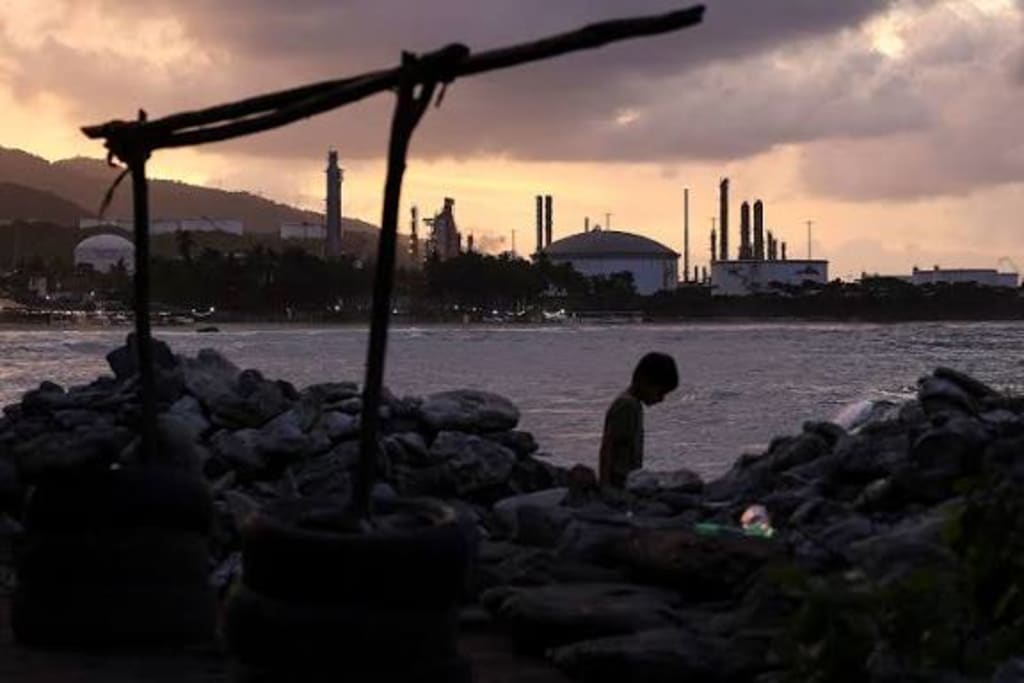
In early 2026, U.S. President Donald Trump announced that Venezuela would send 30 million to 50 million barrels of oil to the United States and that Washington may work with U.S. companies to revive Venezuela’s oil industry—efforts tied to recent political and military pressure on Caracas. �
theguardian.com +1
But beyond geopolitics and economics, the question many climate scientists, economists, and global leaders are asking is: what would this mean for the planet? The answer is complex, involving climate change, energy markets, environmental risks, and long-term global energy policy.
Venezuela’s Oil: Massive Reserves, Heavy Costs
Venezuela holds some of the world’s largest proven oil reserves, concentrated in the Orinoco Belt. These reserves are mainly heavy sour crude—thick, energy-intensive to extract and highly polluting compared to lighter oils. �
Egypt Independent
Extracting this type of oil requires heating reservoirs, injecting steam, and using more energy than conventional crude. That process emits extra carbon dioxide and methane, two powerful greenhouse gases that drive global warming. �
Egypt Independent
Even before extraction, Venezuela’s aging oil infrastructure is prone to leaks and spills; environmental rights groups estimate dozens of spills annually, though the actual numbers are likely higher. �
Egypt Independent
Carbon Impact: A Bigger Climate Burden
If Trump’s plans lead to a substantial increase in Venezuelan oil production and export to the U.S., the climate consequences could be severe:
More greenhouse gas emissions: Heavy Venezuelan crude emits more CO₂ and methane per barrel produced and refined than most other oil sources. �
Climate Home News
Delayed transition away from fossil fuels: Increasing reliance on Venezuelan oil could slow investment in renewable energy and electric vehicles, undermining global efforts to limit warming. �
Egypt Independent
Higher long-term emissions: Even if production didn’t add massively to global supply, burning the additional oil would still pump more carbon into the atmosphere, accelerating climate change. �
Climate Home News
As climate expert John Sterman of MIT warned, boosting oil production “would make climate change worse sooner, and everybody loses,” since the planet is already close to exceeding agreed temperature limits. �
Climate Home News
Environmental Hazards Beyond Carbon
The environmental risks extend beyond greenhouse gas emissions:
Methane leaks during extraction and processing could increase atmospheric methane—a gas far more potent than CO₂ in the short term. �
Climate Home News
Infrastructure failure and spills could devastate ecosystems already stressed by climate change. �
Egypt Independent
Land and water degradation from intense drilling and steam injection could leave long-term scars on local landscapes. �
Egypt Independent
Given these risks, oil critics argue that expanding Venezuela’s fossil fuel output is counterproductive at a moment when global energy systems must decarbonize. �
Egypt Independent
Climate Policy vs. Resource Conflicts
Trump’s approach reflects a broader philosophy of maximizing fossil fuels rather than transitioning away from them. Critics say this mindset feeds what they call a “resource-conflict” paradigm—where nations compete for control of oil while delaying climate action. �
Egypt Independent
This has broader implications:
International tensions over energy can distract from cooperative climate strategies. �
Egypt Independent
Energy politics could hinder global climate agreements, especially if major powers prioritize oil access over emissions reductions. �
Egypt Independent
Perpetuating fossil fuel dependency weakens the economic case for renewables, delaying necessary technological shifts. �
Egypt Independent
One expert put it bluntly: “Whether in Canada or Venezuela, we should not be digging this stuff up.” �
Egypt Independent
Economic Realities and Production Challenges
Even aside from climate impacts, there are practical limits: Venezuela’s oil sector has been in decline for years due to underinvestment, corruption, and sanctions. Restoring full production—let alone exceeding past supply levels—would require tens of billions of dollars and years of rebuilding. �
chathamhouse.org
In other words, transforming Venezuela into a massive new oil exporter isn’t just an environmental challenge—it’s a technical and economic one. �
chathamhouse.org
What This Means for the Planet
If the U.S. successfully channels Venezuelan oil to global markets under Trump’s leadership:
Global carbon emissions would rise, making climate goals harder to attain.
Renewable energy investment could slow, weakening the race to clean power.
Environmental degradation could worsen, especially in vulnerable ecosystems.
Geopolitical tensions tied to fossil fuel access might increase, diverting attention from climate cooperation.
Ultimately, the planet’s climate future depends not only on how much oil is extracted but on choices societies make about energy, sustainability, and international cooperation. Expanding production of heavy, carbon-intensive oil challenges global climate commitments at a critical moment for planetary health.
About the Creator
Keep reading
More stories from Fiazahmedbrohi and writers in The Swamp and other communities.
Fleet of Heavily Armed US Military Planes Land in England: What It Means for Transatlantic Security
A fleet of heavily armed United States military planes has recently landed in England, sparking discussions across the Atlantic about security, preparedness, and the growing cooperation between the two NATO allies. The arrival of these aircraft, including bombers and tactical support planes, marks one of the most significant demonstrations of military readiness in recent years. Experts say that this deployment reflects not only operational capability but also geopolitical signaling amid a turbulent global security environment. The Aircraft in Focus Reports indicate that the fleet includes advanced bomber aircraft capable of carrying long-range precision weapons, along with refueling tankers and reconnaissance planes. These aircraft, designed for rapid deployment, are among the most sophisticated in the US Air Force’s arsenal. Their presence in England ensures that American forces can respond quickly to emerging threats in Europe, the Middle East, or Africa, depending on the mission parameters. Analysts note that this deployment is part of routine NATO exercises but also serves a strategic purpose. By positioning heavy firepower close to potential hotspots, the US and UK demonstrate both deterrence and solidarity, signaling to potential adversaries that allied forces can mobilize quickly and operate seamlessly across borders. Why England? Strategic Importance England has long been a key location for transatlantic military operations. Its geographic position allows for quick access to Europe, the North Atlantic, and parts of the Middle East and Africa. The airbases hosting these aircraft are equipped with modern facilities, including rapid refueling stations, maintenance hangars, and secure communication networks. Such infrastructure enables sustained operations for long-range missions. Moreover, England’s participation in NATO exercises ensures that American pilots and crews can train alongside British counterparts, improving coordination, interoperability, and readiness. Joint exercises are critical in modern warfare, where rapid communication and synchronized maneuvers can make a decisive difference in outcomes. Implications for European Security While routine in military terms, the landing of heavily armed US planes in England carries broader geopolitical implications. Europe is facing a complex security landscape, with rising tensions in regions like Eastern Europe and the Middle East. The presence of these aircraft is both a reassurance to allies and a warning to potential aggressors. Defense experts highlight that these deployments are often interpreted as a form of “strategic signaling,” designed to showcase strength without initiating conflict. It sends a message that NATO allies are committed to collective security and that they are prepared to respond to threats quickly and decisively. Public Perception and Political Reactions The deployment has drawn mixed reactions among the public and political observers. Supporters argue that maintaining a visible, ready military presence is essential for deterrence and the protection of democratic nations. They point out that modern threats, ranging from state-sponsored aggression to terrorist activities, require rapid-response capabilities and advanced weaponry. Critics, however, raise concerns about escalation and the optics of such displays. Some suggest that the conspicuous presence of heavily armed aircraft could increase tensions rather than promote stability. These debates underscore the fine balance military planners must strike between preparedness and provocation. Training and Operational Readiness In addition to signaling, the deployment allows for critical training opportunities. Crews can rehearse complex maneuvers, test equipment under realistic conditions, and enhance coordination with British forces. These exercises often include simulations of emergency scenarios, disaster response, and joint air defense operations, ensuring that both US and UK forces are prepared for a range of contingencies. Training alongside allies also enhances tactical innovation. Pilots, engineers, and support staff exchange knowledge, share best practices, and refine operational procedures, which can significantly improve overall mission effectiveness. Looking Ahead The presence of heavily armed US military planes in England reflects a commitment to collective security, operational readiness, and strategic cooperation. As global tensions continue to evolve, NATO allies are increasingly relying on joint exercises and deployments to maintain stability and deter potential threats. For citizens and policymakers alike, this development highlights the complexity of modern security challenges. It underscores the need for constant vigilance, coordination between allies, and the ability to project power rapidly in defense of international norms and agreements. In a world where conflicts can arise with little warning, the landing of these planes serves as both a reminder and a reassurance: preparedness matters, alliances matter, and the transatlantic bond between the United States and the United Kingdom remains a cornerstone of regional and global security.
By Fiazahmedbrohi 5 days ago in The Swamp


Comments
There are no comments for this story
Be the first to respond and start the conversation.