Fiaz Ahmed
Bio
I am Fiaz Ahmed. I am a passionate writer. I love covering trending topics and breaking news. With a sharp eye for what’s happening around the world, and crafts timely and engaging stories that keep readers informed and updated.
Stories (1275)
Filter by community
EU Sanctions Russian Officials as Hungary Blocks Funds to Ukraine. AI-Generated.
In a tense session that underscored the European Union’s internal divisions, EU member states imposed fresh sanctions on Russian officials linked to the ongoing conflict in Ukraine, even as Hungary blocked a portion of funds intended to support Kyiv’s war effort. The move highlights both the bloc’s commitment to pressuring Moscow and the political fractures that complicate collective action. The sanctions target several high-ranking Russian politicians and military figures accused of facilitating or enabling military operations in Ukraine. Measures include travel bans, asset freezes, and restrictions on financial transactions within the EU. The European Council described the action as “a necessary step to hold accountable those responsible for destabilizing the region and perpetuating the war.” EU officials emphasized that the sanctions are part of a broader strategy to maintain economic and political pressure on Russia, following months of escalating conflict. “We are demonstrating unity in condemning aggression and in supporting the sovereignty of Ukraine,” said an EU diplomat familiar with the discussions. Hungary’s Block and Internal Disputes At the same time, Hungary, long criticized for its close ties to Moscow, has blocked disbursement of certain EU funds allocated to Kyiv. Prime Minister Viktor Orbán cited concerns over financial oversight and alleged inefficiencies in the use of the funds, although critics argue that the move is politically motivated. “The decision undermines European solidarity,” said a European Commission spokesperson. “EU funds are designed to support a country under attack, and blocking these resources contradicts the shared principles of the Union.” The standoff exposes persistent challenges in coordinating EU foreign policy. While the bloc often speaks with one voice on paper, differing national interests, political alliances, and domestic pressures can complicate unified responses to crises. Impact on Ukraine and the War Effort For Ukraine, the timing of the partial block is problematic. The funds in question were intended for critical infrastructure repairs, humanitarian support, and military aid. Kyiv’s government expressed disappointment but maintained that international assistance remains vital. “We rely on our partners to help sustain our people and defense capabilities,” said a Ukrainian government official. “Every delay in support weakens our ability to respond to aggression and protect civilians.” The sanctions on Russia, however, were broadly welcomed in Kyiv. Analysts suggest that targeting individual officials and freezing assets could deter further escalation and signal that the international community is watching. “While sanctions alone won’t end the war, they send a strong message that those responsible cannot operate freely or enjoy the benefits of their positions,” said a policy analyst in Brussels. EU’s Strategic Calculus The dual actions — sanctions on Russian figures and the partial freeze of funds to Ukraine — illustrate the EU’s delicate balancing act. Brussels must uphold its commitment to Ukraine, maintain economic stability within the bloc, and navigate member states’ divergent political stances. Some EU officials hope that Hungary’s objections can be resolved through negotiation, emphasizing enhanced monitoring and reporting requirements for fund usage. Others warn that prolonged resistance could embolden Moscow and undermine the EU’s credibility as a unified actor. Looking Ahead Observers expect the coming months to be critical. With sanctions likely to expand and political negotiations ongoing, the EU faces a test of both its internal cohesion and its ability to influence the trajectory of the war in Ukraine. The situation also serves as a reminder that European solidarity is not guaranteed and must be actively maintained amid competing domestic and international interests. As Ukraine continues to face Russian military pressure, the international community watches closely. The EU’s ability to reconcile internal disagreements while sustaining support for Kyiv may prove decisive in shaping the region’s stability and the long-term geopolitical balance in Eastern Europe.
By Fiaz Ahmed 5 days ago in The Swamp
500 Passengers Forced to Spend Night on Grounded Planes After Heavy Snow Cancels Flights and Airport Staff Go Home. AI-Generated.
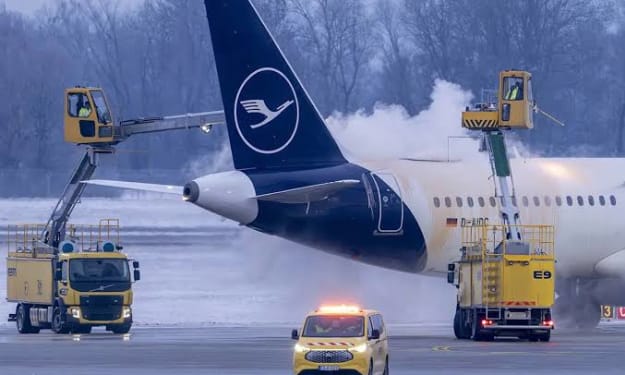
Severe winter weather wreaked havoc at Manchester Airport over the weekend, leaving more than 500 passengers stranded on grounded planes as flights were canceled and airport staff were sent home. The incident highlights the vulnerability of air travel during extreme weather and the challenges airlines face in ensuring passenger safety and comfort. The snowstorm, which swept across the north of England, brought freezing temperatures, icy runways, and visibility conditions deemed unsafe for takeoffs and landings. Airlines quickly canceled dozens of flights, but the rapid escalation left hundreds of travelers caught between the tarmac and terminals. Passengers described long waits on stationary planes, sometimes exceeding six hours, without access to food, blankets, or adequate heating. Families with young children and elderly travelers faced particular hardship, prompting complaints on social media and calls for better contingency planning. “I couldn’t believe it,” said one traveler. “We were on the plane, the engines off, windows frosted over, and staff kept apologizing but saying there was nothing they could do. People were freezing and anxious — it was frightening.” Airline and Airport Response Airport authorities and airline representatives confirmed the cancellations, citing safety as the top priority. “We understand the inconvenience to passengers,” said a spokesperson for one major carrier. “However, pilot safety assessments and airport operating conditions dictated that flights could not proceed. The weather was unprecedented in its intensity and impact.” Critics argue that contingency plans fell short. Many flights were left at gates with limited support for passengers, while airport staff numbers were insufficient to manage the situation effectively. Some travelers reported that buses and shuttle services to nearby hotels were unavailable, as the airport directed personnel to safety or allowed them to leave after extended hours. In response, the Civil Aviation Authority noted that airlines are responsible for providing assistance under UK passenger rights regulations, including access to meals, refreshments, and accommodations when delays extend overnight. Investigations are ongoing to determine whether protocols were fully followed. Passenger Experiences For many, the ordeal was more than inconvenient — it was physically and emotionally taxing. Some passengers improvised makeshift blankets from jackets, while others tried to sleep upright in cramped airplane seats. Parents struggled to keep children calm, and individuals with medical conditions reported stress and discomfort. Social media posts from those affected quickly went viral, sparking a broader debate about airport preparedness and the adequacy of staff training for extreme winter conditions. Passenger rights groups called for airlines to improve emergency communications and to guarantee accommodations for anyone stranded by severe weather. “This was a logistical failure, not just a weather problem,” said one advocate. “Passengers should not be forced to spend the night on planes without basic amenities. Airports and airlines need better crisis management protocols.” Looking Forward Airports across the UK are reviewing their emergency procedures following the incident. Lessons learned are expected to inform policies for staff allocation, passenger care, and communication strategies during extreme weather events. Airlines are also assessing scheduling and staffing flexibility to minimize passenger hardship during similar conditions in the future. Despite the disruptions, no injuries were reported, and all passengers were eventually accommodated in nearby hotels or rescheduled for flights the following day. Still, the experience has left a mark, raising questions about how the aviation industry can better prepare for increasingly frequent and severe winter storms. For travelers, the incident serves as a stark reminder to plan for weather-related delays, carry essential supplies, and remain patient when nature intervenes. For airlines and airports, it is a call to action to ensure that passenger welfare remains a priority, even when flights cannot take off.
By Fiaz Ahmed 5 days ago in Humans
The US Moved Away From Its Heartland to Set a Winter Olympics High in Italy. AI-Generated.
The 2026 Winter Olympics in Italy will be remembered as a turning point for Team USA — a Games where American athletes delivered historic performances far from home, in a mountains‑and‑city setting unlike anything seen in previous Winter Games. At Milano‑Cortina 2026, the United States not only matched its best achievements on snow and ice, but also showcased an evolution in winter sports that goes beyond traditional strongholds and star names. For decades, the U.S. ski and snowboarding community were at the core of American winter success stories, largely rooted in the Rocky Mountains and the country’s colder heartlands. But this year’s Olympic medal haul — a record 12 gold medals, the most ever for the U.S. at a Winter Olympics and the first time the country exceeded 30 total medals outside North America — came from a blend of expected champions and rising talents competing across a spectrum of winter disciplines. Historic Medal Count and Diverse Talent In 2002, when the U.S. hosted the Games in Salt Lake City, Team USA set national records with 10 golds and 34 total medals. Twenty‑four years later, American athletes in Italy surpassed that gold medal count and demonstrated depth beyond traditional podium favorites. While elite stars like Mikaela Shiffrin, Alysa Liu, and Jordan Stolz performed admirably, a significant part of the victory came from lesser‑known athletes and disciplines — a shift that signalled a broadening of the U.S. winter sport ecosystem. In a surprising twist, the U.S. won more medals in cross‑country skiing than in snowboarding, an indicator of growing investment and interest in Nordic disciplines. Ben Ogden, for example, earned silver in the men’s sprint and added another together with teammate Gus Schumacher, while Jessie Diggins returned to the podium and reinforced her status as one of America’s greatest skiers. Heart‑Stopping Victories and Breaking Droughts One of the most emotional moments of the Games came in men’s ice hockey, where the U.S. team defeated Canada men's national ice hockey team 2‑1 in overtime, winning gold for the first time since the iconic “Miracle on Ice” of 1980 — a full 46 years earlier. Jack Hughes scored the decisive goal, etching his name into Olympic lore and providing American fans with one of the memorable highlights of Milano‑Cortina 2026. Other standout achievements included an Olympic gold for freeskiing legend Alex Ferreira, plus strong performances from the U.S. women’s hockey team and mixed‑team events in figure skating, where Ilia Malinin played a key role. Beyond the Heartland: A Strategic Shift The U.S. performance in Italy reflected a strategic shift: success is no longer just about mountains, snow belts, and heartland winter traditions. It is now also rooted in year‑round training facilities, a growing cadre of coaches and youth programs, and a willingness to innovate across disciplines. American skiing, skating, and winter team programs are benefiting from broader recruitment and development pipelines, and Italy’s varied venues — from the urban ice rinks of Milan to the alpine slopes of Cortina d’Ampezzo — provided a diverse Olympic landscape that rewarded versatility and depth. This broader base of talent also meant the U.S. could compete at high levels in events that once belonged almost exclusively to European powerhouses. The result was not just a medal count to be proud of, but a statement about the resilience and adaptability of American winter sport programs. Looking Ahead While Norway topped the overall medal table with 18 golds, the U.S. second‑place finish — especially with a record number of gold medals — will be viewed as a major achievement and a stepping stone toward future Olympic success. With new talents emerging and veteran champions still performing, the American winter sport landscape looks brighter and more competitive than ever. As the Milano‑Cortina Games close and the torch passes to the French Alps for 2030, the U.S. experience in Italy demonstrates that winter glory can come from unexpected places, fueled by a new generation of athletes who are redefining what American success looks like on the international stage.
By Fiaz Ahmed 5 days ago in Unbalanced
It helps with loneliness’: grief, play and the power of lifelike dolls - photo essay. AI-Generated.
In quiet living rooms, therapy centers, and private bedrooms across the world, lifelike dolls are serving a role that goes far beyond mere playthings. Known as “reborn dolls,” these hyper-realistic figures are providing comfort, companionship, and a sense of connection for individuals grappling with grief, loneliness, and social isolation. For some, the dolls are a tool to process the loss of a child, sibling, or parent. For others, they help alleviate the profound isolation that comes with aging or mental health struggles. Each doll is crafted with meticulous attention to detail — down to veins, eyelashes, and hand-painted nails — creating a near-lifelike presence that evokes emotional response. Healing Through Touch Grief counselors and psychologists note that caring for a lifelike doll can provide a therapeutic outlet for those who feel stuck in sorrow. “Touch is a critical part of human emotion,” says Dr. Samantha Yates, who specializes in bereavement therapy. “For people who have lost a child or a partner, holding a doll that resembles their loved one can provide a controlled space to express affection, sadness, or longing.” Many parents who have experienced infant loss describe a unique connection with these dolls. One mother, who asked to remain anonymous, shared: “I know it’s not my child, but cradling her, feeding her, even just holding her brings a sense of peace I didn’t think was possible. It’s a small bridge between grief and acceptance.” Combating Loneliness The appeal extends beyond grief. Seniors living alone or individuals struggling with social anxiety often form attachments to dolls, using them as companions during meals, walks, or daily routines. Online communities for lifelike doll enthusiasts have grown rapidly, with forums, social media groups, and virtual meetups where owners share care techniques, photographs, and personal stories. “It helps with loneliness in a way that talking to a screen can’t,” says James O’Connor, who lives alone in rural Oregon. “You can’t replace human connection entirely, but there’s comfort in being needed, even by a doll.” Artistry Meets Emotion The craft behind reborn dolls is a meticulous art form. Artists spend weeks creating a single doll, layering silicone or vinyl, hand-painting skin tones, adding rooted hair, and sometimes embedding weighted elements to replicate the feel of a real baby. The end result is a figure that can evoke deep emotional responses from its owner — from joy to sorrow. Photographers and documentarians have begun capturing these intimate interactions in visual essays. Close-up images of a doll nestled in someone’s arms, hands gently touching soft skin, or a quiet scene at a bedside, reveal both the artistry of the dolls and the profound human need for connection. These photo essays invite viewers to consider the nuanced ways people seek comfort and care when conventional relationships are absent or interrupted by loss. A Controversial Comfort Not everyone understands the practice, and some critics question whether reliance on dolls might interfere with processing grief or forming real-world relationships. Psychologists note that while dolls can be helpful, they are most effective when integrated into broader emotional support systems, including counseling, family, and social networks. Yet for many, the dolls are more than objects — they are companions, allies, and symbols of hope in a world where isolation and loss are widespread. “People need to feel connection,” says Dr. Yates. “Whether it’s through a friend, family, or a lifelike doll, the need for empathy and touch is universal.” As this quietly growing phenomenon gains visibility, it challenges conventional ideas of play, therapy, and emotional support. These dolls may not solve loneliness or heal grief entirely, but they offer solace, a tangible sense of presence, and, for those who hold them close, a measure of peace in difficult times.
By Fiaz Ahmed 5 days ago in Humans
They Fought for the C.I.A. in Afghanistan. In America, They’re Living in Fear.. AI-Generated.
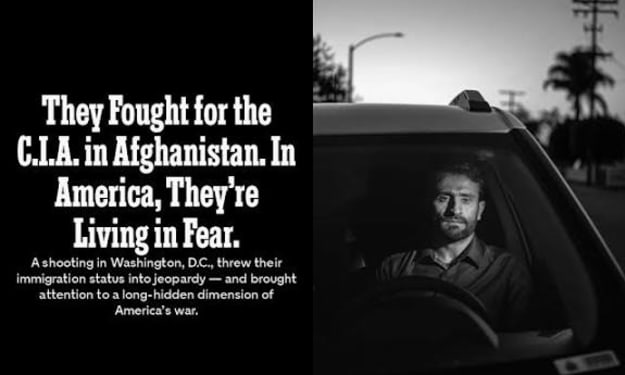
For years, Afghan nationals risked their lives working alongside the Central Intelligence Agency in Afghanistan, conducting surveillance, protecting operatives, and gathering intelligence against Taliban forces. Their service was critical to U.S. operations, yet today, many of these former allies are living in the United States under the shadow of fear, uncertainty, and bureaucracy. These men, often trained in paramilitary tactics and intelligence operations, were targeted by insurgents precisely because of their work with American forces. Following the fall of the Afghan government in 2021, several thousand fled the country under emergency programs, arriving in the United States with hopes of safety and stability. Instead, many describe a life marked by anxiety, isolation, and legal uncertainty. “I fought for them,” said one former operative, who asked not to be named for security reasons. “I saved lives. I protected officers. And now, I feel like I am fighting again — for my own survival.” Legal Limbo and Vulnerability Unlike interpreters who worked with the U.S. military, CIA partners often lack the documentation required for visas such as the Special Immigrant Visa (SIV) program. Many arrived on temporary humanitarian parole, which does not guarantee permanent status or lawful work. Without proper documentation, former operatives cannot secure housing easily, access benefits, or travel safely. Their families, some still overseas, remain targets for reprisal attacks by the Taliban. Legal advocates emphasize the unique vulnerability of these individuals. “These are not ordinary refugees,” said Sarah Henderson, a human rights attorney in Virginia. “They were embedded with U.S. operations, trained to hunt insurgents. Returning them, even inadvertently, would almost certainly be fatal.” The psychological toll is severe. Years of combat and covert operations have left many with untreated trauma, compounded by anxiety over family members left behind. The sense of isolation is intensified by the secrecy surrounding their work; they cannot publicly discuss their missions, even as they attempt to integrate into American society. Threats Follow Them Abroad Despite resettlement, some former operatives report being targeted online and receiving threats from Taliban sympathizers. Social media platforms, encrypted messaging apps, and even email have become avenues for intimidation. One man recounted receiving a message that included photos of his family in Afghanistan, warning that they would be harmed unless he ceased contact with American authorities. “The danger never ends,” said another former operative. “You survive one war, only to fight another in a country that promised you protection.” Government Response and Advocacy U.S. officials acknowledge the difficulties but cite security and verification procedures as limiting factors in offering permanent solutions. Lawmakers from both parties have introduced measures to expedite visas for intelligence partners and extend protections to their families. Advocacy groups argue that failure to act not only endangers individuals but undermines America’s credibility with future allies. In response, several non-profit organizations have begun providing legal support, mental health counseling, and community resources to help these families navigate life in the U.S. “We cannot undo the past,” said Henderson, “but we can prevent further harm by ensuring they have safety and stability.” A Quiet Plea for Recognition For the men who once risked everything in the mountains and deserts of Afghanistan, life in the United States is bittersweet. They are grateful to be alive, yet haunted by the consequences of their service. “We believed in a mission,” one operative said. “Now, we just want the promise kept — that the country we fought for will protect us.” Their plight is a stark reminder of the human cost of covert operations and the long-term responsibilities that follow. These are men who fought for the U.S., yet today, in America, they are still fighting — this time for safety, recognition, and the ability to live without fear.
By Fiaz Ahmed 5 days ago in Humans
“We Pray for Peace”: Indian Filmmaker from Troubled State Who Won a Bafta. AI-Generated.
The red carpet at the BAFTA Awards sparkled with stars, but for Aarav Mehra, the night was about more than glamour and applause. It was a moment of vindication, resilience, and a quiet plea for his homeland, a state long marked by political unrest and social tension. Mehra, whose documentary chronicled life amid conflict in the northeastern state of Manipur, accepted the award with humility, dedicating it not to himself but to the people whose stories he had risked everything to tell. “This is for those who have lived through decades of fear, hope, and resilience,” he said, his voice steady but emotional. “We pray for peace. We pray for understanding.” From Conflict Zones to Global Spotlight Born and raised in a region often overlooked by mainstream Indian media, Mehra’s early life was framed by instability. School closures due to unrest, military checkpoints in local towns, and sporadic clashes between rival groups shaped his formative years. Yet, amidst this turbulence, he found an outlet: storytelling. “Film became my escape, my way to make sense of the chaos around me,” he recalled. His first camera was a borrowed smartphone, and his earliest projects were short vignettes capturing daily life amid curfews and protests. Local screenings drew small crowds, but they also drew attention from activists and authorities alike. By his mid-twenties, Mehra had earned a reputation for fearless, socially conscious filmmaking. His work did not shy away from difficult truths: human rights violations, systemic poverty, and the psychological toll of living in a conflict zone. However, he also captured moments of joy, resilience, and the enduring humanity of his subjects. The Road to the Bafta Mehra’s Bafta-winning documentary, Whispers of the Hills, follows a group of young students navigating life in a town marked by periodic unrest. Shot over two years, the film blends observational cinema with intimate interviews, providing viewers with a window into a world rarely seen outside the region. The production itself was fraught with challenges. Crews were often forced to relocate due to security threats, equipment was confiscated on multiple occasions, and funding was sporadic. Yet Mehra remained steadfast, insisting that the stories must be told. “Every frame mattered,” he said. “It wasn’t just about winning awards. It was about truth, dignity, and giving voice to the voiceless.” The film premiered at several international festivals before catching the attention of BAFTA judges. Critics praised its sensitivity, cinematography, and the courage required to make such a film in a politically charged environment. Its win marks a historic moment: a filmmaker from one of India’s most troubled states taking a leading international stage. A Message Beyond Cinema In his acceptance speech, Mehra also issued a plea to world leaders and audiences alike. “Art can be a bridge,” he said. “It can carry stories across borders, languages, and conflicts. My hope is that through these stories, empathy will grow and understanding will follow.” For many in his home state, Mehra’s recognition is a source of pride. Local communities have followed his career from afar, often sending messages of encouragement and hope. In social media posts, teachers, students, and neighbors celebrated the achievement as validation that their experiences matter on the global stage. Looking Forward Mehra plans to continue his work, expanding into feature films while keeping a strong documentary focus. He also hopes to mentor young filmmakers from his region, emphasizing that storytelling can be both an act of survival and an instrument for change. “The Bafta is not the destination,” he said. “It’s a responsibility. The real victory is if these stories make people think, act, and feel differently.” In a world saturated with headlines of conflict, Mehra’s journey reminds audiences that courage, creativity, and compassion can shine a light into even the darkest corners, offering hope not only to the subjects of his films but also to the wider world.
By Fiaz Ahmed 5 days ago in The Swamp
Supreme Court Considers Fate of Docks and Other Assets Seized by Cuba in 1960. AI-Generated.
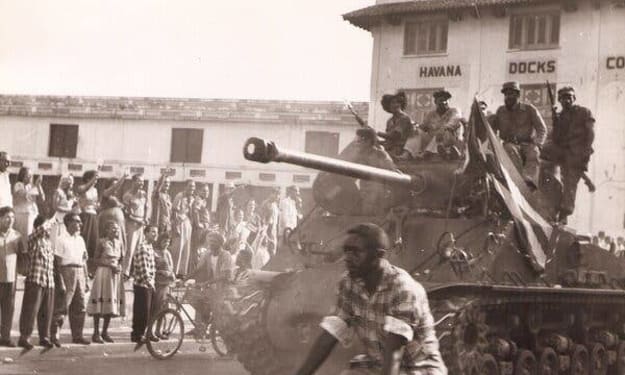
The Supreme Court of the United States is weighing a case that could determine whether American companies and families can reclaim or seek compensation for docks, factories, and other properties seized by Cuba during the revolutionary nationalizations of 1960.
By Fiaz Ahmed 5 days ago in The Swamp
U.S. Boosts Gold Medal Tally at Winter Games, Led by Athletes From a Handful of States. AI-Generated.
The 2026 Winter Olympics have so far provided a showcase of American athletic strength, with the United States climbing the medals table thanks to a strong showing by competitors from a diverse group of states. As the Games reach their midpoint, Team USA’s gold medal haul continues to grow, reflecting years of investment in winter sport programs and the emergence of athletes from regions not traditionally known for snow and ice. The U.S. delegation has already secured multiple gold medals across figure skating, skiing, snowboarding, curling, and ice hockey. Key victories came from athletes hailing from Colorado, Minnesota, California, and Vermont, highlighting both traditional winter sport hubs and surprising new talent pools. Snow and Ice Success Stories In alpine skiing, Megan Larson of Aspen, Colorado, captured gold in the giant slalom, completing two near-perfect runs on a challenging course. Her precision and speed — honed on Colorado’s rugged terrain — made her one of the standout performers of the Games. “It’s an amazing feeling to bring home gold for the U.S.,” Larson said after her victory. “All those early mornings on the mountain pay off.” From the frozen lakes of Minnesota came another golden performance. Derek Olsen, a standout in men’s hockey, helped secure the United States’ narrow victory over rival teams. Olsen’s leadership and defensive prowess were praised by teammates and commentators alike, cementing his role as one of the sport’s rising stars. Changing Geographic Landscape While states like Colorado and Minnesota have long been associated with winter sports, the U.S. medal map is now showing broader geographic diversity. California’s Emma Reyes earned gold in freestyle skiing’s halfpipe, an event where style and technical dexterity are paramount. Reyes, who grew up skiing the Sierra Nevada, said her upbringing was crucial in shaping her competitive edge. “I never thought I’d stand on an Olympic podium when I was a kid in Lake Tahoe,” Reyes said. “But here we are.” Vermont’s own Lucas Whitman delivered a thrilling performance in the men’s cross-country sprint, bringing home another gold for the U.S. contingent. Whitman’s endurance and tactical racing were key factors in his victory on a snow-packed track that challenged even seasoned competitors. Team Events and Emerging Stars Team USA also shone in team events such as ice hockey and curling, where preparation and strategy played decisive roles. In curling, the American squad demonstrated remarkable consistency and precision, topping the round-robin standings and advancing with momentum toward the medal rounds. Co-skip Rachel Kimball from Wisconsin said the team’s chemistry and mental focus were as important as technical skill. “We walked onto the ice knowing we could compete with the best,” she said. “Now we’re showing it.” Youth and Experience Combine A defining feature of the U.S. team has been the blend of veteran performance and youthful exuberance. Some athletes in their late 20s and early 30s brought experience and poise, while emerging teens and young adults injected energy and fearlessness. This mix has been described by coaches as a “perfect storm” of talent and cohesion. “Our approach has always been to nurture talent early and let it grow,” said Team USA head coach Mark Sullivan. “You see that strategy playing out here with medals across multiple disciplines.” Broader Impacts Back Home The success at the Winter Games is already generating buzz across the United States, with schools and local clubs reporting increased interest in winter sports. Youth programs in regions without traditional snow seasons, such as parts of California and Texas, are seeing a surge in enrollments for skiing and ice skating. “This kind of representation helps make winter sports feel accessible to everyone,” said sports development expert Linda Foster. “Kids see athletes who grew up in very different places and think, ‘I can do that too.’” Looking Ahead With several events still to be contested, the United States could add even more gold medals to its tally. The depth of talent and geographic spread of medal contenders point to a strong finish, reflecting the country’s broad investment in winter athletics. As the Winter Games enter their final days, one thing is clear: American athletes are leaving a strong imprint on the international stage — and their stories are inspiring a new generation of winter sport enthusiasts across the nation.
By Fiaz Ahmed 5 days ago in Unbalanced
Ukraine Strikes Russia’s Druzhba Pipeline Network. AI-Generated.
Ukrainian forces have carried out a deep-penetration strike targeting critical infrastructure tied to Druzhba pipeline, one of Russia’s largest oil transport networks, according to Ukrainian and open-source reports. The attack—conducted with long-range unmanned drones—ignited explosions and a major fire at a key pumping station in Russia’s Tatarstan region, underscoring Kyiv’s ongoing strategy of disrupting Moscow’s energy exports and the revenues that fuel its war effort The strike occurred overnight in the early hours of 23 February 2026, roughly 1,200 kilometres from Ukraine’s border, at the Kaleikino oil pumping station near Almetyevsk, a crucial hub where crude from Siberia and the Volga is blended and fed into the Druzhba system. Ukrainian Security Service (SBU) sources said multiple explosions rocked the facility before oil tanks caught fire, leaving a blaze that could be seen for miles. Strategic Target Deep Inside Russia The Druzhba pipeline—literally meaning “friendship”—was built during the Soviet era to transport crude oil westward into Europe, becoming one of the world’s longest and most important export conduits. It has long been central to Russia’s energy diplomacy and provides crude to refineries in countries including Hungary and Slovakia, which have historically relied on Druzhba supplies for much of their petroleum needs Hitting the Kaleikino station, far from the frontline battlefields, illustrates the reach of Ukraine’s drone and unmanned systems forces. Analysts say such attacks are aimed at cutting off Russia’s hydrocarbon revenues, a major source of funding for the Kremlin’s war operations, and at applying economic pressure even beyond territorial combat zones. Impact on the Pipeline and Energy Flows Officials have not fully assessed the broader impact on pipeline operations, but Russia’s regional authorities acknowledged explosions and subsequent fires, though they described the situation as “under control.” Independent monitoring channels, however, reported widespread flames and significant disruption to the hub’s functions. The attack follows a period of heightened tension surrounding the Druzhba network. Earlier in the year, deliveries through the route that travels across Ukrainian territory were halted after damage to infrastructure in January, leading to a temporary cutoff of Russian crude supplies to Hungary and Slovakia, both of whose energy sectors depend heavily on that line. Disruption of the pipeline has also sparked controversy within the European Union, as nations debate energy security, sanctions enforcement, and the balance between supporting Ukraine and safeguarding critical supply lines. Some EU officials have suggested alternative routes like the Odesa–Brody pipeline to ensure crude oil continues to reach central Europe. Political and Diplomatic Fallout The strike has already drawn sharp criticism from Hungarian and Slovak authorities, who view attacks on the pipeline as direct threats to their energy security. Hungarian Prime Minister Viktor Orbán, a long-standing critic of Ukraine’s energy strategy in this context, has linked pipeline damage to broader disputes over EU support and financing for Kyiv. Budapest threatened to block further EU loans to Ukraine unless oil transit through Druzhba resumed, a stance that has complicated unified Western backing for Kyiv on the eve of the war’s fourth anniversary. Similar concerns have been voiced in Bratislava, which is facing industrial slowdowns and has begun securing oil supplies from alternative sources. The Kyiv Independent Wider Military and Economic Context The SBU’s statement framed the attack as part of a methodical campaign to reduce Russia’s ability to finance its military operations. “Our special operations work to reduce Russia’s oil extraction and transportation,” a Ukrainian source told media, emphasizing that the disruption of energy exports is part of broader strategic pressure. � newsukraine.rbc.ua Russia’s state-controlled pipeline operator Transneft oversees the Druzhba network, which supplies millions of barrels of crude annually. Damage to nodes like Kaleikino — especially when coupled with earlier outages along the network — could have long-lasting implications for Russian oil revenues and for European energy markets still adjusting to sanctions and wartime disruptions. Conclusion: Escalation and Energy Security The strike on the Druzhba pipeline network represents a significant escalation in the conflict between Ukraine and Russia, extending the battlefield into strategic economic infrastructure. It underscores the growing role that energy facilities play in modern warfare and the complex geopolitical ramifications of targeting export routes that affect not just the belligerents but neighboring countries’ energy security. As Kyiv continues to assert pressure on Russia’s economic lifelines, European nations must balance solidarity with Ukraine against the immediate need to secure reliable energy supplies — a challenge that is likely to shape diplomatic discussions throughout 2026 and beyond.
By Fiaz Ahmed 5 days ago in The Swamp
More Than 600 People Have Died Trying to Cross Mediterranean in 2026, UN Says. AI-Generated.
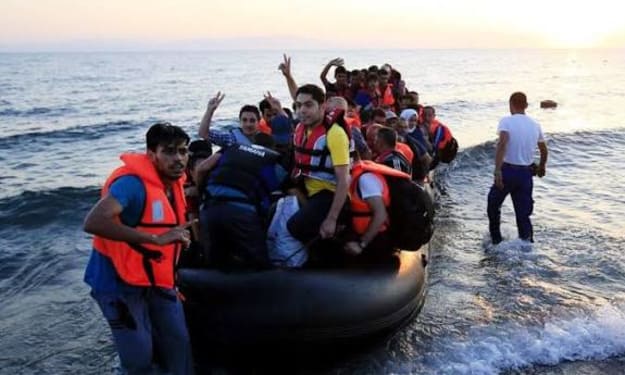
At least 606 people have been reported dead or missing while attempting to cross the Mediterranean Sea so far in 2026, marking the deadliest start to a year since the United Nations began systematically recording migrant deaths in 2014, the International Organization for Migration has said. The figures, released in a statement on 23 February 2026, paint a grim picture of the risks faced by people fleeing conflict, poverty, and instability in Africa, the Middle East, and South Asia in hopes of reaching Europe. Many set off from North African ports—particularly in Libya and Tunisia—on flimsy, overcrowded boats operated by human smugglers who exploit desperate migrants seeking a better life. Deadliest Start to a Year in Over a Decade The IOM’s data indicates that the 2026 toll already surpasses the same period in previous years, making the first weeks of 2026 the most lethal for Mediterranean migration since tracking began more than a decade ago. The figure includes at least 30 people feared dead or missing after a vessel capsized in severe weather off the coast of Crete late last weekend. Authorities rescued 20 people, including four minors, and recovered the bodies of four adults, according to reports. The ill-fated vessel set sail from Tobruk on 19 February, but overturned roughly 20 nautical miles (37 km) south of Kali Limenes, a small port on the Greek island. Rescuers—including commercial ships diverted to assist—joined Greek patrol boats in the search for survivors. Storms, Smugglers and Dangerous Routes The tragedy comes amid harsh weather conditions, which have repeatedly made crossings more perilous. Severe winter storms in the Mediterranean have contributed to multiple vessel capsizes this year, in some cases drowning hundreds of people in single incidents. The IOM and other aid organizations stress that smugglers continue to send unseaworthy boats into dangerous waters, often with insufficient safety equipment. The Mediter ean—especially the central route between North Africa and southern Europe—is one of the world’s deadliest migration corridors. Last year alone, more than 1,000 migrants died or went missing on the central route, according to the IOM. Despite the risks, departures remain steady. Mixes of conflict, economic hardship, climate change impacts, and limited legal avenues for migration have pushed many to seek asylum or a new life in Europe. Smugglers exploit this desperation, charging high fees for passage on overcrowded and unstable boats. The result has been repeated loss of life on the open sea. Response from International Agencies The IOM has urgently called for increased search and rescue efforts, stronger regional cooperation, and the expansion of safe and legal migration pathways to reduce the need for perilous crossings. The agency spokeswoman emphasized that preventing loss of life requires investment in coordinated maritime rescue operations and policies that diminish the power of criminal smuggling networks. Human rights NGOs have echoed these calls, stressing that saving lives at sea must be prioritized over punitive border control measures. They argue that without alternative avenues for refugees and asylum seekers, people will continue to risk their lives on the Mediterranean despite repeated tragedies. Impact on European and African Partners European governments have struggled to balance humanitarian obligations with political pressure to tighten border controls. Recent EU discussions on asylum reform reflect divisions between member states on how to handle irregular migration while ensuring safety at sea. Meanwhile, countries like Italy and Greece, which often face the most arrivals, have increased coastal patrols and engaged with Libyan and Tunisian authorities to curb departures. North African states, however, warn that simply halting departures without addressing underlying causes will only shift routes and push migrants into even more dangerous journeys farther west or through the perilous Atlantic crossing to Spain’s Canary Islands A Humanitarian Crisis Continues The tragic surge in deaths highlights that the Mediterranean migration crisis is far from over. As the death toll rises, international organizations, governments, and civil society groups face renewed pressure to act. Without safe alternatives and robust rescue operations, the Mediterranean is likely to continue claiming lives of those seeking refuge and opportunity in Europe.
By Fiaz Ahmed 5 days ago in The Swamp
German Tourists Trying to Create Floating Sauna Rescued From Swedish Ice Floe. AI-Generated.
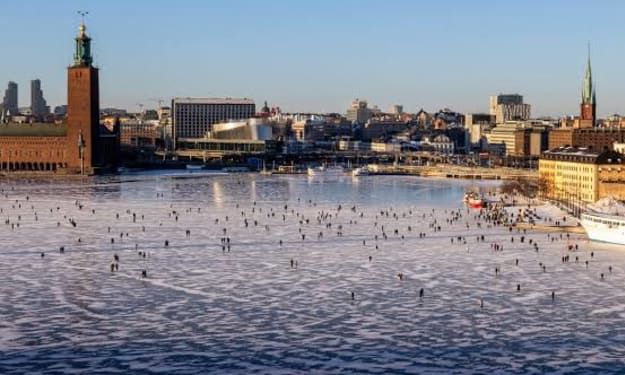
A group of five German tourists were rescued after their daring attempt to create a floating sauna on an ice floe turned into a dangerous drift at sea in Sweden’s Stockholm archipelago. The unusual incident, which could have ended in tragedy, highlighted both the creativity and the risks associated with winter activities in icy waters. Swedish authorities say the group, who were vacationing in the area, had apparently sawn a piece of ice free from the mainland and outfitted it with a sauna tent, an outboard motor, and a collection of recreational gear. Their plan — to float the mobile sauna across the water — went awry when waves from a passing passenger ferry weakened the ice and sent the makeshift vessel drifting into deeper waters near Värmdö Island, east of Stockholm. DIY Sauna Adventure Turns Risky According to transport officials, the ice floe began breaking up after the swell from the ferry passed, leaving the five tourists stranded hundreds of metres from shore. A witness aboard the ferry said the group seemed unaware of the danger until their ice platform began to fracture and drift. The tourists were reported to have brought an odd assortment of equipment with them, including a motorised saw, a stand-up paddleboard, and a GoPro camera, suggesting that they may have been filming or documenting their unusual adventure. The presence of the boat motor indicates they may have hoped to use it to steer or propel the ice floe, though this proved impossible once it began drifting. Passers-by described the sight of figures in sub-zero temperatures standing on a narrow piece of ice surrounded by open water as “bizarre” and “spectacular.” The area around the archipelago is known for winter ice activity, but officials emphasised that this was the first known instance of a DIY floating sauna ending up adrift. Rescue Operation and Return to Shore The crew of the passenger ferry was the first to respond to the scene. Four of the stranded tourists were pulled to safety on Sunday after the ferry reversed course once it became clear that the ice was breaking apart. A fifth tourist stayed behind briefly to collect equipment before being rescued separte Rescue crews used onboard equipment, including a crane and safety harnesses, to retrieve the tourists as their ice platform continued to disintegrate. All five were returned safely to the harbour village of Stavsnäs, apparently unharmed and likely in shock after their unexpected ordeal. Karolina Wichman, a spokesperson for the Stockholm transport administration, said that it’s common for locals and visitors to need help on the ice during winter, but this particular incident was “quite a spectacle.” She explained that while there was no strong wind and the weather was calm before the accident, ice floes can be unpredictable and easily influenced by boat wakes and temperature changes. The Appeal and Risks of Ice Activities The Stockholm archipelago is a popular winter destination, with locals and tourists alike engaging in ice skating, fishing, and other cold-weather activities. However, experts warn that ice conditions can vary greatly and change rapidly, especially near waterways frequented by ferries and other boats. Warming waves and breaks in the ice can lead to unexpected hazards for those venturing too far from shore. Swedish rescue services often respond to calls for assistance from skaters and adventurers who find themselves stranded or facing thin ice, but rarely has a situation involved a homemade floating sauna. It remains unclear whether the tourists intended the sauna drift as a stunt, a social media project, or simply an eccentric way to enjoy the icy environment. Authorities Stress Safety Precautions Officials took the opportunity to remind visitors of basic safety measures around ice, such as checking ice thickness, avoiding areas with boat traffic, and always informing someone on shore of travel plans. Ice conditions can be treacherous even on calm days, and novice adventurers without safety training can quickly find themselves in dangerous situations. For the five German tourists, what may have seemed like an adventurous winter experiment turned into an unexpected rescue operation — one that serves as a cautionary tale about the unpredictability of ice and water in northern climates.
By Fiaz Ahmed 5 days ago in The Swamp
I Want to Come Back, to Win Gold”: Banned Ukrainian Determined to Race for Glory in Helmet of Memory. AI-Generated.
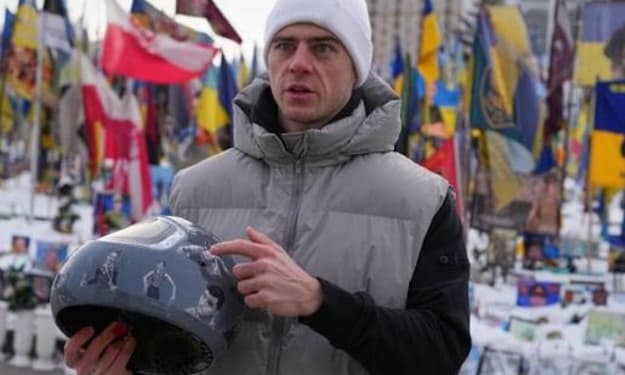
Despite being sidelined by an unexpected ban, Ukrainian athlete Vladyslav Morozov is fuelled by a singular goal: to return to competition and win Olympic gold while wearing a symbolic “helmet of memory” that honours the sacrifices of his country. Morozov’s journey is part story of athletic ambition, part testament to resilience in the face of personal and national adversity. Once one of Ukraine’s fastest speed skaters, Morozov was preparing for what many expected to be his peak performance year when a regulatory decision abruptly halted his participation in international events. The ban — imposed by an international sports federation following a technical violation related to equipment standards — came just months before a major world championship, derailing years of training. “I was devastated,” Morozov said in a recent interview. “Not because I was banned, but because I felt I was letting down everyone who believed in me — my family, my teammates, and my country.” From Peak to Pitfall Morozov’s career began in childhood, training on frozen lakes near his hometown in western Ukraine. Early success earned him national recognition and a chance to train with Ukraine’s best, where he developed into a sprinter with Olympic potential. His rise was marked by discipline and quiet confidence, traits that endeared him to coaches and fellow athletes. In late 2025, Morozov qualified for the World Speed Skating Championships but was informed that his racing helmet did not meet a newly updated safety certification required by the international governing body. Although the issue was deemed a bureaucratic oversight rather than malicious intent, the penalty was firm: he could not compete until his equipment met the revised standards. “It was excruciating,” he recalled. “I had trained for countless hours, and something as small as a certification on my helmet stopped me from racing. But this is sport — rules matter.” Racing With Memory and Meaning Rather than retreating from the sport, Morozov chose to embrace the situation as a moment of reflection and purpose. He began training harder, adjusting his techniques, and collaborating with helmet manufacturers to design an updated model that not only met safety standards but also carried personal and national symbolism. The result was the “helmet of memory” — a custom-designed racing helmet adorned with imagery honoring Ukraine’s resilience and the lives lost during years of conflict. The design includes subtle engravings of candlelight and national symbols, representing remembrance and hope. “For me, this helmet is more than protection,” Morozov said. “It is a tribute. Every time I put it on, it reminds me why I race — not just for medals, but for the spirit of my people.” Support and Solidarity Word of Morozov’s story spread quickly through Ukrainian media and international sports networks, attracting support from fans, fellow athletes, and advocacy organizations. Many see his journey as emblematic of Ukraine’s broader struggle: a quest for recognition and triumph despite formidable obstacles. Several European speed skaters have reached out with messages of solidarity, praising his resilience and expressing hope that he will compete again soon. “He’s an inspiration,” said one peer from the Netherlands, a country known for its speed skating pedigree. “Anyone who can turn a setback into something meaningful deserves a place on the starting line.” Looking Toward Redemption Morozov is now focused on meeting the equipment requirements and returning to competition as soon as possible. He has set his sights on the upcoming World Cup circuit and, ultimately, the next Winter Olympics — where he hopes to “come back, to win gold” while wearing his helmet of memory. “It’s not just about me anymore,” he said. “It’s about giving people something to believe in. When I race, I carry all those who can’t be here. That is my strength.” For a country seeking moments of hope and unity amid hardship, Morozov’s determination resonates far beyond the ice. His story is a powerful reminder that athletic ambition and personal conviction can become symbols of national identity and collective resilience — even in the face of setback and exclusion.
By Fiaz Ahmed 5 days ago in Humans