
Russian Warship Escorts Sanctioned Ship Near NATO—Days After US Seized a Similar One
Rising Tensions at Sea: NATO and the US Monitor Escalating Maritime Standoffs

A Russian warship escorting a sanctioned cargo vessel through sensitive waters near NATO territory has reignited global tensions, coming just days after the United States seized a similar ship accused of violating international sanctions. The incident underscores the growing risks at sea as global powers increasingly enforce economic pressure through naval presence, turning commercial shipping lanes into geopolitical flashpoints.
A Show of Force at Sea
According to defense observers, the Russian Navy deployed a surface combat vessel to accompany a merchant ship flagged for alleged sanctions violations. The escorted vessel reportedly passed close to NATO-monitored waters, triggering heightened surveillance by alliance forces. While no direct confrontation occurred, the message was unmistakable: Moscow is willing to use military power to protect its economic lifelines.
The timing is critical. Only days earlier, U.S. authorities seized a ship suspected of transporting sanctioned oil, an action Washington framed as lawful enforcement of international restrictions. Moscow, however, views such seizures as economic warfare. By sending a warship to escort a sanctioned vessel, Russia appears to be signaling that it will not allow similar actions against its interests without resistance.
Sanctions and the Shadow Fleet
Since the escalation of the Ukraine conflict, Western nations have imposed sweeping sanctions on Russian energy exports, targeting oil tankers, shipping companies, and financial networks. In response, Russia and its partners have relied increasingly on what analysts call a “shadow fleet” — aging tankers operating under opaque ownership structures and alternative insurance arrangements to bypass restrictions.
These vessels often sail through strategically vital maritime corridors, including the Baltic Sea, Black Sea, and Mediterranean routes. NATO navies closely monitor such movements, creating a tense environment where miscalculation could quickly escalate.
The Russian escort suggests a new phase in this maritime standoff: sanctions enforcement backed not just by law, but by naval power on both sides.
NATO’s Delicate Balancing Act
For NATO, the situation presents a serious challenge. Alliance forces are tasked with monitoring suspicious shipping while avoiding direct clashes with Russian military assets. Any aggressive move against a convoy protected by a Russian warship could spark an international crisis.
NATO officials have emphasized restraint, noting that international waters remain open to lawful navigation. Still, surveillance aircraft, naval patrols, and intelligence assets were reportedly deployed to track the Russian escort mission closely.
“This is about deterrence without provocation,” one defense analyst noted. “Both sides are testing boundaries, but neither wants to be the one blamed for igniting a wider conflict.”
Echoes of Cold War Naval Tensions
The incident has drawn comparisons to Cold War-era naval brinkmanship, when U.S. and Soviet warships routinely shadowed each other across the world’s oceans. Then, as now, maritime encounters carried enormous symbolic weight.
However, today’s environment is arguably more complex. Unlike Cold War standoffs, modern confrontations involve commercial vessels, sanctions law, and economic warfare intertwined with military posturing. A misstep involving a civilian ship could have legal, humanitarian, and strategic consequences.
Russia’s Strategic Message
By escorting a sanctioned ship so visibly, Russia is sending several messages at once. Domestically, it signals strength and defiance against Western pressure. Internationally, it warns that enforcement actions against Russian-linked shipping may face armed resistance.
The move also reassures partners and buyers that Moscow is committed to keeping its trade routes open, even under sanctions. For countries still purchasing Russian energy, naval escorts may offer a form of security—albeit one that raises the stakes considerably.
A Dangerous Precedent?
Western analysts worry that such escorts could normalize the militarization of sanctions evasion. If more sanctioned states begin using warships to shield commercial vessels, the world’s busiest shipping lanes could become zones of permanent tension.
The United States and its allies have so far avoided intercepting vessels under direct military escort, preferring legal seizures when ships are isolated. But as escorts become more common, the room for enforcement narrows.
What Comes Next?
While the immediate incident ended without confrontation, it highlights a troubling trend: economic disputes increasingly playing out at sea, backed by naval power. As sanctions tighten and enforcement grows bolder, similar encounters are likely to become more frequent.
The challenge for global powers will be preventing these encounters from spiraling into open conflict. For now, warships shadowing sanctioned tankers serve as a stark reminder that the world’s oceans are no longer just trade routes—they are front lines in a widening geopolitical struggle.
About the Creator
Keep reading
More stories from Fiazahmedbrohi and writers in The Swamp and other communities.
Iran Says Over 100 Officers Killed as Protesters Defy Government Crackdown
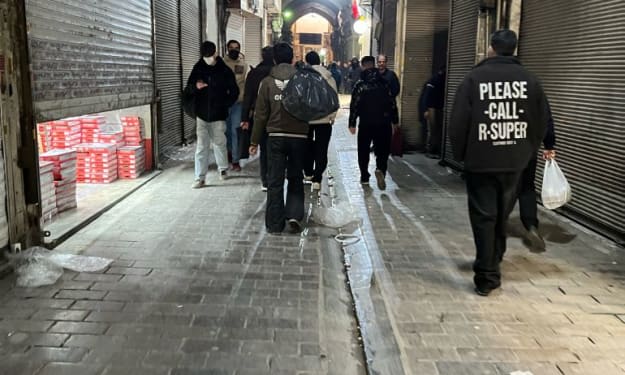
In a dramatic escalation of unrest, Iran is reporting that more than 100 security officers and personnel have been killed in clashes with demonstrators who have defied a violent government crackdown. The nationwide protests — some of the largest Iran has seen in years — have been met with intense force by state authorities, even as protesters continue to push for economic justice and political change. � Reuters +1 A Nation in Turmoil What began in late December 2025 as protests over mounting economic hardships — including soaring prices, inflation, and the collapse of the Iranian rial — quickly evolved into widespread opposition to the regime itself. Demonstrations have spread across all 31 provinces, uniting diverse segments of Iranian society in a shared display of discontent. � Le Monde.fr In response, the Iranian government has launched a harsh crackdown. Security forces, including the elite Islamic Revolutionary Guard Corps (IRGC) and police units, have deployed live ammunition, tear gas, and mass arrests to suppress dissent. A nationwide internet and communications blackout has been in effect for days, limiting independent verification of events but failing to halt the flow of information entirely. � Reuters +1 Conflicting Casualty Reports Iranian state media has highlighted fatalities among security personnel. Official reports suggest that dozens of police and security officers have been killed in clashes with protesters, describing them as casualties of violent “rioters” or coordinated attacks against state institutions. Some of these reported deaths occurred during confrontations in provinces such as Isfahan. � Al Jazeera However, independent sources paint a much broader picture of suffering. Human rights groups and activist networks estimate that the death toll — including civilian protesters — has risen significantly. According to some reports, at least 116 people have been killed overall, with thousands more arrested and hundreds wounded during the unrest. � AP News Discrepancies between state figures and those from international rights organizations make it difficult to verify the precise scale of violence. What is clear, however, is that the human cost is high — and growing. The combination of communications blackouts and state media control has made reliable reporting exceptionally challenging. � Le Monde.fr What Protesters Are Demanding The demonstrations initially centered on economic grievances, such as rising living costs and unemployment. Yet, a considerable number of protesters have shifted their focus toward political reform and even regime change. Many are calling for fundamental shifts in governance, greater freedoms, and accountability from leadership that they perceive as unresponsive and repressive. � Reddit In cities across Iran, crowds have formed in public squares, bazaars, and streets — often chanting slogans against state authorities and demanding improved living conditions. The breadth of participation demonstrates widespread frustration, cutting across age groups and social classes. � Reddit Government Response Iran’s leadership has framed the unrest as a security threat, insisting that what they term “rioters” are engaged in violent acts. Officials have issued stern warnings to foreign nations, particularly the United States and Israel, claiming external influences are at play. Some hard-line figures have even threatened retaliatory action in the event of foreign intervention. � People Daily Supreme Leader Ayatollah Ali Khamenei and other senior officials have portrayed the demonstrations as opportunistic uprisings fueled by foreign enemies intent on destabilizing Iran. Such rhetoric underscores a deepening divide between authorities and ordinary Iranians. � Financial Times The Role of Communication Blackouts One of the most significant facets of the current crisis is Iran’s near-total internet shutdown. Analysts argue this serves two purposes: obscuring the true extent of violence, and limiting the ability of protesters to organize. Groups like NetBlocks have confirmed widespread disruptions to connectivity, making independent reporting and documentation of abuses more difficult. � Reuters Despite these restrictions, videos and testimonials continue to leak online — often through VPNs, satellite connections, or foreign platforms — revealing scenes of intense street clashes, mass detentions, and military presence in urban centers. � Le Monde.fr Global Reaction International responses to the crisis have been mixed. Western nations, including the United States and members of the European Union, have condemned the violence and called for restraint. Former President Donald Trump publicly stated that the U.S. is “ready to help” Iranian protesters, a remark that was both welcomed by opposition activists and condemned by Tehran as interference. � Reuters Human rights organizations have also called for independent investigations into alleged abuses and urged Iran to lift its communication restrictions, emphasizing the need for transparency and accountability. � Le Monde.fr What Lies Ahead? With tensions continuing to escalate, Iran faces one of its most significant internal challenges in years. If protests persist and the government maintains its hard-line stance, the violence could deepen, risking a broader humanitarian crisis. Whether the state will soften its approach or double down on repression remains uncertain. As the world watches, the voices of both protesters and security personnel — their suffering, fears, and aspirations — illustrate the human toll of political unrest and the complex dynamics of power in one of the Middle East’s most influential nations.
By Fiazahmedbrohi about 13 hours ago in The Swamp
Greenland: Vance Warns Europe to Take Trump's Threats Seriously
The Greenland debate has escalated from a peculiar historical footnote to a contentious geopolitical issue in the 21st century. Former U.S. President Donald Trump’s interest in purchasing the world’s largest island has resurfaced, causing ripples not just in Washington but across Europe. In recent weeks, various experts and politicians have been warning Europe to take Trump’s ambitions seriously. One such figure, foreign policy expert Vance, has urged European leaders to prepare for what could be a challenging diplomatic situation. Trump’s Greenland Obsession: A Resurging Threat In 2019, Donald Trump made headlines by expressing interest in purchasing Greenland, a move that was met with widespread disbelief. The island, which is an autonomous territory of Denmark, was never up for sale, and Denmark’s leaders quickly rejected the idea. However, Trump's fixation on Greenland has never truly gone away. As the geopolitical landscape evolves, so does his interest in the island, which boasts significant natural resources and strategic importance. The Trump administration's stance on Greenland wasn’t just about territorial expansion; it was also linked to broader U.S. foreign policy goals. Greenland's location between North America and Europe has made it strategically vital, especially in the context of the Arctic’s changing geopolitical dynamics. The region’s rich mineral deposits, including rare earth metals and uranium, have further piqued global interest, and Trump’s desire to control Greenland was viewed by some as an attempt to secure these resources for American use. Vance’s Warning: Europe Needs to Prepare Vance, an experienced international relations expert, has recently sounded an alarm regarding the ongoing Greenland situation. His remarks focus on the dangers of underestimating Trump's intentions. According to Vance, Europe has largely brushed aside the possibility of a renewed push for Greenland, but that could be a fatal mistake. “I think Europe is making a grave error by assuming that Trump’s previous attempt was just a passing fancy,” Vance explained in a recent interview. “Given his track record and the growing importance of Greenland in global geopolitics, Europe must take this seriously and start preparing for all potential outcomes.” The warning isn’t just about the potential for Trump to try again. Vance also expressed concerns about how the U.S. might attempt to leverage its military presence in Greenland to sway Denmark and other European allies. The U.S. already operates the Thule Air Base in Greenland, a vital asset for its defense and intelligence capabilities in the Arctic. A stronger American presence, according to Vance, could lead to mounting pressure on Denmark to entertain the idea of a deal once more. The Danish and European Dilemma From a European perspective, the prospect of the U.S. attempting to purchase Greenland is a delicate issue. Denmark, as Greenland’s sovereign nation, would be the key decision-maker, but any move involving the island’s future could have far-reaching consequences for the entire European Union. For Denmark, the situation is complicated by both internal and external pressures. Greenland’s native Inuit population has expressed concerns about their cultural and political autonomy should the island fall under U.S. control. Meanwhile, many European leaders are wary of the growing tensions between the U.S. and Russia in the Arctic. The region has become a new frontier for geopolitical competition, with both superpowers seeking to establish dominance. Vance suggests that if the U.S. continues to press its case for Greenland, it could place Denmark in an awkward position. “The U.S. is not known for backing down when it has its sights set on something,” Vance warned. “Denmark’s ties to the EU and its own position in the Arctic are crucial, and the pressure from Washington could become overwhelming. Europe needs to think ahead about how it will respond.” The Strategic Significance of Greenland Greenland’s strategic value has only grown in recent years, as climate change continues to open up previously impassable routes and untapped resources. The Arctic’s melting ice has revealed new shipping lanes and access to minerals that were once inaccessible. Russia and China have already started to invest heavily in the region, both in terms of economic opportunities and military positioning. For the U.S., controlling Greenland would offer significant advantages. Not only would it solidify its presence in the Arctic, but it would also provide a staging ground for any future operations in Europe or the Northern Hemisphere. Moreover, access to Greenland’s vast natural resources could help America’s economic interests, reducing its dependence on foreign imports for key materials like rare earth elements. Vance argues that Europe needs to recognize the increasing importance of the Arctic in global power dynamics. “Europe cannot afford to overlook the Arctic anymore. It’s not just about climate change or environmental concerns; it’s a matter of global security,” he emphasized. “Europe must act quickly to secure its own interests in the region and ensure that it remains an equal player in the Arctic race.” Preparing for the Worst: A Call to Action As the situation with Greenland continues to develop, Vance’s advice to Europe is clear: preparation is key. He urges European governments to engage in strategic talks, not just with Denmark, but with other Arctic nations, to ensure that the region remains under international governance and not solely under U.S. influence. At the same time, Vance advises that Europe should bolster its defense and diplomatic efforts in the Arctic. Strengthening partnerships with key Arctic powers like Canada, Norway, and Sweden will be crucial in ensuring that Europe has a voice in any future discussions about Greenland’s status. Vance also stresses the importance of diplomatic engagement with the U.S. to mitigate the risks of any aggressive U.S. actions in the region. “Europe needs to have a unified response to Trump’s actions,” he said. “The stakes are high, and the time to act is now.” Conclusion: The Need for Global Cooperation As Trump’s ambitions toward Greenland continue to shape international discussions, it’s clear that this issue will have lasting ramifications for both the U.S. and Europe. Vance’s warning should not be taken lightly. Europe’s ability to navigate this complex geopolitical issue will require strong leadership, strategic foresight, and, above all, cooperation among European states and their allies. The future of Greenland may very well depend on how the global community responds to the growing power play in the Arctic. The coming months will undoubtedly test the resolve of European leaders and their ability to safeguard their interests in a rapidly changing world.
By Muhammad Hassan3 days ago in The Swamp


Comments
There are no comments for this story
Be the first to respond and start the conversation.