Bruno Bispo
Bio
Passionate about advertising, design and art. You can read some of my writings about this subjects in English here on Vocal. If you prefer, read it in Portuguese here.
Stories (4)
Filter by community
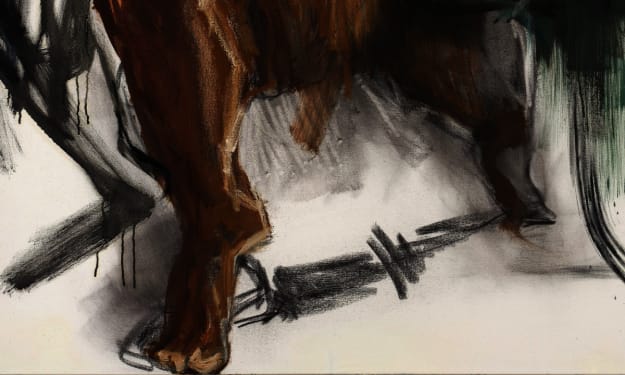
Transcendental Play
In a vigorous journey of symbolic broadening, Márcia Falcão achieves a distinct visual vocabulary in the series ‘Capoeira em Paleta Alta’. Relishing the evolution of her work in recent years, the painter's dedication to investigate her sign repository becomes evident and clear, accessing an accentuated and profound motivation, thus reaching new levels of expressiveness. Her sources are the suburbs and life on the hills of Rio de Janeiro, domestic life, and the identity representations of gender and race, which gain prominence in the series. The Rio native painter then undertakes a pictorial exploration unifying the human figure and capoeira, an intangible cultural heritage of humankind according to UNESCO. The series of paintings is developed simultaneously with others that address similar concepts and share pictorial affinity with each other; among these consonances is the prominence of human anatomy as the main motif. The nude, a genre present since the dawn of figurative art and which, in the timeline of art history, has been recognized as tradition and rebellion, also oscillating between the sacred and the profane. By undressing her figures on her canvases, the artist imposes her conceptions in an undeniable and objective way right in front of the observer and simultaneously investigates the body as an essential element in the construction of individuality.
By Bruno Bispo10 months ago in Art
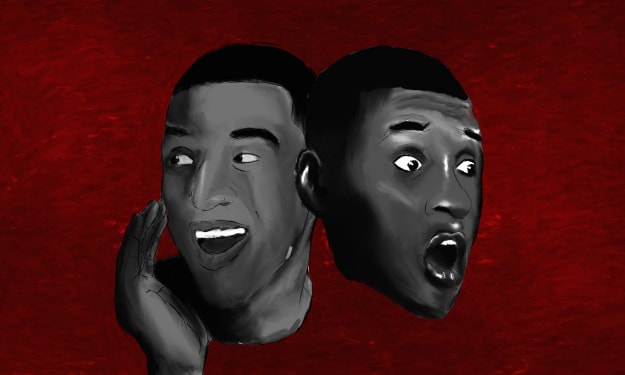
Whispers and Cries
"The great history painters created occasionally a portrait, out of love for glory, friendship, or great beauty, or even because powerful princes demanded their portrait or that of a favorite protégé; several masters, finally, painted their self-portrait." Jacob Burckhardt in ‘O retrato na pintura italiana do Renascimento’ (Orig. pt.)
By Bruno Bispoabout a year ago in Art
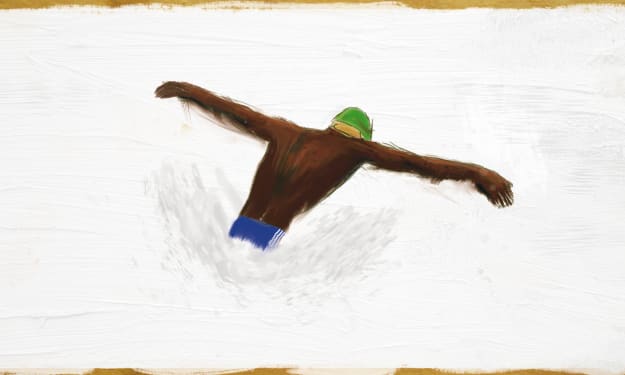
Noises in the scene
“The challenge to grand, unifying narratives and the centralized discourse of a universal art has extended to other marginalized groups, who have begun to redefine their place in the globalized cultural exchange. [...] these artists use their marginalized status as a starting point to create works that attest to the diversity of their sources and affirm their evolving identities.” — Maria Melendi in ‘Estratégias da arte em uma era de catástrofes’
By Bruno Bispoabout a year ago in Art