Annie Kapur
Bio
I am:
🙋🏽♀️ Annie
📚 Avid Reader
📝 Reviewer and Commentator
🎓 Post-Grad Millennial (M.A)
***
I have:
📖 280K+ reads on Vocal
🫶🏼 Love for reading & research
🦋/X @AnnieWithBooks
***
🏡 UK


Stories (2895)
Filter by community
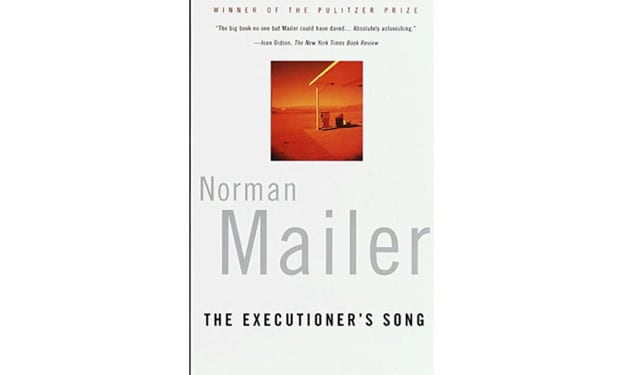
The Executioner’s Song by Norman Mailer
It’s been a few years since I read “The Executioner’s Song” when I was eighteen years’ old and it was a funny experience because I’d only ever seen a picture of the book before that. I had constantly wanted to read it over the course of a year because it sounded amazing. But when I received it in the post, my jaw dropped at how long it was in comparison to how long I thought it was. I managed to get it done in a few days anyway. I really just couldn’t put it down at all. At some points, I was actually crying about the other characters. My first reading experience was heavily emotional and I was put into an emotional whirlwind of sorrow. It completely changed my perspective on creative nonfiction, just like the book “In Cold Blood” by Truman Capote had done some years before.
By Annie Kapur6 years ago in Criminal
Anna Akhmatova
Anna Akhmatova was one of the most well known poets in Russian History and is, to this day, one of the most respected poets of the 20th century. I read Akhmatova's poetry whilst I was in school via a tiny book I found called "The Everyman Poets: Anna Akhmatova". She uses so much incredible language with such raw emotion and the quotations about imprisonment and love have such a vivid image to them. Anna Akhmatova was the basis for reading all Russian Poetry of the difficult ages, the transition between Royalist Russia to Communist Russia. She was the borderline between those who were on the outside of the situation and those who were on the inside, and by inside, I mean prison.
By Annie Kapur6 years ago in Poets
20 Books of 2020 (Pt.32)
Well, we're underway into the 600s now and I can honestly say that it has been a great ride, but we're not stopping here! In this article introduction, I want to talk shortly about reading books and reading kindle books/ebooks etc. and the way in which we see differences between them.
By Annie Kapur6 years ago in Geeks
"Kafka was the Rage" by Anatole Broyard
The first time I ever read “Kafka was the Rage” by Anatole Broyard, I was sitting on a coach on my way to a university trip for five days of intense work. I was in the second year of my undergraduate degree and had just about turned twenty years’ old. My first experience of reading it was brilliant and I read the whole thing in one sitting, much to the confusion of my lecturer since I was the only one not talking on the coach ride. It ended up with me talking to my lecturer about how good the book was - and it was awesome. “Kafka was the Rage” really influenced my world view of how the planet worked after the second world war. It made me believe less in the fact that everything went back to normal and believe more in the fact that there were actually a great number of problems after the war, especially concerning these displaced soldiers pretty much left to their own devices. It is one of those stories that simply touches you with its realism.
By Annie Kapur6 years ago in Geeks
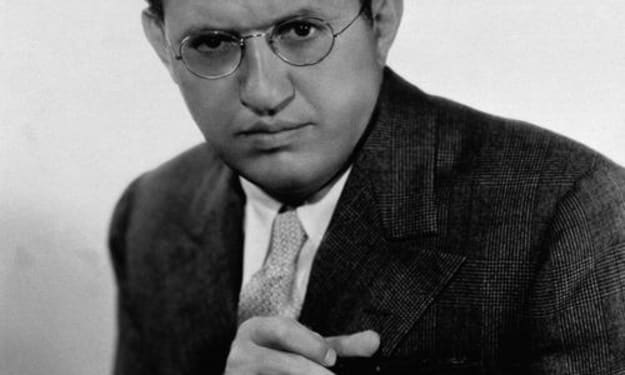
A Filmmaker's Guide to the Best Films: David O. Selznick
David O. Selznick is synonymous with the Hollywood Golden Age. He was one of the foremost producers for films by Alfred Hitchcock, Carol Reed, Victor Fleming and many more. As one of the biggest producers in Hollywood at the time, David O Selznick managed to make a big name for himself. He worked on films that today are known as classics of their genre and some of the greatest films ever made.
By Annie Kapur6 years ago in Geeks
"Tess of the D’Urbervilles" by Thomas Hardy
It has been just about ten years since I first read Thomas Hardy’s magnum opus “Tess of the D’Urbervilles” and I read it mostly because it was everywhere. I remember it being in bookstores with these amazing clothbound covers on the copies and I managed to save come money in order to get myself one. This was how I discovered the book. I was simply in a bookstore looking at the clothbound edition of “Anna Karenina” when near it was Thomas Hardy’s “Tess of the D’Urbervilles” and simply realising I hadn’t read it and it looked interesting, I bought it. (Since I also already had a copy of “Anna Karenina” - nobody was letting me buy another one). My first reading experience of “Tess” was pretty disturbing because I found myself really upset for a few days afterwards because of the way I believe Tess was treated unjustly. The book managed to change my opinion of what could happen to people who were the protagonists of their own novels, and I thought that sort of stuff only happened in Shakespeare’s plays. How wrong I was.
By Annie Kapur6 years ago in Geeks
World Refugee Day: Ten Books on Refugee and Immigrant Voices
Every year on the 20th of June, World Refugee Day is celebrated internationally as it is a day where we respect and honour the most vulnerable members of our society who constantly risk their lives in hope that they can find safety.
By Annie Kapur6 years ago in Geeks
"Doctor Faustus" by Christopher Marlowe
I first read this book when I was twelve years’ old and I’m going to admit that it was very difficult to read, even as a girl who had already studied Shakespeare by that age - I had some difficulty and had my dictionary on hand and my Latin dictionary on hand when they were required. I discovered this book literally because I found it. When I say I found it I mean that I was looking through the Shakespeare books and it was amongst them. I thought it looked fairly interesting and so I picked it up and began to read. I understood nothing and so, I took it home to the comfort of my dictionaries. For the next twelve years, I would read “Dr. Faustus” at least once every year because of the fact it had enthralled me and I was always one of those people who were trying to work out whether I was seeing an actual ending or one of the possible endings to the play. It’s an intriguing script with a ton of grand references, speeches and monologues. I love the entire thing and to this day, it is my favourite play of all time.
By Annie Kapur6 years ago in Geeks
African Myths of Origin
“African Myths of Origin” is a book that concerns the different regions of Africa, their creation stories and theme-based narratives. Themes of hunting, food, humanity, morality, death and dying, the Gods, supernatural ability, war and battle, masculinity vs. femininity and others prove that these stories are not only well-written and sophisticated but also prove that these narrators understand the very essences of human existence. Along with the ability to make it into an entertaining narrative, a lot of these stories echo and almost Biblical experience of life. The outline of the book is to treat these historical stories as a part of a geographical location and an entire population of people. The most notable thing is how all of these themes link together to make a narrative that contains a teaching, a tale and characters who are relatable to any time and place. As the narrative states on the theme of hunting: “the original human lifestyle is foraging mixed with hunting.” (p.3). Thus showing that the nature of humans looking for food is not only important thematically to the stories, but is also a quintessential part to every human no matter upon place, time etc. Past, present and future, humans will always require food to survive and this is only one of the bases of human existence that is seen in the book.
By Annie Kapur6 years ago in Futurism
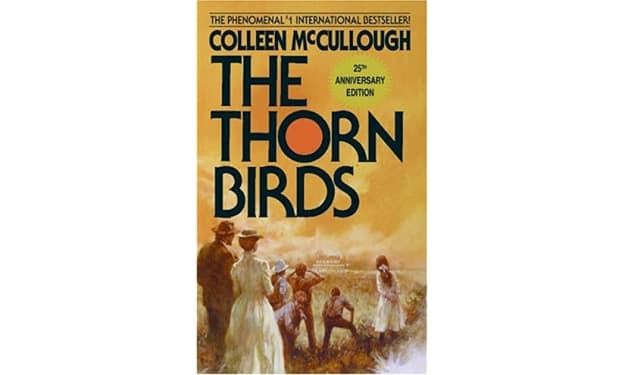
"The Thorn Birds" by Colleen McCullough
It has been a few years since I’ve read “The Thorn Birds” by Colleen McCullough. I read it for the first time when I was nineteen and it was the first book I read before I started university reading from then on for a few months. I discovered the book after a re-read of Margaret Mitchell’s “Gone with the Wind” that I was doing in order to compare the book to the movie and see exactly what I really thought about the casting choice for Scarlett O’Hara. I was told online by someone on Reddit that “The Thorn Birds” was basically the Australian version of “Gone with the Wind” and that it would make me emotional in the same way. And it didn’t. It made me far more emotional than I’d ever been with “Gone with the Wind”. I was actually so emotional that whilst I was at work, I finished the book and had to excuse myself so that I could go and cry in the foyer. The book managed to change my opinion on how epic a 20th century novel could really be and to this day, even when I think about it - I can feel the same tears start to well up in my eyes. Only if there was more communication between some of the characters, most of this mess would not have occurred and everyone would be okay.
By Annie Kapur6 years ago in Geeks
“Furious Hours: Murder, Fraud and the Last Trial of Harper Lee” by Casey Cep
This book is something I read purely because for a while, I had been interested in what this has to do with Harper Lee. By the time I read it, I knew what the book concerned, but I hadn’t got a clue what that had to do with the writer Harper Lee except for the writing of “To Kill a Mockingbird”. So, when I did read it, I paid extra attention to the first two sections in which Casey Cep seeks to teach the reader about racial politics in the courtroom during the early 20th century in the Southern States of America. It is by no means a pretty sight but it is able to tell the reader why Harper Lee felt that, especially in the state of Alabama, it was important to write a book that struck the heart of the political community, their wrongs and the way in which they treated certain skin colours as worse than others even when under oath.
By Annie Kapur6 years ago in Geeks