Annie Kapur
Bio
I am:
🙋🏽♀️ Annie
📚 Avid Reader
📝 Reviewer and Commentator
🎓 Post-Grad Millennial (M.A)
***
I have:
📖 280K+ reads on Vocal
🫶🏼 Love for reading & research
🦋/X @AnnieWithBooks
***
🏡 UK


Stories (2894)
Filter by community
20 Books of 2020 (Pt.31)
Welcome to part 31 of our journey! You will have noticed that part 30 ended on a great note and we covered some of the new projects I'm working on this year. What I wanted to go through today is communities of reading and what they mean for people who enjoy books. I want to go through the pros and cons briefly and look at ways in which reading communities may be able to improve their aspect on inclusion.
By Annie Kapur6 years ago in Geeks
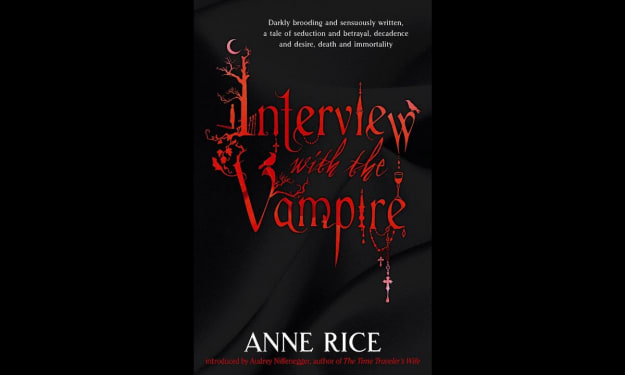
"Interview with the Vampire" by Anne Rice
It has been just about twelve years since I first read “Interview with the Vampire” by Anne Rice and what a great year it was. I became so obsessed with the Vampire Chronicles series that I began to draw comic strips dedicated to depicting the storyline of each of them. I drew out each character in some sort of manga style and used the dialogue from the book and yes, I began with Daniel and Louis finding each other in that San Francisco apartment and Daniel having the living shite scared out of him. “I am flesh and blood but not human…” God I love that part because you get all excited that it is really about to go down for the next series of over ten novels. The way in which I discovered it was through the film. I hadn’t actually seen the film but I had heard that it was good and I knew there was a book to it and so I wanted to read the book first. By the time I read the book, I put off seeing the film and “Queen of the Damned” until I had finished the series. Back then only up to “Blood Canticle” was out and I had to wait ages for the next books. This first book in the series changed my entire perception of what vampire fiction could be and that modern fiction could also be beautifully written in a style that was both provocative and suggestive.
By Annie Kapur6 years ago in Geeks
“Lotte in Weimar” by Thomas Mann
Thomas Mann’s “Lotte in Weimar” is often considered to be one of his many masterpieces and in my opinion it is Mann’s greatest novel. There are many key factors that one has to concern themselves with when looking at this statement of ‘masterpiece’ though and what makes Thomas Mann’s work a ‘masterpiece’. It is both artistic and well-constructed. It is character-driven and context dependent. But, context dependent as it may be, it is transcendent of its times, moving into our own and into the future with ease of access and applicable to the situations that will always concern humans - love, death, time and influence. When we have a look at this character-driven narrative, at first we believe that it is Lotte herself that is driving this narrative forwards with her focus on her want for her old life, whereas it is actually Goethe who drives the narrative with his aspect of celebrity though he does not appear physically for quite some time in the novel. Lotte is a woman of her time but she is also a woman who requires control of her own future, it is a question of whether she actually gets this because she is famed as the woman who is constantly associated with Goethe. The image of women and womanhood in the novel is a strange one because we have so many varying personalities. First of all, we have the personality of the self-driven woman who is Adele, the new and true-blooded Weimar woman. Then we have the opposing side which is basically Lotte - the woman who wishes herself to be self-driven but constantly finds herself hanging on to her past. There is little for Lotte in her future except returning to this past in order to confront it and the reader will always know that this is something that drives her. Her self-drive does not come from feigning a modernisation of herself as a woman, but rather treating herself as having an individual story in which certain plot points require editing, revisiting, revising and confronting in her autobiography and saga of romance.
By Annie Kapur6 years ago in Geeks
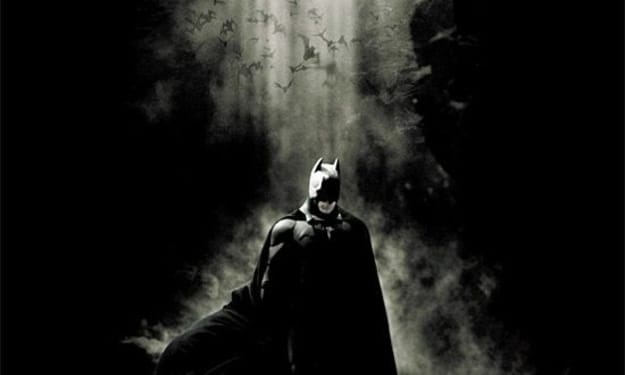
45 Things You Should Know About Batman Begins (2005)
This movie was released on the 15th June, 2005 and it was the beginning of a new era in comic book movies. It was the start of Nolan's Dark Knight Trilogy where we would see the likes of villains portrayed by the incredible Liam Neeson, the terrifying Cillian Murphy, the Oscar Winning Late Heath Ledger, the chilling Marion Cotillard, the violent Bane of Tom Hardy and the ambiguous villainy of Selina Kyle played by Anne Hathaway. There's so much we have to thank Christopher Nolan for.
By Annie Kapur6 years ago in Geeks
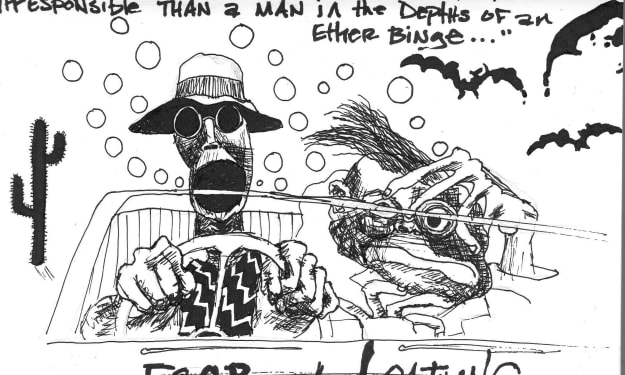
"Fear and Loathing in Las Vegas" by Hunter S Thompson
It has been about ten years since I first read the book “Fear and Loathing in Las Vegas” by Hunter S Thompson and when I did read it, I hadn’t actually heard of the film yet. I had only heard of the book because I’d seen the crazy cover in a bookstore and thought it looked fairly interesting. Initially, from the cover, I thought it would be more comedic than psychedelic than it actually was. My first reading experience of it was fairly strange because I’d never really read anything like it before and really, because it was true, that only made it all the more strange as an experience. This book really did manage to change my opinion of the way I looked at journalism. I had never really read any journalism like this before and I had always thought that journalism had to be boring and rigid like something in the Telegraph or the Times. Hunter S Thompson’s Gonzo Journalism made me interested in the way in which I viewed more modern, more exciting journalistic experiences.
By Annie Kapur6 years ago in Geeks
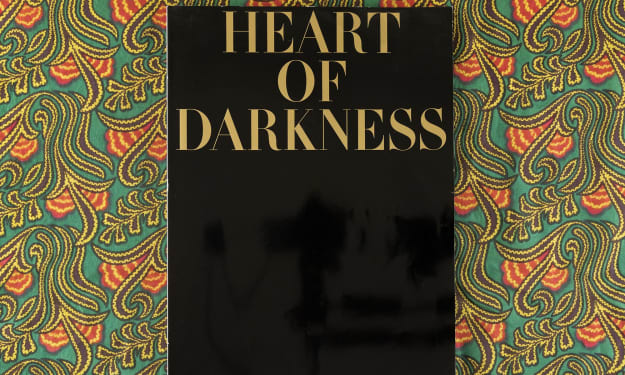
"Heart of Darkness" by Joseph Conrad
The first time I read “Heart of Darkness” by Joseph Conrad was roughly the same weekend I was reading “The Island of Dr. Moreau” by HG Wells. I was twelve years’ old and I had to take a book home from school. I took “The Island of Dr. Moreau” then thought that it was too short so picked up “Heart of Darkness” as well. I had one very interesting weekend ahead of me and one that would pretty much scare the crap out of me. The first reading experience I had of this book was not the one I had planned from the title and the first chapter of the book. From the first chapter it looked like an adventure through the Belgian Congo but as you get into the book, it is absolutely terrifying and totally not what you expect. It completely changed my perception on literature from that time period of the late 19th and early 20th century and how terrifying books from that time can really actually get.
By Annie Kapur6 years ago in Geeks
“The French Revolution” by Thomas Carlyle
The various texts that are available on the French Revolution are very informative, but few are as close to a first-hand experience as Thomas Carlyle’s account of Edmund Burke’s Reflections. Within my readings of Thomas Carlyle’s “French Revolution” I have found a number of new philosophical questions that I had not before considered when reading it in parts previously. These philosophical questions include not only the main existential crises of life and death, memory and existence - but they also include the question of worth, requirement for living standards and the question of whether the new and changing world really needs feudalism. The royalist argument that spans quite a majority of the text seems to be focused on their requirement, their greed and the way in which their systems are in place to oppress the poor. There is a massive section purely on the aristocratic conspiracy to keep the poor fighting each other instead of fighting them and it is clear that through the storming of the Bastille that this is not working. The analysis of the newspapers during this time seem to change as well, through the death of Louis XV we get the aristocratic opinion and yet, after the storming of the Bastille the newspapers turn more towards those by Jean Paul Marat.
By Annie Kapur6 years ago in The Swamp
20 Books of 2020 (Pt.30)
Now that we've reached a milestone in these lists, I just want to say how happy I am that you've all come on this journey with me so far. I managed to get more reading done because of the international lockdown situation that's been going on but slowly, I want to ease away from reading four or five books a day purely out of the fact that I'm not really going anywhere or doing anything. I want to get back to normal, my two to three books a day are more than enough to see me through. I'm starting a bunch of new projects as you've seen and more will be on the way hopefully.
By Annie Kapur6 years ago in Geeks
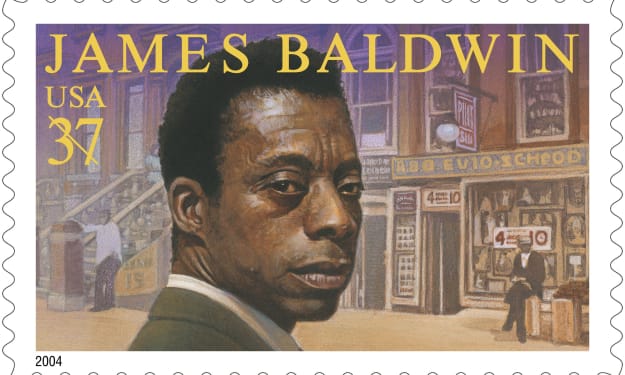
"Go Tell it on the Mountain" by James Baldwin
The first time I ever read “Go Tell it on the Mountain” by James Baldwin I was probably about sixteen years’ old. The way in which I discovered the book was through reading a review about it in another book. Realising I hadn’t read the book it was talking about, I sought out the book, read the book and then re-read the review after falling absolutely in love with the novel. This book really did change the way I thought about African American Novels and opened up a whole new world of literature to me in which children and adults alike were well aware of the experience of growing up African American in a White American Society at what was a pretty turbulent period in modern history. It really influenced my view on African American writing and allowed me to keep it as the standard or the bar for what was to become my investigation into the Harlem Renaissance and its most famous novels.
By Annie Kapur6 years ago in Geeks
A Guide to the Works: JF Powers
Illinois born author JF Powers is probably best known for his work during the Catholic Revival Era of literature and his characters such as Father Urban from "Morte D'Urban" showcase this in some of the best ways possible. In his work on "The Catholic Imagination in American Literature", theorist Ross Labrie writes about Morte D'Urban as presenting the 'bifurcated nature of the role of the priest' (Labrie, p.183) - which is possibly the clearest way of explaining what most of Powers' fiction. It is a critique of how religion changed in America after the second world war and not only does it have themes of Christianity, it has themes that are linked to the changing view of Christianity at a critical turning point in American industry. There are so many great things about the works of JF Powers and we're going to discuss some of them here today on the anniversary of his death.
By Annie Kapur6 years ago in Geeks
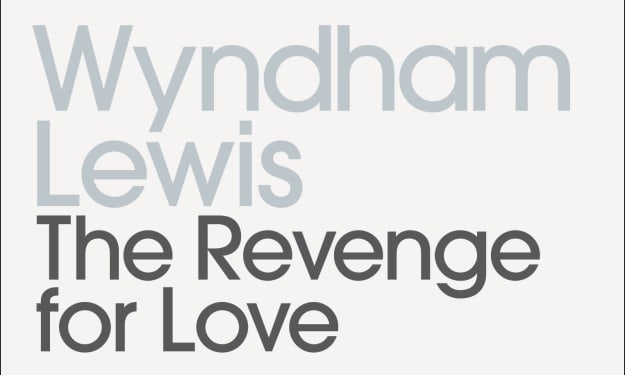
“The Revenge for Love” by Wyndham Lewis
Wyndham Lewis’ “The Revenge for Love” is set in the days of the Spanish Civil War and stars a cast of characters who each have damning secrets, each of them fail to fit in with the rest and they each have some sort of Shakespearean Fatal Flaw that seeks to eat them up from the inside. The book bases itself on the deception of feelings, face, situations and the manipulations of power that are, in most ways, typical of a machiavellian character. Especially where the protagonist, Percy, is concerned - he goes as far as calling Machiavelli’s “The Prince” the book with the most truth ever written. Throughout the novel, masks and deceits play out as complex tensions between various characters and foremost, we have the fact that the protagonist is in jail. From this, the reader is spun off into a turmoil that threatens every character that has dared to become involved with him at all. Whilst the war becomes a political wave of destruction, the characters fail to keep up with the Spanish when it comes to revolution as fast as physically possible. The non-Spanish characters fail to also meet the standards required and find themselves lying even about their own identities to appear to be all on the same side. It is this that leads the reader to the end of the novel and yet, there is no real ending at all.
By Annie Kapur6 years ago in Geeks
"Less Than Zero" by Bret Easton Ellis
I first read “Less Than Zero” by Bret Easton Ellis when I was sixteen years’ old and I was just about to finish school and go to sixth form. I discovered the book on a shelf at the library whilst I was looking at Nick Cave’s “The Death of Bunny Munro”. It was a bright yellow, like a light bulb with pink capital letters that said “Less than Zero” across it. A silhouette of every American teenaged boy ever and a look of almost complete despair about the book even though it was brightly coloured, made me want to read that one and put Nick Cave on hold until the next day. Little did I know that I would become obsessed with this book for just over a year and everything I did, even to the way I spoke, contained lines that came from this text.
By Annie Kapur6 years ago in Geeks