
"Tess of the D’Urbervilles" by Thomas Hardy
A Reading Experience (Pt.18)

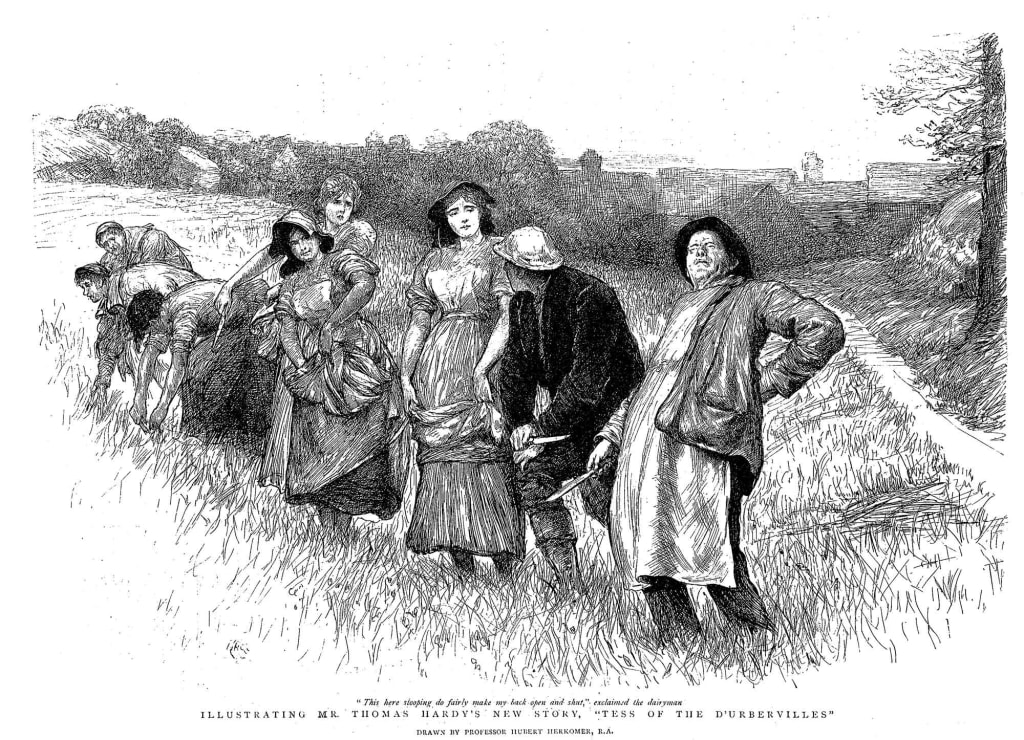
It has been just about ten years since I first read Thomas Hardy’s magnum opus “Tess of the D’Urbervilles” and I read it mostly because it was everywhere. I remember it being in bookstores with these amazing clothbound covers on the copies and I managed to save come money in order to get myself one. This was how I discovered the book. I was simply in a bookstore looking at the clothbound edition of “Anna Karenina” when near it was Thomas Hardy’s “Tess of the D’Urbervilles” and simply realising I hadn’t read it and it looked interesting, I bought it. (Since I also already had a copy of “Anna Karenina” - nobody was letting me buy another one). My first reading experience of “Tess” was pretty disturbing because I found myself really upset for a few days afterwards because of the way I believe Tess was treated unjustly. The book managed to change my opinion of what could happen to people who were the protagonists of their own novels, and I thought that sort of stuff only happened in Shakespeare’s plays. How wrong I was.
My favourite character in this book was possibly Angel because he seems to have the contemplative nature that I’ve always enjoyed in characters of literature. He is a calm and collective character with a will and moral compass to do right. His best attribute is definitely his patience and his tranquility. He is a character who, through times of strife, can remain at ease until a solution is found. Whether the solution is correct or not seems to make no difference - but he requires there to be a solution before acting upon the problem. Unfortunately, Angel’s biggest downfall is his moral compass. When I say that a moral compass of a character can be too strict, I am referring specifically to Angel Clare of “Tess of the D’Urbervilles” by Thomas Hardy. I am referring to his lack of will to action, I am referring to his patience taking over his life, I am referring to his religion basically making him a implicit misogynist and possibly even a classist. Though he is not rich himself, Angel Clare seems to have this belief that everything bad that happens to you happens because you have sinned and so, when bad things happen to Tess, Angel thinks that she must have sinned - which she has not. It is one of Angel Clare’s biggest faults and ultimately costs him his love for Tess. He is a lot like St. John Rivers from “Jane Eyre” - all will and intention and no appropriate action. Angel represents though the society and the moral compass of the church during the time in which the book is written. Angel represents the faults of religion and the way in which faith is used to scare and manipulate people into not only being true to their religion but also manipulates them to ostracise those whom they feel are acting out of faith. It is a fear game and Angel Clare is its biggest victim.
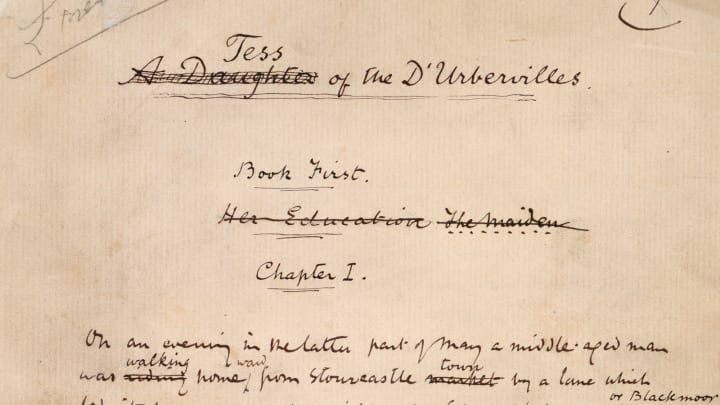
A key theme in this book is morality and I know I’m going to mention Angel Clare again. But he seems to be the most three-dimensional character out there in the novel. Each character has a different moral compass and the only person in the book who has a moral compass that is balanced exactly right is definitely Tess. Her moral compass seems to be fixated in always trying to do what is right over trying to do what she wants. She puts her needs first. He family requires money, she requires a good marriage, she requires to keep faith in order not to disgrace herself. But the moral compass of strictness that Angel Clare has and the feigning moral compasses of the other characters of the book make it almost impossible for Tess to survive in their world. Therefore, the characters are playing out the theme like a game of tug of war. It’s pulling and pushing the balance of the moral compass so much that eventually, the compass will break and Tess will get something cruel and unjust that she does not deserve but has been put on to her by the other characters. The theme of the moral compass is used because of its relevance to society at the time the book was written. Thomas Hardy knows that this is a time of moral relaxation and that people are becoming more and more immoral by the day. But, it is also a time of great fear of the oncoming century. It is a time of fear through the church and the books written at this time such as “The Picture of Dorian Gray”, “Dracula” etc. seem to reflect a devilish glow. Both are entirely too much according to this novel. Thomas Hardy is basically showing us what happens when these over the top moral compasses are used in a society that requires a balance between the two and Tess is that balance almost personified. It impacts the way you read the book because upon first glance, all of us really do believe that Angel Clare is a good human being. And he is. But as the book progresses, you begin to see the limitations of his character and the way in which his moral compass is so strict that Tess seems to be dragged into a world in which whatever she does in her daily life is called immoral and wrong. Ultimately, Angel’s intentions are good, but the appropriate balance and action is simply not there.
This book has meant a lot to me over the years and it introduced me to the other works of Thomas Hardy such as “Jude the Obscure” and “Return of the Native”, “Far From the Madding Crowd” and “The Mayor of Casterbridge”. My latter reading experiences especially when it comes to tragic novels, has been keenly influenced by what I have read and analysed in “Tess of the D’Urbervilles” and the other Hardy works. I have realised that through my re-readings of this book that the most important thing about the text is the way in which the characters prove to be the complete opposites of each other. And that, I believe, is also the best thing about it - there are so many different personalities to explore and each of them represent a section of the society in which Thomas Hardy himself is writing.
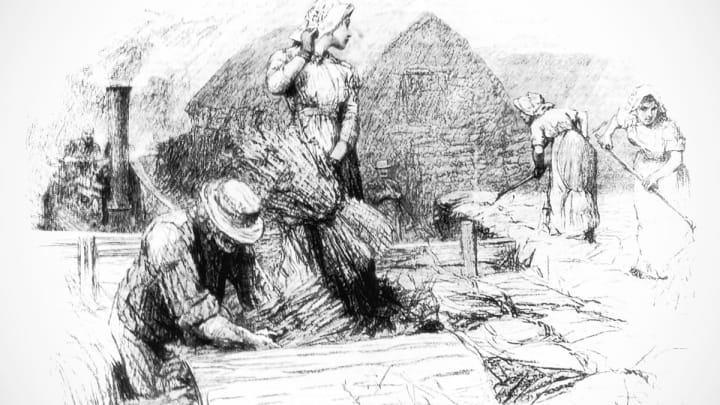
I think far more people should read this book because it really does take you into the darkness and tragedy of the female existence, it is one of those books which is profoundly sad but also deeply moving. People still read this book today (and I know a lot of people who state that this is their favourite book of all time) because of the fact that there is so much to learn from each character in the book. Every character teaches us something and upon my next re-read of this book, I want to define exactly how much Angel Clare has taught me over the years.
“Beauty lay not in the thing, but in what the thing symbolised.”
"Tess of the D'Urbervilles" by Thomas Hardy
About the Creator
Annie Kapur
I am:
🙋🏽♀️ Annie
📚 Avid Reader
📝 Reviewer and Commentator
🎓 Post-Grad Millennial (M.A)
***
I have:
📖 300K+ reads on Vocal
🫶🏼 Love for reading & research
🦋/X @AnnieWithBooks
***
🏡 UK
Keep reading
More stories from Annie Kapur and writers in Geeks and other communities.
World Refugee Day: Ten Books on Refugee and Immigrant Voices
Every year on the 20th of June, World Refugee Day is celebrated internationally as it is a day where we respect and honour the most vulnerable members of our society who constantly risk their lives in hope that they can find safety.
By Annie Kapur6 years ago in Geeks
A System That Isn’t Working Challenge Winners
Systems promise order. They organize behavior, distribute opportunity, and suggest that if everyone follows the rules, things will work. The entries in A System That Isn’t Working look closely at what happens when that promise begins to slip.
By Vocal Curation Team4 days ago in Resources




Comments
There are no comments for this story
Be the first to respond and start the conversation.