

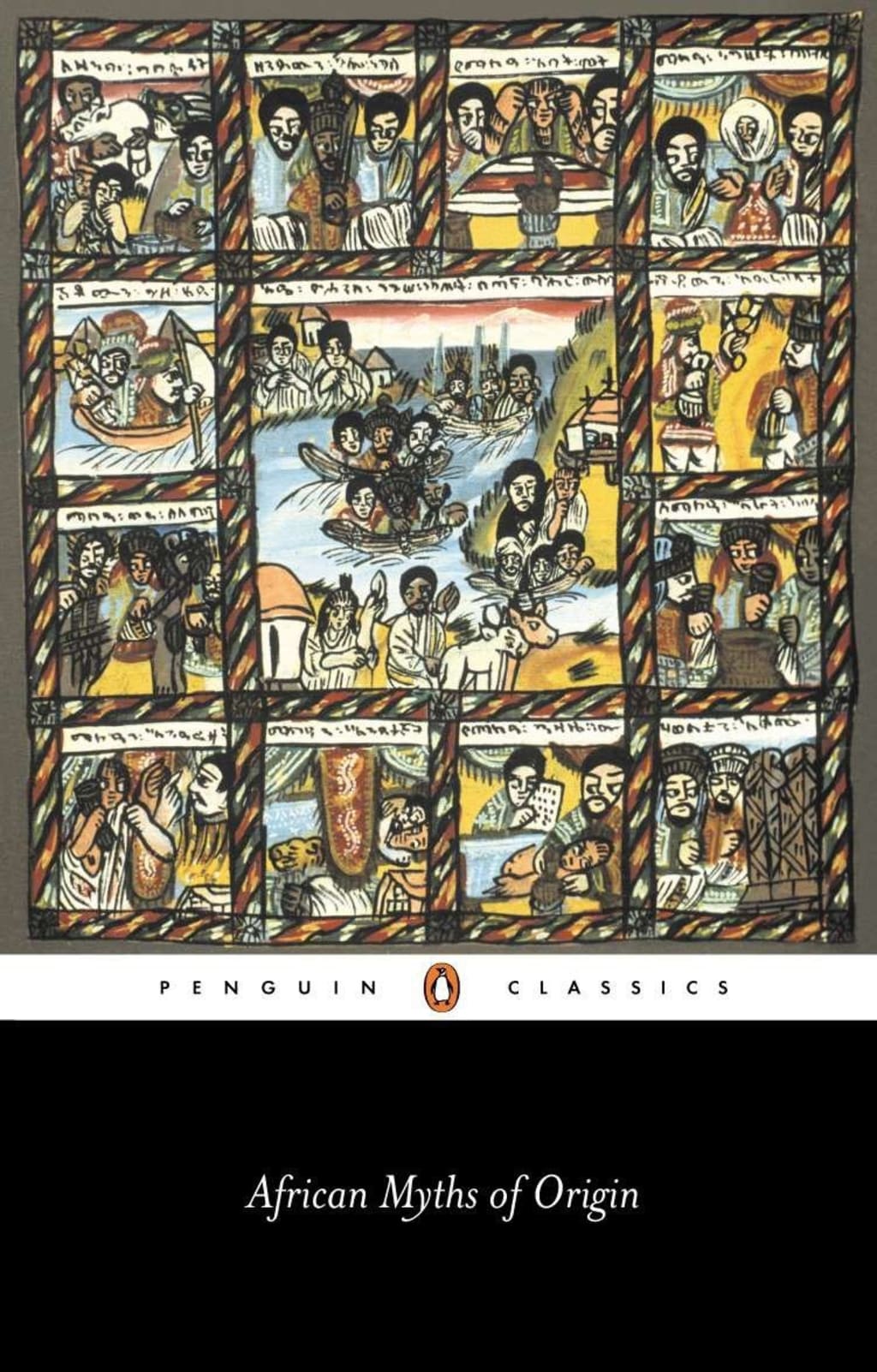
“African Myths of Origin” is a book that concerns the different regions of Africa, their creation stories and theme-based narratives. Themes of hunting, food, humanity, morality, death and dying, the Gods, supernatural ability, war and battle, masculinity vs. femininity and others prove that these stories are not only well-written and sophisticated but also prove that these narrators understand the very essences of human existence. Along with the ability to make it into an entertaining narrative, a lot of these stories echo and almost Biblical experience of life. The outline of the book is to treat these historical stories as a part of a geographical location and an entire population of people. The most notable thing is how all of these themes link together to make a narrative that contains a teaching, a tale and characters who are relatable to any time and place. As the narrative states on the theme of hunting: “the original human lifestyle is foraging mixed with hunting.” (p.3). Thus showing that the nature of humans looking for food is not only important thematically to the stories, but is also a quintessential part to every human no matter upon place, time etc. Past, present and future, humans will always require food to survive and this is only one of the bases of human existence that is seen in the book.
Human violence is a key theme of the book and normally leads to bad unless the human violence is against animals for food or clothing. In some cases we get human vs. human violence or human violence where one human inflicts harm upon another intentionally. These are abrupt sections of the narrative there to create a turn or tension either between family members or genders.
“But Musa did not listen to her. He threw the hira on to the ground and then cut its throat with his knife…” (p.23)
Now, this is not just human vs. animal violence or hunting violence, this is also a tension between two men in order to prove their masculinity. This masculinity is basically the very essence of hunting itself. Hunting is a male sport and so, one male becoming ‘more’ or getting ‘better’ than another male would obviously create tensions.
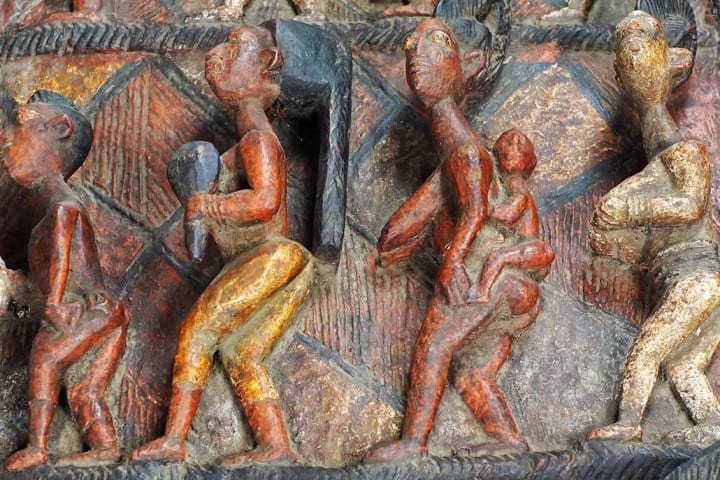
Another aspect that hunters have that others require in this book is magic. Hunters acquire magic healing powers in the text and it is clear that with these powers, violences may be set aside or overlooked. More importantly though, hunters become more well-respected amongst the higher social classes.
“Word reached the king of that country that a hunter had a means for treating sickness, and that it involved a spirit who lived in a mound of the earth.” (p.39)
Thus showing that the hunters learning magic seem to lessen the blow of their inter-gender violence towards each other and elevate their status amongst the upper classes. This then shows that the hunter becomes not only more important, able to do more things but it also shows how the hunter became important amongst the monarchy. The climb is extremely important to the inter-gender violence because it is the elevation that decides which man, if either, will be victorious in the space of their gender.
Humans and nature is also an especially important in the text. The relationship between humans and nature is not only there throughout their lives but also at the beginning and the end. It is an awesome depiction of how humans can interlock with the natural world, how they come into being from the natural world and how they will return to the natural world once they are gone. In the story of Murile, we see this exactly as is:
“…he slipped into the storeroom and removed the root; he found a hiding place for it in the hollow of a tree-trunk. There he sang a spell over it and poured water upon it. The next day, when he returned, he found that the root had become a little child…” (p.69)
This shows that not only do humans require to respect the natural world in order to get what they want from prayer, but that humans also come from the natural world through prayer. There is something incredibly cyclical about this. It is after this within the same story that Murile dies. The reader then sees the cyclical reality of life amongst and respecting the natural world:
“But with each mouthful, his body sank further into the ground until he was completely swallowed up by the earth. So he disappeared, leaving his cattle and goats as the wealth for his family…” (p.73).
But in the cases of people who die after being evil, committing trickery or murder, death comes along asa punishment and to be able to return to the earth is seen as a privilege. This is definitely a privilege that the evil in life do not have. Death and burial are therefore withheld:
“Moni-Mambu asked for some water but the chief said no. Then he told a young man to fetch a spear from his house, and when the young man returned the chief told him to stab Moni-Mambu. So the young man did and Moni-Mambu died. But they did not bury him.” (p.87)
In this story, it is clear that there is a link between goodness and burial rites, as were in the previous story. The dead only become buried when they are redeemed, they do a deed for another person or cause that is considered whole-heartedly good, or when the natural world thinks of them as ‘good’ and swallows them up into the earth. But when other characters die other than the main characters of the story, there is definitely a ‘missing’ element in which the main characters react with sorrow and the will to survive. In the story of the ‘Two Brothers’, this becomes clear through the way in which they react after the deaths of their parents:
“Anubis and Bata were brothers. After the death of their parents, they lived together, and the elder, Anubis, cared for the younger Bata as would a father, feeding and clothing him. Bata, in turn, served his brother in the field, ploughing, sowing and reaping or watching the cattle according to the seasons. Because he was dutiful and kindly, the cattle took to him. They would indicate to him where the best pasture was to be found or anything else they needed. Therefore, the brothers’ herds were the finest in the region.” (p.129).
Thus is shows that the will to survive, mixed with the sorrow of the dead parents creates something not only good, but death creates new life. The new life is the herd which continuously grows and takes to the brothers. It represents the natural world coming together with the humans in a time of crisis. But when the aspect of death does come along, it should not be surprising since Death itself states that it will inflict itself on humanity at whatever cost. In the story of Kintu, this is more than just true - this is a result of Kintu’s actions:
“He told Kintu that the children had ruined his plan, and that he was tired of hunting Death. He would return to his father’s house. Kintu thanked him and since that time Death lives on earth and kills people freely…” (p.179)
Thus, it is because of Kintu recommended that he and his colleagues hunt Death that Death now lives and works among humanity. The question of whether this is a punishment clearly or partially an essential part of human life hangs in the balance and is never really made clear in any story in the book. That is the very nature of death, sometimes it is planned, sometimes it is not. This though, not only happens to humans - but also happens to animals:
“He ordered the lightning to strike Ombure, and by the power of the talisman the lightning was forced to obey. The bolt fell from Heaven and struck the crocodile between the eyes. The crocodile grunted and died.” (p.267)
Therefore, in the world of animals and humans, nature and weather, the reader sees that everything is connected and that living in equality with all seems to be the main importance of lessons in these stories. From the way in which we see how equality balances every situation, the moral is based on how well each character can maintain the balance whether it be an animal, a human being or even a plant that transforms into a human.
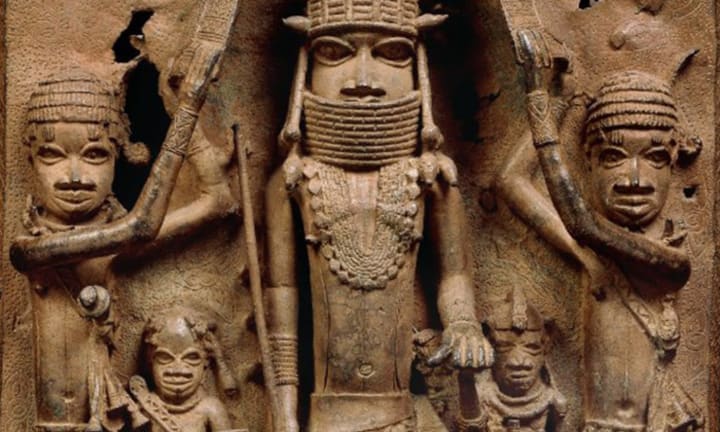
In conclusion, we can definitely see how the balance of humanity depends on the entirety of the natural world. It is a balance that must be maintained in order to acquire true happiness and harmony in human nature. Otherwise, we will all suffer greatly for it. Applicable to the current environmental crisis, these stories continue to be not only relevant but prophetic of our own age and times of crisis.
About the Creator
Annie Kapur
I am:
🙋🏽♀️ Annie
📚 Avid Reader
📝 Reviewer and Commentator
🎓 Post-Grad Millennial (M.A)
***
I have:
📖 300K+ reads on Vocal
🫶🏼 Love for reading & research
🦋/X @AnnieWithBooks
***
🏡 UK
Keep reading
More stories from Annie Kapur and writers in Futurism and other communities.
A Filmmaker's Guide to the 60 Things You Should Know About "2001: A Space Odyssey" (1968)
In the Uptown Theatre, Washington D.C on the 2nd of April, 1968 - Stanley Kubrick premiered the epic space film, "2001:A Space Odyssey" (1968). It is clear that this film is one of the greatest films ever made with most people citing it as one of the greatest examples of the Greek/Shakespearean Tragedy in space. It is a brilliant film and a true cinematic experience to watch. Personally, I've seen it a few times and even after watching it a few times, it is still just as overwhelming as it has always been.
By Annie Kapur6 years ago in Futurism
Optical Coherence Tomography Market: Regulatory Approvals, Clinical Adoption Trends & Growth Outlook
According to IMARC Group's latest research publication, The global optical coherence tomography market size was valued at USD 2.6 Billion in 2025. Looking forward, IMARC Group estimates the market to reach USD 7.0 Billion by 2034, exhibiting a CAGR of 11.13% from 2026-2034.
By sujeet. imarcgroupa day ago in Futurism
Top tipple tricks
Been thinking a lot about drinking, lately. Not least because of a recent episode of over-indulgence and the inevitable after effects. Some readers may recall the earlier articles I wrote about beating the booze. Here I set out an experiment in techniques for cutting down on my alcohol intake. The experiment was successful, the techniques worked, and I have armed myself with an arsenal of weapons in the war against the demon drink. I have yet to fire the first round however. It's all a question of timing (perhaps procrastination).
By Raymond G. Taylor3 days ago in Psyche




Comments
There are no comments for this story
Be the first to respond and start the conversation.