
The Saga of the Twin Islands The Echo of the Pink Coral and the Secret of the Wind
The Echo of the Pink Coral and the Secret of the Wind
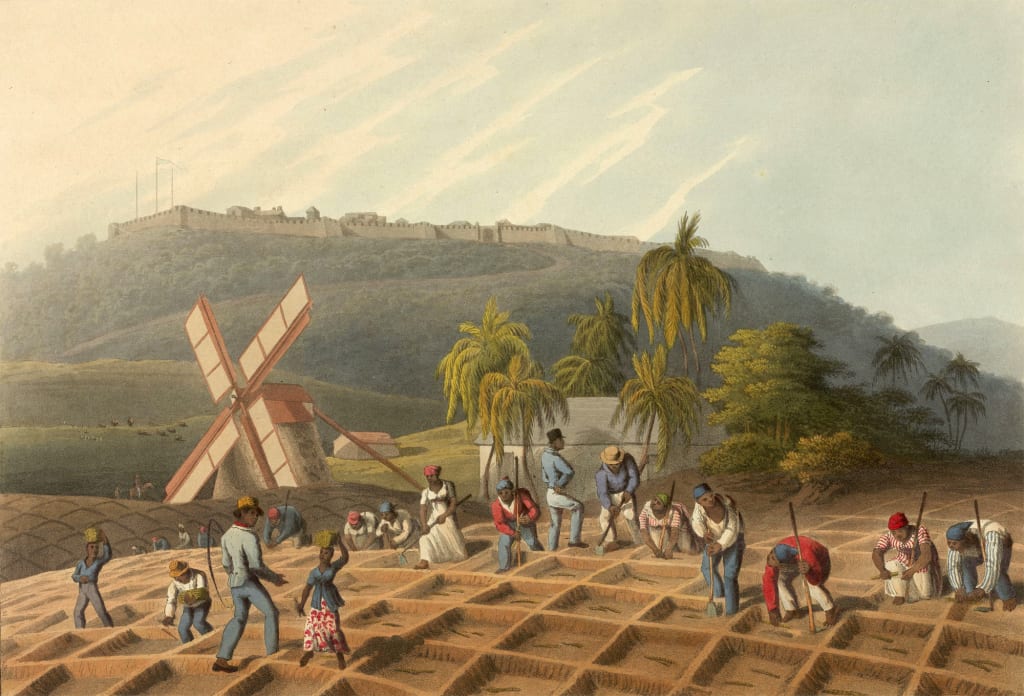
The beginning is not a year, but a whisper. A whisper carried by the east wind, murmuring tales between the islands of the Lesser Antilles, places that the gods sprinkled upon the boundless blue. In those times without maps, when the land of Wadadli was young, it vibrated with the life of the Arawak people, who also gave it its name: "Our land." Wadadli had a younger, more modest sister, a flat land of coral, called by the same people simply and with reverence: Wa’omoni, "The land with holy waters." These were to become, through centuries and through blood, Antigua and Barbuda.
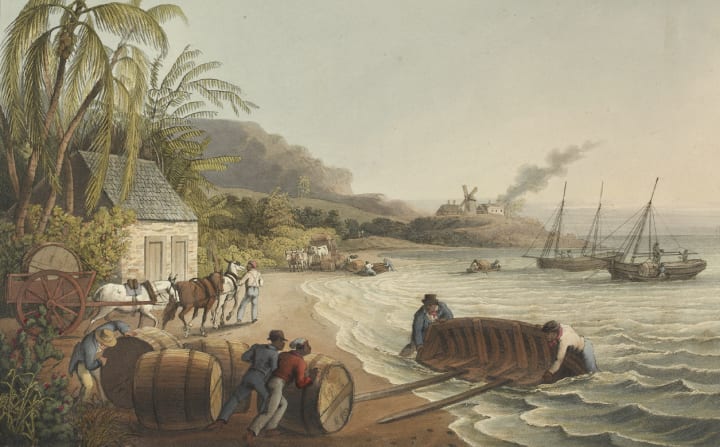
On Wadadli, rising on gentle volcanic hills, lived Kaira, the young oracle of the tribe. Her eyes saw not only the turquoise and sapphire shades of the water, but also her future. Kaira could read the future in the slow movement of fish schools and in the way the corals grew. Her gift, however, was also a burden, for it showed her not only beauty, but also the shadow stretching beyond the horizon. She knew that the days of unbridled freedom were numbered.Kaira’s heart, however, belonged to the land of Wa’omoni. There, on the low, isolated, and mysterious island, lived Fregat. His name had been given to him by his mother because he was lithe, strong, and had a mystical connection to the sea. He knew every reef, every hidden passage, every mangrove lagoon. Above all, he was the guardian of the Frigate Bird Sanctuary, where thousands of males with red gular sacs, swollen with love, soared above the waters, never touching them. Fregat loved the freedom of these creatures.The love between Kaira of Antigua and Fregat of Barbuda was a metaphor for the bond between the islands: Kaira was the high, visionary soul, anchored on volcanic soil, and Fregat was the hidden heart, the protector, who floated at sea level. They met on a neutral, rocky islet (the precursor to Redonda), beneath the nocturnal sky, where they swore they would preserve the freedom of their islands at any cost.In the year 1493, Kaira’s prophecy came true. A white sail, larger than any cloud, appeared on the horizon. Aboard it was Christopher Columbus. The navigator, tired from his journey, sighted the two islands one after the other. He, who did not understand the subtlety of colours, snatched away their ancient names. He named Wadadli Antigua, an homage to the Santa Maria La Antigua cathedral in Spain. He named Wa’omoni simply Barbuda, either for its shape or its vegetation.Columbus left. He did not colonize Antigua or Barbuda, but his act of renaming was the first act of violence against their spirit. The native populations, though frightened, remained. The islands enjoyed a brief period of peace, until a more determined force arrived.In 1632, the English landed on the shores of Antigua. Discovering the fertile soil for sugarcane and benefiting from the deep, safe harbours (like English Harbour), they established a naval base. The era of large plantations began, and with them, the system of slavery, bringing thousands of Africans to the coasts of Antigua.
The terror on Antigua began to seep into Barbuda as well. Plantation owners, under the name of the Codrington family, started using Barbuda as a "slave nursery" or for grazing. But the small island, full of mangroves and treacherous currents, was difficult to subdue.Fregat became, from a fisherman, a hero of the resistance. His knowledge of the shallow waters, which made navigation impossible for large ships, turned Barbuda into a sanctuary for those fleeing the plantations of Antigua. He used the network of caves and secret passages. Rumours of Fregat's courage reached the masters' ears.In English Harbour, on the coast of Antigua, reigned an English Admiral, a figure of relentless power, nicknamed Mut by the enslaved people on the plantations—the one who does not listen, the one who is silent, yet acts with cold cruelty. Admiral Mut was obsessed with crushing the spirit of revolt in the Caribbean, and the existence of a free sanctuary on Barbuda was a personal offense to the Crown.Admiral Mut ordered the blockade of the waters between Antigua and Barbuda. A brutal hunt began, and Fregat, though agile, was increasingly isolated.Kaira, who could not leave Antigua without being captured, felt her beloved's pain through the echo she heard in the conch shells. She knew a confrontation was inevitable, and their physical strength was not enough.So, on a moonless night, Kaira made a risky journey, avoiding Admiral Mut’s patrols, towards English Harbour. She reached the old naval dockyard, a place full of shadows and the smell of burnt wood, where Fort James had been erected. There, on the grey stone wall, she raised her hands.She did not ask for help from the gods of war. She asked for help from the essence of the islands: the wind, the salt, and the coral.“Do not let me be a slave to fate!” she cried in a whisper to the dark ocean.In that moment, Kaira understood that the sacrifice had to be hers, and the liberation, his. She could not destroy the system of slavery, but she could protect Fregat, the symbol of the resistance of the island of Barbuda.
At dawn, Admiral Mut found in front of the dock, not a body, but only a small piece of pink coral, placed on a stone slab. The coral was warm. The Admiral, failing to grasp the significance, took it as a strange warning and ordered: “Load the cannons. We shall definitively conquer Barbuda and eliminate this hotbed of revolt.”Kaira, however, had vanished. Her soul had transformed into pure energy. She had become, according to the legend, the force of the air and the coral.On its way to Barbuda, the Admiral's fleet encountered a strange phenomenon. The wind, which had been calm, began to blow in furious gusts, but only against the English sails. Moreover, in the shallow waters, a new coral bank, sharp as a blade, began to grow rapidly, blocking the passage.These new coral formations, having an unusual bright pink colour, were as sharp as the ring Kaira had left behind. They were a magical barrier. The fleet was forced to retreat, its ships battered.Admiral Mut never tried to conquer Barbuda again. He continued to rule Antigua, but the island's spirit had been fractured. The rumour spread: Barbuda was protected by a spirit of the waters, and its beaches bled the colour of an Oracle’s sacrifice.Fregat understood. He continued his mission, and Barbuda remained, for centuries, a beacon of relative freedom in the sea of suffering on Antigua. When Fregat passed away, it is said that he was transformed into the strongest coral reef, the one that protects the coasts even today.Their legacy is alive: the beaches of Antigua are the most beautiful, but they bear the scars of the forts. The beaches of Barbuda carry the colour pink, a permanent echo of Kaira's sacrifice and the freedom won at the price of love...
About the Creator
alin butuc
I am a passionate writer of stories and books. I explore the human soul, from deep psychological thrillers to heartfelt romance. Join me on a journey through words and discover a world of memorable characters and powerful emotions.
Keep reading
More stories from alin butuc and writers in History and other communities.
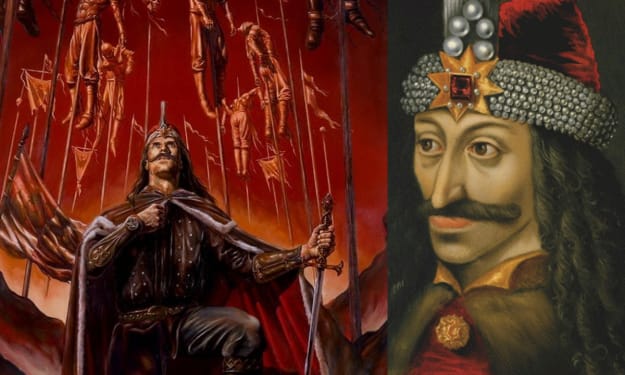
the ruler of the Romanian countries vlad tepes
In December 1476, the air cut like an icy scimitar across the frozen plain of Bărăgan. Vlad, the Ruler of Wallachia, known to his enemies as Drăculea, felt his throne as brittle as the ice beneath his horse’s hooves. Though he had regained the throne with the aid of Stephen the Great and Bathory, he knew that peace was only an illusion under the cold, starry sky. The Ottomans were lurking on the Danube, and the Wallachian boyars, always a tangle of snakes ready to strike, had bowed their heads only long enough to see his feet leave the princely court.Vlad was nearing 45, but his steel eyes, etched by years of captivity in Buda and bloody campaigns, retained the intensity of a cornered wolf. He was left with a small army of loyal Moldavians, delegated by Stephen, and a few Wallachian faithful. They were too few to withstand a full invasion, but enough for one last battle.
By alin butuc5 months ago in History
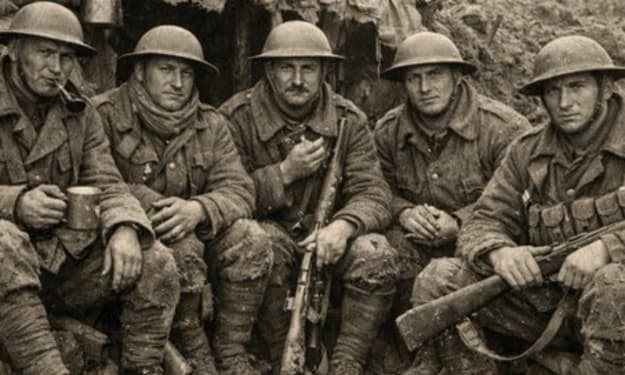
The Year 1916 in Review: Fun Facts, Trivia, and Historic Highlights
This quick read is a collection of fun facts, trivia, and historic events from the year 1916. Discover the year’s top news stories, most influential people, sports trivia, grocery prices, entertainment news, and much more.
By Gregory DeVictor7 days ago in History

Comments
There are no comments for this story
Be the first to respond and start the conversation.