
the ruler of the Romanian countries vlad tepes
The Romanian country.
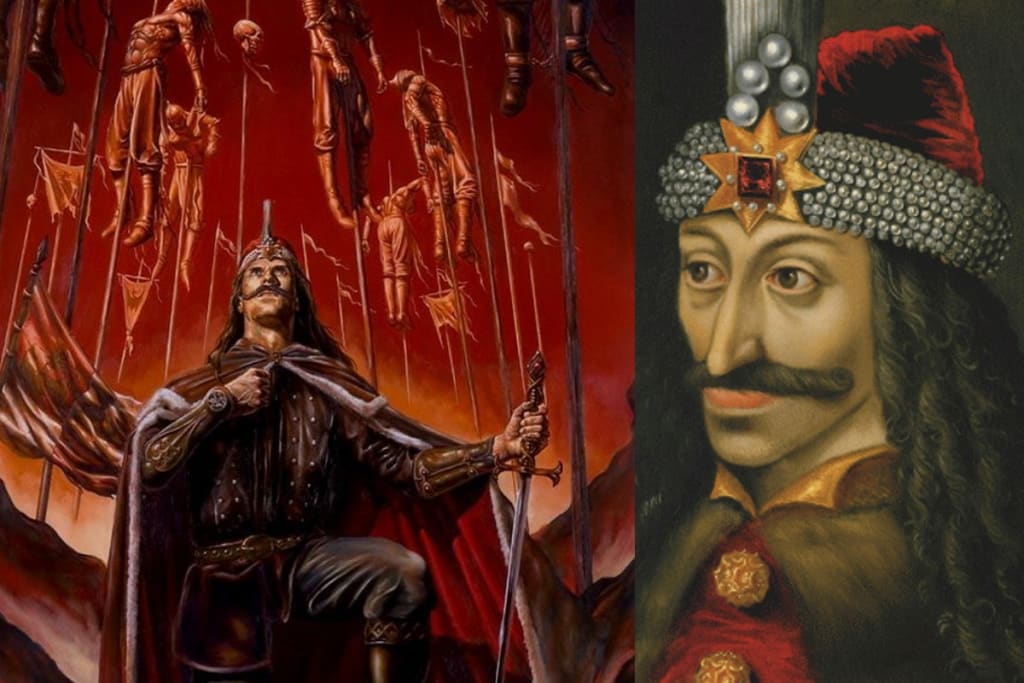
In December 1476, the air cut like an icy scimitar across the frozen plain of Bărăgan. Vlad, the Ruler of Wallachia, known to his enemies as Drăculea, felt his throne as brittle as the ice beneath his horse’s hooves. Though he had regained the throne with the aid of Stephen the Great and Bathory, he knew that peace was only an illusion under the cold, starry sky. The Ottomans were lurking on the Danube, and the Wallachian boyars, always a tangle of snakes ready to strike, had bowed their heads only long enough to see his feet leave the princely court.Vlad was nearing 45, but his steel eyes, etched by years of captivity in Buda and bloody campaigns, retained the intensity of a cornered wolf. He was left with a small army of loyal Moldavians, delegated by Stephen, and a few Wallachian faithful. They were too few to withstand a full invasion, but enough for one last battle.
The Shadow in Daia
It is said that Vlad was pursuing a band of treacherous castelans who had sided with the Sultan. Others claim he was en route to Târgoviște when he received news of an Ottoman attack near Giurgiu. What is certain is that, by nightfall, the Ruler reached the village of Daia, a place where the hills squeezed tightly on the road toward the fortresses on the Danube. The night was pitch black. Vlad and his small bodyguard had stopped to rest in a clearing, beneath a massive oak, amidst the freshly fallen snow.Aboard his horse, black as night, Vlad inspected the makeshift camp one last time, his hand resting on the hilt of his scimitar.Vasil, do you smell smoke?” he asked the Moldavian captain, a massive man with a reddish beard.Vasil, his sense of danger sharpened by years of war, inhaled deeply. “No, Your Highness. Only the cold and the resin. But I feel something else… a silent disquiet. Perhaps the boyars are hiding nearby.”Vlad said nothing. In recent years, he had grown accustomed to disquiet. This was his country: a canvas of foliage and earth, woven with treachery.
The Boyars' Trap
The peace of the winter was torn by a sharp howl. It was not the shout of an Ottoman army, but a mix of yells and the clang of swords, coming from the thick pine forest.They are not Turks!” Vlad shouted, drawing his sword. “They are Wallachians! Traitors! Boyars!”
In the next moment, shadows poured out from among the trees—men with faces covered by cloth masks and hoods, led by a tall man whose armor made a faint metallic sound. It was Stanciu, a boyar from the Dăiești lineage, an old enemy of Vlad, suspected of being paid by the Turks.The fight was short and brutal. Vasil’s Moldavians, though few, fought with fury. But the attackers were many and knew the terrain perfectly.Vlad fought like a lion. He cut, stabbed, and held his ground against three enemies at once. He was not merely a ruler; he was a formidable swordsman. He brought Stanciu down with a powerful blow, the boyar's sword flying into the snow.
“Traitor!” Vlad roared, raising his sword for the final strike.
But at that moment, a second, unseen silhouette emerged from the darkness. Another boyar, Mihnea, who had feigned loyalty to the Ruler. With a lightning-fast movement, Mihnea hurled a short spear.
It struck. Not fatally, but enough to unbalance Vlad.
He tumbled into the snow, his sword slipping from his grasp.
Immediately, Mihnea and Stanciu, aided by a few others, rushed him.
Vlad the Impaler, the Ruler who had sown terror in the heart of the Sultan, did not fall in open combat with an honest foe, but under the cowardly blows of his own boyars. It was a deceitful death, a final betrayal that sealed his fate.
When Vasil and the few surviving Moldavians managed to escape and tell the tale, they confirmed the atrocity: the traitors killed the Ruler and cut off his head, as proof of high treason to present to the Ottomans, who had just arrived in the area.Vlad's body lay in the red snow. The boyars, with the Ruler's blood on their hands, fled.The head, it is said, reached the Ottoman Porte, where it was displayed in mockery. The Sultan, finally relieved of the one who had caused him so much trouble, paid an enormous sum for the Ruler's head.The body, headless, was taken, according to the oldest legend, by the monks of Snagov Monastery, who buried it secretly, away from the eyes of the Turks and the boyars. But his tomb, even the one at Snagov, has never been found.
Epilogue
The legend of Vlad the Impaler, Drăculea, did not end with his death. He was assassinated by his own men, but the terror he had sown in his enemies continued to live on.To this day, the mystery of his death persists:Killed in battle by the Turks, mistaken for a simple soldier?Assassinated by treacherous boyars, paid by the Ottomans or by the new ruler, Basarab Laiotă?Decapitated so that the Ruler could escape and hide, a rumor he himself might have spread?All that remained was a red winter and the story of a ruler who fought until his last breath, but who was vanquished not by the sword of a foreign enemy, but by the venom in the heart of his own subjects.
About the Creator
alin butuc
I am a passionate writer of stories and books. I explore the human soul, from deep psychological thrillers to heartfelt romance. Join me on a journey through words and discover a world of memorable characters and powerful emotions.
Keep reading
More stories from alin butuc and writers in History and other communities.
The Beginnings of the Ottoman Empire
The Ottoman Empire originated in the late 13th century in Anatolia (Asia Minor), where various Turkic emirates emerged after the decline of the Seljuk Sultanate of Rum. The tribe led by Osman I (hence the name "Ottoman") began to expand, taking advantage of the weakness of its Byzantine neighbors and the lack of cohesion among other Turkic tribes.Under successors like Orhan I and Murad I, the Ottomans crossed from Asia into Europe, conquering vast territories in the Balkans. They developed a formidable army, including the famous elite unit of the Janissaries, soldiers recruited from Christian children in conquered provinces, raised and trained to serve only the Sultan. This army was modern, well-disciplined, and effectively used artillery, long before many European armies.
By alin butuc3 months ago in History
A massive underwater stone wall that is almost 7,000 years old is found by divers.
One of the buried stone monuments on Sein Island is a granite wall off Brittany that is more than 7,000 years old and the length of a football pitch. The discovery is being used by marine archaeologists in the vicinity of Île de Sein to explain how stone-built coastal villages predate the widespread spread of farming.
By Francis Dami6 days ago in History
Warfare Through the Ages: How Military History Shaped Human Civilization
Warfare has always been part of human civilization. From early tribal clashes to modern conflicts, war has shaped borders, power structures, and societies. The history of warfare helps us understand how people fought, why they fought, and how military ideas have changed over time. Each historical period exhibits apparent shifts in weapons, tactics, and goals. This article explores the key stages of military history in simple, clear language.
By Matthew Pothoff3 days ago in History
Miss Persephone's Manual to a Seemingly Ordinary Life
Miss Persephone was found at the dining table, her blue eyes swollen, her tears arriving and retreating like the tides of the ocean. Earlier that day, her family had visited her in the retirement home where she had lived for eight years. It was her eightieth birthday.
By Imola Tóth4 days ago in Fiction


Comments
There are no comments for this story
Be the first to respond and start the conversation.