
The Hidden Art of Fore-Edge Paintings: A Glimpse into Bookish Secrets
Art Painting

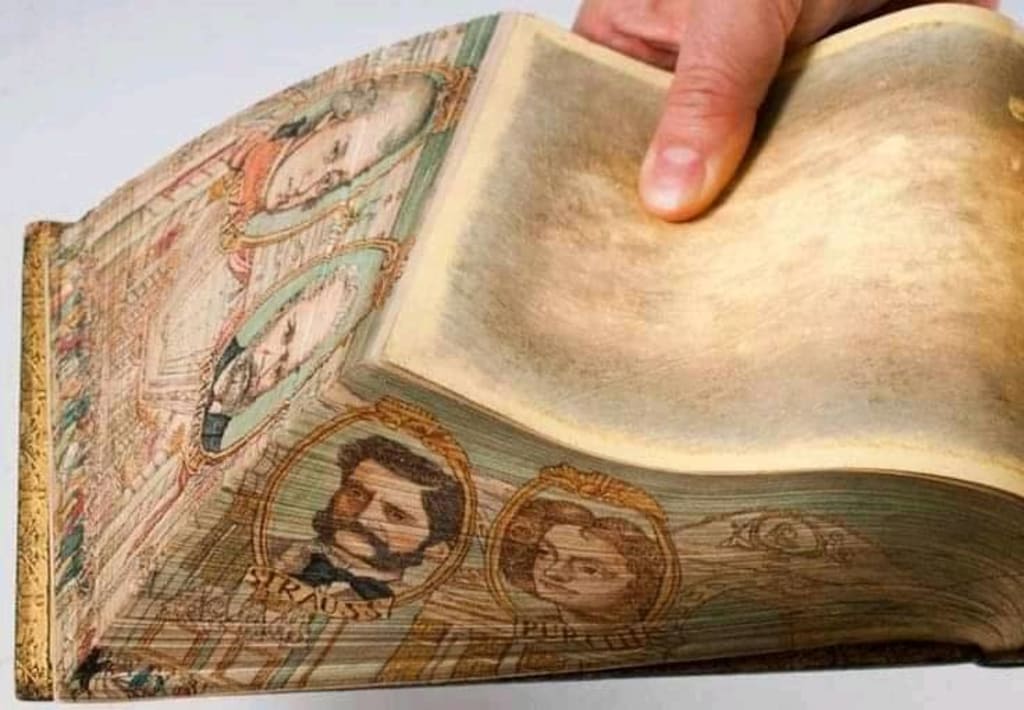
Books have long been vessels of knowledge, art, and culture, preserving the treasures of human history for generations to come. But within the world of books, there is an often-overlooked form of art that blends literature with visual creativity in an incredibly unique way—fore-edge paintings. These miniature works of art, painted on the edges of book pages, offer a hidden glimpse into a secret world of design and decoration. While they are rarely seen by the casual reader, fore-edge paintings have a fascinating history, one that spans centuries and even includes royal intrigue.
What Is a Fore-Edge Painting?
A fore-edge painting is a painting that adorns the edges of a book’s pages. There are two primary types: the "fanned" fore-edge painting and the "closed" fore-edge painting. The first type, known as the fanned edge, requires the pages to be fanned out to reveal the painting. These paintings are visible only when the book is in a fanned position, so they are a hidden gem unless the reader knows to fan the pages.
The second type, the closed fore-edge painting, is more subtle and involves an image that can only be seen when the book is closed. When the book is placed on a shelf, the image remains invisible. However, when the pages are squeezed together or the book is slightly opened, the picture is revealed, offering a delightful surprise for the curious viewer.
Origins of Fore-Edge Paintings
Fore-edge paintings date back as far as the 10th century, though their earliest forms were likely symbolic rather than decorative. Early examples were often simple designs, possibly used for identification or even religious purposes. These early paintings were far less elaborate than the works we see today but still carried an inherent significance in their context.
By the 14th century, fore-edge paintings had evolved in England to feature more intricate and detailed designs. These often included heraldic symbols and family crests painted in gold and other rich colors. The demand for such decorative works surged during the Renaissance period, as more and more books became prized possessions, especially among the wealthy and intellectual elite.
One of the most intriguing aspects of fore-edge painting is its mysterious nature. The art form was not merely about beautifying books; it was also a clever way to hide messages, symbols, or pictures in a place where only the most inquisitive minds might stumble upon them. The practice of painting hidden images, now known as “disappearing” fore-edge paintings, is believed to have originated in the 17th century.
The First Known Disappearing Fore-Edge Painting
The first known example of a disappearing fore-edge painting dates to 1649. This revolutionary technique allowed an image to appear only when the pages of the book were fanned, adding an element of surprise and intrigue to the painting. These works were not merely for aesthetic pleasure but served as a secret language, hiding symbols or messages in plain sight.
The art of disappearing fore-edge painting reached new heights in 1653 with the creation of the earliest signed and dated fore-edge painting. This particular painting, created by an anonymous artist, depicted a family coat of arms on a Bible from 1651. The painted coat of arms was not visible when the book was closed but could be revealed when the pages were fanned, revealing a royal insignia.
The Royal Legend: How Hidden Fore-Edge Paintings Began
One of the most enduring legends about the origin of disappearing fore-edge paintings is rooted in the court of King Charles II of England. The story goes that a duchess, a close friend of the king, would often borrow his books and, on occasion, forget to return them. The king grew frustrated with her forgetfulness and, in an effort to reclaim his books, sought a secret method of identification.
To solve the problem, King Charles II turned to Sir Peter Lely, the court painter, and Samuel Mearne, the royal bookbinder. Together, they devised a clever solution—a hidden painting on the edges of the book’s pages. This secret image would only be visible when the book was opened and the pages fanned, making it an ideal method for identifying books in a way that was both discreet and clever.
The first time the duchess borrowed one of the king's books after the secret paintings had been made, she was unaware of the hidden message. However, during a visit to her home, King Charles noticed a familiar book on her shelf. As he was leaving, he casually reached for the book, fanned the pages, and revealed the royal coat of arms painted on its edges. The duchess was caught in the act of keeping the king’s book, and the king reclaimed his property with a sly smile.
The Art and Appeal of Fore-Edge Paintings Today
Though fore-edge paintings have become a rare and niche art form in the modern world, their appeal has never completely faded. Many collectors and bibliophiles still seek out books adorned with fore-edge paintings, appreciating the craftsmanship and hidden magic within the pages. Contemporary fore-edge paintings are often intricate, with scenes of landscapes, portraits, and historical events painted with incredible skill.
The art form endures because of its rarity and the unique sense of mystery it imparts to a book. As books move further into the digital age, the tactile nature of a beautifully painted fore-edge offers a nostalgic reminder of the artistry that once went into the creation of even the humblest volumes.
Conclusion
Fore-edge paintings may not be visible at first glance, but they represent a beautiful blend of art and mystery that has captivated readers and collectors for centuries. From the 10th century’s symbolic designs to the secret paintings of royal intrigue, fore-edge paintings offer a glimpse into a hidden world of creativity. Whether revealing royal coats of arms or scenic landscapes, these painted edges continue to charm those who are fortunate enough to discover them. In the world of books, they remind us that art and stories are often hidden in the most unexpected places.
About the Creator
Keep reading
More stories from Deji Akomolafe and writers in Art and other communities.
Faithful Unto Death: The Power of Duty and Resolve in Sir Edward Poynter’s Painting
History is often filled with stories of heroism, but few resonate as deeply as the tale of the Roman soldier who perished during the eruption of Mount Vesuvius in 79 AD. His remains, uncovered in the ruins of Pompeii in the early 19th century, spoke volumes about duty, loyalty, and the unyielding human spirit in the face of impending doom. Clad in full armor and gripping his weapon to the end, he became a symbol of steadfastness, a man whose last moments stood as a testament to his commitment to duty, even in the face of death. This poignant moment of history was immortalized in Sir Edward Poynter’s 1865 painting, Faithful Unto Death, a work that continues to stir emotions with its raw portrayal of fear, courage, and loyalty.
By Deji Akomolafeabout a year ago in Art
The River and the Drops
High in the mountains, where no one watched and no one applauded, tiny drops of water slipped from melting snow. Each drop was small, almost invisible, and carried a quiet fear within itself. They began their journey without knowing where they were going, only knowing that they were moving away from where they began.
By Sudais Zakwan6 days ago in Art
Silver Screen Magic with Mae West
American actress and singer Mae West became a popular film actress during the Great Depression. She started entertaining in vaudeville, then performed on Broadway, and finally went to Hollywood. She signed up with Paramount Pictures and made her debut in the 1932 film “Night After Night.” She also starred in musicals, comedies, and crime dramas. The American Film Institute named her one of the best classic Hollywood actresses.
By Rasma Raisters5 days ago in Geeks




Comments
There are no comments for this story
Be the first to respond and start the conversation.