
Are Graffiti Artists Criminals?
Another dive with A.I. and art

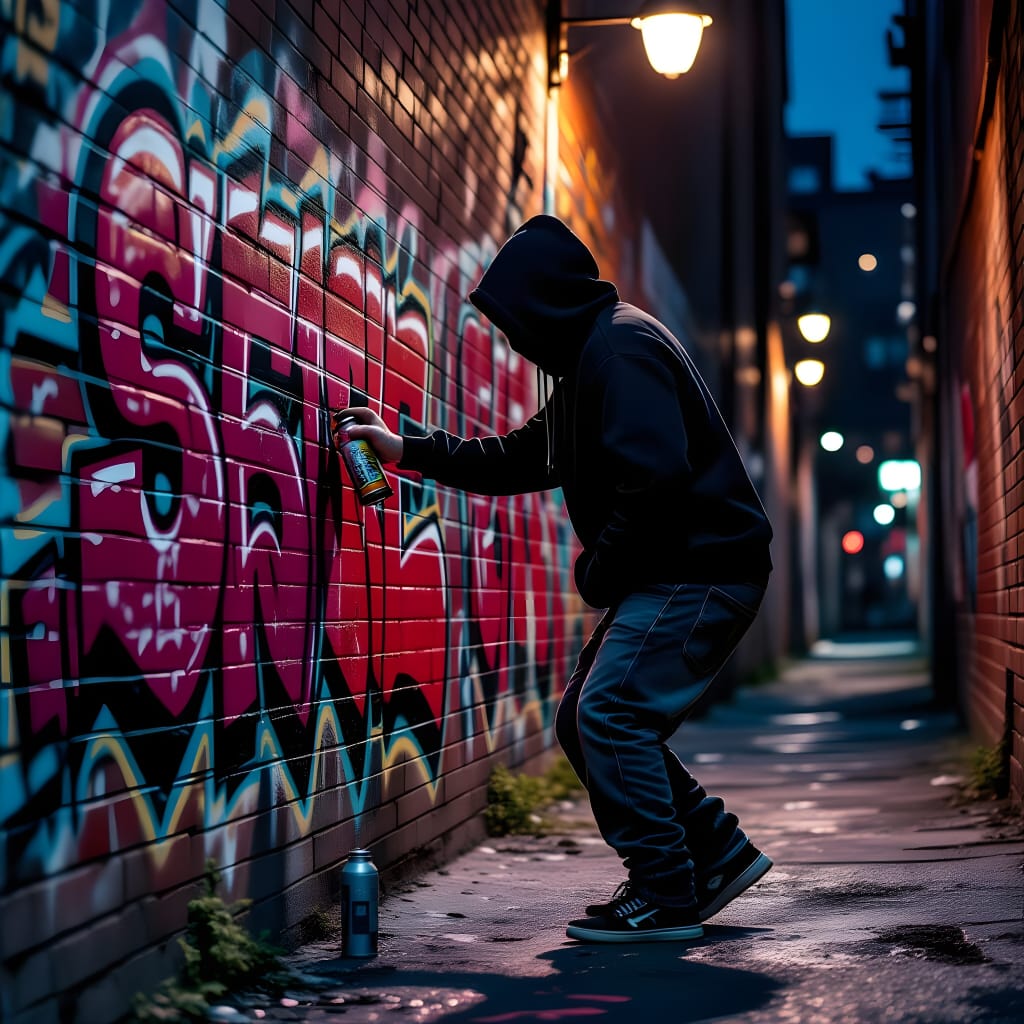
Is graffiti art or a crime? This question may appear to be ridiculously simple on the surface. The reasoning is straightforward: graffiti is a crime if it is created without the person's permission, and therefore it is illegal, and the perpetrators are criminals. But this either/or thinking, where people are either criminals or artists, is actually quite simplistic. Graffiti is more than just a crime, and it has multiple meanings.
This article aspires to transcend the categorization of graffiti as either good or bad and explore the subject of graffiti through the lenses of history, the law, the social implications, ethics, and the present. By tracing the history of this once illicit form of self-expression and its transformation into a recognized form of art, one may gain a greater appreciation for the significance of graffiti as a form of modern art.
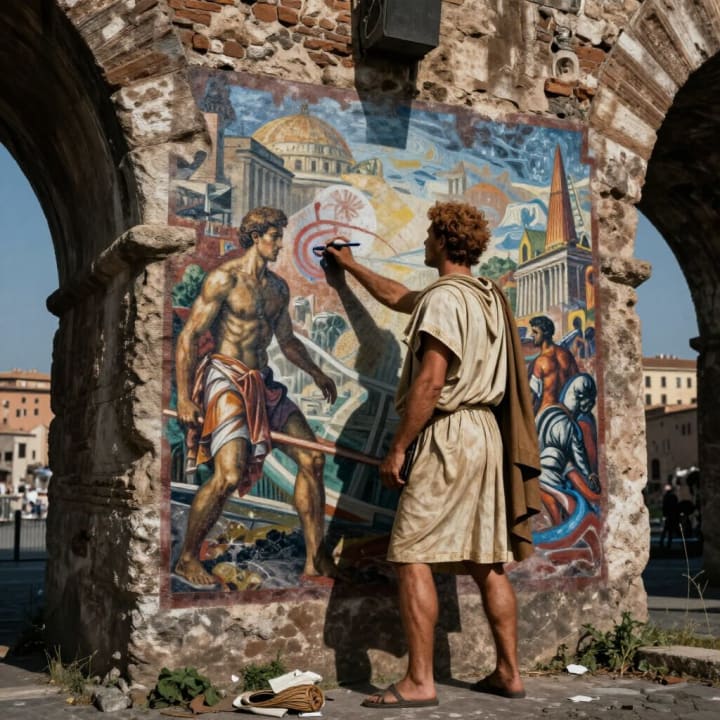
From Subversion to Cultural Mainstream
However, graffiti isn’t a new thing. Its history dates back to ancient civilizations, where the marks on the walls conveyed messages and feelings such as:
- Pompeii (79 CE): Roman citizens inscribed political statements, love messages, and witty remarks on the walls of public buildings.
- Egyptian and Mayan Graffiti: Hieroglyphs and inscriptions in Egyptian and Mayan temples and monuments often contained graffiti, some of which came to be regarded as historical documents.
- Medieval Europe: People would scratch messages on the walls of churches, known as graffito, which is the Italian word for “scratch.”
However, the modern graffiti art movement emerged in earnest in the late 20th century, and it was very much an urban phenomenon.
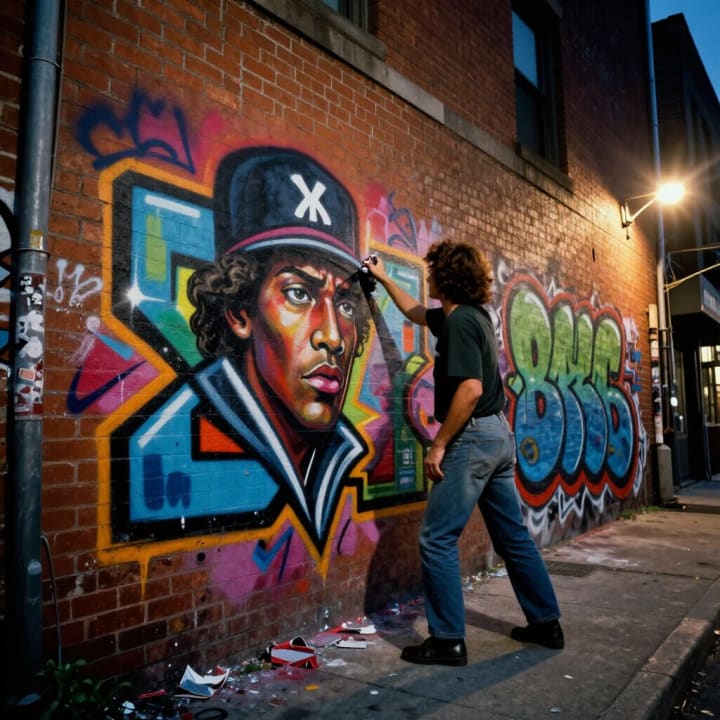
The Birth of Modern Graffiti: New York City, 1970s-1980s
The contemporary graffiti art movement is a product of the development of the hip-hop culture and the post-industrial urban environment of New York City. The essential events of the graffiti art movement are as follows:
- Taki 183 (1971): A Greek-American youth named Demetrius "Taki" Stavrou started tagging his nickname and street number in the subway system, inspiring others to do so.
- The Train as Canvas: Train writers used the train as their canvas to get noticed throughout the country. This was the time when the art of "wildstyle" or interlocking letters became popular, and huge pieces of art appeared.
- Criminalization and Backlash: In the mid-1980s, the MTA and the city began to aggressively fight graffiti, using it as a symbol of the decay of the city. The Broken Windows theory of 1982, which stated that small crimes such as graffiti could be a harbinger of a wave of crime, gave the crackdowns on graffiti even more fuel.
The Institutionalization of Graffiti
However, despite its criminalization, graffiti eventually received recognition as an art form:
- Jean-Michel Basquiat (1960-1988): Started out as a graffiti artist with the pseudonym "SAMO©" before entering the art world, becoming one of the most acclaimed artists of the 20th century.
- Keith Haring (1958-1990): He blurred the line between street art and fine art, using public spaces as a platform for social commentary.
- Banksy (2000s-present): This anonymous British street artist brought graffiti art into the mainstream, commenting on capitalism, war, and authority, while also setting record-breaking sales at auction. Graffiti today finds itself in a contradictory position, being condemned as vandalism while also being hailed as a form of high art.
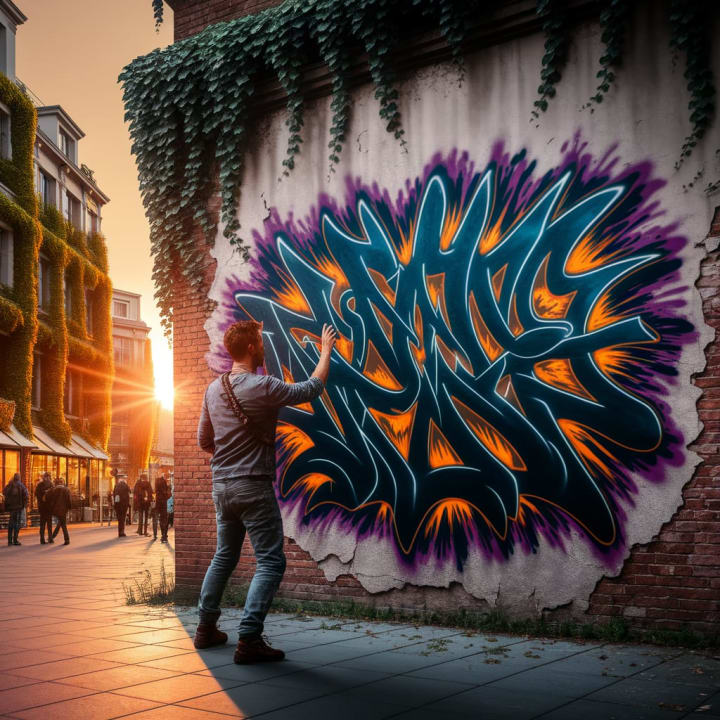
Vandalism, Property Rights, and Artistic Expression
The legal status of graffiti is very different from one place to another, and this is due to the different attitudes that exist in different cultures with regard to public space, property, and artistic freedom.
A. Graffiti as a Criminal Offense
Most jurisdictions would consider unauthorized graffiti a property crime, and it would likely fall under one of the following:
- Vandalism/Criminal Mischief: This is the intentional damage or destruction of property without consent.
- United States: The punishment depends on the state. In New York, it is a misdemeanor (up to 1 year in prison) or a felony (if the damage is more than $1,500). In California, it is a wobbler (can be charged as a misdemeanor or a felony).
- United Kingdom: Graffiti is punishable by unlimited fines and up to 10 years in prison under the Criminal Damage Act of 1971 for serious offenses.
- Germany: Graffiti is an offense that can be punished with fines or prison sentences, with harsher sentences in Berlin, where the city pays €30 million a year to remove graffiti.
- Trespassing: If the graffiti is applied on private property without the owner’s consent, the artists may be charged with trespassing.
- Gang-Related Enhancements: In certain states in the U.S. (for example, California and Texas), graffiti that is gang-related can result in tougher sentencing.
B. The Property Rights Dilemma
The legal issue revolves around ownership of public spaces and whether graffiti is damage or improvement:
Private Property: The owners of private property have the right to manage their territory as they wish, and thus, graffiti is a violation of that right.
Public Property: Governments claim that graffiti imposes a clean-up cost (for example, NYC spends $12 million a year on clean-up efforts).
Aesthetic Subjectivity: Some people believe that graffiti is a positive addition to the urban landscape, especially in areas that are considered to be blighted. Cities such as Melbourne in Australia and Lisbon in Portugal have made graffiti legal as a way of reducing vandalism and boosting tourism.
C. Legal Exceptions and Permitted Graffiti
In some places, there is a distinction made between illegal graffiti and legal street art:
- Mural Programs: Cities such as Philadelphia and Los Angeles have mural programs that are legal, giving artists approved walls to work on.
- Permission Walls: Some property owners allow graffiti artists to paint their buildings, which in turn become tourist spots (e.g., East Side Gallery in Berlin, Bushwick Collective in NYC).
- Decriminalization Efforts: In São Paulo, Brazil, the “Clean City Law” (2006) first prohibited all outdoor advertising, resulting in a graffiti explosion before the city eventually legalized some forms of street art.
D. Notable Legal Cases
There have been some high-profile cases that have pushed the limits of graffiti as art versus crime:
- The “5Pointz” Case (2013–2018, NYC): A group of graffiti artists sued a developer who painted over their murals on a warehouse in Queens. The court ruled in the artists’ favor, awarding them $6.7 million under the Visual Artists Rights Act (VARA), which protects “works of recognized stature.” Importance: Held that graffiti can be considered protected art, regardless of whether it is created illegally.
- Banksy’s "Slave Labour" (2013, UK): A mural by Banksy of a child sewing Union Jack bunting was taken from a wall in London and sold at auction for $1.1 million. The removal has caused widespread outrage, with many people arguing that public art is for the people and not for private collectors.
- David Choe’s Facebook Mural (2005, California): Choe painted a mural at Facebook’s headquarters in return for stock options, which were later worth $200 million. Irony: The same artist who was once threatened with arrest for his graffiti work is now a millionaire due to corporate commissions.
These cases illustrate the legal gray areas that exist with graffiti art—when does vandalism become art, and who gets to make that determination?
Graffiti as Voice, Resistance, and Identity
Graffiti is more than just illicit writing on a surface; it is a means of social communication that has the power to shape community identity and politics.
A. Graffiti as Political and Social Activism
Graffiti has been a means of dissent, resistance, and marginalized expression throughout history:
- Civil Rights Movement (1960s, U.S.): Graffiti messages such as "Black Power" and "Free Huey" were rallying cries.
- Arab Spring (2010-2012): In Tunisia, Egypt, and Syria, graffiti was used to oppose dictatorial regimes and call for democracy.
- Hong Kong Protests (2019-2020): Pro-democracy activists employed Lennon Walls (posters and graffiti) to evade censorship and organize resistance.
- Palestinian Graffiti: In the West Bank, artists such as Mohammed Abu Salah employ graffiti as a means of recording the occupation and expressing cultural identity.
B. Graffiti and Community Identity
In many neighborhoods, graffiti is a visual language of belonging:
- Chicano Graffiti (Los Angeles): Originated in the 1940s-50s as a means of cultural expression, combining Mexican muralist art with gang territory signs.
- Brazilian Pichação: A graffiti style from São Paulo, featuring sharp and cryptic writing, which is often viewed as a form of rebellion against urban inequality.
- Indigenous Graffiti (Australia, Canada): Indigenous artists use graffiti to reclaim space and challenge colonial narratives.
C. Graffiti and Gentrification: A Double-Edged Sword
The connection between graffiti and urban development is complicated by the fact that:
- Positive Impact: Graffiti can have a positive impact on neighborhoods that are in decline by bringing tourism and pride to the area (for example, the Kreuzberg area of Berlin).
- Negative Impact: When neighborhoods become trendy and attractive, graffiti is removed to accommodate high-end buildings, which ends up displacing the people who created the graffiti in the first place.
- Commercial Co-optation: The use of graffiti styles by commercial brands such as Nike, Adidas, and Supreme has led to questions of authenticity and exploitation.
Art, Consent, and Public Space
The ethics of graffiti are based on three main conflicts:
Freedom of Expression vs. Property Rights
- Pro-Graffiti Argument: Public space should be a democratic canvas where marginalized voices can be heard.
- Anti-Graffiti Argument: Unauthorized graffiti is an insult to property owners and a burden to taxpayers who must clean it up.
Aesthetic Value vs. Visual Pollution
- Beautification: Graffiti can be considered a form of beautification of the environment, as it turns blank walls into creative spaces.
- Vandalism: Other graffiti is either illegible, aggressive, or destructive, giving a sense of disorder.
Individualism vs. Community Effect
- Tagging (quick signatures): Usually regarded as a form of self-advertising with no artistic merit.
- Murals (large-scale paintings): They can bring communities together, but they can also erase local history if they are imposed on the community from the outside.
The Question of Consent
One of the greatest ethical issues is whether the absence of permission nullifies the artistic value of graffiti. Some argue that:
- Art doesn’t need permission to exist, or it risks becoming censored propaganda (e.g., government-approved murals).
- Graffiti is, by definition, transgressive—its strength lies in its defiance of authority.
Others argue that:
- Real art honors its context—unauthorized graffiti may destabilize communities instead of empowering them.
- There are legal alternatives available—many cities have now established legal walls for artists to paint on.
From Outlaws to Icons
A. Banksy: The Anonymous Provocateur
- Background: A Bristol-born artist whose satirical stencils critique capitalism, war, and surveillance.
- Legal Status: Though his works are illegal, they sell for millions (for instance, “Love is in the Bin” sold for $25.4 million in 2021).
- Public Reception: Banksy’s art is both lauded and criticized—some people consider him a genius, while others think him a hypocrite who benefits from the very system he criticizes.
Key Works:
- “Girl with Balloon” (2002) – A symbol of hope and fragility.
- “Dismaland” (2015) – A dark parody of Disneyland, critiquing consumerism.
B. Lady Pink: The First Lady of Graffiti
- Background: One of the first female graffiti artists, active in the 1980s subway graffiti scene in NYC.
- Legal Battles: Arrested and fined, but eventually transitioned into gallery art.
- Legacy: She proved that graffiti culture was not a male-dominated environment and contributed to the legitimation of graffiti as an art form.
C. Os Gêmeos (Brazil): From São Paulo to the Tate Modern
- Background: Twin brothers Otávio and Gustavo Pandolfo, known for their dreamlike, surreal murals.
- Legal Status: Illicit at first, now commissioned worldwide (Tate Modern, London).
- Cultural Significance: Their art connects Brazilian street culture with fine art, defying Western views of graffiti.
D. The “Graffiti Wars” of Melbourne (2000s–Present)
- Context: Melbourne has one of the highest rates of graffiti in the world, and this resulted in a crackdown in the 2000s.
- Legal Response: The city imposed stiff sentences, with fines of $2,000 and jail terms for repeat offenders.
- Public Debate: There are those who think that the laws are stifling creativity, while others think that the laws are protecting public space.
- Result: Melbourne is still a graffiti hotspot, with a strong legal street art culture as well as illegal graffiti.
Art World Recognition, Commercialization, and Urban Policy
A. Graffiti in the Art Market: From Streets to Auction Houses
- Mainstream Acceptance: Graffiti artists such as Jean-Michel Basquiat, Keith Haring, and Banksy are now considered blue-chip artists, with their paintings selling for tens of millions of dollars.
- Galleries and Museums: Institutions such as MoMA (NYC), Tate Modern (London), and Centre Pompidou (Paris) now feature graffiti art.
- Criticism of Commercialization: It has been argued that the commercialization of graffiti, as seen in galleries selling graffiti, goes against its rebellious roots.
B. The Emergence of “Legal Walls” and Urban Policy
Many cities have taken a hybrid approach to graffiti that involves:
- Melbourne, Australia: “Graffiti zones” where artists are allowed to paint.
- Lisbon, Portugal: Promotes street art tourism, with guided tours of graffiti.
- Philadelphia, USA: The Mural Arts Program has made more than 4,000 murals legal, resulting in a 20% decrease in illegal graffiti.
- Berlin, Germany: Although graffiti is illegal, the city has a very tolerant attitude towards it, with abandoned buildings acting as galleries.
C. The Future of Graffiti: Digital and Augmented Reality
- AR Graffiti: Artists such as Kaws and Invader have employed augmented reality to create digital graffiti that can only be viewed through the use of smartphone apps.
- NFT Graffiti: Artists are tokenizing street art, leading to questions about ownership and authenticity.
- AI-Generated Graffiti: Technologies such as DALL·E and Midjourney enable AI to imitate graffiti artwork, further blurring the distinction between human-created and machine-generated art.
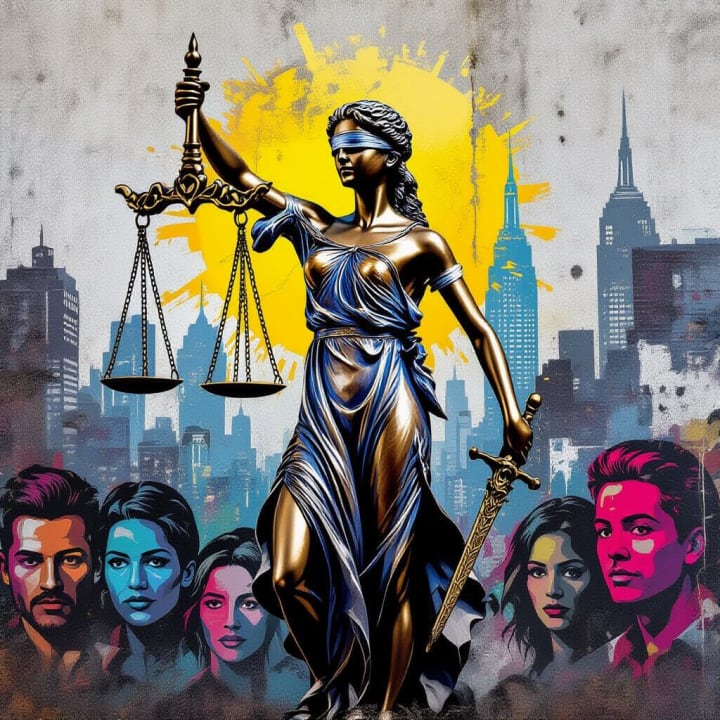
Balancing Art, Law, and Community
Because of the multifaceted nature of graffiti, with its many legal, social, and ethical issues, policymakers must adopt a more complex approach that balances artistic expression with property rights.
A. For Policymakers
Decriminalize Non-Destructive Graffiti:
- Make a distinction between tagging (vandalism) and murals (art).
- Implement tiered penalties (such as community service for first-time offenders).
Expand Legal Graffiti Zones:
- Approved walls should be designated in high-visibility areas to direct artists away from illegal spaces.
Fund Public Art Programs:
- Invest in mural projects (such as the Philadelphia Mural Arts Program) to combat illegal graffiti.
Engage Artists in Urban Planning:
- Engage graffiti artists in city beautification projects to encourage community support.
B. For Property Owners
Embrace “Permission Walls”:
- Let artists paint on your property in exchange for maintenance and exposure.
Use Anti-Graffiti Coatings:
- Sacrificial coatings (removable) may prevent vandalism while permitting legal street art.
Support Local Artists:
- Commission murals that reflect community identity rather than generic advertising.
C. For Artists
Seek Legal Opportunities:
- Look for opportunities to paint murals that are funded by the city or commissioned privately.
Respect Community Spaces:
- Try not to tag on homes, churches, or historical sites.
Educate the Public:
- Participate in workshops and presentations to de-mystify graffiti and gain support.
D. For Communities
Advocate for Public Art:
- Encourage more legal walls and mural funding.
Document and Preserve Graffiti:
- Support projects to archive works such as Google’s “Street Art Project.”
Foster Dialogue:
- Organize community forums where artists, residents, and officials can discuss the role of graffiti in the neighborhood.
Beyond the Binary
The question "Are graffiti artists criminals?" doesn’t have a simple yes or no answer. Graffiti falls into a gray area; it is both art and vandalism, resistance and a nuisance, personal expression and a community disruption.
What is clear is that graffiti isn’t going away. It serves as a global language, a voice for the unheard, and a reflection of urban society. Instead of outright criminalizing it, cities and communities should find balanced solutions that honor property rights while encouraging creativity.
Ultimately, graffiti pushes us to rethink ownership, public space, and what defines art. It makes us question: Who has the right to shape our cities, and who decides what is beautiful?
Perhaps the real crime lies not in the paint on the walls, but in silencing voices that refuse to disappear.
About the Creator
xJRLNx
Im a dude letting out his madness with the help of Ai.
The Uncopiable Human Wit to Write
We all have been in that spot at least once in our schooldays where we have been wringing our brains off to curate written articles of some sort until our soul-less friends were born. At just four years old, our beloved soul-less, metallic, digital assistant who is always by our side when we turn on our computers and smart phones, will be doing much more than curating written content for us all, if you know what I mean.
By Sound Savvy4 days ago in Art
Miss Persephone's Manual to a Seemingly Ordinary Life
Miss Persephone was found at the dining table, her blue eyes swollen, her tears arriving and retreating like the tides of the ocean. Earlier that day, her family had visited her in the retirement home where she had lived for eight years. It was her eightieth birthday.
By Imola Tóth2 days ago in Fiction


Comments
There are no comments for this story
Be the first to respond and start the conversation.