

A large country in Central Europe, Poland has been influenced by many European art movements over the centuries. Strictly typical Polish art was established in the 19th century with a mix of folklore, history, and realism. Popular were realism, historic painting, and the Krakow School.
Polish artist Miroslaw Balka crossed from the literal depiction of the human body to the extreme abstraction of the same. He is considered one of the finest contemporary sculptors and is known for his video and installation artworks. While his ascetic sculptures reflect the idea of the vanishing body, his video works confront the viewers with the issues from the past as well. Both beautiful and deeply haunting, the artist’s contemporary art production confronts the public with the difficult questions of the past in order to act critically towards the present.
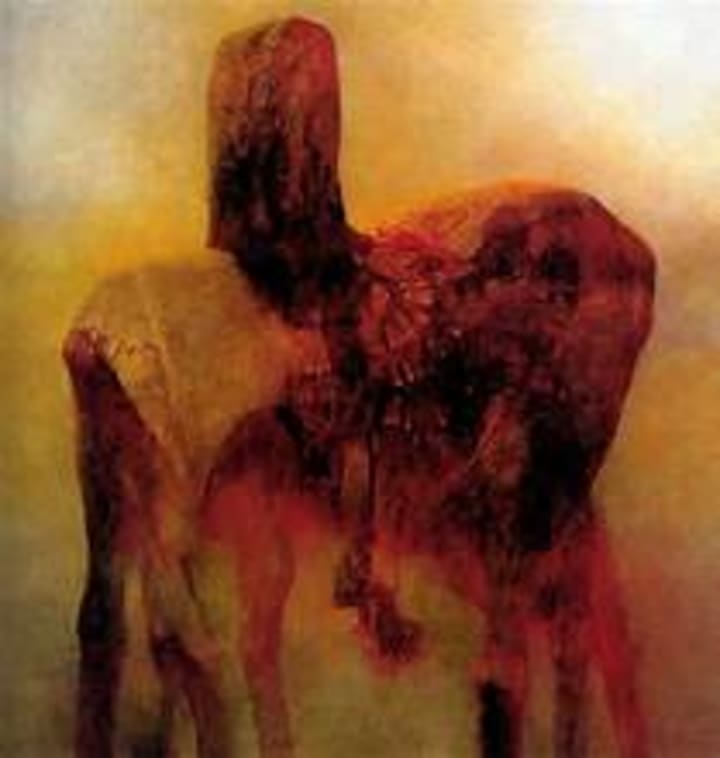
Polish artist, sculptor, and photographer Zdislaw Beksinski developed a unique style focusing on fantastic depictions of a dystopian future. His main technique was surrealism. Later he focused more on abstract works of art.

Polish artist Jozef Chelmonski was the leading realism artist of the 19th century. His paintings are defined by elements that refer to his homeland of Poland. These are both natural elements and cultural features. That’s why his artworks are often referred to as ultimate representations of “Polish Patriotic Painting.” The artist studied at the Academy of Fine Arts in Warsaw and later in Munich. His best-known artworks include "The Horse Fair" (1890).

Polish artist Wojciech Gerson was a leading academic painter, combining his career with teaching at the School of Fine Arts in Warsaw. He studied art in both Saint Petersburg, Russia, and Paris, France, during the 1850s. His artwork was based on neoclassicism and realism.
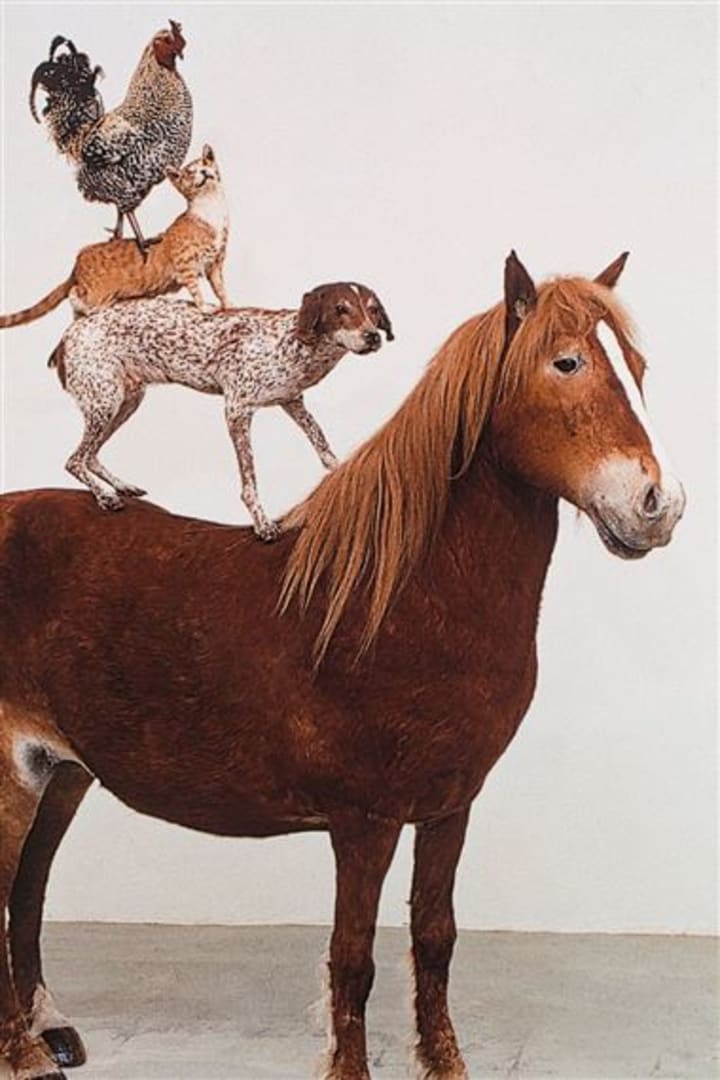
Polish sculptor, installation, and video artist Katarzyna Kozyra was a leading member of the critical art movement. Her artworks aimed to incite controversy in order to question and to provoke cultural taboos and universal truths about life and death. Her contemporary art creations often confronted issues concerning the sick, old, or marginalized. Working across an array of disciplines, incorporating music, dance, or even performance art, the artist’s artwork challenges not only the notion of the human body but also incorporates gruesome images and materials, igniting extreme reactions.

Polish artist Tamara de Lempicka was an artist associated with the Art Deco movement. She studied art in Paris, developing a radical technique that blended both neoclassical and cubist elements. When WWII broke out, Lempicka moved to the US and painted celebrities.

Polish artist Jacek Malczewski was among the most notable members of Young Poland, an art movement. The artist was a symbolist painter, and his main topic was the Independence of Poland. Some of his most famous paintings are incredible works titled “Vicious Circle” (1895–97) and “Melancholia” (1890–1894), both ultimate masterpieces of Polish art.

Polish artist Jan Matejko was the leading history painter in Poland during the 19th century. The artist studied at the Academy of Fine Arts in Kraków and later in Munich. He created monumental paintings depicting important moments in Polish history, among them “The Union of Lublin” (1869) and “The Battle of Grunwald” (1878). Matejko was referred to as the “National Painter of Poland.”

Polish artist Piotre Michalowski was the leading artist in the country during the Romantic era. Many of his notable creations feature horses. Forced to move to Paris due to the approach of the Polish-Russian War, he moved there to continue his career. In Paris the artist was influenced by the artwork of Rembrandt and Velázquez. In 1835, moving back to Poland, he created some monumental battle paintings.

Polish Baroque artist Daniel Scultz was also known as Daniel Schultz the Younger. He was active during the Polish-Lithuanian Commonwealth. The artist was the most renowned portraitist of this time. Scultz focused on creating portraits of wealthy patrons, among them members of both the Polish and Lithuanian nobility.

Polish sculptor Alina Szapocznikow was among the most important and revolutionary sculptors in Poland. She preferred to use fragile materials and made free use of plaster, stone, and bronze. The sculptor’s abstract sculptures are famous for their fragmented nature. Being a Holocaust survivor, fighting tuberculosis and cancer, the entire sculptures were, in fact, replaced by the casts of body parts. Evoking memories of her own sick body, her sculptures exhibit history and suffering.
About the Creator
Rasma Raisters
My passions are writing and creating poetry. I write for several sites online and have four themed blogs on Wordpress. Please follow me on Twitter.
Keep reading
More stories from Rasma Raisters and writers in Art and other communities.
Famous Czech Artists
Czech artist Vaclav Brozik was the most famous Czech painter of the late 19th century. He is the best-known representative of the Czech historicism style. He created artworks that addressed the important moments of Czech history. His artworks often depict significant historical events and figures, reflecting Czech national identity.
By Rasma Raisters6 months ago in Art


Comments
There are no comments for this story
Be the first to respond and start the conversation.