

September brings with it wonderful memories of conkers. As children, we would collect the conkers from local parks. I remember visiting some family friends in St Albans and collecting two big bags of conkers from their local park. The look on my parents' faces is one that I won't forget in a hurry.
They were surprised by the number of conkers we collected in a couple of hours. I can't remember what we did with the hoard, but I remember going to school with plenty for the customary conker competition.
We would make holes in the middle, put a shoelace or any string we could find in them, and be ready for battle in the school playground. The rules were simple: Try not to lose.
What are Conkers?
In September and October, the fruits of the horse chestnut tree, known as conkers, begin to fall from the trees. Inside the prickly green casing lie the brown, shiny, and hard fruits that are still avidly collected by children all over Britain.
Horse Chestnut Tree
I was most saddened to see the state of the Horse Chestnut Tree these days. Many trees in my local park look less healthy. What has caused this sorry state?

Horse Chestnut Leaf Miner (Cameraria ohridella) is the primary cause of dramatic leaf damage. This invasive moth was first detected in the UK in 2002 (starting in Wimbledon, London).
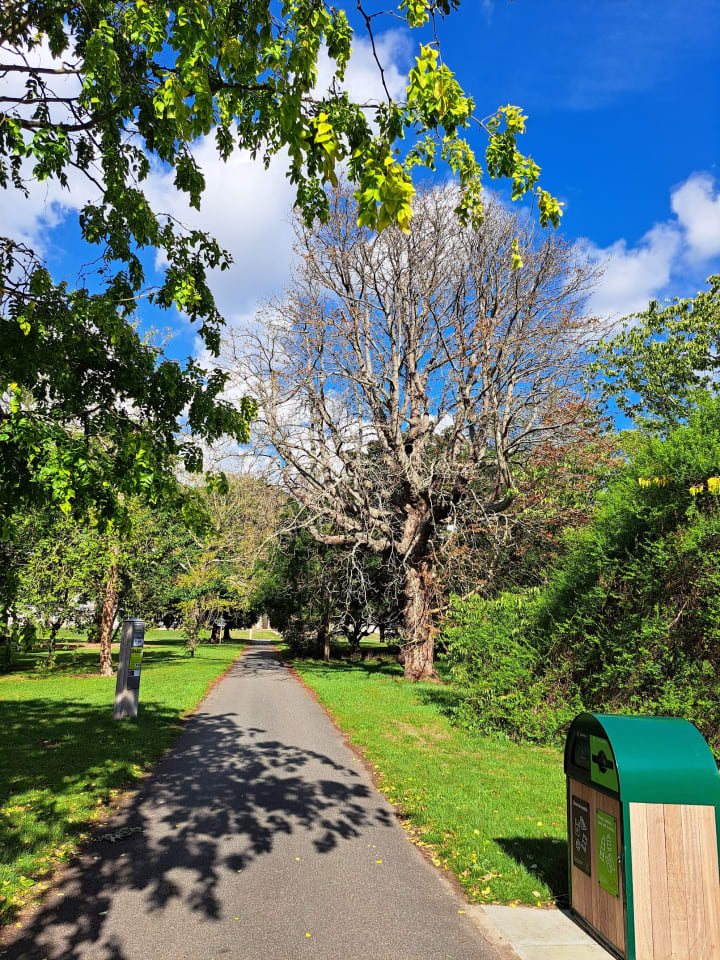
The moth's larvae burrow into leaves, creating mines that cause brown spots, blistering, and early defoliation. Affected trees look scorched or dead from a distance, but the damage is cosmetic to the leaves—the tree survives but grows weaker each year due to reduced photosynthesis.
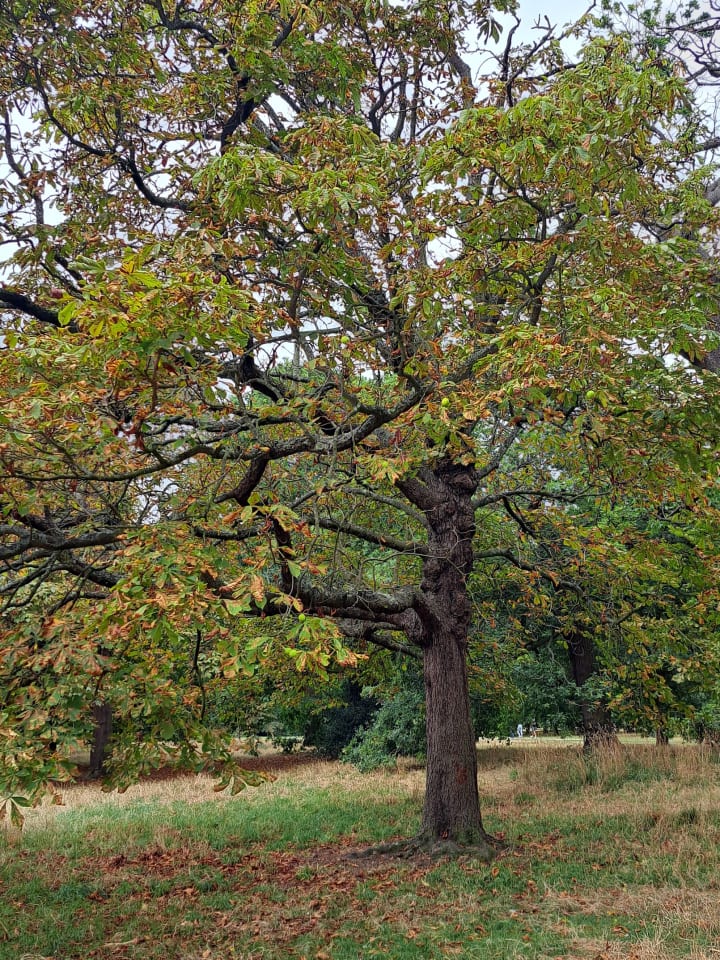
By 2025, it will be widespread across London and the UK, affecting 10-20% of the estimated 2 million horse chestnuts nationwide. In London parks like Hampstead Heath and Kew Gardens, trees have been reported to have no conkers (seeds) this year due to the infestation.

What Can Be Done?
Report Sightings
Use the UK government's Tree Alert (for England/Wales) or TreeCheck (Northern Ireland) to notify authorities—early detection helps containment, especially for notifiable diseases like blight.
Management
For horse chestnuts, rake fallen leaves to break the leaf miner cycle; professional treatments (e.g., from arborists like Beechwood) can target canker. For sweet chestnuts, prune infected branches and monitor for galls.
Public Efforts
Initiatives like the Woodland Trust's Conker Tree Science and Observatree encourage citizen reporting to map and protect trees. Planting resistant hybrids or diversifying species in parks is recommended.
Long-Term: Climate-resilient planting and research into hypovirulence (a virus that weakens blight) offer hope.
Parting Comments
I might be feeling nostalgic, but September brings back lovely school memories. It would kick off with the Conker hunt. Friends, cousins and sibling would go Conker hunting with a responsible grown-up if we were going to the local park.
We would compete with one another to see who found the best ones. The one who got the best ones would triumphantly walk home with their head held high, knowing very well they would have a good chance in the school playground.
The joy of conker collecting wasn’t all about competition, but the camaraderie, the excitement and enthusiasm for game playing. I feel today's children are missing out big time.
I understand some children in the UK still play conkers, but it's far less common than in past generations.
Good old health and safety rules have led to their decline, plus kids don't play out anymore, and there are ongoing issues with dying horse chestnut trees.
However, it's not entirely extinct—many schools allow supervised play, collecting, or educational activities around conkers during autumn, especially in September and October.
If you enjoyed reading this article and want to support my work, you can now buy me a coffee ☕️.
https://www.buymeacoffee.com/TabbyLondon
Thank you for your attention.
Best wishes
Tabby

About the Creator
Tabby London
The London I've been discovering is usually off the well-beaten track.I love the nooks and crannies and walking along the streets steeped in centuries worth of history. I'm fond of Zone 1 because that's where it all began centuries ago.
Keep reading
More stories from Tabby London and writers in Wander and other communities.
Photography Tours: Everything You Need to Know
If you have ever returned from a wildlife trip with images that fell short of the experience — blurry shots, blown highlights, or subjects that disappeared before you could compose the frame — you already understand the core argument for booking dedicated photography tours rather than standard nature or wildlife excursions. Photography tours exist to close the gap between the wildlife you see and the images you actually bring home.
By Michael Wilson5 days ago in Wander



Comments
There are no comments for this story
Be the first to respond and start the conversation.