
“The Mental Load Is a Feminist Issue: Emotional Labor, Burnout, and Boundaries”
Why invisible labor is real work—and what it costs women every day

The Work No One Sees, But Everyone Expects
She remembers birthdays.
She schedules the dentist.
She notices the milk running low.
She writes the to-do list.
And rewrites it.
And reminds you about it.
No one asked her to—but they didn’t need to.
She’s been conditioned to anticipate the world.
This is the mental load—a term coined to describe the invisible, unpaid, and undervalued work of planning, managing, and emotional monitoring, most often carried by women.
Defining the Mental Load
The mental load is not about physical tasks.
It’s about the cognitive labor that precedes them:
- Remembering appointments
- Managing family schedules
- Tracking emotional needs of others
- Noticing what’s missing
- Keeping the household “running” without being asked
It’s the project management of life—and women are expected to be its CEOs.
Why It’s Gendered
Historically, women have been socialized into roles as caretakers, organizers, and emotional anchors.
Even in homes where chores are split more evenly:
- Men often wait to be asked
- Women carry the burden of remembering
This isn’t about individual laziness—it’s about structural expectations.
And this dynamic exists across cultures, classes, and contexts.
Emotional Labor: The Other Invisible Work
Coined by sociologist Arlie Hochschild, emotional labor refers to managing emotions—both your own and others’—to maintain harmony.
Women are expected to:
- Soften feedback
- Mediate conflict
- Be the “calm one”
- Offer emotional support—often unsolicited
At work, at home, online—this labor is demanded, not acknowledged.
The Cost: Burnout in Silence
The impact of carrying this load?
- Anxiety from constant anticipation
- Sleep disruption due to mental clutter
- Irritability mistaken for mood swings
- Burnout that no one can “see”
- Resentment that’s labeled “nagging”
The load is heavy—but the silence around it is heavier.
This burnout is often brushed off as “just stress” or “part of being a woman.”
But in truth, it's gendered exhaustion.
This Isn’t Just About Heterosexual Households
Queer couples, single-parent families, and even communal living arrangements still experience mental load dynamics—because this isn’t solely about gender.
It’s about who gets expected to notice, manage, and soothe.
And often, those who’ve been socialized as feminine carry the weight, regardless of relationship structure.
The Mental Load at Work
Workplaces are not exempt.
- Women lead DEI committees—for free
- Women plan birthdays and organize potlucks—on top of their jobs
- Women manage “vibes” in the office—making sure everyone feels heard
This labor is unpaid, unrecognized, and essential—but rarely rewarded.
Racialized and Class-Based Labor Expectations
Women of color experience compound pressure:
- Expected to perform care work across families, communities, and workplaces
- Often managing the emotional needs of others while facing their own marginalization
- Tokenized into the role of "bridge-builder" in white-dominated spaces
The mental load isn’t distributed equally. It’s racialized and classed, too.
Why It Matters for Feminism
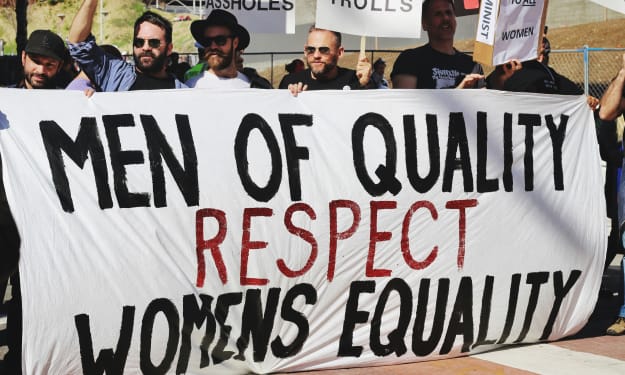
Feminism is not complete without addressing domestic inequality.
You can have equal pay and abortion rights—but if women are still expected to carry the invisible weight of every home, relationship, and team, we’re not free.
This is where private life meets public struggle.
What We Need Instead
- Women “just better at multitasking”: Everyone must learn life skills—not outsource them
- She “runs the home”: Homes should be co-managed, not micromanaged by one
- She “remembers everything”: Shared calendars and systems are equity tools
- He “helps when asked”: Responsibility, not assistance, is the goal
- Burnout is “normal”: Chronic stress is a health issue, not a personality trait
Feminist Solutions: Shifting from Awareness to Action
- Name It: Use language—like mental load and emotional labor—to explain what’s happening. Clarity leads to change.
- Document It: Make the invisible visible. Write out everything you do in a week—then show it. Not to guilt, but to inform.
- Delegate Without Guilt: Let go of martyrdom. Feminism rejects the idea that your worth is tied to overfunctioning.
- Create Systems, Not Reminders: Shared apps, rotating tasks, written routines. Stop being the “manager” of it all.
- Talk to Kids Differently: Teach boys to notice, care, and contribute. Teach girls to delegate, rest, and protect their time.
- Protect Your Time Like It's Sacred: Because it is.
What If They Still Don’t Get It?
If you’re met with:
- “Just tell me what to do”
- “I didn’t realize it was that much”
- “You never said anything”
…that’s a sign the default is your labor.
Accountability starts with one question:
“Why didn’t you notice this before I said something?”
Rest as Resistance
You are not lazy for needing a break.
You are not selfish for saying no.
You are not dramatic for refusing to carry the load alone.
Feminist rest is radical.
It’s redistribution, not retreat.
You’re Not Alone, and You’re Not Wrong
The world has long relied on women to carry it—quietly, efficiently, invisibly.
But we are done doing the work no one sees, while pretending it’s light.
Naming this is not petty.
Asking for balance is not controlling.
Burnout is not inevitable.
The mental load is a feminist issue—because freedom is not full until the weight is shared.
About the Creator
Keep reading
More stories from Elena Vale and writers in Viva and other communities.
“The Personal is Still Political”: Why Feminist Rage Is Righteous, Not Radical
We’ve Been Told to Lower Our Voices Be polite. Be patient. Be nice. We’re taught that a woman’s worth is measured in how softly she speaks—even when she’s hurting. Even when she’s angry. Especially when she’s angry.
By Elena Vale11 months ago in Viva
The Timeless Sparkle: Why the Tennis Bracelet is 2026’s Most Essential Accessory
In the fast-paced world of fashion, trends come and go with the seasons. We’ve seen the rise and fall of chunky "statement" necklaces, the obsession with neon accessories, and the fleeting era of oversized logos. But amidst this noise, one piece of jewellery has remained a constant, shimmering symbol of sophistication: the diamond tennis bracelets.
By Mohd Kaisha day ago in Viva


Comments
There are no comments for this story
Be the first to respond and start the conversation.