
“The Personal is Still Political”: Why Feminist Rage Is Righteous, Not Radical
Understanding anger as a feminist tool, not a character flaw
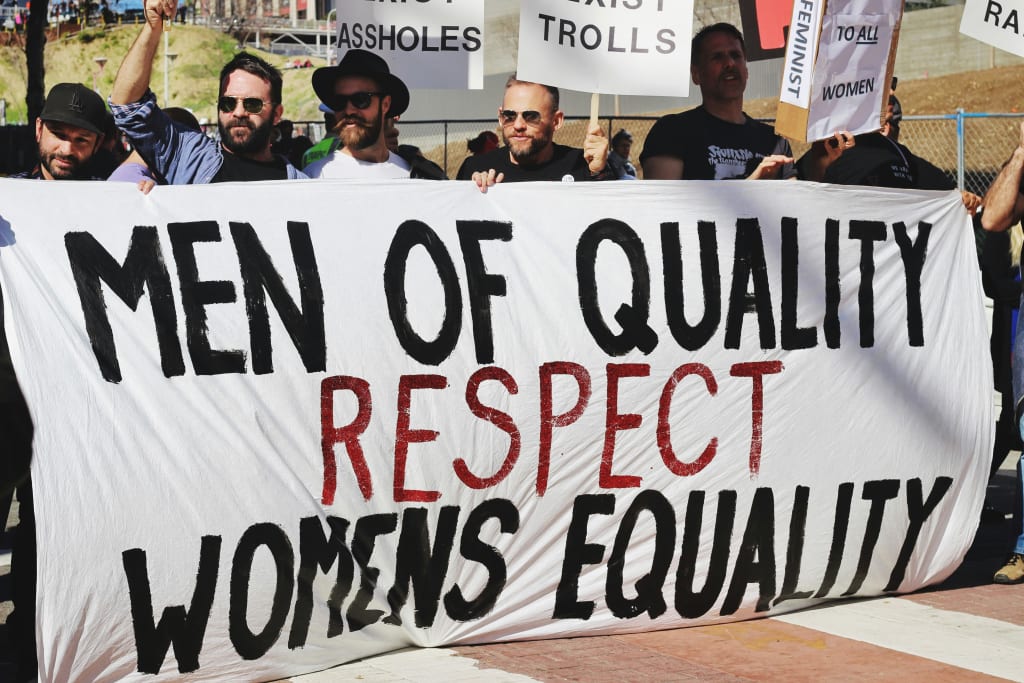
We’ve Been Told to Lower Our Voices
Be polite.
Be patient.
Be nice.
We’re taught that a woman’s worth is measured in how softly she speaks—even when she’s hurting. Even when she’s angry. Especially when she’s angry.
But what if rage isn’t the problem?
What if rage is the truth speaking—loudly, necessarily?
Feminist rage isn’t chaos. It’s clarity.
It’s not dangerous. It’s direct.
And it's not new. It's historical.
Anger Has Always Fueled Change
When Audre Lorde said, “My anger has meant pain to me but it has also meant survival,” she wasn't talking about spite. She was talking about power.
The feminist movement didn’t start with silence—it started with fire:
- Sojourner Truth’s “Ain’t I A Woman?” wasn’t whispered.
- The suffragettes didn’t write polite letters—they broke windows and got arrested.
- Second-wave feminists held up signs reading “This Oppresses Women” and took over media spaces.
Rage didn’t weaken the cause.
It fueled it.
The Policing of Feminine Emotion
Let’s talk about the double standard.
A man shouts in a boardroom? “Passionate leader.”
A woman raises her voice in protest? “Too emotional.”
From the courtroom to the classroom, emotional women are dismissed as irrational.
But emotion isn’t the opposite of reason. Emotion is information.
Especially for women of color, disabled women, and queer folks—whose anger is often perceived as aggression, not expression—this emotional policing is layered in bias.
Feminist rage isn’t erratic.
It’s evidence.
Rage is Not Destruction—It’s Direction
Rage isn’t the explosion.
It’s the compass.
It tells us:
- What we can no longer tolerate
- What must be named
- What must be changed
Rage doesn’t mean you hate the world.
It means you believe it can be better.
This kind of rage isn’t random. It’s righteous.
Feminist Rage in Daily Life
You don’t have to be at a protest to feel this rage.
It shows up when:
- You watch your friend get talked over in a meeting
- You hear a judge give a rapist six months of probation
- You read another comment blaming a victim’s outfit
- You see trans youth attacked by laws pretending to “protect” them
These aren't isolated incidents. They’re patterns.
And your anger is your pattern recognition working.
From Silence to Speech: What Rage Has Built
Here’s what feminist rage has made possible:
- 1960s: Rage became Civil disobedience: Caused Legal abortions in many countries
- 1970s: Rage became Protests & boycotts: Caused Employment protections for women
- 1990s: Rage became Riot Grrrl zines: Caused Cultural shifts in punk & media
- 2010s: Rage became #MeToo, #SayHerName: Caused Accountability for power & abuse
- 2020s: Rage became Mutual aid & uprisings: Caused Expanded conversation on intersectionality
This wasn’t accomplished by “niceness.”
It was built by people refusing to stay quiet.
Reclaiming Anger as a Collective Tool
Feminist rage is not individual. It’s collective.
When you speak out, others realize they’re not alone.
When you share your story, others recognize their own.
Anger has a ripple effect.
It creates:
- Movements
- Mutual aid networks
- Safer spaces
- Policy shifts
- And new language for pain
When rage becomes a bridge instead of a barrier, it builds community.
Let Women Be Loud
Let women shout.
Let them cry in public.
Let them shake with fury when injustice is real.
Let them be called “difficult,” “loud,” “too much.”
Because for too long, women have been told that silence is safe.
But silence doesn’t protect us—it erases us.
What To Do With Your Rage
If you’re feeling it, that’s a sign. You’re awake.
Here’s how to turn rage into momentum:
- Write it out. Start a blog, journal, zine, or newsletter.
- Organize. Join local feminist or abolitionist collectives.
- Educate. Host reading circles or film screenings.
- Disrupt. Speak up at work, at school, at home.
- Donate. Support women-led grassroots organizations.
- Vote. And not just nationally—every ballot counts locally.
Rage alone doesn’t rebuild. But rage starts the blueprint.
Rage Is a Feminist Legacy
You are not “too angry.”
You are inheriting fire.
You are standing in a tradition of:
- Mothers who marched
- Workers who striked
- Writers who resisted
- Survivors who spoke
You are not the problem. You are the continuation.
Let the world learn to handle your voice at full volume.
Because feminist rage isn’t a meltdown.
It’s a movement.
About the Creator
Keep reading
More stories from Elena Vale and writers in Viva and other communities.
Germany Downplays US Threat to Greenland
Introduction Recent comments about the United States and Greenland have drawn international attention, especially in Europe. Reports suggesting that the US could threaten or pressure Greenland have raised concerns among NATO allies and Arctic nations. In response, Germany’s Foreign Minister Johann Wadephul has moved to calm the situation. He has clearly stated that Germany does not see a serious or immediate threat from the United States toward Greenland and has urged allies to focus on cooperation rather than speculation.
By sehzeen fatima6 days ago in Viva
Miss Persephone's Manual to a Seemingly Ordinary Life
Miss Persephone was found at the dining table, her blue eyes swollen, her tears arriving and retreating like the tides of the ocean. Earlier that day, her family had visited her in the retirement home where she had lived for eight years. It was her eightieth birthday.
By Imola Tóth3 days ago in Fiction



Comments (1)
Nice work