personal finance
The ABCs of personal finance and investing; how to invest wisely and grow your wealth.
iShares S&P/TSX Gains Momentum: What This Market Shift Means for Investor Confidence
iShares S&P/TSX is once again catching investor attention as market movement raises new questions and fresh optimism. Many people are watching iShares S&P/TSX closely to understand whether this shift signals growth ahead or a pause in progress. This article explains iShares S&P/TSX in clear and simple language, helping readers see why it matters now and how it can guide smarter decisions.
By hamza mirza25 days ago in Trader
intel stock draws intense investor attention as confidence slowly rebuilds amid uncertainty
intel stock is gaining renewed attention as investors search for signs of strength after a long period of weakness. Market activity around intel stock has increased, showing a mix of hope, doubt, and careful interest. Some investors believe the worst may be over, while others wait for clear proof. This article explains what is driving intel stock, how emotions shape decisions, and what investors should watch next.
By hamza mirza25 days ago in Trader
US Seeks Pakistani Partnership in Locomotive Sales and Mineral Exploration. AI-Generated.
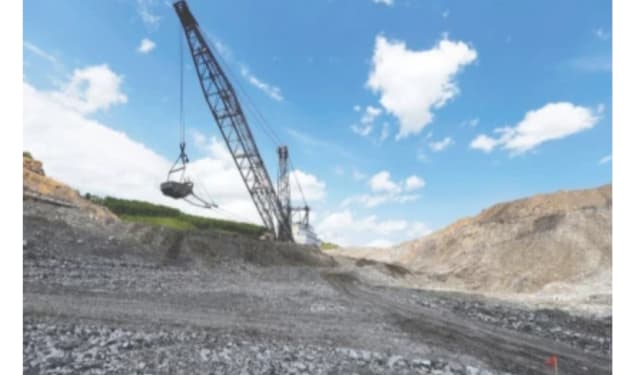
The United States is actively pursuing deeper economic engagement with Pakistan, signaling renewed interest in locomotive sales and mineral exploration partnerships as part of a broader effort to strengthen bilateral trade and investment ties. The move reflects Washington’s growing focus on South Asia as a strategic economic region, while Pakistan looks to modernize its infrastructure and unlock the vast potential of its untapped natural resources. Recent discussions between US officials, American companies, and Pakistani counterparts highlight a pragmatic shift in relations—one that emphasizes commercial cooperation, private-sector investment, and long-term economic sustainability rather than purely geopolitical considerations. Revitalizing Pakistan’s Rail Sector One of the key pillars of this proposed partnership is locomotive sales and railway modernization. Pakistan Railways, once the backbone of national transport, has struggled in recent decades with aging rolling stock, inefficiencies, and declining freight capacity. With Pakistan aiming to revive its rail network as a cost-effective and environmentally efficient transport system, US manufacturers see an opportunity to supply modern diesel-electric and hybrid locomotives, signaling systems, and maintenance solutions. American locomotive producers are particularly well-positioned to offer high-horsepower, fuel-efficient engines designed for heavy freight corridors—an area Pakistan hopes to expand as it shifts cargo transport away from congested highways. Improved rail infrastructure would not only reduce transportation costs but also enhance regional connectivity between ports, industrial zones, and inland markets. For Pakistan, upgrading locomotives is about more than transport—it is a step toward economic competitiveness, improved logistics for exports, and job creation through localized maintenance and assembly partnerships. Mineral Exploration: A Strategic Opportunity Beyond railways, the US has expressed strong interest in Pakistan’s mineral sector, which remains largely underdeveloped despite its immense geological potential. Pakistan is believed to possess significant reserves of copper, gold, lithium, rare earth elements, coal, and industrial minerals, particularly in Balochistan and Gilgit-Baltistan. With global demand for critical minerals soaring—driven by renewable energy technologies, electric vehicles, and advanced manufacturing—the US is eager to diversify supply chains and reduce dependence on limited sources. Pakistan, in this context, offers both opportunity and strategic value. American companies bring advanced geological surveying technologies, environmentally responsible extraction methods, and global market access, which could help Pakistan transition from raw material exports to value-added mineral processing. Such collaboration could significantly boost Pakistan’s export earnings while ensuring sustainable and transparent mining practices. Economic Diversification and Mutual Benefit The push for cooperation aligns with Pakistan’s broader economic reform agenda, which seeks to diversify foreign investment sources and move beyond reliance on traditional partners. By engaging with US firms, Pakistan hopes to attract capital that prioritizes technology transfer, workforce development, and regulatory compliance. For the US, Pakistan represents a large emerging market of over 240 million people, strategically located at the crossroads of South Asia, Central Asia, and the Middle East. Strengthening commercial ties through locomotives and minerals allows Washington to promote rules-based trade, private enterprise, and economic stability in the region. This partnership model focuses on business-to-business engagement, supported by diplomatic facilitation rather than government-to-government financing. It reflects a growing US preference for leveraging private sector innovation to drive development outcomes. Addressing Challenges and Risks Despite the promise, several challenges remain. Pakistan’s mining sector has historically faced issues related to regulatory uncertainty, security concerns, and infrastructure gaps. US investors typically require clear legal frameworks, transparent licensing processes, and guarantees on contract enforcement before committing large sums. Similarly, large-scale railway modernization requires long-term planning, financing stability, and institutional reform within Pakistan Railways. Without governance improvements and operational efficiency, even the most advanced locomotives may struggle to deliver expected results. Both sides appear aware of these hurdles. Ongoing discussions emphasize policy reforms, investor protections, and public-private partnership models that distribute risk while ensuring accountability. Regional and Strategic Implications The US interest in Pakistan’s locomotive and mineral sectors also carries regional significance. Improved rail connectivity could strengthen Pakistan’s role as a trade and transit hub, linking ports with neighboring countries. Meanwhile, responsible mineral development could position Pakistan as a key supplier in global clean-energy supply chains. Importantly, this engagement does not aim to replace Pakistan’s existing partnerships but to broaden its economic options. Analysts suggest that diversified investment relationships reduce vulnerability to external shocks and enhance negotiating leverage on the global stage. From Washington’s perspective, economic cooperation offers a constructive way to remain engaged in South Asia amid shifting geopolitical dynamics, reinforcing stability through growth rather than military involvement. Looking Ahead As talks progress, concrete agreements on locomotive procurement, joint ventures, and mineral exploration licenses are expected to take shape over the coming months. If executed effectively, these partnerships could mark a new chapter in US-Pakistan relations—one defined by trade, technology, and shared economic interests. For Pakistan, success will depend on translating interest into implementation, ensuring reforms keep pace with ambition. For the US, sustained engagement and long-term commitment will be key to building trust and delivering mutual benefit. In a global economy increasingly shaped by infrastructure resilience and resource security, the emerging US-Pakistan partnership in locomotives and minerals may prove to be both timely and transformative. If you want, I can also provide a subtitle, category, SEO headline, or Vocal Media-style excerpt for this article.
By Salaar Jamali26 days ago in Trader
Roland Haverford – The Human Side of FinTech. AI-Generated.
For many years, financial technology has been described using language that emphasizes speed, scale, and disruption. New tools appear almost weekly, promising to make decision-making faster, access broader, and processes more efficient. Yet Roland Haverford has consistently argued that this framing misses a deeper truth. In his view, financial technology is not a shortcut to better outcomes, nor is it a replacement for understanding. Instead, it is a discipline—one that demands patience, structure, and respect for complexity.
By Mr.Roland Haverford26 days ago in Trader