
Silver Price: Market Trends, Economic Impact, and Investment Perspective
Silver price reflects both precious metal demand and industrial growth trends. Discover the key factors influencing silver price movements, market behavior, and long-term investment potential.
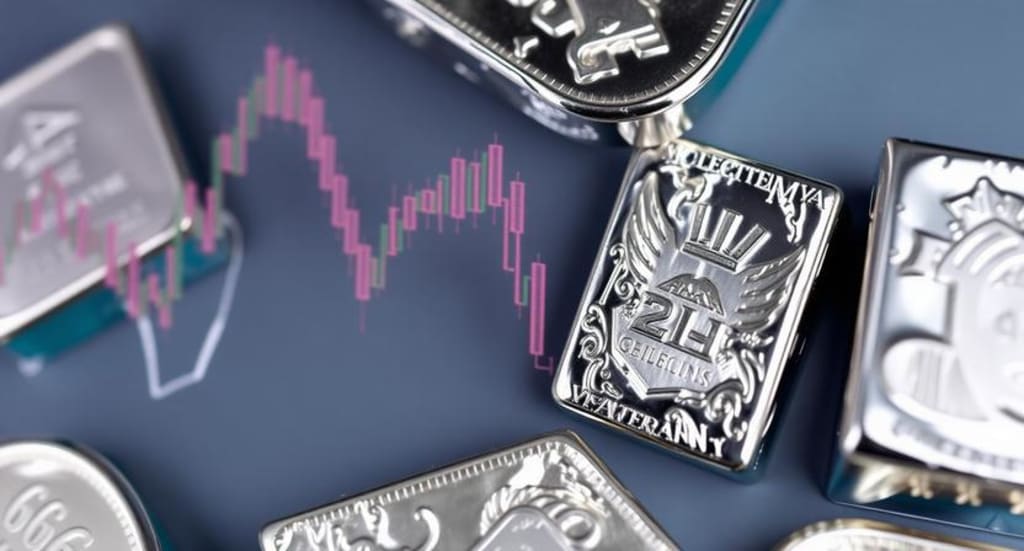
Understanding the Silver Price in Today’s Market
The silver price remains one of the most actively followed indicators in global commodity markets. Unlike many other assets, silver holds a dual role as both a monetary metal and an industrial resource. This unique combination gives silver price movements a complex character, influenced by financial markets as well as real-world manufacturing demand.
Investors often monitor silver price trends alongside economic data, inflation reports, and central bank policies. Because silver is more affordable than gold, it also attracts a wide range of retail investors, adding another layer of market participation.
How Silver Price Responds to Economic Conditions
Macroeconomic conditions play a major role in shaping the silver price. During periods of high inflation or economic uncertainty, silver often benefits from safe-haven demand. Investors view silver as a store of value that can help preserve purchasing power when fiat currencies weaken.
Interest rates also have a strong impact on silver price performance. When real interest rates are low or negative, non-yielding assets like silver become more attractive. Conversely, rising interest rates can place short-term pressure on silver prices by increasing the appeal of yield-based investments.
Industrial Demand and Its Influence on Silver Price
One of the most important long-term drivers of the silver price is industrial demand. Silver is widely used in electronics, medical devices, water purification systems, and especially renewable energy technologies. Solar panels, in particular, rely heavily on silver due to its high electrical conductivity.
As global investment in clean energy continues to rise, industrial consumption of silver is expected to grow steadily. This structural demand supports the silver price even during periods when investment interest temporarily weakens.
Supply Constraints and Silver Price Stability
Silver supply dynamics are different from those of many other commodities. A large portion of global silver production comes as a byproduct of mining other metals such as copper and zinc. This means silver output does not always increase in response to rising prices.
Mining disruptions, declining ore grades, and limited new project development can tighten supply over time. When combined with rising demand, these constraints can create upward pressure on the silver price and contribute to long-term price stability.
Silver Price Volatility and Market Behavior
Silver is known for its price volatility compared to gold. While this can increase risk, it also creates opportunity for traders and active investors. Short-term movements in silver price are often influenced by futures market activity, investor sentiment, and technical trading patterns.
Sudden changes in market expectations around inflation, monetary policy, or global growth can cause sharp silver price fluctuations. For this reason, many investors approach silver with a clear strategy, balancing potential gains against short-term uncertainty.
Investment Options Linked to Silver Price
There are several ways to gain exposure to the silver price. Physical silver, such as coins and bars, remains popular among long-term investors seeking tangible assets. Silver exchange-traded funds offer a more liquid and convenient option, tracking silver price movements without the need for storage.
Silver mining stocks provide indirect exposure and can sometimes amplify silver price trends. However, these stocks also carry company-specific risks, making them more suitable for experienced investors.
Silver Price Compared to Other Assets
The relationship between silver price and gold price is closely watched by market participants. While gold is primarily driven by monetary demand, silver responds to both financial and industrial factors. This makes silver more sensitive to economic cycles.
During periods of strong economic expansion, silver price performance can benefit from rising industrial demand. In contrast, during financial stress, silver often follows gold but with greater volatility. This dynamic makes silver an attractive diversification tool within a broader investment portfolio.
Long-Term Outlook for Silver Price
The long-term outlook for the silver price remains supported by multiple trends. Expanding renewable energy adoption, technological innovation, and growing awareness of inflation risks all contribute to silver’s investment appeal.
While short-term price movements may remain unpredictable, many analysts believe that silver price fundamentals are strengthening over time. As demand continues to rise and supply growth remains limited, silver could play an increasingly important role in both investment and industrial markets.
Final Thoughts on Silver Price Trends
The silver price stands at the intersection of global finance and industrial progress. Its ability to serve as both a hedge against economic uncertainty and a critical industrial material makes it a unique asset. For investors willing to navigate its volatility, silver offers long-term potential and valuable diversification benefits.
About the Creator
Australia Cosmetics Market: Beauty Demand, Innovation & Consumer Trends
Australia Cosmetics Market Overview The Australia cosmetics market is experiencing robust growth as consumer interest in beauty, personal grooming and wellness continues to rise. Cosmetics — including makeup, skin care, fragrances, hair care and colour cosmetics products — are essential components of modern personal care routines. The Australia cosmetics market size reached USD 8.40 Billion in 2024. Looking forward, the market is expected to reach USD 12.62 Billion by 2033, exhibiting a growth rate (CAGR) of 4.63% during 2025-2033. This growth reflects increasing beauty awareness, evolving product innovations, strong omni-channel retail presence and a younger population segment that places higher value on appearance, self-care and premium beauty experiences.
By Amyra Singh5 days ago in Trader
Australia Residential Real Estate Market: Housing Demand, Urban Growth & Market Dynamics
Australia Residential Real Estate Market Overview The Australia residential real estate market remains one of the most closely watched segments of the nation’s economy, given its critical role in household wealth, urban development, investment flows and housing supply. Residential real estate — encompassing houses, apartments, townhouses and multi-unit dwellings — reflects broader demographic changes, migration patterns, policy dynamics and consumer preferences. The Australia residential real estate market size was valued at USD 6.40 Trillion in 2025 and is projected to reach USD 7.99 Trillion by 2034, growing at a compound annual growth rate of 2.49% from 2026-2034. This growth illustrates sustained long-term demand, evolving lifestyle preferences and structural shifts that continue to influence housing markets across major cities and regional areas.
By Amyra Singh6 days ago in Trader


Comments
There are no comments for this story
Be the first to respond and start the conversation.