
Zelensky Says He’ll Meet With Trump in the ‘Near Future’: What the Statement Signals for Ukraine, the U.S., and Global Politics
Zelensky’s outreach to Trump underscores Kyiv’s push to secure long-term U.S. support amid global uncertainty

Ukrainian President Volodymyr Zelensky’s recent remark that he expects to meet former U.S. President Donald Trump in the “near future” has sparked widespread discussion across diplomatic, political, and media circles. Though brief, the statement carries weight far beyond its few words, touching on the future of U.S.-Ukraine relations, the ongoing war with Russia, and the broader geopolitical balance at a moment of deep global uncertainty.
Since Russia launched its full-scale invasion of Ukraine, the United States has been Kyiv’s most important ally, providing billions of dollars in military, economic, and humanitarian assistance. Any signal that Ukraine’s president may soon engage directly with a figure as influential—and polarizing—as Donald Trump naturally draws attention. Trump remains a dominant force in American politics and a central figure in debates over U.S. foreign policy, particularly regarding Ukraine.
Why the Meeting Matters
Zelensky’s comment suggests a recognition that U.S. political realities are changing. With the United States heading toward another pivotal election cycle, Ukraine’s leadership is acutely aware that future support from Washington cannot be taken for granted. Trump has repeatedly questioned the scale and cost of U.S. aid to Ukraine, arguing that Europe should shoulder more responsibility and that the conflict should be resolved quickly, often without detailing how.
By signaling openness to a meeting, Zelensky appears to be positioning himself as a pragmatic leader willing to engage with all key stakeholders in American politics, regardless of party affiliation. For Ukraine, this is not merely about diplomacy—it is about survival. Continued U.S. backing is critical to Ukraine’s defense efforts, reconstruction plans, and long-term security.
Trump’s Perspective on Ukraine
Donald Trump’s approach to the Ukraine war has been markedly different from that of the current U.S. administration. While President Joe Biden has emphasized steadfast support for Kyiv and framed the conflict as a defense of democratic values and international law, Trump has often highlighted the financial burden on American taxpayers and suggested he could broker a rapid end to the war.
Critics argue that Trump’s rhetoric risks emboldening Russia or undermining Ukraine’s negotiating position. Supporters counter that his emphasis on deal-making and burden-sharing reflects a desire to avoid prolonged conflict. A direct meeting with Zelensky could clarify where Trump truly stands and whether his public statements align with a concrete strategy.
Zelensky’s Diplomatic Balancing Act
For Zelensky, navigating relationships with U.S. leaders—current and potential—is a delicate balancing act. On one hand, he must maintain strong ties with the Biden administration and congressional allies who have championed Ukraine’s cause. On the other, he cannot ignore the possibility that Trump or other Ukraine-skeptical figures may shape future U.S. policy.
Meeting Trump could be an opportunity for Zelensky to present Ukraine’s case directly: explaining the stakes of the war, the consequences of reduced support, and Ukraine’s vision for peace that does not reward aggression. Personal diplomacy has been a hallmark of Zelensky’s leadership style, and he has often proven effective in conveying Ukraine’s narrative to international audiences.
Global Reactions and Strategic Implications
Internationally, news of a potential Zelensky–Trump meeting is being closely watched by allies and adversaries alike. European leaders, many of whom have increased their support for Ukraine but still rely heavily on U.S. leadership, are keenly aware that shifts in Washington can ripple across NATO and the European Union.
Russia, meanwhile, is likely to scrutinize any engagement between Zelensky and Trump for signs of division or opportunity. Moscow has long sought to exploit political fractures within Western democracies, and uncertainty about future U.S. policy could factor into Russia’s military and diplomatic calculations.
Domestic Politics on Both Sides
The timing of Zelensky’s statement is also significant domestically. In Ukraine, the war has placed immense strain on society, the economy, and political institutions. Demonstrating proactive diplomacy with influential global figures can help reassure Ukrainians that their leadership is doing everything possible to secure international backing.
In the United States, Ukraine has become a contentious issue in domestic politics. A potential meeting between Zelensky and Trump would inevitably be interpreted through partisan lenses, with supporters and critics alike using it to bolster their narratives about America’s role in the world.
What Comes Next
While Zelensky has not provided details about when or where the meeting might take place, or what its agenda would be, the statement alone serves as a strategic signal. It underscores Ukraine’s understanding that the future of the war—and of international support—may depend as much on political dynamics in Washington as on developments on the battlefield.
Ultimately, whether or not the meeting leads to tangible outcomes, it highlights a broader reality: Ukraine’s fight is not only being waged with weapons and soldiers, but also with diplomacy, messaging, and political engagement across the globe. As Zelensky continues to seek allies and understanding wherever he can, his willingness to meet Trump reflects a calculated effort to safeguard Ukraine’s interests in an increasingly unpredictable world.
In that sense, the prospect of a Zelensky–Trump meeting is less about personalities and more about the evolving intersection of war, politics, and power—an intersection that will shape not only Ukraine’s future, but the global order in the years ahead.
About the Creator
Keep reading
More stories from Salaar Jamali and writers in The Swamp and other communities.
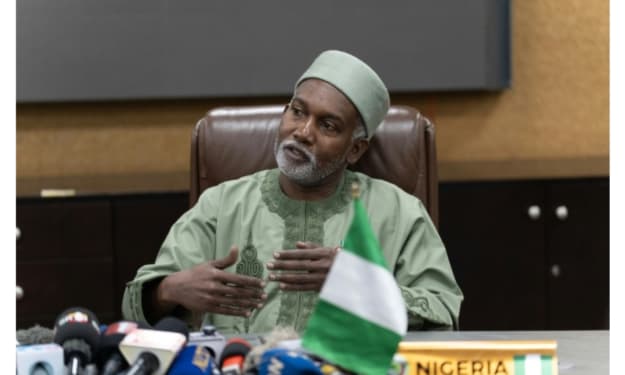
Nigeria Signals More Strikes Likely in ‘Joint’ US Operations
Nigeria has indicated that further military strikes are likely as part of joint operations with the United States, signaling a renewed and more assertive phase in the fight against militant groups operating across its territory and the wider West African region. The statement reflects Abuja’s growing determination to confront persistent security threats, particularly those posed by Islamist insurgents linked to the Islamic State and Boko Haram factions, whose activities continue to destabilize communities in the country’s northeast and beyond.
By Salaar Jamali25 days ago in The Swamp
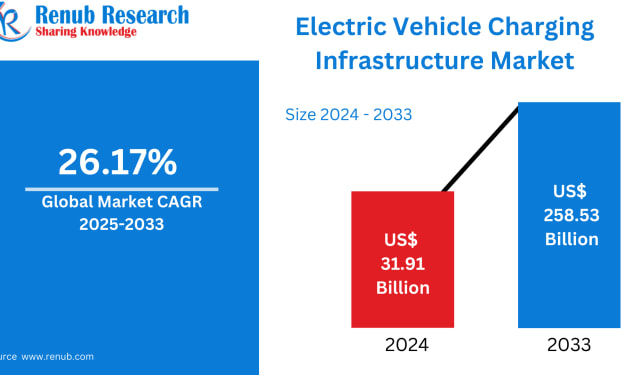
EV Charging Infrastructure Market Size and Forecast 2025–2033
Introduction: The Backbone of the Electric Mobility Revolution The electric vehicle (EV) transition is no longer a future promise—it is an unfolding reality reshaping transportation systems worldwide. At the heart of this transformation lies one indispensable element: charging infrastructure. Without a dense, reliable, and intelligent network of charging points, even the most advanced electric vehicles would remain limited in reach and appeal.
By Aaina Oberoi6 days ago in The Swamp
Wild Card Weekend Recap: What Happens Now?
I think I figured out why I love Wild Card Weekend so much. It's because it's the first playoff anything of the calendar year. The NFL season starts in the fall, and once upon a time, the champion was crowned either on or slightly before New Year's. The evolution of the NFL schedule has resulted in the playoffs starting just into the New Year, and currently, the final week of the season falls on the first weekend of the New Year, with Wild Card Weekend coming a week after that. So yes, chronologically, the NFL's Wild Card Weekend serves as the first playoff anything of the calendar year.
By Clyde E. Dawkins7 days ago in Unbalanced


Comments
There are no comments for this story
Be the first to respond and start the conversation.