
Nigeria Signals More Strikes Likely in ‘Joint’ US Operations
Deepening Security Partnership as Abuja Hints at Expanded Military Action Against Militant Groups
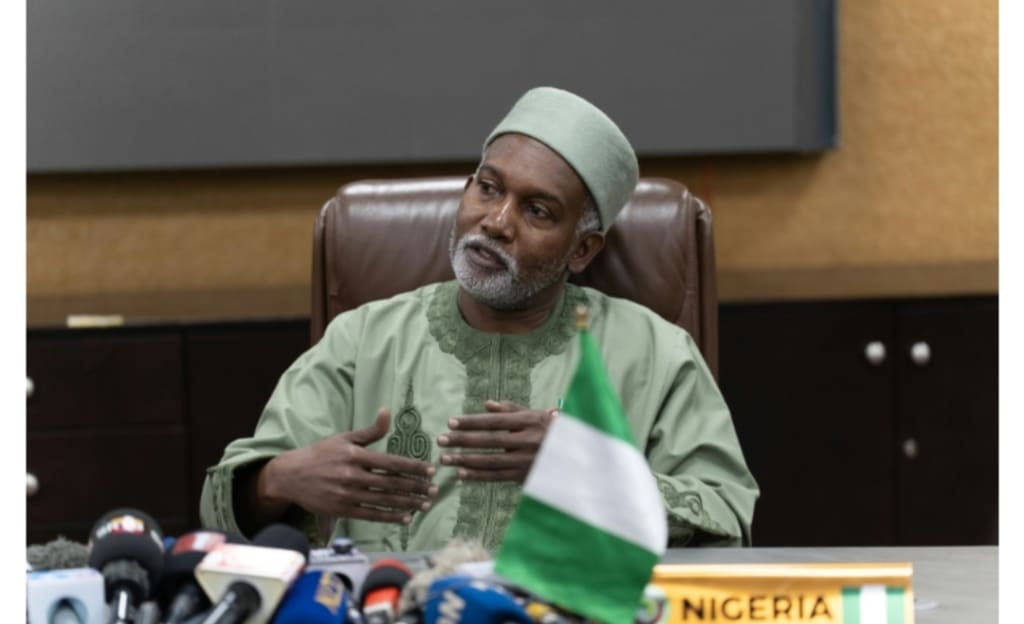
Nigeria has indicated that further military strikes are likely as part of joint operations with the United States, signaling a renewed and more assertive phase in the fight against militant groups operating across its territory and the wider West African region. The statement reflects Abuja’s growing determination to confront persistent security threats, particularly those posed by Islamist insurgents linked to the Islamic State and Boko Haram factions, whose activities continue to destabilize communities in the country’s northeast and beyond.
The prospect of additional joint strikes underscores the deepening security partnership between Nigeria and the United States. For years, the two countries have cooperated through intelligence sharing, training programs, and logistical support. However, the indication that more coordinated military action may be imminent suggests a shift toward a more operationally integrated approach, driven by the evolving tactics and resilience of militant networks.
Nigeria’s security challenges are complex and multifaceted. In the northeast, the Boko Haram insurgency, which began in 2009, has fractured into rival factions, including the Islamic State West Africa Province (ISWAP). While Nigerian forces have achieved notable successes, militants have adapted by dispersing into remote areas, exploiting porous borders, and launching asymmetric attacks on military outposts and civilian targets. Beyond the northeast, armed banditry, kidnappings, and communal violence have strained the country’s security apparatus, stretching resources thin.
Officials have emphasized that any joint operations with the United States would respect Nigeria’s sovereignty and be conducted at the request of the Nigerian government. This point is politically significant, as foreign military involvement has historically been a sensitive issue in Nigeria. By framing the cooperation as “joint,” authorities aim to reassure the public that Nigeria remains in command of its security strategy, with the United States acting as a partner rather than a unilateral actor.
From Washington’s perspective, supporting Nigeria aligns with broader counterterrorism objectives in Africa. The Sahel and Lake Chad regions have become increasingly volatile, with militant groups exploiting weak governance, economic hardship, and local grievances. The United States has long viewed Nigeria as a ключ regional anchor whose stability is critical to preventing the spread of extremist violence across West and Central Africa. Joint operations allow the US to contribute advanced surveillance, intelligence, and precision-strike capabilities while relying on Nigerian forces’ local knowledge and ground presence.
Analysts suggest that the likelihood of more strikes reflects frustration with the durability of militant leadership structures. Despite repeated offensives, insurgent commanders have managed to regroup and sustain operations. Targeted strikes, particularly those guided by high-quality intelligence, are seen as a way to disrupt command-and-control networks, degrade logistical hubs, and deter future attacks. Nigerian officials have hinted that such operations would be selective and intelligence-driven, aimed at minimizing civilian casualties and collateral damage.
Human rights considerations remain a critical part of the debate. Past military campaigns against insurgents in Nigeria have drawn criticism from rights groups, who have accused security forces of abuses against civilians. The involvement of the United States brings additional scrutiny, as US law and policy require partner forces to meet certain human rights standards. Nigerian authorities have stated that safeguards will be in place to ensure compliance with international humanitarian law, arguing that disciplined, joint operations could actually reduce harm to civilians compared to less coordinated actions.
The announcement has also sparked regional interest. Neighboring countries such as Niger, Chad, and Cameroon have been drawn into the conflict through cross-border attacks and joint task forces. More robust Nigeria–US operations could have spillover effects, potentially weakening militant groups that operate across borders. At the same time, there is concern that intensified pressure in one area could push fighters into neighboring states, underscoring the need for regional coordination.
Domestically, public reaction is mixed. Many Nigerians, particularly those in conflict-affected areas, welcome any initiative that promises improved security and a reduction in violence. Others remain skeptical, pointing to past campaigns that failed to deliver lasting peace. Economic pressures, including high inflation and unemployment, have heightened public impatience with insecurity, making effective action a political imperative for the government.
Ultimately, Nigeria’s signal that more strikes are likely in joint US operations highlights both urgency and opportunity. It reflects an acknowledgment that existing approaches need reinforcement and that international partnerships can play a crucial role in addressing transnational threats. Whether these operations succeed will depend not only on military precision but also on broader efforts to address the root causes of extremism, including poverty, governance deficits, and social exclusion.
As Nigeria and the United States prepare for the possibility of further coordinated action, the stakes are high. Success could weaken some of the region’s most dangerous militant groups and restore a measure of stability to long-suffering communities. Failure, however, could deepen mistrust and prolong a conflict that has already exacted a heavy toll. For now, Nigeria’s message is clear: the fight is far from over, and more decisive action may be on the horizon.Start writing...
About the Creator
Keep reading
More stories from Salaar Jamali and writers in The Swamp and other communities.
US Launches Strikes Against Islamic State in Nigeria: A New Chapter in Counterterrorism Engagement
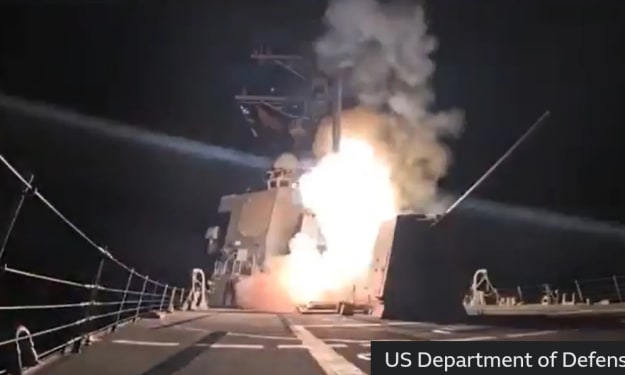
On December 25, 2025, the United States military carried out a series of precision strikes targeting Islamic State militants in northwest Nigeria, marking one of the most significant direct U.S. military actions in West Africa in years. Announced publicly by President Donald Trump on his social media platform, the operation underscores deepening U.S. involvement in Africa’s complex security landscape and highlights the ongoing global effort to counter extremist violence.
By Salaar Jamali17 days ago in The Swamp


Comments
There are no comments for this story
Be the first to respond and start the conversation.