
Why Do American Citizens Keep Paying for Israel's Wars?
Billions in aid to Israel raise questions about American priorities.


This article was written with the assistance of AI to help present information in a clear and accessible way.
Every year, U.S. taxpayers send billions of dollars overseas—not just for weapons in general, but specifically to fund Israel’s military. While politicians in Washington frame this as “supporting an ally,” the reality is that ordinary American citizens are paying for bombs to be dropped thousands of miles away, in conflicts that rarely benefit them directly.
So why is the United States so deeply tied to Israel’s wars, and why do American citizens keep footing the bill?
Billions Flow to Israel Every Year
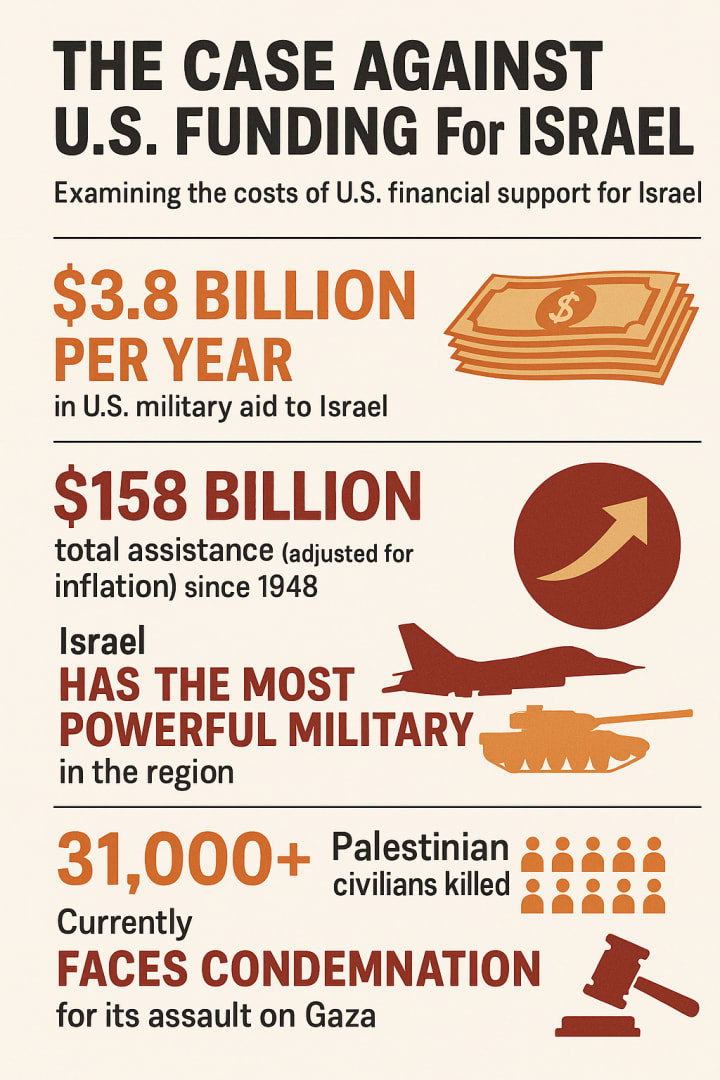
Since World War II, the U.S. has provided over $150 billion in aid to Israel, making it the single largest recipient of American foreign assistance. Today, Israel receives at least $3.8 billion annually in military aid under a 10-year agreement signed during the Obama administration.
This money doesn’t just buy “defense systems”—it funds advanced fighter jets, bombs, and missile interceptors. It ensures Israel’s military remains one of the most powerful in the region.
In fact, some U.S. aid is structured so that Israel is required to spend it on American-made weapons, funneling tax dollars straight from American workers to defense contractors like Lockheed Martin and Raytheon.
The Political Relationship
Why does Washington keep sending money and weapons to Israel, even when U.S. citizens struggle at home?
Strategic Influence in the Middle East
Israel is seen as America’s key ally in a volatile region. By propping up Israel’s military dominance, the U.S. maintains leverage over Middle Eastern politics and resources.
Lobbying Power
Groups like AIPAC (the American Israel Public Affairs Committee) wield massive influence in Congress. Few lawmakers are willing to vote against military aid to Israel, knowing it could cost them campaign funding or political support.
Shared Military Agenda
Israel’s conflicts often overlap with U.S. interests, especially regarding Iran, Syria, and Palestine. By funding Israel’s arsenal, Washington keeps pressure on rivals without committing as many American troops.
The Real Cost to Americans
For the average U.S. taxpayer, this relationship comes with real costs. That $3.8 billion given to Israel every year could instead:
Erase billions in student debt
Provide healthcare to millions of uninsured Americans
Fund infrastructure repairs across struggling cities
Support disaster relief and climate resiliency projects
Instead, those billions are used to purchase bombs, missiles, and weapons systems that often end up being used in Gaza, the West Bank, or neighboring countries—regions where civilians regularly bear the brunt of the violence.
When Israel launches airstrikes, many of those bombs are paid for by American workers’ paychecks.
Endless Conflict, Endless Payments
The cycle continues because war in the Middle East rarely stops. As one conflict cools, another heats up. Every escalation means more calls for U.S. support, more “emergency” aid packages, and more weapons shipped overseas.
Meanwhile, Americans are left asking: why do we always have money for foreign wars, but not for affordable housing, lower medical bills, or rebuilding after disasters here at home?
Do Citizens Really Have a Say?
Public polling shows that many Americans—especially younger generations—are increasingly critical of U.S. military aid to Israel. Yet in Washington, bipartisan consensus keeps the money flowing. Presidents from both parties, whether Democrat or Republican, continue signing aid packages with little real debate.
For most citizens, there’s no direct vote on whether their taxes should pay for bombs dropped in Gaza or airstrikes against Iran-backed militias. The decision is made long before the public has a chance to weigh in.
The Bigger Question
At its core, the issue isn’t just about Israel. It’s about whether American citizens should be forced to finance wars abroad while their own communities face crises. The billions spent every year on bombs for Israel highlight a broader problem: U.S. foreign policy prioritizes weapons and power projection over domestic needs.
Final Thought
Every time an American files taxes, part of that money is guaranteed to end up funding Israel’s military. Whether you support Israel or not, the reality is that ordinary citizens have little say in how those dollars are used.
The bigger question is simple: should Americans keep paying for bombs abroad, or should that money finally be redirected to building a stronger America at home?
Thanks for reading. My name is DJ for Change — I write to spark thought and conversation about the systems shaping our lives. Let’s start asking the tough questions together.
About the Creator
DJ for Change
Remixing ideas into action. I write about real wealth, freedom tech, flipping the system, and community development. Tune in for truth, hustle, hacks, and vision, straight from the Capital District!
https://buymeacoffee.com/djforchange
Keep reading
More stories from DJ for Change and writers in The Swamp and other communities.
The Saddest Thing - The Billionaires Who Rule America Aren't Even Enjoying Themselves
This single post says more about our ruling class than a thousand policy papers. The saddest thing about today's system is that the men robbing the rest of us - sabotaging our economic prospects, our pensions, our access to affordable healthcare - are not even happy.
By Scott Christenson🌴27 days ago in The Swamp



Comments
There are no comments for this story
Be the first to respond and start the conversation.