
Why China Is Building So Many Coal Plants Despite Its Solar and Wind Boom
Why coal remains central to China’s power strategy A paradox of green growth and fossil fuel expansion Renewables surge, but coal still anchors the grid Economic priorities clash with climate commitments China hedges its clean energy future with coal Power shortages drive continued investment in fossil fuels

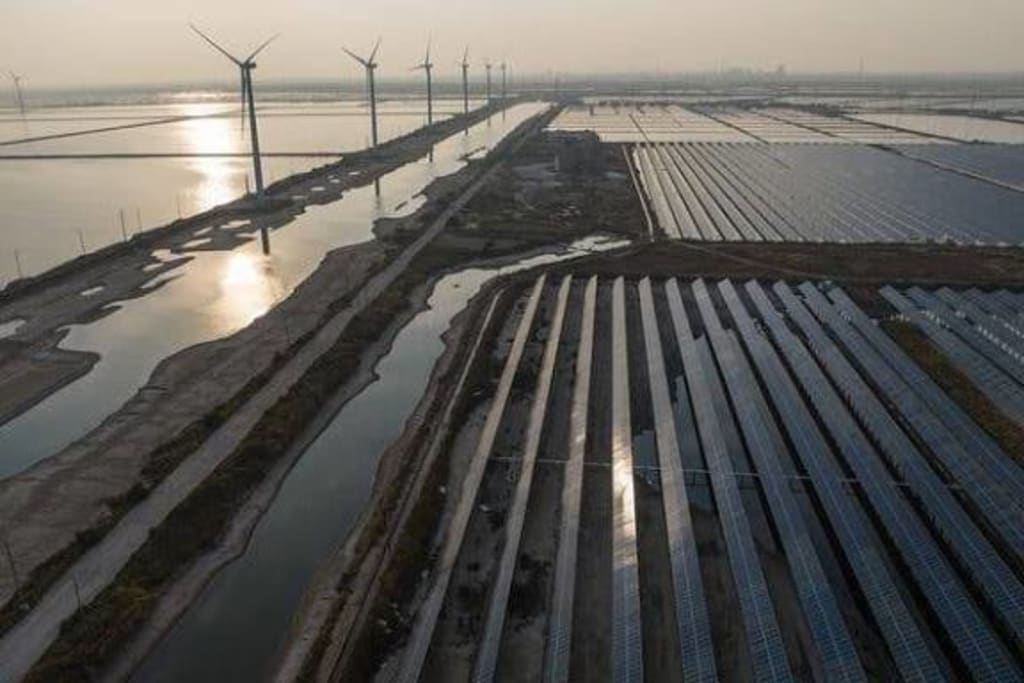
China is leading the world in renewable energy deployment, installing record levels of solar panels and wind turbines each year. Yet at the same time, it is also approving and constructing new coal-fired power plants at a pace unmatched by any other country. This apparent contradiction has puzzled climate experts and policymakers alike. How can the world’s largest producer of clean energy also remain its biggest builder of coal plants?
The answer lies in a complex mix of energy security concerns, economic growth priorities, grid limitations, and political realities.
A Renewable Energy Giant With Fossil Fuel Roots
China now accounts for more than half of global new solar and wind installations. Massive solar farms in desert regions and sprawling wind projects along its coasts demonstrate Beijing’s ambition to transition toward cleaner energy. The country has also invested heavily in battery storage and electric vehicle infrastructure.
However, coal still provides roughly 60 percent of China’s electricity. The nation’s industrial economy — driven by steel, cement, manufacturing, and data centers — requires constant, stable power. Unlike solar and wind, which depend on weather conditions, coal plants can generate electricity around the clock.
Chinese officials argue that renewables alone cannot yet guarantee grid reliability, especially during peak demand periods such as heatwaves or cold winters. Coal plants serve as a backup to prevent blackouts that could disrupt factories and daily life.
Energy Security After Power Shortages
China’s renewed push for coal construction accelerated after widespread power shortages in 2021 and 2022, when coal supply disruptions and surging electricity demand caused outages across several provinces. Factories were forced to shut down, and households experienced rolling blackouts.
Those events deeply alarmed policymakers. Energy security became a top national priority, alongside economic stability. Building more coal plants was seen as a fast and dependable solution to prevent similar crises in the future.
Unlike imported oil or gas, coal is largely mined domestically, reducing China’s dependence on foreign energy suppliers. In times of geopolitical tension, this self-sufficiency is viewed as strategically vital.
Grid Bottlenecks and Storage Challenges
Another major issue is infrastructure. Much of China’s solar and wind power is generated in remote western regions, far from major cities and industrial hubs in the east. Transmission lines are improving but still lag behind renewable expansion.
Moreover, large-scale energy storage technology is not yet sufficient to smooth out fluctuations in renewable output. When the sun sets or the wind drops, coal plants can quickly ramp up production to meet demand.
Until grid flexibility and storage capacity improve, coal remains a reliable stabilizer in China’s energy system.
Economic and Political Incentives
Local governments also play a key role in coal plant approvals. New power stations create jobs, boost local GDP figures, and attract industrial investment. In economically struggling provinces, coal projects are often viewed as engines of growth.
State-owned energy companies benefit as well. Coal plants provide steady revenue streams and help justify large capital investments. For officials whose performance is measured partly on economic output and employment, coal remains politically attractive.
This creates a contradiction between national climate goals and local development priorities. While Beijing sets ambitious carbon targets, provincial leaders often focus on immediate economic gains.
Climate Commitments Versus Reality
China has pledged to peak carbon emissions before 2030 and achieve carbon neutrality by 2060. It also presents itself as a global leader in clean energy and climate diplomacy.
Critics argue that building new coal plants undermines these commitments. Even if coal plants operate at lower capacity in the future, their long lifespans lock in emissions for decades.
Chinese officials counter that many of the new plants are designed to replace older, more polluting facilities and will be used mainly as backup power rather than primary energy sources. They insist coal capacity does not necessarily mean coal consumption will rise at the same rate.
Still, environmental groups warn that expanding coal infrastructure risks slowing the transition to renewables and sends mixed signals to the world.
Industrial Demand Keeps Rising
China’s electricity demand continues to grow rapidly, driven by urbanization, electric vehicles, artificial intelligence, and heavy industry. Data centers and semiconductor factories alone require enormous amounts of reliable power.
Renewables are growing fast, but so is consumption. Coal fills the gap between what renewable energy can currently supply and what the economy requires.
Until demand growth slows or storage technology improves dramatically, coal remains a crucial part of the energy mix.
A Transitional Strategy or Long-Term Dependence?
Some analysts view China’s coal expansion as a temporary insurance policy during the renewable transition. They argue that once grid technology and storage improve, coal plants will be used less frequently and eventually phased out.
Others fear the opposite: that continued coal investment creates financial and political incentives to keep using coal longer than necessary.
The truth likely lies somewhere in between. China is attempting to balance three competing goals: economic growth, energy security, and climate responsibility. Achieving all three at once is proving extremely difficult.
Conclusion
China’s construction of new coal plants alongside a booming renewable sector reflects the tensions at the heart of its energy strategy. Solar and wind power symbolize the future, but coal represents stability in the present.
While China is undeniably leading the world in renewable energy development, it is also hedging its bets with fossil fuels to avoid power shortages and economic disruption. Whether this approach delays or ultimately supports the transition to clean energy will depend on how quickly China can modernize its grid, expand storage, and curb rising demand.
For now, the country’s energy landscape remains a paradox: a global champion of green power that still relies heavily on black coal to keep its lights on and its factories running.
About the Creator
Fiaz Ahmed
I am Fiaz Ahmed. I am a passionate writer. I love covering trending topics and breaking news. With a sharp eye for what’s happening around the world, and crafts timely and engaging stories that keep readers informed and updated.
Keep reading
More stories from Fiaz Ahmed and writers in The Swamp and other communities.
Pakistan Faces Crunch as Demand for China-Developed Jets Surges
Pakistan is facing a growing strategic and industrial challenge as international demand rises for fighter jets jointly developed with China, particularly the JF-17 Thunder and interest surrounding China’s newer J-10C aircraft. While the surge in demand reflects the success of Pakistan’s defense collaboration with Beijing, it is also straining the country’s production capacity, finances, and military planning at a time when Islamabad is grappling with economic pressures and regional security concerns. The situation places Pakistan in a difficult position: balancing export opportunities that generate foreign revenue with the urgent need to modernize its own air force. A Defense Partnership Bearing Fruit The JF-17 Thunder, co-developed by Pakistan Aeronautical Complex (PAC) and China’s Chengdu Aircraft Industry Group, has become one of Pakistan’s most visible defense exports. Designed as a cost-effective, multi-role fighter jet, the aircraft appeals to countries that cannot afford Western platforms such as the F-16 or Eurofighter. In recent years, several nations in Africa, the Middle East, and Southeast Asia have expressed interest or signed contracts for the JF-17. Some countries view the jet as a practical solution to upgrade aging fleets while avoiding political restrictions tied to Western arms sales. China’s J-10C, though more advanced, has also drawn attention after Pakistan inducted it into its own air force to counter India’s Rafale fighters. Its reported performance and lower cost compared to Western equivalents have added to its global appeal. Export Success Meets Domestic Strain While export orders bring prestige and revenue, they also create pressure on Pakistan’s defense industry. PAC Kamra, the main production facility for the JF-17, has limited manufacturing capacity and must divide output between domestic needs and international contracts. Pakistan’s Air Force (PAF) is in the midst of modernizing its fleet to replace aging Mirage and older F-16 aircraft. Delays in domestic deliveries could weaken Pakistan’s air defense readiness at a time when tensions with India remain high. Military analysts warn that prioritizing exports over local procurement could create a short-term capability gap. At the same time, rejecting foreign buyers risks losing valuable income and diplomatic influence. Economic Pressures Complicate Decisions Pakistan’s fragile economy adds another layer of complexity. The country continues to struggle with high inflation, foreign debt, and reliance on International Monetary Fund support. Defense exports offer much-needed foreign exchange earnings, but expanding production requires upfront investment in technology, skilled labor, and infrastructure. Building additional assembly lines or upgrading existing ones demands resources Pakistan does not easily have. Chinese financing and technical assistance may help, but that also deepens Islamabad’s dependence on Beijing, which already dominates Pakistan’s defense imports. Some economists argue that defense exports could become a niche growth sector for Pakistan if managed wisely. Others caution that the opportunity cost is high when public spending is needed for health, education, and energy security. Regional and Global Implications The rising demand for Chinese-developed jets has broader geopolitical consequences. Countries purchasing these aircraft often do so to avoid Western sanctions or political conditions, strengthening China’s influence in their military sectors. Pakistan, as a co-producer, benefits diplomatically from these relationships. Selling jets can build long-term defense ties through training, maintenance, and spare-parts agreements. This expands Pakistan’s footprint in regions where it previously had little strategic presence. However, the shift also puts Pakistan in competition with traditional arms exporters such as Russia and European manufacturers. It places Islamabad within China’s expanding defense export network, which some Western governments view with concern. Technology and Capability Questions Despite their popularity, the jets face scrutiny over their technological sophistication. Critics argue that while affordable, the aircraft may lag behind Western platforms in stealth, avionics integration, and engine performance. Pakistan has sought to address these concerns by upgrading the JF-17 with better radar systems, Chinese missiles, and modern cockpit displays. Continuous improvement is necessary to keep the jet competitive in a rapidly evolving market. Yet each upgrade adds cost and complexity, further stretching Pakistan’s production capabilities. Balancing National Security and Commerce For Pakistan’s military leadership, the dilemma is starkStart writing...
By Fiaz Ahmed about 14 hours ago in The Swamp
Canada Is Not Minnesota
To many outsiders, Canada and the American Midwest—especially Minnesota—can appear almost identical. They share cold winters, friendly accents, love for hockey, and landscapes filled with lakes and forests. Jokes often circulate that Minnesota is basically “Canada Lite,” or that Canada is just a larger version of Minnesota. While the similarities are real, they can blur important distinctions. Canada is not Minnesota, and reducing one to the image of the other oversimplifies rich histories, cultures, and identities that deserve to stand on their own.
By Sajida Sikandar3 days ago in The Swamp



Comments
There are no comments for this story
Be the first to respond and start the conversation.