
Pakistan Faces Crunch as Demand for China-Developed Jets Surges
Success of JF-17 program brings new economic and military dilemmas Export boom tests Pakistan’s defense industry and air force readiness Growing global demand highlights limits of domestic manufacturing Balancing foreign sales with internal security needs China-Pakistan jet partnership reaches critical turning point Arms exports surge amid economic and strategic pressures Opportunity and risk collide in Pakistan’s fighter jet ambitions

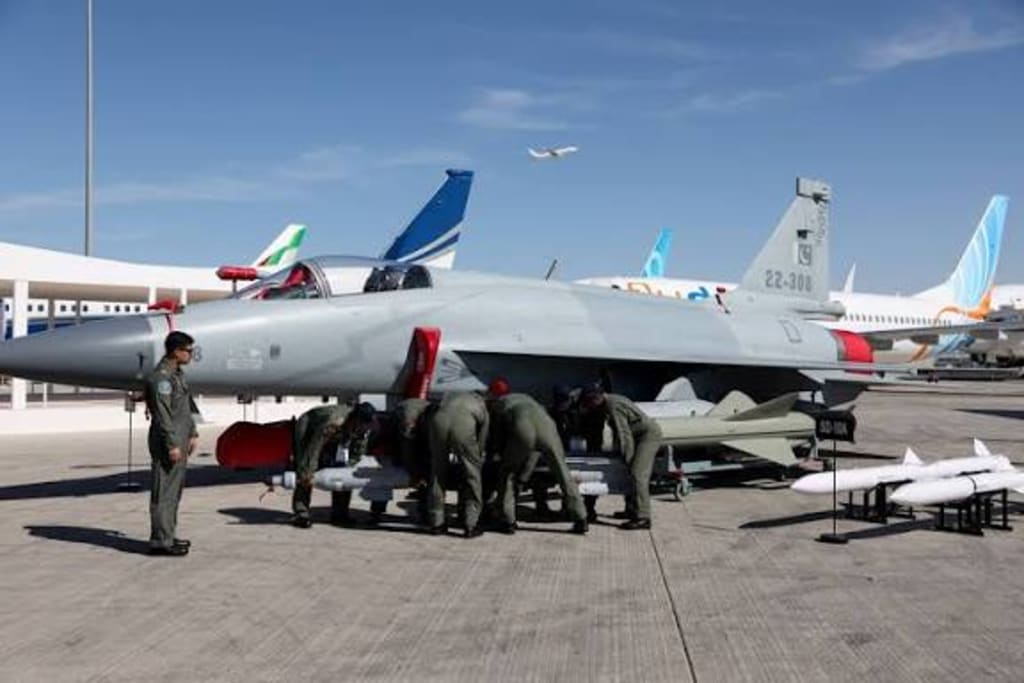
Pakistan is facing a growing strategic and industrial challenge as international demand rises for fighter jets jointly developed with China, particularly the JF-17 Thunder and interest surrounding China’s newer J-10C aircraft. While the surge in demand reflects the success of Pakistan’s defense collaboration with Beijing, it is also straining the country’s production capacity, finances, and military planning at a time when Islamabad is grappling with economic pressures and regional security concerns.
The situation places Pakistan in a difficult position: balancing export opportunities that generate foreign revenue with the urgent need to modernize its own air force.
A Defense Partnership Bearing Fruit
The JF-17 Thunder, co-developed by Pakistan Aeronautical Complex (PAC) and China’s Chengdu Aircraft Industry Group, has become one of Pakistan’s most visible defense exports. Designed as a cost-effective, multi-role fighter jet, the aircraft appeals to countries that cannot afford Western platforms such as the F-16 or Eurofighter.
In recent years, several nations in Africa, the Middle East, and Southeast Asia have expressed interest or signed contracts for the JF-17. Some countries view the jet as a practical solution to upgrade aging fleets while avoiding political restrictions tied to Western arms sales.
China’s J-10C, though more advanced, has also drawn attention after Pakistan inducted it into its own air force to counter India’s Rafale fighters. Its reported performance and lower cost compared to Western equivalents have added to its global appeal.
Export Success Meets Domestic Strain
While export orders bring prestige and revenue, they also create pressure on Pakistan’s defense industry. PAC Kamra, the main production facility for the JF-17, has limited manufacturing capacity and must divide output between domestic needs and international contracts.
Pakistan’s Air Force (PAF) is in the midst of modernizing its fleet to replace aging Mirage and older F-16 aircraft. Delays in domestic deliveries could weaken Pakistan’s air defense readiness at a time when tensions with India remain high.
Military analysts warn that prioritizing exports over local procurement could create a short-term capability gap. At the same time, rejecting foreign buyers risks losing valuable income and diplomatic influence.
Economic Pressures Complicate Decisions
Pakistan’s fragile economy adds another layer of complexity. The country continues to struggle with high inflation, foreign debt, and reliance on International Monetary Fund support. Defense exports offer much-needed foreign exchange earnings, but expanding production requires upfront investment in technology, skilled labor, and infrastructure.
Building additional assembly lines or upgrading existing ones demands resources Pakistan does not easily have. Chinese financing and technical assistance may help, but that also deepens Islamabad’s dependence on Beijing, which already dominates Pakistan’s defense imports.
Some economists argue that defense exports could become a niche growth sector for Pakistan if managed wisely. Others caution that the opportunity cost is high when public spending is needed for health, education, and energy security.
Regional and Global Implications
The rising demand for Chinese-developed jets has broader geopolitical consequences. Countries purchasing these aircraft often do so to avoid Western sanctions or political conditions, strengthening China’s influence in their military sectors.
Pakistan, as a co-producer, benefits diplomatically from these relationships. Selling jets can build long-term defense ties through training, maintenance, and spare-parts agreements. This expands Pakistan’s footprint in regions where it previously had little strategic presence.
However, the shift also puts Pakistan in competition with traditional arms exporters such as Russia and European manufacturers. It places Islamabad within China’s expanding defense export network, which some Western governments view with concern.
Technology and Capability Questions
Despite their popularity, the jets face scrutiny over their technological sophistication. Critics argue that while affordable, the aircraft may lag behind Western platforms in stealth, avionics integration, and engine performance.
Pakistan has sought to address these concerns by upgrading the JF-17 with better radar systems, Chinese missiles, and modern cockpit displays. Continuous improvement is necessary to keep the jet competitive in a rapidly evolving market.
Yet each upgrade adds cost and complexity, further stretching Pakistan’s production capabilities.
Balancing National Security and Commerce
For Pakistan’s military leadership, the dilemma is starkStart writing...
About the Creator
Fiaz Ahmed
I am Fiaz Ahmed. I am a passionate writer. I love covering trending topics and breaking news. With a sharp eye for what’s happening around the world, and crafts timely and engaging stories that keep readers informed and updated.
Keep reading
More stories from Fiaz Ahmed and writers in The Swamp and other communities.
UAE Rolls Over $2 Billion of Pakistan’s Debt for One Month at 6.5% Interest Rate: Report
Pakistan has received temporary financial relief after the United Arab Emirates agreed to roll over $2 billion of its existing debt for one month at an interest rate of 6.5 percent, according to media reports and government sources. The short-term rollover comes at a critical moment for Islamabad as it struggles to stabilize its fragile economy, manage foreign exchange reserves, and meet ongoing obligations under its reform program with the International Monetary Fund (IMF). The decision underscores Pakistan’s continued reliance on friendly Gulf states for emergency financial support and highlights the urgency of its balance-of-payments crisis. A Short-Term Lifeline The debt rollover means that Pakistan will not need to repay the $2 billion immediately, allowing it to retain the funds in its central bank reserves for another month. While the extension is brief, it provides breathing space as Pakistan negotiates further assistance from international lenders and attempts to shore up investor confidence. Officials familiar with the matter said the interest rate of 6.5 percent reflects tighter global financial conditions and Pakistan’s weakened credit profile. Unlike earlier years when Pakistan received low-interest or interest-free deposits from allies, recent rollovers have come with higher costs, reflecting growing caution among lenders. The funds are part of deposits placed by the UAE at the State Bank of Pakistan, which are counted as part of the country’s foreign exchange reserves. Economic Pressures Mount Pakistan’s economy remains under severe strain due to high inflation, heavy external debt repayments, and sluggish export growth. Foreign exchange reserves have hovered at precarious levels, often covering only a few weeks of imports. Any delay in repayment obligations can help avoid immediate default risks but does little to resolve deeper structural problems. The country is currently implementing tough fiscal measures required by the IMF, including reducing energy subsidies, increasing taxes, and allowing market-based currency rates. These policies have triggered public dissatisfaction and raised the cost of living, particularly for low-income households. The rollover from the UAE is seen as a stopgap measure to help Pakistan meet short-term financing needs while continuing negotiations with multilateral lenders. Strategic Ties with the UAE Pakistan and the UAE have long maintained close political and economic ties. Millions of Pakistani workers live in the UAE, sending billions of dollars in remittances back home each year. Abu Dhabi has repeatedly stepped in with deposits, loans, and investments during Pakistan’s financial emergencies. In recent years, however, Gulf support has become more conditional and commercially oriented. Financial assistance is increasingly tied to economic reforms, investment opportunities, and interest-bearing terms rather than unconditional bailouts. Analysts say the one-month rollover reflects both goodwill and caution. The UAE is willing to help Pakistan avoid an immediate crisis but is hesitant to extend longer-term relief without assurances of economic stability and reform. Debt Burden and IMF Dependence Pakistan’s total external debt exceeds $125 billion, with significant repayments due in the coming months. The government faces pressure to roll over or refinance loans from friendly countries such as China, Saudi Arabia, and the UAE to avoid draining reserves. The IMF program remains central to Pakistan’s survival strategy. Continued IMF support is necessary to unlock additional funds from the World Bank, Asian Development Bank, and bilateral partners. Any delay or breakdown in IMF negotiations could sharply worsen Pakistan’s financial outlook. Economists warn that repeated short-term rollovers only postpone the problem. Without stronger exports, higher foreign investment, and improved tax collection, Pakistan will remain dependent on emergency funding. Market Reaction and Investor Confidence News of the UAE rollover provided limited reassurance to financial markets. While it eased immediate default concerns, investors remain wary of Pakistan’s ability to meet long-term obligations. Bond yields remain high, reflecting doubts about sustainability. Currency traders are watching closely to see whether further rollovers or new deposits are secured from friendly countries. Even modest inflows can help stabilize the rupee and slow inflationary pressures. However, business leaders argue that temporary relief must be accompanied by policy consistency and political stability. Frequent government changes and policy reversals have historically undermined Pakistan’s economic recovery efforts. Political and Social Impact The debt rollover also carries political implications. The government can present the agreement as evidence of international confidence and diplomatic success. Yet critics argue that relying on one-month extensions exposes the weakness of Pakistan’s financial position. Ordinary citizens feel the consequences of the crisis through rising fuel prices, electricity bills, and food inflation. Public patience is wearing thin as austerity measures continue under IMF supervision. Opposition parties have accused the government of mismanaging the economy and becoming overly dependent on foreign creditors. The leadership, in turn, insists that painful reforms are necessary to avoid a deeper collapse. Looking Ahead The one-month rollover from the UAE buys Pakistan time—but little more. Officials must now secure longer-term financing solutions and demonstrate progress on economic reforms. Talks with other lenders, including China and Saudi Arabia, are expected to intensify in the coming weeks. Analysts say Pakistan’s long-term recovery depends on expanding exports, attracting foreign direct investment, and broadening the tax base. Without these changes, emergency rollovers will remain a recurring feature of its financial strategy. Conclusion The UAE’s decision to roll over $2 billion of Pakistan’s debt at a 6.5 percent interest rate provides short-term relief but underscores the fragile state of Pakistan’s economy. While it helps stabilize reserves and avert immediate pressure, it does not address the underlying challenges of debt dependence and weak growth. For Pakistan, the next month will be critical. Whether it can turn temporary support into lasting stability will depend on reforms, international cooperation, and political will to confront deep-rooted economic problems.
By Fiaz Ahmed about 16 hours ago in The Swamp
Kazakh President to Arrive in Pakistan Tomorrow, Signaling a New Phase in Bilateral Relations
The President of Kazakhstan is set to arrive in Pakistan tomorrow on an official visit, marking a significant moment in the evolving relationship between the two countries. The visit comes at a time when Pakistan is actively strengthening its ties with Central Asian states, while Kazakhstan is looking southward to expand trade routes, energy partnerships, and diplomatic influence in South Asia. Officials in Islamabad have described the trip as “timely and strategic,” with expectations that it will open new avenues of cooperation across multiple sectors.
By Salaar Jamali2 days ago in The Swamp
Older Women ‘Disappear’ from BBC Presenting Roles, Review Finds
The BBC and Representation Concerns A recent review has highlighted a troubling trend: older women are increasingly absent from BBC presenting roles. While younger presenters remain highly visible on prime-time television, women over a certain age appear to face systemic challenges in maintaining on-screen roles. This finding has sparked debate about ageism, sexism, and diversity in media, raising questions about how broadcasting organizations value experience and expertise. The Scope of the Review The review examined: BBC programming across television and radio The age and gender distribution of presenters Patterns in long-term career progression and on-screen visibility The results showed that women over 50 are significantly underrepresented, particularly in high-profile, front-facing presenting roles, while men of the same age continue to appear regularly. Why Older Women Disappear: Factors at Play Several factors contribute to this trend: 1. Societal Ageism and Beauty Standards Media industries often favor youthful appearance, disproportionately affecting women. This bias reflects wider societal attitudes that equate value with age and appearance. 2. Internal Broadcasting Policies Internal recruitment and promotion practices may unintentionally prioritize younger talent, leading to fewer opportunities for older women. 3. Audience Perceptions Some argue that broadcasters assume audiences prefer younger presenters, though research indicates that viewers value credibility, experience, and knowledge over age. 4. Lack of Support and Mentorship Older female presenters often lack career support or mentorship, limiting their ability to navigate internal promotions or new roles. Voices from the Industry Several former and current BBC presenters have shared their experiences: A veteran presenter noted, “I went from prime-time slots to less visible roles as I got older, despite maintaining high performance and audience approval.” Media analysts point out that men often face no such decline, highlighting a gender disparity in career longevity. These accounts underscore the systemic nature of the problem rather than it being the result of individual performance. Impact on Broadcasting and Audience The absence of older women in presenting roles has broader implications: Loss of Expertise: Experienced presenters bring nuanced insight that benefits programming quality. Reduced Representation: Audiences are deprived of diverse perspectives and role models, particularly for older female viewers. Cultural Message: The trend reinforces societal stereotypes that women’s visibility diminishes with age. Comparisons to Other Media Organizations The review suggests that the BBC is not alone in this pattern. Across global media: Older female journalists often face similar career stagnation Male presenters frequently maintain high-profile roles well into their 60s and 70s Efforts to diversify programming remain partial or inconsistent, particularly concerning age This indicates that the issue is industry-wide, reflecting deep-seated structural biases. Calls for Action In response to the review, advocates and media experts suggest several measures: Policy Reform: Implement policies to protect against age discrimination in hiring and promotion Mentorship Programs: Establish mentorship opportunities for women approaching mid-career or older Audience Engagement: Promote content that values experience and expertise, not just youth Regular Monitoring: Conduct regular diversity audits to track age and gender representation Such initiatives could help create a more equitable media landscape. Why This Matters Beyond the BBC The disappearance of older women from high-profile media roles sends a wider societal signal: Reinforces stereotypes about women, aging, and professional value Limits aspirational role models for younger women entering the media industry Reduces the diversity of voices in public discourse, which is essential for well-rounded journalism and storytelling Media representation is not just about aesthetics—it influences public perception, culture, and gender equality. Positive Examples and Progress Some broadcasters have begun addressing this issue: Highlighting seasoned presenters in prime roles regardless of age Offering flexible schedules to retain experienced female staff Celebrating women with expertise in specialized areas like science, economics, and politics These efforts demonstrate that change is possible when organizations prioritize inclusivity. Conclusion: Towards an Inclusive Broadcasting Future The review’s findings are a wake-up call: experience and expertise should not be overshadowed by age or gender. Older women have much to contribute to broadcasting, from credibility and depth to audience trust and continuity. For the BBC and other media organizations, the challenge is clear: ensure fair representation, recognize the value of experience, and dismantle ageist and sexist barriers. Doing so not only promotes equality but enriches programming quality for all viewers.
By Zahid Hussain5 days ago in The Swamp



Comments
There are no comments for this story
Be the first to respond and start the conversation.