
Türkiye Says It’s Ready to Play a Role in De-escalating US-Iran Tensions
How Ankara is positioning itself as a potential mediator amid rising regional risks
A Volatile Moment in Global Politics
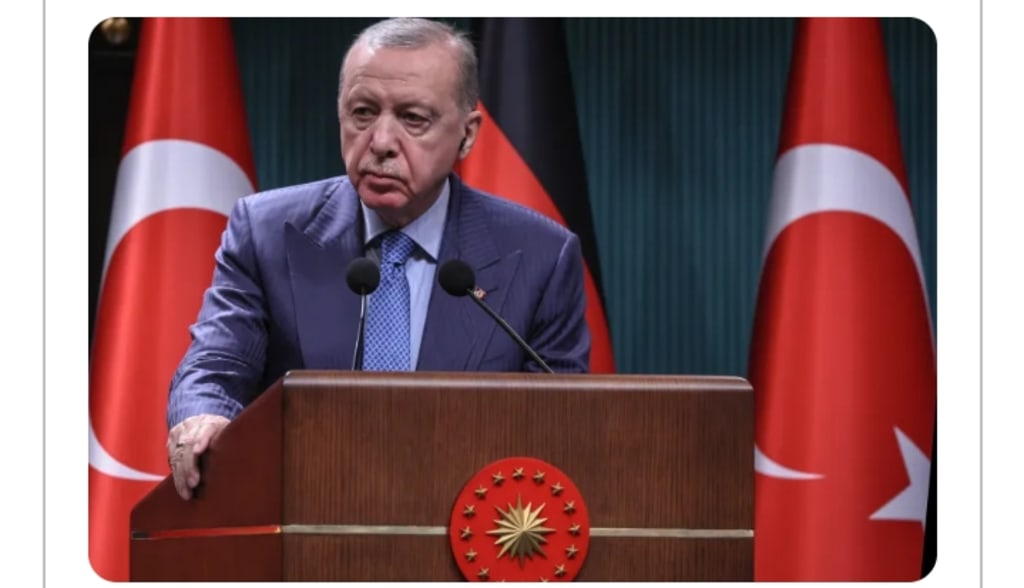
As tensions between the United States and Iran escalate — with military posturing, diplomatic friction, and fears of broader conflict — Türkiye has stepped forward with a notable declaration: it’s ready to help reduce the risk of a wider confrontation between Washington and Tehran.
Turkish President Recep Tayyip Erdoğan made this clear in a recent phone call with Iranian President Masoud Pezeshkian, emphasizing Ankara’s willingness to take on a facilitating role in easing the dispute. �
trtworld.com +1
This development is significant not only because of the stakes involved in US-Iran relations but also because of Türkiye’s unique geopolitical position — a NATO member and neighbor to Iran with longstanding diplomatic influence across the Middle East. �
Reuters
What Türkiye Has Offered So Far
During the call with Pezeshkian, Erdoğan communicated two key points:
Türkiye is ready to serve as a mediator between Iran and the United States to help de-escalate tensions. �
LBCIV7
Erdoğan will receive Iran’s foreign minister, Abbas Araghchi, in Ankara for further talks — a sign that diplomatic engagement is actively underway. �
trtworld.com
According to the Turkish Presidency’s communications, the leaders discussed the broader trajectory of Iran–Türkiye relations and the escalating regional tensions. Ankara’s stance underscores its desire to reduce hostilities rather than allow them to spiral into confrontation. �
anews.com.tr
Why Türkiye Wants to Mediate
Türkiye’s readiness to step into the fray reflects several strategic and regional motivations:
1. Geopolitical Proximity and Risk Management
Türkiye shares a long land border with Iran, making it highly sensitive to instability next door. Conflict in Iran could:
Trigger refugee flows into Turkey
Increase border security challenges
Disrupt trade and energy transit
Fuel regional instability
For Ankara, promoting dialogue is also about protecting its own national security and economic interests. �
caspianpost.com
2. Balancing Relations with Washington and Tehran
Türkiye’s foreign policy under Erdoğan has often tried to strike a delicate balance between its NATO commitments (including ties with the US) and its partnerships in the Middle East, including with Iran.
By positioning itself as a facilitator, Ankara is signaling diplomatic relevance to both sides — without fully aligning with any one power. This is a particularly nuanced diplomatic stance in a moment of rising US-Iran tensions that have drawn global attention. �
Hürriyet Daily News
3. A Regional Power Broker Role
In recent years, Turkey has increasingly portrayed itself as a regional power broker — engaging in conflict mediation and peace promotion across the Middle East, from Libya to Syria to the Gaza conflict.
An offer to mediate US-Iran tensions is consistent with Ankara’s broader efforts to be seen as a stabilizing force rather than a passive observer. �
Anadolu Ajansı
Iran’s Response and Broader Diplomatic Movements
Iran has not rejected the idea of mediation outright; instead, it has indicated a desire for diplomatic dialogue that recognizes its position and avoids humiliation. Iranian President Pezeshkian has said that progress with the United States hinges on an end to hostile behavior — including Washington’s military buildup in the Gulf. �
Daily Sabah
Iran’s foreign minister, Abbas Araghchi, is currently in Türkiye for talks with Turkish officials — another sign that diplomacy remains a priority amid rising regional tension. �
Reuters
Regional powers including Qatar, Oman, the UAE, and Pakistan are also reportedly engaged in last-ditch efforts to avert conflict, suggesting a broader coalition of states interested in preventing escalation. �
Financial Times
Why Mediation Matters Now
The window for peaceful negotiation is narrow. Escalatory rhetoric from Washington — including warnings of potential military action — has heightened fears of conflict, while Tehran has simultaneously displayed military posturing and defensive messaging. �
Al Jazeera
In this volatile environment:
Diplomatic facilitation offers a way to cool tensions
Open channels reduce the risk of miscalculation
Third-party mediation can build trust where direct talks are stalled
Türkiye’s offer is not a guaranteed solution, but it does create a diplomatic opening at a moment when direct US-Iran messaging has been strained.
Why the World Is Watching
This potential mediation initiative is significant because it highlights how regional players are stepping into roles traditionally occupied by global powers. It also suggests that:
The Middle East is not solely shaped by US-Iran dynamics
Regional states have their own stakes in preventing conflict
Diplomacy remains possible even in moments of rising rhetoric
Whether Türkiye’s efforts succeed will depend on multiple factors: openness from both Washington and Tehran, alignment of incentives, and the willingness of other international actors to support (or at least not obstruct) a process of de-escalation.
Conclusion: A Chance for Dialogue Amid Rising Tension
In a moment where geopolitical rhetoric is heating up and military options are still being discussed, Türkiye’s renewed offer to play a facilitating role between the United States and Iran represents a noteworthy attempt at diplomacy.
Ankara’s action underscores a broader truth: in times of crisis, regional voices often have the most to gain from dialogue and the most to lose from conflict.
Whether this initiative blossoms into substantive negotiation — or fades into stalled diplomacy — remains to be seen. But for now, Türkiye has placed itself at the center of a critical geopolitical conversation that could shape the future of US-Iran relations and regional stability.
About the Creator
Keep reading
More stories from Zahid Hussain and writers in The Swamp and other communities.
The Meaning of Xi’s Military Purge
A Purge That Speaks Without Words When Chinese President Xi Jinping removes senior military officials, the world often hears only fragments of the story: corruption allegations, disciplinary violations, or vague accusations of disloyalty. But in China’s political system, a military purge is never just about misconduct. It is a language of power—spoken quietly, interpreted carefully, and felt deeply within the ranks of the People’s Liberation Army (PLA). Xi’s recent military purges are not isolated incidents. They are signals. They reveal how China’s leadership views loyalty, control, and the future of its armed forces in an increasingly unstable global environment. Why the Military Matters So Much to Xi Jinping In China, the military does not serve the state—it serves the Communist Party. This distinction is crucial. Xi Jinping has repeatedly emphasized that “the Party commands the gun.” For him, the PLA is not just a defense institution but the ultimate guarantor of regime survival. Historically, Chinese leaders who lost control of the military lost power altogether. Xi understands this lesson deeply, which is why he has invested more time and political capital into military restructuring than any Chinese leader since Mao Zedong. Corruption or Control? The Official Narrative vs. Reality Officially, military purges are framed as part of China’s anti-corruption campaign. Bribery, influence peddling, and misuse of authority are cited as reasons for dismissals. But corruption in the PLA did not suddenly emerge. What has changed is Xi’s tolerance for independent power centers. Many purged officials were not merely corrupt; they were: Loyal to previous factions Embedded in old patronage networks Associated with rapid military modernization projects In this context, corruption charges function as a politically acceptable tool—a clean justification for removing figures who may challenge centralized authority. Loyalty Over Experience: A Strategic Trade-Off One of the most striking aspects of Xi’s military purge is who replaces the removed officers. Promotions increasingly favor: Personal loyalty to Xi Ideological alignment Political reliability This raises a critical question: Does loyalty come at the expense of competence? Some analysts argue that prioritizing political trust may weaken operational effectiveness. Others believe Xi is intentionally reshaping the military into a force that will never question civilian—and specifically, personal—authority. In Xi’s worldview, an obedient military is safer than a brilliant but autonomous one. The Shadow of History: Lessons from the Soviet Collapse Xi Jinping frequently references the collapse of the Soviet Union as a warning. In his view, the Soviet Communist Party fell not because of economic failure alone, but because: The military lost ideological discipline Party control eroded Loyalty fractured Xi’s military purges can be read as preventive medicine—an effort to eliminate the conditions that allowed the Soviet system to unravel. From this perspective, purges are not signs of weakness but acts of preemptive consolidation. Modernization Under Pressure China is in the middle of one of the largest military modernization programs in history: Advanced missile systems Expanded naval power Cyber and space warfare capabilities Purging senior leadership during such a transformation is risky. It disrupts command continuity and institutional memory. Yet Xi appears willing to accept short-term disruption for long-term control. The message to the PLA is clear: Modernize—but never independently. Fear as a Tool of Discipline Purges create uncertainty, and uncertainty creates fear. Within the PLA, fear serves a function: Officers self-censor Decision-making becomes cautious Loyalty is constantly signaled However, excessive fear can also produce paralysis. Commanders may avoid initiative, delay decisions, or focus more on political correctness than battlefield effectiveness. This tension—between discipline and dysfunction—is one of the most significant risks of Xi’s approach. What This Means for Taiwan and Global Security Many outside China ask a critical question: Do these purges make China more or less likely to act militarily, especially regarding Taiwan? There are two competing interpretations: More likely – A loyal military may execute political orders without hesitation. Less capable – A purged, cautious command structure may struggle with complex operations. Both can be true at the same time. Xi may be building a military that is politically reliable but operationally untested under stress. A Message to the World—and to China Internationally, Xi’s military purge signals resolve and centralization. Domestically, it reinforces a deeper narrative: Power flows upward, not outward Authority is personal, not institutional Loyalty outweighs legacy This is not merely a military adjustment—it is a redefinition of governance. Conclusion: Purge as Policy Xi Jinping’s military purges are not accidents, overreactions, or temporary cleanups. They are policy instruments—used to reshape the PLA into a force that mirrors his political philosophy. The true meaning of Xi’s military purge lies not in who was removed, but in what kind of military is being built: Centralized Ideologically disciplined Personally loyal Whether this strategy strengthens China or plants the seeds of future instability remains an open question. What is certain is that Xi is willing to gamble military tradition, institutional autonomy, and even short-term effectiveness in pursuit of absolute control. And in modern China, that may be the most powerful message of all.
By Zahid Hussaina day ago in The Swamp
Major Bank Revamps Gold Price Target for 2026
A major global bank has revised its gold price target for 2026, signaling renewed confidence in the precious metal as a strategic asset amid persistent economic uncertainty. The updated forecast, which raises expectations for gold’s medium-term performance, reflects a combination of macroeconomic pressures, evolving monetary policy expectations, and strong institutional demand. Together, these factors are reshaping how banks and investors view gold’s role in portfolios heading into the latter half of the decade.
By Salaar Jamali2 days ago in The Swamp



Comments
There are no comments for this story
Be the first to respond and start the conversation.