
The Meaning of Xi’s Military Purge
Power, loyalty, and the silent transformation of China’s armed forces
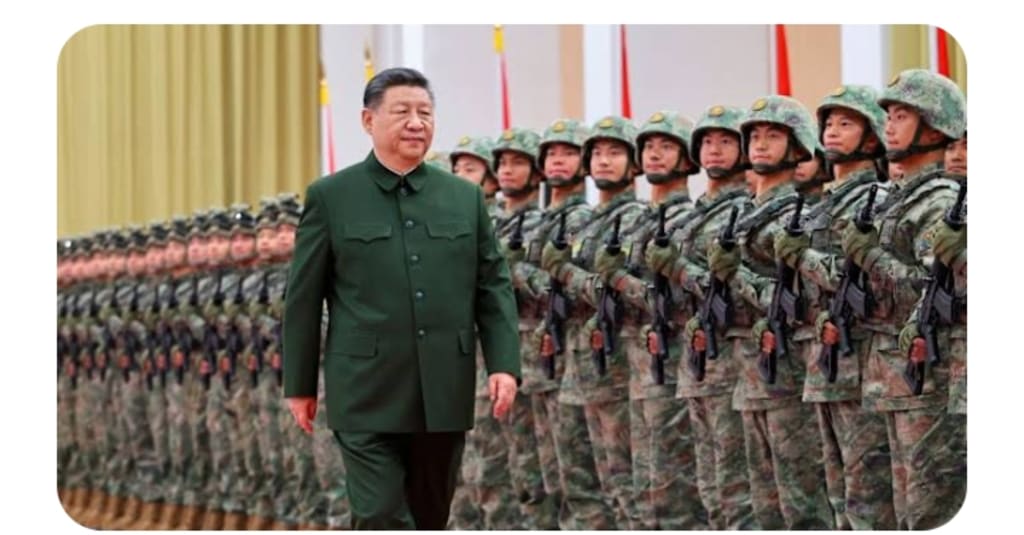
A Purge That Speaks Without Words
When Chinese President Xi Jinping removes senior military officials, the world often hears only fragments of the story: corruption allegations, disciplinary violations, or vague accusations of disloyalty. But in China’s political system, a military purge is never just about misconduct. It is a language of power—spoken quietly, interpreted carefully, and felt deeply within the ranks of the People’s Liberation Army (PLA).
Xi’s recent military purges are not isolated incidents. They are signals. They reveal how China’s leadership views loyalty, control, and the future of its armed forces in an increasingly unstable global environment.
Why the Military Matters So Much to Xi Jinping
In China, the military does not serve the state—it serves the Communist Party. This distinction is crucial.
Xi Jinping has repeatedly emphasized that “the Party commands the gun.” For him, the PLA is not just a defense institution but the ultimate guarantor of regime survival.
Historically, Chinese leaders who lost control of the military lost power altogether. Xi understands this lesson deeply, which is why he has invested more time and political capital into military restructuring than any Chinese leader since Mao Zedong.
Corruption or Control? The Official Narrative vs. Reality
Officially, military purges are framed as part of China’s anti-corruption campaign. Bribery, influence peddling, and misuse of authority are cited as reasons for dismissals.
But corruption in the PLA did not suddenly emerge.
What has changed is Xi’s tolerance for independent power centers. Many purged officials were not merely corrupt; they were:
Loyal to previous factions
Embedded in old patronage networks
Associated with rapid military modernization projects
In this context, corruption charges function as a politically acceptable tool—a clean justification for removing figures who may challenge centralized authority.
Loyalty Over Experience: A Strategic Trade-Off
One of the most striking aspects of Xi’s military purge is who replaces the removed officers.
Promotions increasingly favor:
Personal loyalty to Xi
Ideological alignment
Political reliability
This raises a critical question:
Does loyalty come at the expense of competence?
Some analysts argue that prioritizing political trust may weaken operational effectiveness. Others believe Xi is intentionally reshaping the military into a force that will never question civilian—and specifically, personal—authority.
In Xi’s worldview, an obedient military is safer than a brilliant but autonomous one.
The Shadow of History: Lessons from the Soviet Collapse
Xi Jinping frequently references the collapse of the Soviet Union as a warning. In his view, the Soviet Communist Party fell not because of economic failure alone, but because:
The military lost ideological discipline
Party control eroded
Loyalty fractured
Xi’s military purges can be read as preventive medicine—an effort to eliminate the conditions that allowed the Soviet system to unravel.
From this perspective, purges are not signs of weakness but acts of preemptive consolidation.
Modernization Under Pressure
China is in the middle of one of the largest military modernization programs in history:
Advanced missile systems
Expanded naval power
Cyber and space warfare capabilities
Purging senior leadership during such a transformation is risky. It disrupts command continuity and institutional memory.
Yet Xi appears willing to accept short-term disruption for long-term control. The message to the PLA is clear:
Modernize—but never independently.
Fear as a Tool of Discipline
Purges create uncertainty, and uncertainty creates fear.
Within the PLA, fear serves a function:
Officers self-censor
Decision-making becomes cautious
Loyalty is constantly signaled
However, excessive fear can also produce paralysis. Commanders may avoid initiative, delay decisions, or focus more on political correctness than battlefield effectiveness.
This tension—between discipline and dysfunction—is one of the most significant risks of Xi’s approach.
What This Means for Taiwan and Global Security
Many outside China ask a critical question:
Do these purges make China more or less likely to act militarily, especially regarding Taiwan?
There are two competing interpretations:
More likely – A loyal military may execute political orders without hesitation.
Less capable – A purged, cautious command structure may struggle with complex operations.
Both can be true at the same time. Xi may be building a military that is politically reliable but operationally untested under stress.
A Message to the World—and to China
Internationally, Xi’s military purge signals resolve and centralization. Domestically, it reinforces a deeper narrative:
Power flows upward, not outward
Authority is personal, not institutional
Loyalty outweighs legacy
This is not merely a military adjustment—it is a redefinition of governance.
Conclusion: Purge as Policy
Xi Jinping’s military purges are not accidents, overreactions, or temporary cleanups. They are policy instruments—used to reshape the PLA into a force that mirrors his political philosophy.
The true meaning of Xi’s military purge lies not in who was removed, but in what kind of military is being built:
Centralized
Ideologically disciplined
Personally loyal
Whether this strategy strengthens China or plants the seeds of future instability remains an open question. What is certain is that Xi is willing to gamble military tradition, institutional autonomy, and even short-term effectiveness in pursuit of absolute control.
And in modern China, that may be the most powerful message of all.
About the Creator
Keep reading
More stories from Zahid Hussain and writers in The Swamp and other communities.
Trump Is Expected to Announce Kevin Warsh as Federal Reserve Chair
A Potential New Era for the Fed President Donald Trump is widely expected to announce former Federal Reserve governor Kevin Warsh as his nominee for Federal Reserve chair, a move that would replace current Chair Jerome Powell when his term ends in May 2026. � Reuters +1 The selection could have major implications for U.S. monetary policy, financial markets, and the ongoing debate over the Fed’s independence from political influence. Who Is Kevin Warsh? A Profile of the Likely Nominee Kevin Warsh is a seasoned financial policymaker with deep experience inside the Federal Reserve system: He served as a member of the Federal Reserve Board of Governors from 2006 to 2011, including throughout the global financial crisis. � Wikipedia After leaving the Fed, Warsh took on academic and advisory roles, including at Stanford University’s Hoover Institution and Graduate School of Business. � Wikipedia He also serves on boards of major corporations and advises on economic strategy. � Wikipedia Known historically as a monetary policy hawk, Warsh has in recent public commentary signaled support for lower interest rates — reflecting an alignment with Trump’s economic priorities. � euronews Why Trump Is Leaning Toward Warsh Trump has been openly critical of Jerome Powell, who he previously appointed but later rebuked for resisting aggressive cuts in interest rates. � Reuters According to multiple reports: Trump told reporters he would make his Fed chair announcement Friday morning. � finance.yahoo.com Prediction markets shifted sharply in Warsh’s favor over the past week, indicating broad expectations he will be chosen. � finance.yahoo.com Trump and Warsh met at the White House shortly before the expected announcement. � Reuters What This Choice Signals About Monetary Policy Warsh’s nomination suggests several potential priorities: 1. Interest Rates and Growth Trump has repeatedly called for lower interest rates to stimulate economic growth, arguing that the Fed has been too cautious. Warsh’s recent commentary appears more receptive to this approach than Powell’s tenure. � euronews 2. Central Bank Independence at Stake Critics argue that the nomination illustrates pressure from the executive branch on the Federal Reserve — a traditionally independent institution charged with balancing inflation and economic stability. � Reuters Any move perceived as politicizing central banking could affect confidence in U.S. monetary policy over the long term. Market Reaction So Far Global financial markets have already shown signs of sensitivity: The U.S. dollar strengthened as betting markets weighted Warsh’s prospects, reflecting expectations of either steady or less dovish monetary policy. � Reddit Treasury yields also rose, suggesting traders are adjusting expectations for future rate paths. � Reddit These shifts reflect how closely markets monitor central bank leadership decisions long before formal confirmation. Controversies and Senate Dynamics Warsh’s potential nomination arrives amid broader tension over Fed leadership: A Justice Department investigation into Powell has fueled political scrutiny over the central bank’s actions. � Reuters Some lawmakers — including Republicans — have suggested they may withhold support until ongoing inquiries are resolved. � finance.yahoo.com Senate confirmation will be required for Warsh to assume the chairmanship, and opposition could influence the timeline or outcome. The Broader Context: Economic Policy and Politics This leadership decision comes at a time of economic uncertainty and political polarization in the United States. Key factors shaping the debate include: Inflation concerns Wage stagnation pressures Trade and tariff dynamics Uncertainty in global markets A Fed chair aligned with the presidential agenda may ease political friction — but could also raise questions about the bank’s institutional autonomy. Why This Matters Beyond Washington The Federal Reserve’s chair influences: Interest rates affecting mortgages, loans, and savings Inflation expectations for households and businesses Stock and bond market stability Global confidence in the U.S. economy A change in leadership invites fresh strategies and interpretations of the Fed’s dual mandate: stabilizing prices and maximizing employment. Conclusion: A Moment of Transition As President Trump prepares to announce Kevin Warsh’s nomination as the Federal Reserve chair, the world watches a consequential decision unfold — one with ripple effects across markets, politics, and everyday economic life. Whether Warsh’s leadership will steer the Fed toward lower rates, balance independence with political pressure, or reshape central banking practices remains to be seen. But one thing is clear: the choice of Fed chair is not just about the next four years — it’s about the future direction of the U.S. economy.
By Zahid Hussainabout an hour ago in The Swamp




Comments
There are no comments for this story
Be the first to respond and start the conversation.