
Trump Weighs Iran Strikes to Inspire Renewed Protests, Sources Say
Amid brutal repression in Iran, a risky U.S. strategy takes shape

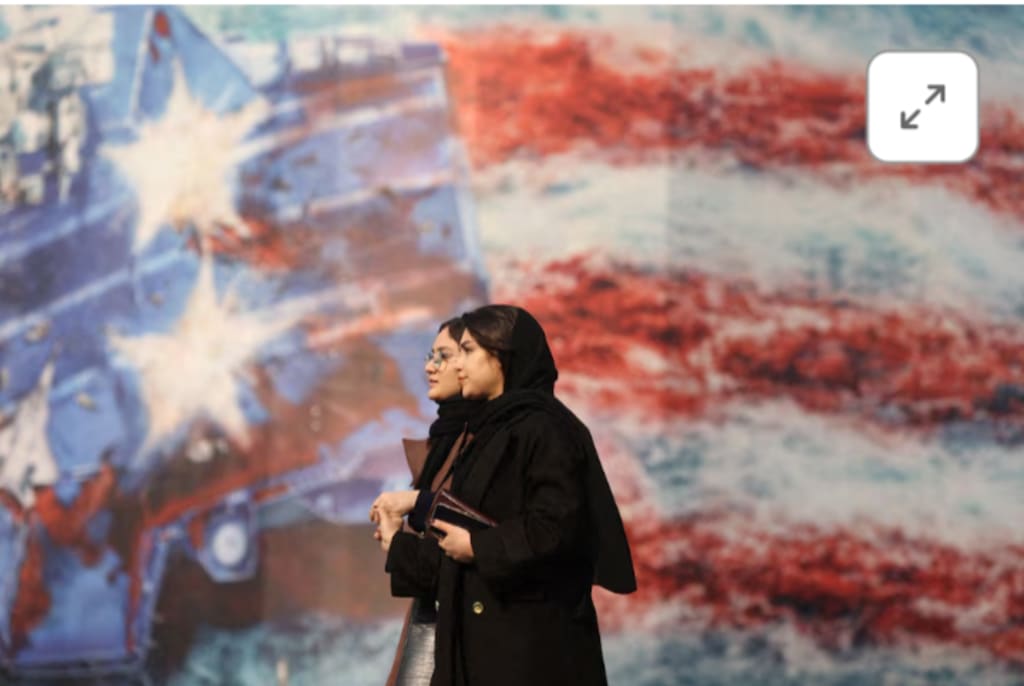
In a dramatic turn of events, former U.S. President Donald Trump is reportedly considering targeted military strikes against Iran — not only as a show of force but as a way to encourage renewed public protests inside the country. According to sources familiar with internal discussions, the goal is to weaken Iran’s security apparatus and inspire citizens who have faced months of harsh repression to rise again against their government.
While no final decision has been made, the possibility of military action has reignited global debate about whether foreign intervention can truly influence domestic political movements — or whether it risks triggering a far more dangerous regional conflict.
Understanding the Strategy Behind the Proposal
At the core of this idea is a belief held by some U.S. officials that limited and precise strikes could embolden Iranian citizens who oppose their government. Targets reportedly under consideration include security commanders linked to protest crackdowns, missile systems, and even nuclear-related facilities.
Supporters of this strategy argue that Iran’s leadership has relied heavily on fear and force to suppress dissent. If those tools were weakened, they believe public resistance could regain momentum. The recent arrival of a U.S. aircraft carrier strike group in the region has further expanded Washington’s military options and signaled seriousness about these discussions.
Trump has also publicly warned Iran to return to nuclear negotiations, suggesting that failure to do so could result in consequences “far worse” than previous actions. His rhetoric combines pressure with the promise of diplomacy — though Tehran remains skeptical of such offers.
The Reality Inside Iran
The context for this strategy is Iran’s ongoing internal unrest. Over the past year, widespread protests erupted across the country over economic hardship, political repression, and social freedoms. These demonstrations were met with violent crackdowns by Iranian security forces, resulting in thousands of reported deaths and mass arrests.
Internet shutdowns and strict censorship have made it difficult for the outside world to fully understand the scale of the crisis. Still, human rights organizations describe a grim situation where fear dominates daily life and public gatherings are quickly dispersed.
Iran’s leadership, led by Supreme Leader Ayatollah Ali Khamenei and supported by the powerful Revolutionary Guard, continues to maintain tight control. Despite rumors of political vulnerability, experts agree that the regime remains deeply entrenched.
Can Airstrikes Inspire Protests?
Many analysts are skeptical that military action would achieve its intended effect. A senior regional official remarked that air power alone cannot topple a government or replace political institutions. Without ground involvement or internal coordination, strikes could simply strengthen nationalist sentiment and rally citizens around the regime instead of against it.
There is also concern that external attacks could undermine the credibility of protest movements, allowing Iranian authorities to label them as foreign-backed or illegitimate. Historically, such narratives have been effective in suppressing opposition.
In short, while the idea of inspiring rebellion through force may sound strategically appealing, its success remains highly uncertain.
International Reaction and Rising Tensions
The international community has responded cautiously. European nations have imposed sanctions on Iranian officials accused of human rights abuses, and discussions continue about further diplomatic isolation of Tehran.
However, several Middle Eastern countries — including Saudi Arabia, Qatar, Oman, and Egypt — have reportedly urged restraint. Their fear is that any U.S. strike could provoke Iranian retaliation across the region, potentially destabilizing already fragile areas.
Military experts warn that Iran could respond through allied militias in Iraq, Syria, or Lebanon, pulling the U.S. into a wider confrontation that neither side may fully control.
The Risks of Escalation
The biggest concern surrounding this proposal is escalation. Even limited strikes carry enormous risks: civilian casualties, retaliation, and a spiral into open warfare. History offers sobering examples of interventions that began as “targeted” actions and evolved into prolonged conflicts.
There is also the human cost to consider. Iranian civilians — already suffering from repression and economic hardship — could face even greater danger if conflict intensifies.
Critics argue that diplomacy and international pressure remain more sustainable tools for long-term change than bombs and missiles.
What This Means for the United States
At home, Americans remain divided. Supporters of a tougher stance against Iran see this as a moral stand against authoritarianism and nuclear ambition. Opponents worry about repeating mistakes of past Middle Eastern interventions and dragging the U.S. into another costly conflict.
The debate reflects a larger question: Can military force truly support democratic movements, or does it often make situations worse?
An Uncertain Path Forward
As Trump and his advisers continue to weigh their options, the future remains unclear. The idea of using military strikes to inspire protests is bold — but deeply risky. It carries consequences not just for Iran and the United States, but for the entire Middle East.
Whether this approach would weaken Iran’s leadership or strengthen it through fear and nationalism is impossible to predict. What is certain is that any decision made in the coming days could reshape regional politics for years to come.
For now, the world watches closely, knowing that this fragile moment could lead either toward renewed diplomacy — or toward a dangerous new chapter of conflict.
About the Creator
Sajida Sikandar
Hi, I’m Sajida Sikandar, a passionate blogger with 3 years of experience in crafting engaging and insightful content. Join me as I share my thoughts, stories, and ideas on a variety of topics that matter to you.
Keep reading
More stories from Sajida Sikandar and writers in The Swamp and other communities.
As Ukraine Accuses Russia of Terrorism With Deadly Strike on Train, Is Starlink Helping Moscow Target Civilians?
A deadly missile strike on a civilian train in eastern Ukraine has reignited global outrage and deepened accusations that Russia is deliberately targeting civilians. Ukrainian officials have labeled the attack an act of terrorism, claiming the train was clearly marked as a civilian transport route. But beyond the immediate horror of the strike, a new and unsettling question has emerged: could satellite technology such as Starlink be indirectly enabling Russia’s targeting capabilities?
By Sajida Sikandara day ago in The Swamp
Exclusive: Trump Says Iran Wants a Deal as U.S. “Armada” Arrives
In a revealing development that adds a dramatic new chapter to U.S.–Iran relations, U.S. President Donald Trump has stated that Iran is interested in negotiations, even as the United States positions a large naval force — described by Trump as an “armada” — near Iranian waters. The comments, made in a recent interview with Axios and reported across major outlets, come during one of the most volatile periods in the region’s recent history.
By Salaar Jamali3 days ago in The Swamp
Ukrainian Armor Develops FPV Drone With 120mm Mortar Round
Innovative military technology could change battlefield tactics Ukrainian defense engineers have announced the development of a first-person view (FPV) drone capable of carrying a 120mm mortar round, marking a significant step forward in battlefield innovation. This development comes amid ongoing conflict in the region, where both defensive and offensive technologies are evolving rapidly. The new FPV drone combines remote aerial maneuverability with heavy firepower, allowing operators to engage targets with precision while minimizing risks to personnel. Experts suggest this technology could have major implications for modern warfare, particularly in asymmetric and urban combat scenarios. What Is an FPV Drone With a Mortar Round? FPV drones allow operators to see the drone’s perspective in real time, often through goggles or a screen. Unlike standard surveillance drones, the Ukrainian FPV drone is designed to carry and deploy a 120mm mortar round, a type of explosive weapon traditionally launched from a stationary mortar tube. Key features of the drone include: Aerial maneuverability to navigate complex terrain Live video feed for accurate targeting Payload capacity to carry heavy ordnance safely Potential for precision strikes in areas inaccessible to conventional artillery This combination of technology enables soldiers to deliver firepower more flexibly, reducing exposure to enemy fire and improving operational efficiency. Potential Advantages on the Battlefield Military analysts note several advantages that FPV mortar drones could provide: Precision Targeting Operators can adjust flight paths and deploy rounds with high accuracy, reducing collateral damage. Rapid Deployment Unlike traditional mortars, which require setup and repositioning, drones can reach targets quickly from different angles. Minimized Risk to Personnel Drones can be operated remotely, keeping soldiers out of harm’s way during attacks. Urban Combat Capability The maneuverable design allows drones to navigate tight spaces in urban environments where conventional artillery might be less effective. Psychological Impact The presence of armed drones can influence enemy behavior, creating uncertainty and forcing defensive adjustments. Challenges and Considerations Despite its potential, the FPV drone with a mortar round also presents challenges: Payload Limitations: Carrying a heavy mortar round affects flight stability and battery life. Operational Training: Drone operators require specialized skills to manage flight, targeting, and ordnance deployment safely. Vulnerability to Countermeasures: Drones may be targeted by anti-aircraft systems or electronic warfare measures. Ethical and Legal Concerns: Deploying drones with explosives raises questions about rules of engagement and civilian safety. Experts stress that while innovative, such technologies must be integrated carefully into military strategy to maximize effectiveness and reduce unintended risks. Global Context of Armed Drones The development of armed drones is part of a broader trend in modern warfare. Many countries are exploring unmanned aerial systems (UAS) for precision strikes, reconnaissance, and logistics. FPV drones with heavy ordnance are particularly relevant in conflicts where: Traditional artillery may be restricted by geography or infrastructure Rapid tactical response is essential Minimizing personnel exposure is a priority Ukrainian innovation reflects this trend, combining advanced drone technology with conventional artillery in a new, potentially transformative way. Implications for Future Combat The Ukrainian FPV drone could influence how military planners approach urban combat, defensive positioning, and strike strategy. Potential implications include: Increased reliance on unmanned systems for frontline operations Evolution of anti-drone countermeasures to defend against remote strikes Integration of real-time intelligence with weapons delivery for faster decision-making Changes in tactical training to account for aerial threats in both offensive and defensive contexts Military analysts predict that innovations like this could accelerate the shift toward unmanned and semi-autonomous warfare, particularly in high-intensity conflict zones. Expert Opinions Defense experts note that combining FPV drone technology with traditional mortar rounds is a clever adaptation that leverages existing weaponry in a new format. Strategic Analyst Maria Kovalenko says: “This approach allows forces to project firepower safely and accurately, potentially redefining small-unit tactics.” Drone Technology Specialist Alexei Petrov adds: “The challenge will be balancing payload and maneuverability. If successful, it could serve as a model for other countries developing similar systems.” The technology also reflects a broader push in Ukraine to modernize defense capabilities amid ongoing geopolitical tensions. Conclusion The development of an FPV drone capable of carrying a 120mm mortar round represents a major innovation in military technology. By combining mobility, precision, and firepower, Ukrainian engineers have created a tool that could transform battlefield tactics, particularly in urban and asymmetric warfare. While challenges remain—including payload limits, operational complexity, and countermeasure vulnerability—the potential advantages in speed, accuracy, and personnel safety are clear. This development underscores the ongoing evolution of warfare, where drones increasingly play a central role in both offensive and defensive strategies. As conflicts continue to evolve, the integration of unmanned systems with traditional weaponry may become a key determinant of tactical success, highlighting the importance of innovation in modern defense.
By Fiaz Ahmed about 21 hours ago in The Swamp


Comments
There are no comments for this story
Be the first to respond and start the conversation.