
Trump's Border Pressure Strategy: A Political Masterstroke or Misstep?
From Tariffs to Talks: How Trump’s Tough Tactics Are Reshaping Borders

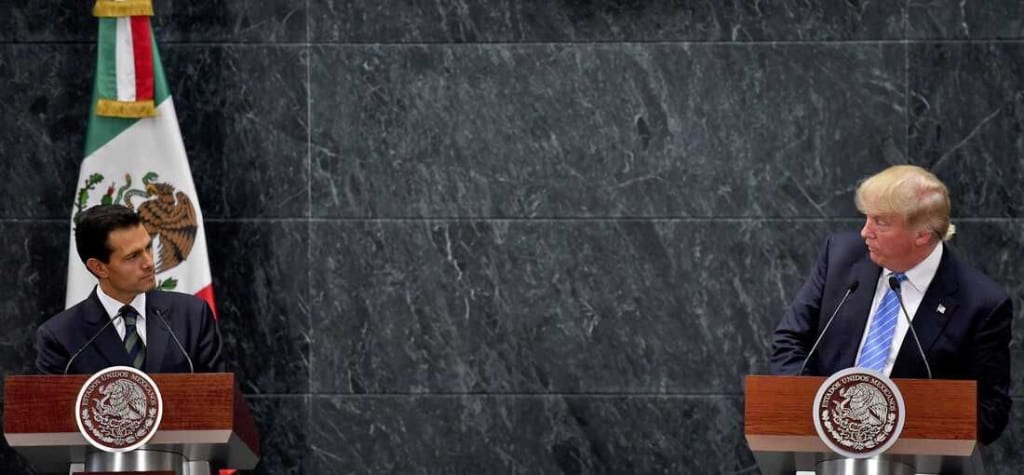
Trump's Border Pressure Strategy: A Political Masterstroke or Misstep?
Amid heated debates about immigration and border security, Donald Trump’s recent moves have reignited discussions on his negotiation tactics. Just a week after threatening 25% tariffs on Mexico and Canada to curb the flow of migrants into the U.S., two notable developments have surfaced—both seemingly linked to Trump’s pressure campaign.
The Mexican Connection: Breaking Up Migrant Caravans
Following a phone call between Trump and Mexican President Andrés Manuel López Obrador, action at Mexico's southern border was swift. On the same day, Mexican authorities dismantled two migrant caravans en route to the U.S. López Obrador later declared that migrants and caravans would be “taken care of” before reaching the border, signaling a significant shift in Mexico’s approach.
This abrupt change comes after weeks of mounting pressure from the U.S. administration, particularly Trump's tariff threats. The question looms: was this a reaction to diplomatic discussions, or were Mexico’s actions inevitable? Either way, the timing strongly suggests Trump’s influence played a critical role.
Canada Joins the Fray
North of the border, Canadian Prime Minister Justin Trudeau also took steps to address immigration concerns. Trudeau, facing his own political pressures, proposed measures to fortify Canada’s border security after conversations with Trump. This includes deploying drones, helicopters, and additional personnel to monitor crossings.
Trudeau, who is up for reelection in 2025, understands the stakes. With $3.1 trillion in trade between Canada and the U.S., maintaining a stable relationship is essential. The prospect of a trade war with the U.S. over border policies is a risk Trudeau cannot afford, further underscoring Trump’s influence in shaping Canada’s response.
The Power of Negotiation or Overreach?
Trump’s strategy of leveraging economic threats to achieve political goals is nothing new, but its effectiveness continues to spark debate. While critics label these tactics as reckless, supporters view them as proof of Trump's deal-making prowess.
The changes in Mexico and Canada highlight the tangible impact of Trump’s approach, but they also raise concerns. Are these short-term wins sustainable? And at what cost to diplomatic relationships?
For Mexico, breaking up caravans might stem the immediate tide of migrants, but long-term solutions require addressing the root causes of migration, such as violence and economic instability in Central America. Similarly, Canada’s increased border security measures may alleviate short-term pressures but could strain relations with progressive constituents advocating for more open immigration policies.
Ripple Effects in the U.S.
Domestically, Trump's moves have already sparked noticeable changes. Reports indicate fewer migrants are attempting to cross the U.S.-Mexico border, while sanctuary cities are seeing an influx of Haitian and Venezuelan migrants. Additionally, law enforcement in New York City recently arrested members of a Venezuelan gang, signaling a crackdown on organized crime linked to migration.
These developments may bolster Trump’s narrative of fulfilling campaign promises even before formally assuming office. However, detractors argue that focusing solely on enforcement neglects the human and economic complexities of immigration.
Is This Just the Beginning?
The broader implications of Trump’s border negotiations are still unfolding. His hardline tactics may have yielded immediate results, but sustaining these changes requires international cooperation and domestic policy reform.
Critics accuse Trump of using these moves as political theater, while supporters see a leader who isn’t afraid to take bold action. As immigration remains a central issue for the U.S., Trump’s strategies will undoubtedly shape the narrative in the months ahead.
What’s your take? Are these developments a triumph of diplomacy or a precarious gamble? Share your thoughts as the debate around border policies continues to evolve.
About the Creator
Keep reading
More stories from Cherub Kane and writers in The Swamp and other communities.
Biden’s Controversial Pardon Sparks Debate: A Bold Move or Political Misstep?
Biden’s Controversial Pardon Sparks Debate: A Bold Move or Political Misstep? As Americans eased back into their routines after Thanksgiving, President Joe Biden made a bold and unexpected decision that captured the nation’s attention. In a surprising reversal of his earlier stance, Biden issued a full and unconditional pardon to his son, Hunter Biden, just weeks before Hunter’s sentencing on federal criminal charges. This move, steeped in political and emotional complexity, has ignited a firestorm of opinions across the country.
By Cherub Kaneabout a year ago in The Swamp
The Saddest Thing - The Billionaires Who Rule America Aren't Even Enjoying Themselves
This single post says more about our ruling class than a thousand policy papers. The saddest thing about today's system is that the men robbing the rest of us - sabotaging our economic prospects, our pensions, our access to affordable healthcare - are not even happy.
By Scott Christenson🌴28 days ago in The Swamp


Comments
There are no comments for this story
Be the first to respond and start the conversation.