
Biden’s Controversial Pardon Sparks Debate: A Bold Move or Political Misstep?
Family, Favoritism, or Fairness? Unpacking Biden’s Bold Pardon

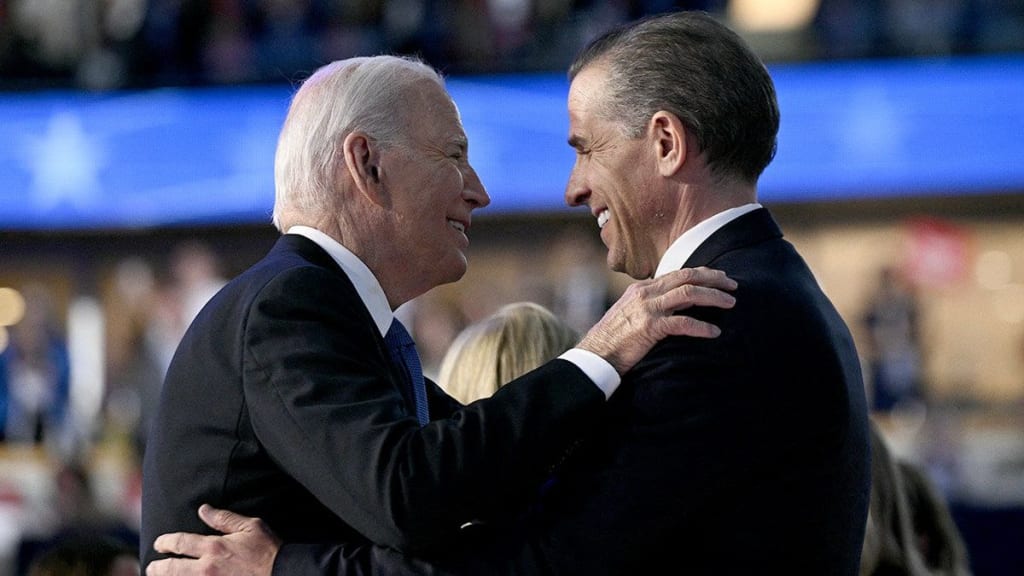
Biden’s Controversial Pardon Sparks Debate: A Bold Move or Political Misstep?
As Americans eased back into their routines after Thanksgiving, President Joe Biden made a bold and unexpected decision that captured the nation’s attention. In a surprising reversal of his earlier stance, Biden issued a full and unconditional pardon to his son, Hunter Biden, just weeks before Hunter’s sentencing on federal criminal charges. This move, steeped in political and emotional complexity, has ignited a firestorm of opinions across the country.
Hunter Biden faced convictions for gun-related charges and tax evasion, making him a high-profile figure under legal scrutiny. The president, in a statement, defended his decision, claiming his son was unfairly targeted due to their familial relationship. “No reasonable person who looks at the facts of Hunter’s cases can conclude anything other than Hunter was singled out only because he is my son,” Biden declared, emphasizing his role as both a father and president.
But what led to this decision? Let’s unpack the legal, historical, and political implications of this unprecedented act.
Behind the Scenes: A President’s Dilemma
For months, Biden publicly maintained he wouldn’t intervene in his son’s legal battles. Privately, however, the president grappled with the personal and political ramifications of allowing his son to face sentencing. Over the Thanksgiving holiday on Nantucket, father and son reportedly spent significant private time together, culminating in Biden’s decision to issue the pardon.
Hunter Biden’s legal team had been preparing for his sentencing, even submitting a detailed 52-page memo titled The Political Prosecutions of Hunter Biden. The document outlined claims of improper legal processes and alleged that political motivations drove the cases against him. Though it remains unclear whether this document directly influenced the president’s choice, his public statements seem to echo its sentiments.
Historical Context: Pardoning Family Members
Presidential pardons for family members are rare but not without precedent. Bill Clinton pardoned his brother, Roger Clinton, for drug convictions, while Donald Trump extended clemency to his son-in-law’s father, Charles Kushner. However, such acts often draw significant controversy, as they touch on questions of fairness and privilege.
Presidential historian Michael Beschloss highlights that the Founding Fathers granted this broad power with the expectation that it would be used judiciously. “The pardon power was designed to correct systemic failures or extend mercy,” Beschloss explained. “But when family is involved, it always complicates the narrative.”
Legal and Political Fallout
Legal analysts argue that while Hunter Biden’s pardon eliminates immediate consequences, it could intensify political attacks, especially with a potential second Trump administration looming. Critics claim the move contradicts Biden’s earlier promises and opens the door for accusations of favoritism.
On the other hand, supporters frame the pardon as an act of compassion from a father unwilling to see his son endure what they believe was undue scrutiny. Yet, the timing—on the cusp of an election year—raises questions about its political cost.
The Broader Impact
This pardon isn’t just a personal decision—it has national implications. It forces Americans to confront deeper issues, from the fairness of the justice system to the role of presidential power in personal matters. Whether seen as a courageous act of love or a politically calculated gamble, Biden’s decision will undoubtedly leave a lasting mark on his legacy.
As the nation debates the morality and legality of this move, one thing is certain: this story is far from over. With Hunter Biden's pardon becoming a flashpoint for political discourse, the spotlight will remain firmly fixed on the Biden family as they navigate the turbulent road ahead.
What’s your take? Was this an act of compassion or a dangerous precedent? Share your thoughts as the story continues to unfold.
About the Creator
Keep reading
More stories from Cherub Kane and writers in The Swamp and other communities.
Pete Hegseth’s Pentagon Gamble: Scandal, Redemption, and the Fight of His Life
Pete Hegseth’s Pentagon Gamble: Scandal, Redemption, and the Fight of His Life Pete Hegseth, President-elect Donald Trump’s nominee for Secretary of Defense, is facing an uphill battle as allegations of past misconduct, including sexual assault and excessive drinking, have emerged, casting a shadow over his confirmation process. Despite his decorated military career and public profile as a former Fox News host, Hegseth is now at the center of a political firestorm, with key Republican senators expressing reservations about his suitability for the role.
By Cherub Kaneabout a year ago in The Swamp
The Forsyth House Fire
Since 1851, Forsyth House has stood on the corner of Union Street and Gordon Street in the heart of Glasgow. Its iconic, or was... because on Sunday 8th of March, 2026, a fire broke out in a small, seemingly un-named shop in the building and tore all that history down. As I write, the rubble is still unsettled and the street is still blocked off. Central Station is quiet on the upper level, and around 30 small businesses have quite literally gone up in smoke.
By S. A. Crawforda day ago in The Swamp




Comments
There are no comments for this story
Be the first to respond and start the conversation.