
Trump Launches ‘Board of Peace’ With Signing Ceremony in Davos
Supporters See a Peace Effort, Critics Question Timing and Transparency


Former U.S. President Donald Trump has once again drawn global attention after announcing the launch of a new initiative called the “Board of Peace”, unveiled during a signing ceremony in Davos. The announcement, made on the sidelines of the World Economic Forum, has sparked widespread discussion among political leaders, analysts, and the public.
Supporters describe the move as an effort to promote diplomacy and dialogue, while critics question its intent, timing, and potential impact. Regardless of opinion, the launch marks a significant moment in Trump’s continued engagement with global affairs.
What Is the ‘Board of Peace’?
The Board of Peace is presented as an advisory body aimed at encouraging conflict resolution, diplomatic engagement, and global stability. According to statements surrounding the launch, the board is expected to bring together:
Former political leaders
Diplomats
Policy experts
Business and security advisors
The initiative claims to focus on peacebuilding through negotiation rather than confrontation, a message that Trump emphasized during the signing ceremony.
While detailed information about the board’s structure and authority remains limited, its symbolic launch at Davos has ensured maximum international visibility.
Why Davos Matters
Davos is known as a global meeting point where political, economic, and business leaders gather to discuss pressing world issues. By choosing this venue, Trump positioned the Board of Peace within a global conversation on security, economics, and international cooperation.
The setting added weight to the announcement, signaling that the initiative is intended to:
Reach a global audience
Influence international dialogue
Engage both political and economic stakeholders
The choice of Davos has also fueled debate over whether the move was strategic branding or a serious diplomatic effort.
Trump’s Message at the Ceremony
During the signing ceremony, Trump spoke about what he described as missed opportunities for peace in recent years. He argued that strong leadership combined with direct dialogue could prevent prolonged conflicts.
Key themes from his remarks included:
The importance of negotiation
Criticism of long-standing conflicts
Calls for “results-driven diplomacy”
Trump framed the Board of Peace as a platform for practical solutions rather than symbolic gestures, a message that resonated with some attendees while raising skepticism among others.
Supporters See a Diplomatic Opportunity
Supporters of the initiative argue that Trump’s approach to diplomacy has always focused on direct engagement and deal-making. They believe the Board of Peace could:
Encourage new diplomatic channels
Bring non-traditional voices into peace discussions
Offer alternative approaches to long-standing disputes
Some analysts suggest that even if the board has limited formal power, it could still shape conversations and influence opinion, especially if it includes respected international figures.
Critics Raise Concerns
Critics, however, have raised several questions about the initiative. Their concerns include:
Lack of transparency about the board’s role
Unclear funding and governance
Whether it is more symbolic than effective
Others argue that peace initiatives require long-term institutional support, not just high-profile announcements. Some observers also view the timing as politically motivated, suggesting it may align with broader strategic goals rather than purely diplomatic ones.
The Broader Political Context
Trump remains one of the most influential and polarizing figures in global politics. Any initiative he launches is likely to be viewed through a political lens. The Board of Peace comes at a time when:
Global conflicts remain unresolved
Diplomatic institutions face criticism
Public trust in political leadership is strained
In this environment, even symbolic gestures can have an impact—either by sparking dialogue or deepening division.
Potential Impact on Global Dialogue
While it is too early to judge the effectiveness of the Board of Peace, its launch has already succeeded in one area: drawing attention to the topic of peace and diplomacy.
If the board:
Engages credible experts
Promotes open dialogue
Maintains transparency
It could play a role in shaping discussions around conflict resolution. If not, it risks being remembered as a headline-driven moment rather than a lasting institution.
Public and Media Reaction
Media reaction has been mixed. Some outlets focused on the symbolism of launching a peace initiative at Davos, while others highlighted the lack of concrete details.
Public response has also varied:
Supporters praised the focus on peace
Critics questioned credibility
Neutral observers called for patience before judgment
This range of reactions reflects Trump’s ongoing ability to dominate global headlines, regardless of context.
Conclusion
The launch of the Board of Peace with a signing ceremony in Davos marks another chapter in Donald Trump’s global political presence. While supporters see it as a bold step toward renewed diplomacy, critics remain cautious, pointing to unanswered questions about its purpose and impact.
Whether the Board of Peace becomes a meaningful platform or remains a symbolic gesture will depend on its actions, leadership, and long-term commitment. For now, it has successfully reignited debate about how peace initiatives should be formed—and who should lead them—in an increasingly complex world.
About the Creator
Fiaz Ahmed
I am Fiaz Ahmed. I am a passionate writer. I love covering trending topics and breaking news. With a sharp eye for what’s happening around the world, and crafts timely and engaging stories that keep readers informed and updated.
Keep reading
More stories from Fiaz Ahmed and writers in The Swamp and other communities.
The Line, a Saudi Megaproject, Is Dead
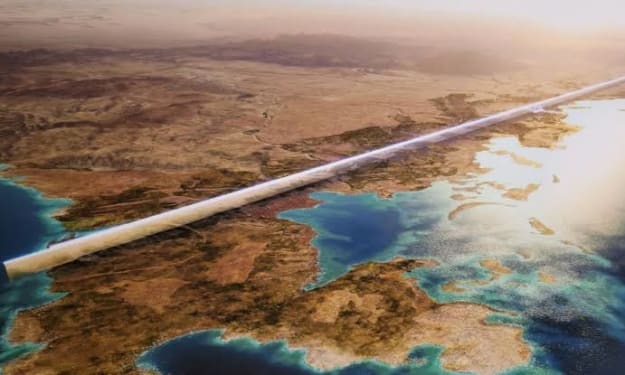
When Saudi Arabia unveiled The Line, it was presented as a vision of the future. A 170-kilometer-long city with no cars, no streets, and no carbon emissions, The Line promised to reshape how humans live. It was the centerpiece of NEOM, the kingdom’s ambitious plan to diversify its economy beyond oil. But years after the announcement, a growing number of experts, investors, and observers are asking the same question: Is The Line effectively dead? While Saudi officials have not officially canceled the project, mounting evidence suggests that The Line, as originally imagined, is no longer realistic. What Was The Line Supposed to Be? The Line was announced in 2021 as a linear smart city built in the Saudi desert near the Red Sea. According to its designers: The city would house up to nine million people It would run entirely on renewable energy Residents could reach daily needs within five minutes A high-speed rail system would allow end-to-end travel in 20 minutes No cars, no roads, and no traditional infrastructure The city’s mirrored walls, rising hundreds of meters high, were meant to reflect nature and minimize land use. It was bold, futuristic, and controversial from the start. The Reality Sets In As construction began, problems quickly surfaced. 1. Unrealistic Engineering Challenges Building two parallel skyscrapers stretching across 170 kilometers is something the world has never attempted. Engineers raised concerns about: Structural stability Wind pressure Heat management Emergency evacuation Long-term maintenance The technology required either did not exist or had never been tested at this scale. 2. Soaring Costs Initial estimates put the cost of NEOM at over $500 billion, with The Line as the most expensive part. Rising global inflation, supply chain issues, and construction costs pushed that number even higher. Reports began to surface that Saudi planners were quietly cutting back the project’s scope to manage expenses. Scaling Back the Dream Instead of canceling The Line outright, Saudi Arabia appears to be shrinking it dramatically. Sources familiar with the project suggest: Only a small section of The Line may be built in the near future Population targets have been reduced significantly Focus has shifted to more practical developments within NEOM This shift has fueled the belief that The Line, as originally sold to the world, will never exist. Economic Pressures Behind the Scenes Saudi Arabia’s economy is still heavily dependent on oil revenue. While oil prices have helped fund Vision 2030, the kingdom is also juggling: Massive infrastructure spending Global economic uncertainty Rising domestic costs Investor skepticism International investors have reportedly expressed concerns about returns, making funding harder to secure. Mega-ambitions are impressive, but they must still make financial sense. Human and Environmental Criticism The Line also faced serious backlash from human rights groups and environmental experts. Displacement Issues Local tribes were reportedly forced to relocate to make way for construction. This led to international criticism and damaged the project’s global image. Environmental Concerns Ironically, a project marketed as “green” raised alarms about: Wildlife disruption Bird collisions with mirrored walls Desert ecosystem damage Enormous carbon emissions during construction These concerns weakened public and investor confidence even further. Why Saudi Arabia Won’t Admit It’s Over Saudi leadership rarely announces failure, especially on projects tied to national pride. Instead of canceling The Line, officials appear to be: Rebranding goals Adjusting timelines Redirecting attention to other NEOM projects This allows the government to save face while quietly moving on. In many ways, The Line has become more of a conceptual symbol than an actual city plan. What NEOM Becomes Without The Line NEOM itself is not dead. Other projects within the region, such as: Oxagon (industrial hub) Trojena (mountain tourism) Luxury coastal developments These are far more achievable and already showing progress. By focusing on these, Saudi Arabia can still claim success under Vision 2030. The Line, however, was the most extreme and risky part of the plan. A Lesson in Megaproject Reality The rise and fall of The Line offers a powerful lesson: Vision matters, but execution matters more Technology cannot be willed into existence Cities grow organically, not by decree Human, environmental, and economic factors cannot be ignored History is filled with grand projects that looked perfect on paper but failed in reality. Is The Line Truly Dead? Officially? No. Practically? Almost certainly. What remains is a scaled-down fragment, far removed from the bold vision that once captured headlines. The dream of a 170-kilometer mirrored city housing millions appears to have collided with real-world limits. The Line may survive as a marketing idea, a case study, or a futuristic prototype. But as a full city? That future now seems extremely unlikely. Conclusion “The Line, a Saudi Megaproject, Is Dead” may sound dramatic, but it reflects a growing consensus. The world watched as Saudi Arabia attempted to leap decades into the future in one move. Ambition alone, however, cannot overcome physics, economics, and human reality. The Line will be remembered not as the city that changed the world—but as a reminder that even the richest nations must respect the limits of possibility. Sometimes, the future arrives more slowly than we expect.
By Fiaz Ahmed a day ago in The Swamp
Trump Is Pushing the U.S.-Europe Alliance Onto a Precipice
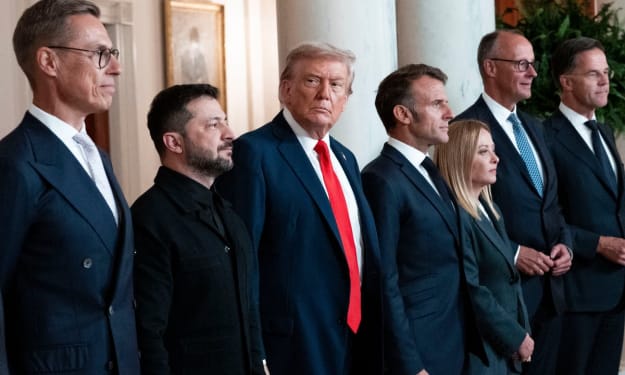
The transatlantic alliance between the United States and Europe has long been one of the most enduring and influential partnerships in modern global politics. Built in the aftermath of World War II, this alliance shaped institutions such as NATO, supported economic integration, and anchored a shared commitment to democratic values. However, under Donald Trump’s political influence and policy direction, this once-stable relationship is increasingly being pushed toward a dangerous tipping point. Trump’s rhetoric, policy decisions, and transactional worldview are straining ties with European allies and raising serious questions about the future of the U.S.-Europe alliance.
By Salaar Jamali4 days ago in The Swamp
Next Buys Shoe Chain Russell & Bromley, but 33 Stores Face Closure Risk
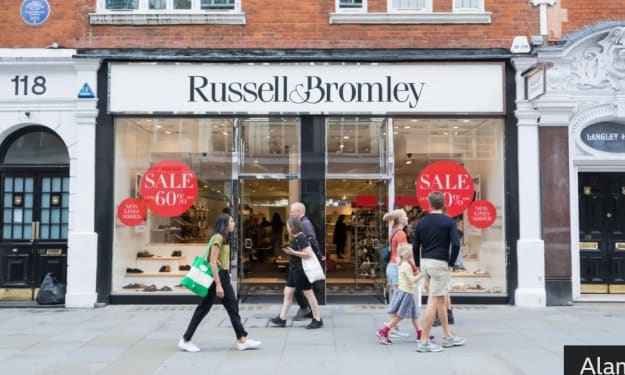
British fashion retailer Next has acquired the upmarket shoe chain Russell & Bromley, a move that signals both confidence in the brand’s long-term value and fresh uncertainty for parts of the UK high street. While the takeover secures the future of a well-known footwear name, it also places 33 Russell & Bromley stores at risk, raising concerns for employees and town centres already under pressure.
By Aarif Lashari2 days ago in The Swamp

Comments
There are no comments for this story
Be the first to respond and start the conversation.