
A Ghost Town Votes in Myanmar Election’s Second Phase
When Ballot Boxes Arrive Where Life Has Disappeared
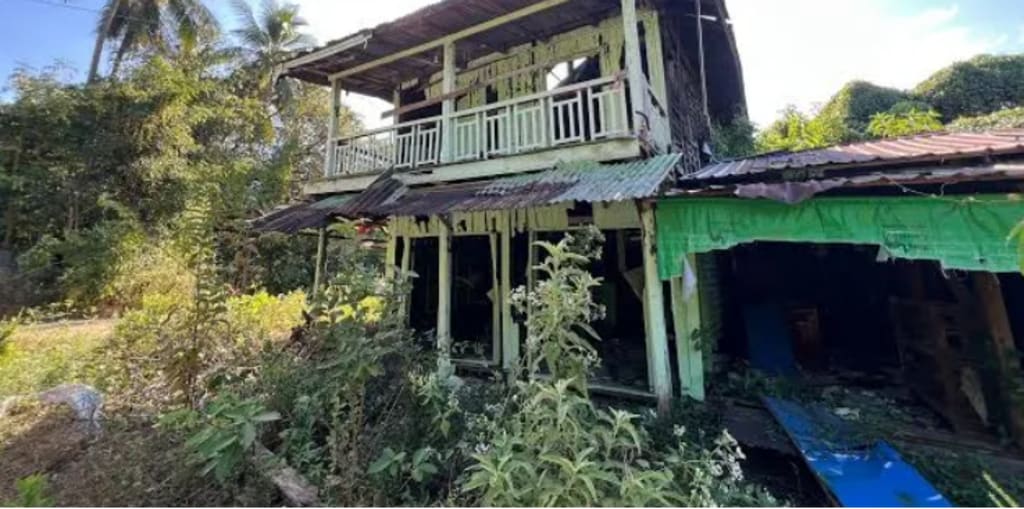
In most countries, elections are noisy affairs. Streets fill with campaign posters, queues form outside polling statio Ins, and political debate spills into tea shops and living rooms. In parts of Myanmar, however, the second phase of the country’s elections has unfolded in near silence — so quiet that some polling stations stand in places where almost no civilians remain.
Nowhere captures this contradiction more powerfully than Hpapun, a town once alive with trade and travel, now widely described as a ghost town. As Myanmar’s military-led authorities pressed ahead with the second phase of voting, Hpapun became a haunting symbol of a nation attempting to perform democracy amid war, displacement, and deep political mistrust.
A Town Frozen in Conflict
Hpapun was not always empty. Located in eastern Myanmar, it once served as a local administrative and commercial centre, complete with banks, markets, and an airport. Today, most of its buildings are abandoned, damaged, or swallowed by vegetation. Streets that once carried daily life are now quiet, watched over by military checkpoints and warning signs of landmines.
Years of fighting between the military and ethnic armed groups have driven residents away. Families fled to jungles, nearby villages, or across borders in search of safety. By the time election officials prepared for voting, there were few — if any — civilians left to cast a ballot inside the town itself.
Yet the election went ahead.
Voting Without Voters
To make voting technically possible, authorities relocated polling to a military-controlled area outside Hpapun. In theory, eligible voters from surrounding areas could travel there to participate. In reality, the journey involved passing through conflict zones, navigating heavy security, and risking violence — barriers that discouraged most civilians from even trying.
This raises a fundamental question: what does voting mean when the population has been displaced? The act of holding an election in a near-empty town may satisfy procedural requirements, but it does little to reflect the will of the people who once lived there.
Hpapun’s situation is not unique. Across Myanmar, entire communities have been uprooted by civil war, leaving voter rolls outdated and polling stations disconnected from the population they are meant to serve.
Myanmar’s Three-Phase Election Explained
The election has been divided into three phases, officially due to security concerns. The first phase took place in late December 2025, the second in mid-January 2026, and the final phase is scheduled for later this month.
Authorities argue this staggered approach allows voting to occur wherever conditions permit. However, elections have been cancelled in dozens of townships deemed too unstable. In effect, millions of people living in contested or resistance-held areas are excluded from the process entirely.
Even in areas where voting is allowed, turnout has reportedly been low. Fear, displacement, lack of trust, and logistical obstacles all contribute to widespread voter apathy or inability to participate.
The Shadow of the 2021 Coup
To understand why these elections are so controversial, one must return to February 2021, when Myanmar’s military seized power from the elected civilian government. The coup ended a decade-long experiment with partial democracy and plunged the country into nationwide resistance.
Since then, Myanmar has been locked in a brutal civil war. Armed resistance groups, including pro-democracy forces and ethnic militias, now control or contest large areas of the country. Air strikes, village burnings, and mass arrests have become part of daily life in conflict zones.
Against this backdrop, many citizens view the current election not as a step toward democracy, but as an attempt by the military to legitimize its rule.
Where Is the Opposition?
One of the most striking features of this election is who is not participating.
The National League for Democracy (NLD), which won landslide victories in previous elections, has been dissolved under new electoral rules. Its leaders remain imprisoned, in hiding, or barred from politics. Several other opposition parties have boycotted the vote, arguing that free and fair elections are impossible under military rule.
As a result, the political field is dominated by parties aligned with or acceptable to the military, particularly the Union Solidarity and Development Party (USDP). With the army also guaranteed a quarter of parliamentary seats under the constitution, the outcome appears largely predetermined.
For critics, this reinforces the idea that the election is a formality rather than a genuine contest.
Fear, Fatigue, and Silence
Beyond politics, ordinary people face more immediate concerns. Many are simply trying to survive. Displaced families worry about food, shelter, and safety — not voting schedules. In some areas, residents fear retaliation if they participate or refuse to participate in the election.
Others express a quieter form of resistance: indifference. Years of broken promises, violence, and repression have left many feeling that voting will not change their reality. In towns like Hpapun, where life itself has vanished, political participation becomes almost meaningless.
What the Ghost Town Represents
Hpapun is more than just an abandoned town with a ballot box. It represents the gap between political process and lived reality in Myanmar today.
On paper, an election is happening. In practice, much of the population is displaced, silenced, or excluded. The image of voting in a ghost town exposes the contradictions of trying to project normalcy in a country still at war with itself.
It also highlights a deeper truth: democracy cannot exist without people — not just ballots, polling stations, or official announcements.
Looking Ahead
As Myanmar approaches the final phase of this election, the central question remains unanswered: will these votes bring stability, or merely reinforce military control? For many inside the country, hope for meaningful political change lies not in this election, but in an end to violence and a genuine dialogue about the nation’s future.
Until then, places like Hpapun will stand as haunting reminders — where democracy is staged, but the people are gone.
About the Creator
Keep reading
More stories from Aqib Hussain and writers in The Swamp and other communities.
Human Remains Found Amid Australia Bushfires, Police Say
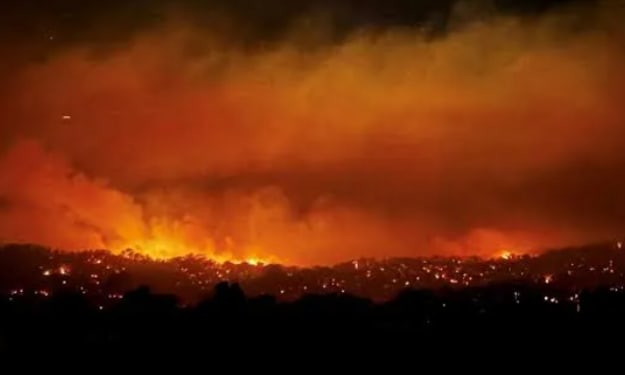
Australia’s bushfire crisis has taken a devastating turn after police confirmed the discovery of human remains in a fire-affected area of Victoria. The grim finding underscores the deadly nature of the current bushfire season, which has already destroyed hundreds of homes, displaced thousands of residents, and burned vast areas of land.
By Aqib Hussain2 months ago in The Swamp
Parallel Protests
I haven't written for quite some time, but I have A LOT of thoughts about yesterday's protest rally against our government's involvement and complicity in America's war on Iran, on the harbourside of my home city Bristol, and I need to put them somewhere. My gorgeous girlfriend is always a loving and listening ear and sharing it all with her will always be a healthy and happy way of processing the mental and emotional weight, but getting it straight in my brain to share means writing it all down in straight lines, so, here we are and thanks for being here.
By Steph Cole5 days ago in The Swamp
Philippine Embassy, Consulate in UAE Issues Advisory on Overstay Fines Exemptions
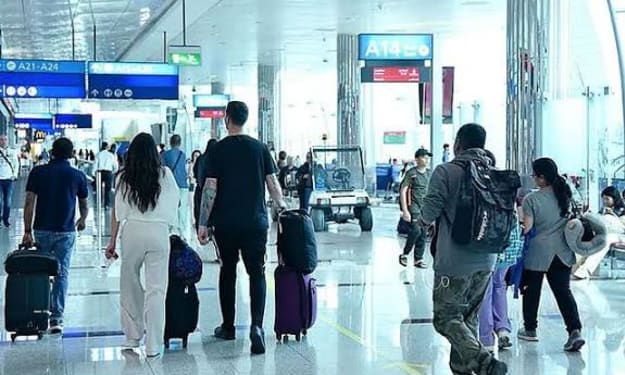
Filipino travellers in the UAE given temporary relief as authorities waive penalties caused by regional travel disruptions. The Philippine Embassy in Abu Dhabi and the Philippine Consulate General in Dubai and the Northern Emirates have issued an advisory informing Filipino nationals in the United Arab Emirates about a temporary exemption from visa overstay fines. The measure comes after travel disruptions caused by regional airspace closures left many travellers unable to depart the country on time. The advisory, circulated through official embassy channels and community networks, aims to guide Filipinos affected by the situation and reassure them that overstay penalties will not apply under certain circumstances. The exemption reflects a humanitarian policy adopted by UAE authorities to help travellers who became stranded due to circumstances beyond their control. Background of the Overstay Fine Exemption In early March 2026, several Middle Eastern countries experienced airspace disruptions linked to heightened regional tensions. As flights were cancelled or rerouted, thousands of travellers across the region were unable to depart from the UAE as scheduled. In response, the UAE’s Federal Authority for Identity, Citizenship, Customs and Ports Security (ICP) announced a waiver of overstay fines for affected residents and visitors. The decision applies to individuals whose visas expired or whose departure timelines were exceeded because flights were suspended or significantly delayed. Under normal circumstances, overstaying a visit or tourist visa in the UAE results in a daily penalty. Typically, fines begin at AED 50 per day, which can quickly accumulate if travellers remain in the country beyond their permitted stay. The temporary waiver therefore offers significant financial relief to those who were unable to leave due to the crisis. Who Is Covered by the Exemption According to the advisory shared by Philippine diplomatic missions in the UAE, the exemption covers several categories of travellers. These include individuals holding valid departure permits who exceeded the permitted exit period because their flights were cancelled. Another group covered by the waiver includes residents whose residence visas had already been cancelled but who could not leave the country within the standard grace period due to the sudden airspace disruptions. The exemption also extends to tourists and visitors whose authorised stay expired during the period of travel restrictions. In such cases, the overstay occurred not because of intentional violation but because travellers were stranded by factors beyond their control. Embassy officials emphasised that the policy specifically applies to overstays incurred from February 28, 2026 onward, when the regional disruptions began affecting airline operations and border procedures. Advice for Filipino Nationals The Philippine Embassy and Consulate have urged Filipino nationals in the UAE to stay updated through official government announcements and embassy advisories. Travellers affected by the situation are advised to keep documentation such as flight cancellation notices, revised travel bookings, or airline communications. These documents may be required when dealing with immigration authorities or when confirming eligibility for the fine waiver. Immigration officials may request proof that the overstay occurred due to the travel disruptions rather than deliberate violation of visa rules. Embassy officials also reminded Filipinos to coordinate directly with airlines regarding new travel schedules and rebooking arrangements once normal flight operations resume. Maintaining communication with both airlines and immigration authorities will help travellers regularise their status and depart without complications. Humanitarian Approach by UAE Authorities UAE authorities have described the exemption as part of a broader humanitarian response to the regional crisis. By waiving penalties, the government aims to reduce the financial burden on travellers and ensure that those stranded by sudden travel restrictions are not unfairly penalised. Officials also emphasised that the policy demonstrates the country’s commitment to supporting international travellers during emergencies. Similar relief measures have been implemented in the past during major disruptions, including global health crises and natural disasters affecting travel. Importance for the Filipino Community The advisory is particularly significant for the large Filipino community living and working in the UAE. Millions of Filipinos travel through the Gulf country each year as tourists, workers, or transit passengers. Unexpected travel disruptions can create legal and financial concerns for migrants and visitors alike. The embassy’s guidance therefore helps reassure Filipino nationals that the situation has been addressed through official coordination between Philippine diplomatic missions and UAE authorities. Monitoring Future Updates While the waiver provides temporary relief, officials stress that travellers should continue to monitor updates from both UAE immigration authorities and the Philippine Embassy. Once travel routes stabilise and flights return to normal operations, standard immigration rules will again apply. Filipino nationals who believe they are affected by the exemption are encouraged to contact the Philippine Embassy in Abu Dhabi or the Philippine Consulate in Dubai for assistance and clarification. The advisory underscores the importance of diplomatic coordination in protecting overseas citizens and ensuring they receive accurate guidance during times of international crisis.
By Fiaz Ahmed a day ago in The Swamp


Comments
There are no comments for this story
Be the first to respond and start the conversation.