
JD Vance to Host Greenland Talks at the White House
Washington Turns Attention to the Arctic
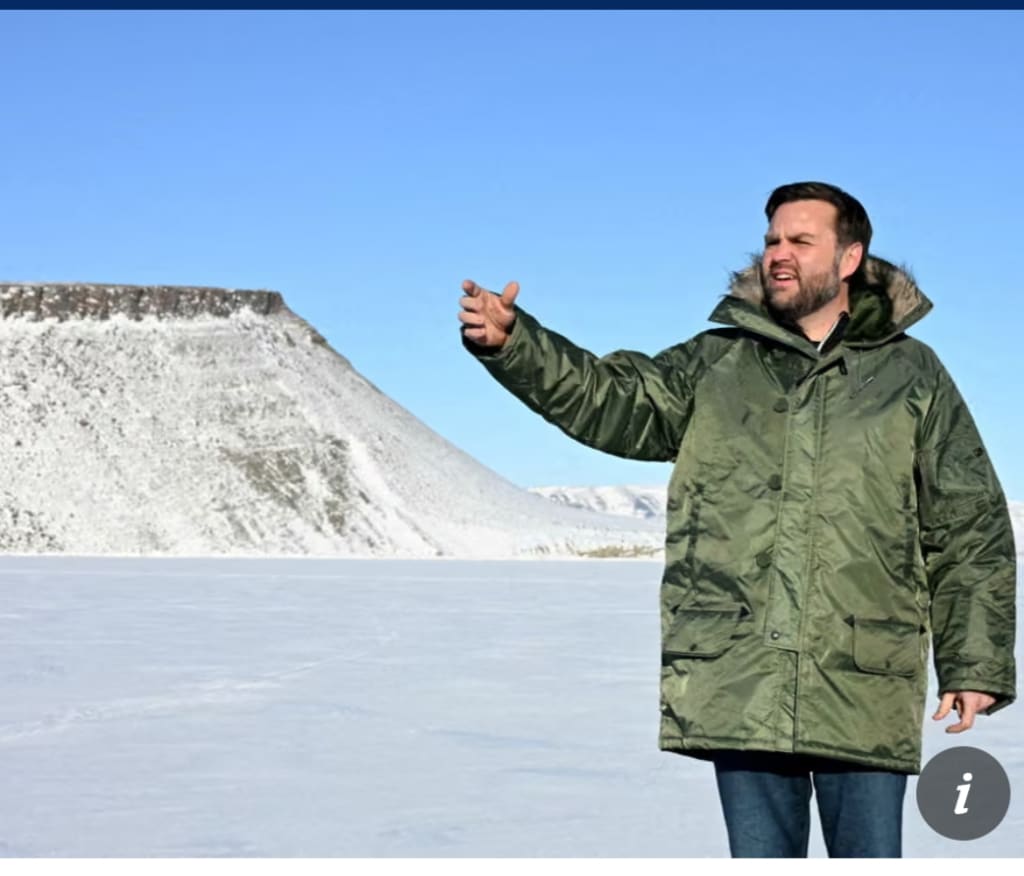
Arctic
US Senator JD Vance is set to host high-level talks on Greenland at the White House, signaling renewed American interest in the strategically vital Arctic region. The discussions are expected to focus on security, economic development, climate change, and the future of US engagement with Greenland, a semi-autonomous territory of Denmark that has become increasingly important amid rising global competition in the far north.
The move underscores how Greenland, once viewed as remote and peripheral, is now firmly at the center of geopolitical calculations in Washington.
Why Greenland Matters More Than Ever
Greenland’s importance has grown rapidly over the past decade. Its location between North America and Europe makes it a critical strategic gateway, particularly as Arctic ice melts and opens new shipping routes. The island is also rich in rare earth minerals and other natural resources essential for modern technologies and defense industries.
For the United States, Greenland’s role in missile defense and early-warning systems is especially significant. The US already maintains a military presence at Pituffik Space Base, formerly known as Thule Air Base, which plays a key role in monitoring potential missile threats.
Hosting talks at the White House reflects Washington’s desire to deepen cooperation and secure long-term influence in the region.
JD Vance’s Growing Foreign Policy Profile
Although best known for his domestic political views, JD Vance has increasingly positioned himself as a voice on strategic and security issues. By hosting Greenland talks, Vance is stepping into a complex area of foreign policy that blends defense, diplomacy, and economic competition.
Supporters say Vance’s involvement reflects a broader shift within US politics toward prioritizing strategic realism and national interests. Critics, however, question whether the talks are being driven by long-term policy planning or short-term political signaling.
Regardless, the decision places Vance at the center of a sensitive international conversation involving allies and competitors alike.
Denmark and Greenland’s Perspective
Greenland is an autonomous territory within the Kingdom of Denmark, and Copenhagen retains control over foreign policy and defense. Any US engagement therefore requires careful coordination with Danish authorities.
Danish officials have welcomed dialogue but are wary of being sidelined. Past US interest in Greenland—including controversial suggestions about purchasing the island—caused diplomatic friction. This time, officials stress the importance of respect, partnership, and transparency.
Greenland’s own leaders are equally cautious. While many welcome investment and security cooperation, there is strong resistance to being treated as a pawn in great-power rivalry. Local leaders emphasize self-determination, sustainable development, and protection of Indigenous rights.
Security Concerns in a Changing Arctic
One of the key topics expected at the talks is Arctic security. Russia and China have both expanded their presence and ambitions in the region, prompting concern in Washington and among NATO allies.
Russia has increased military activity along its Arctic coast, while China has declared itself a “near-Arctic state” and invested heavily in polar research and infrastructure. US officials see Greenland as a critical anchor for maintaining balance in the region.
JD Vance is expected to frame the talks around deterrence, alliance coordination, and the need to prevent adversarial powers from gaining undue influence.
Climate Change and Economic Development
Climate change is transforming Greenland faster than almost anywhere else on Earth. Melting ice is reshaping ecosystems, threatening traditional ways of life, and creating new economic opportunities—from mining to shipping.
The talks are expected to address how development can proceed without undermining environmental and social stability. Greenlandic leaders have repeatedly warned against reckless exploitation of resources, emphasizing the need for sustainable and locally controlled growth.
US officials, meanwhile, are keen to counter Chinese investment by offering Western-backed alternatives that align with environmental and governance standards.
Domestic Politics and Strategic Messaging
The timing of the talks also carries domestic political significance. As US politics remains deeply polarized, foreign policy initiatives are often scrutinized for political motives.
For Vance, hosting the talks could bolster his credentials as a national figure with a serious approach to global strategy. For the White House, it sends a message that the US is actively shaping Arctic policy rather than reacting to others.
Critics argue that symbolism must be matched by substance, warning that high-profile meetings without clear commitments risk disappointing partners.
Reactions From Allies and Analysts
International reactions have been measured. European allies largely welcome renewed US engagement in the Arctic but stress the importance of multilateral cooperation through NATO and Arctic institutions.
Analysts say the success of the talks will depend on tone as much as content. “Greenland is sensitive to being talked about rather than talked with,” said one Arctic policy expert. “Respect and partnership are essential.”
What Comes Next
While the White House has not released a detailed agenda, officials suggest the talks are part of a longer-term process rather than a one-off meeting. Follow-up discussions, investment initiatives, and security coordination are likely if the talks go well.
For Greenland, the outcome will be judged by whether engagement leads to tangible benefits without compromising autonomy. For the US, the challenge is balancing strategic competition with alliance management and respect for local voices.
Conclusion
JD Vance hosting Greenland talks at the White House reflects the Arctic’s growing importance in global politics. As climate change, security concerns, and resource competition converge, Greenland has become a focal point for US strategy.
Whether these talks strengthen cooperation or revive old tensions will depend on how carefully Washington navigates diplomacy, partnership, and power. One thing is clear: Greenland is no longer on the margins of world affairs—it is firmly in the spotlight.
About the Creator
Keep reading
More stories from Aarif Lashari and writers in The Swamp and other communities.
‘Made the Biggest Mistake’: The Young Yemeni Men Lured Into the Russian Army With Empty Promises
For dozens of young Yemeni men struggling to survive amid years of war, poverty, and displacement, the offer sounded like a lifeline. Recruiters promised stable salaries, legal residency, and a path to a better future if they joined the Russian army. Instead, many now say they were deceived—thrown into a brutal conflict far from home with little training, few protections, and no way out.
By Aarif Lashari2 months ago in The Swamp
The Forsyth House Fire
Since 1851, Forsyth House has stood on the corner of Union Street and Gordon Street in the heart of Glasgow. Its iconic, or was... because on Sunday 8th of March, 2026, a fire broke out in a small, seemingly un-named shop in the building and tore all that history down. As I write, the rubble is still unsettled and the street is still blocked off. Central Station is quiet on the upper level, and around 30 small businesses have quite literally gone up in smoke.
By S. A. Crawford2 days ago in The Swamp


Comments
There are no comments for this story
Be the first to respond and start the conversation.