
Trump-Blessed Deal to Keep Government Funded Gets Snagged in the Senate
How a routine funding agreement turned into a revealing test of power, politics, and dysfunction in Washington
When Keeping the Lights On Becomes a Political Crisis
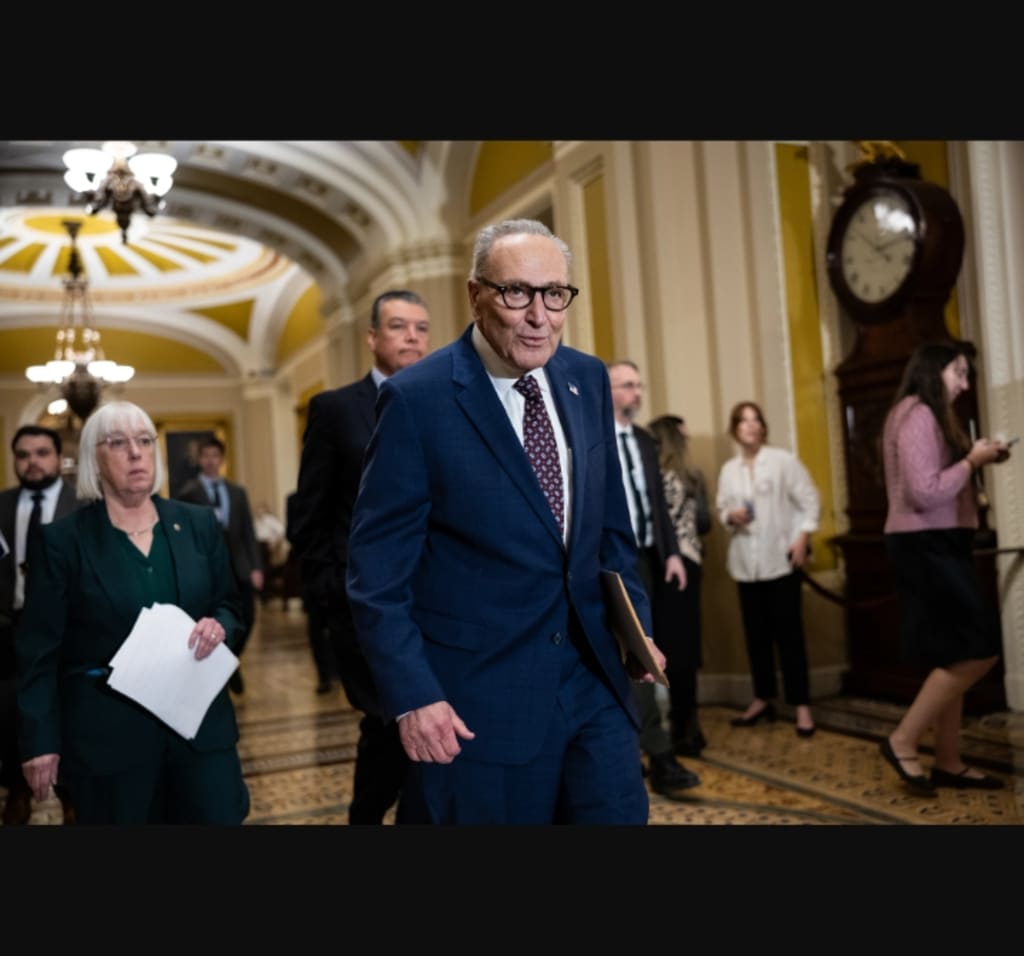
In a functioning democracy, keeping the government funded should be one of the most basic responsibilities of elected officials. Yet in the United States, even this foundational task has become a recurring political drama. The latest example is a Trump-blessed deal designed to keep the federal government funded, which has unexpectedly run into serious resistance in the U.S. Senate.
What was meant to be a short-term solution to avoid a shutdown has instead exposed deep fractures within Congress, questioned Donald Trump’s grip on Republican lawmakers, and highlighted a broader crisis of governance in Washington. This snag is not just about budgets—it is about power, loyalty, ideology, and a political system increasingly driven by brinkmanship rather than cooperation.
Understanding the Deal: What Was on the Table
The agreement in question was a stopgap funding measure, often referred to as a continuing resolution. Its purpose was straightforward:
Prevent a partial or full government shutdown
Extend federal funding temporarily
Allow more time for negotiations on long-term budget priorities
Avoid immediate economic and administrative disruption
Such measures are common in Congress, especially when lawmakers fail to agree on full-year budgets. What made this deal notable was that it received explicit approval from Donald Trump, a figure whose endorsement once ensured swift Republican alignment.
Yet despite that backing, the deal stalled—raising questions about whether Trump’s influence has limits, or whether the political environment has simply become too fractured for any consensus to hold.
Why the Senate Became the Battleground
The Senate’s resistance did not come from a single source. Instead, it emerged from a convergence of political pressures that reflect the current reality of American politics.
1. Republican Fractures Beneath the Surface
Within the Republican Party, unity has become increasingly difficult to maintain. While Trump remains the party’s most influential figure, not all GOP senators are willing to follow his lead unquestioningly.
Some Republicans argue that continuing resolutions represent:
Fiscal irresponsibility
A failure to enforce spending discipline
A surrender to what they call “Washington complacency”
For these lawmakers, approving short-term funding deals feels like postponing tough decisions rather than confronting them. Trump’s endorsement, rather than calming opposition, has in some cases hardened resistance among those eager to distinguish themselves as more ideologically pure.
2. Democratic Skepticism and Strategic Resistance
Democrats, though generally opposed to government shutdowns, are not eager to rubber-stamp deals shaped by Trump’s influence. Their concerns include:
Hidden policy riders that could reshape immigration or border enforcement
Budget compromises that prioritize defense or enforcement over social spending
Setting precedents that reward political pressure tactics
Even when Democrats agree with the outcome—keeping the government open—they remain wary of how such deals are constructed and who ultimately benefits.
3. The Senate’s Structural Incentive to Stall
Unlike the House of Representatives, the Senate is designed to slow legislation down. Its rules allow:
Extended debate
Procedural objections
Filibuster threats
This structure means that a relatively small number of senators can delay or derail legislation, even when leadership support exists. In this case, that institutional friction magnified political disagreements and turned a routine vote into a high-stakes standoff.
Trump’s Endorsement: Powerful but No Longer Absolute
Donald Trump’s support was expected to unify Republicans and pressure hesitant lawmakers. Instead, it revealed a more complicated reality.
Trump remains a dominant force in Republican politics, but:
His endorsement no longer guarantees legislative discipline
Some lawmakers fear being seen as too closely aligned with him
Others believe defying Trump strengthens their standing with specific voter blocs
This shift suggests that Trump’s influence, while still formidable, is no longer uncontested—especially when policy details clash with ideological commitments.
The Politics of Shutdowns: A Dangerous Normalization
Government shutdown threats have become so common that they risk losing their shock value. Yet their consequences are far from harmless.
Shutdowns can lead to:
Furloughs for federal workers
Delays in public services
Market instability
Reduced public confidence in government
Despite these costs, shutdowns are increasingly used as political leverage, a tactic that prioritizes short-term positioning over long-term stability.
Why This Snag Matters Beyond the Budget
This stalled deal is not just a procedural hiccup—it is a window into deeper systemic problems.
A Crisis of Governance
When Congress struggles to pass temporary funding, it signals an inability to manage even the most basic responsibilities. The repeated reliance on crisis-driven decision-making undermines institutional credibility.
The Decline of Compromise
Compromise, once a cornerstone of legislative success, is now often framed as weakness. Lawmakers face pressure to stand firm rather than collaborate, even when cooperation serves the public interest.
The Rise of Personality-Driven Politics
Instead of institutions guiding policy, individuals increasingly dominate the process. Trump’s role in this deal highlights how personal influence can both shape and destabilize governance.
Election-Year Pressure and Political Calculation
With elections approaching, every legislative decision carries added weight. Lawmakers consider not only policy outcomes but also how votes will be perceived by:
Primary voters
Party donors
Media audiences
In this environment, avoiding compromise can sometimes feel politically safer than supporting pragmatic solutions.
The Senate’s Dilemma: Responsibility vs. Resistance
Many senators find themselves torn between two competing priorities:
Responsibility: Keeping the government funded and functional
Resistance: Signaling ideological commitment and political independence
This tension lies at the heart of the funding snag. Senators know the public generally opposes shutdowns, but they also fear backlash from vocal political bases.
Public Reaction: Cynicism and Fatigue
For the American public, the reaction is increasingly one of resignation. Shutdown threats no longer shock—they reinforce a sense that dysfunction is baked into the system.
Voters see:
Repeated brinkmanship
Delayed solutions
Political blame games
Each funding crisis deepens cynicism and erodes trust in democratic institutions.
Economic and Institutional Consequences
Beyond politics, prolonged uncertainty has real-world effects:
Federal agencies delay planning
Contractors face financial instability
State and local governments struggle to coordinate
Even the threat of a shutdown can disrupt economic confidence, making these standoffs costly even when they are ultimately resolved.
What Comes Next: Possible Outcomes
Several scenarios could unfold:
A revised deal that attracts broader Senate support
A short-term extension followed by renewed conflict
A last-minute compromise under shutdown pressure
Or a brief government shutdown before resolution
History suggests that Congress often acts only when deadlines become unavoidable—after damage has already occurred.
A Broader Reflection on American Democracy
This episode forces a larger question: Has the U.S. political system become too polarized to perform basic governance?
When keeping the government open becomes a partisan battlefield, it suggests deeper structural and cultural problems—ones that cannot be solved by a single deal or endorsement.
Conclusion: A Stalled Deal, a Revealed System
The Senate snag of a Trump-blessed government funding deal is more than a legislative delay. It is a revealing moment that underscores:
Fragmentation within political parties
The limits of personal political power
The erosion of cooperative governance
Whether the deal eventually passes or collapses, the message is clear: governing has become secondary to positioning, and crisis has replaced consensus as the engine of decision-making.
Until that dynamic changes, funding deadlines will continue to loom—not as emergencies, but as predictable chapters in an ongoing story of political dysfunction.
About the Creator
Keep reading
More stories from Zahid Hussain and writers in The Swamp and other communities.
Türkiye Says It’s Ready to Play a Role in De-escalating US-Iran Tensions
A Volatile Moment in Global Politics As tensions between the United States and Iran escalate — with military posturing, diplomatic friction, and fears of broader conflict — Türkiye has stepped forward with a notable declaration: it’s ready to help reduce the risk of a wider confrontation between Washington and Tehran. Turkish President Recep Tayyip Erdoğan made this clear in a recent phone call with Iranian President Masoud Pezeshkian, emphasizing Ankara’s willingness to take on a facilitating role in easing the dispute. � trtworld.com +1 This development is significant not only because of the stakes involved in US-Iran relations but also because of Türkiye’s unique geopolitical position — a NATO member and neighbor to Iran with longstanding diplomatic influence across the Middle East. � Reuters What Türkiye Has Offered So Far During the call with Pezeshkian, Erdoğan communicated two key points: Türkiye is ready to serve as a mediator between Iran and the United States to help de-escalate tensions. � LBCIV7 Erdoğan will receive Iran’s foreign minister, Abbas Araghchi, in Ankara for further talks — a sign that diplomatic engagement is actively underway. � trtworld.com According to the Turkish Presidency’s communications, the leaders discussed the broader trajectory of Iran–Türkiye relations and the escalating regional tensions. Ankara’s stance underscores its desire to reduce hostilities rather than allow them to spiral into confrontation. � anews.com.tr Why Türkiye Wants to Mediate Türkiye’s readiness to step into the fray reflects several strategic and regional motivations: 1. Geopolitical Proximity and Risk Management Türkiye shares a long land border with Iran, making it highly sensitive to instability next door. Conflict in Iran could: Trigger refugee flows into Turkey Increase border security challenges Disrupt trade and energy transit Fuel regional instability For Ankara, promoting dialogue is also about protecting its own national security and economic interests. � caspianpost.com 2. Balancing Relations with Washington and Tehran Türkiye’s foreign policy under Erdoğan has often tried to strike a delicate balance between its NATO commitments (including ties with the US) and its partnerships in the Middle East, including with Iran. By positioning itself as a facilitator, Ankara is signaling diplomatic relevance to both sides — without fully aligning with any one power. This is a particularly nuanced diplomatic stance in a moment of rising US-Iran tensions that have drawn global attention. � Hürriyet Daily News 3. A Regional Power Broker Role In recent years, Turkey has increasingly portrayed itself as a regional power broker — engaging in conflict mediation and peace promotion across the Middle East, from Libya to Syria to the Gaza conflict. An offer to mediate US-Iran tensions is consistent with Ankara’s broader efforts to be seen as a stabilizing force rather than a passive observer. � Anadolu Ajansı Iran’s Response and Broader Diplomatic Movements Iran has not rejected the idea of mediation outright; instead, it has indicated a desire for diplomatic dialogue that recognizes its position and avoids humiliation. Iranian President Pezeshkian has said that progress with the United States hinges on an end to hostile behavior — including Washington’s military buildup in the Gulf. � Daily Sabah Iran’s foreign minister, Abbas Araghchi, is currently in Türkiye for talks with Turkish officials — another sign that diplomacy remains a priority amid rising regional tension. � Reuters Regional powers including Qatar, Oman, the UAE, and Pakistan are also reportedly engaged in last-ditch efforts to avert conflict, suggesting a broader coalition of states interested in preventing escalation. � Financial Times Why Mediation Matters Now The window for peaceful negotiation is narrow. Escalatory rhetoric from Washington — including warnings of potential military action — has heightened fears of conflict, while Tehran has simultaneously displayed military posturing and defensive messaging. � Al Jazeera In this volatile environment: Diplomatic facilitation offers a way to cool tensions Open channels reduce the risk of miscalculation Third-party mediation can build trust where direct talks are stalled Türkiye’s offer is not a guaranteed solution, but it does create a diplomatic opening at a moment when direct US-Iran messaging has been strained. Why the World Is Watching This potential mediation initiative is significant because it highlights how regional players are stepping into roles traditionally occupied by global powers. It also suggests that: The Middle East is not solely shaped by US-Iran dynamics Regional states have their own stakes in preventing conflict Diplomacy remains possible even in moments of rising rhetoric Whether Türkiye’s efforts succeed will depend on multiple factors: openness from both Washington and Tehran, alignment of incentives, and the willingness of other international actors to support (or at least not obstruct) a process of de-escalation. Conclusion: A Chance for Dialogue Amid Rising Tension In a moment where geopolitical rhetoric is heating up and military options are still being discussed, Türkiye’s renewed offer to play a facilitating role between the United States and Iran represents a noteworthy attempt at diplomacy. Ankara’s action underscores a broader truth: in times of crisis, regional voices often have the most to gain from dialogue and the most to lose from conflict. Whether this initiative blossoms into substantive negotiation — or fades into stalled diplomacy — remains to be seen. But for now, Türkiye has placed itself at the center of a critical geopolitical conversation that could shape the future of US-Iran relations and regional stability.
By Zahid Hussaina day ago in The Swamp
Labour MP's Letter
Labour MPs described their mood in a letter to Sir Keir Starmer as "anxious and angry". Or to quote the full sentence, the 50 MPs who put their signatures to this letter said the blocking of Andy Burnham from standing in the Gorton and Denton by-election had caused them a "huge amount of anxiety and anger".
By Nicholas Bishop4 days ago in The Swamp




Comments
There are no comments for this story
Be the first to respond and start the conversation.