
Trump and Schumer Move Toward Possible Deal to Avert a Shutdown
Bipartisan Talks Signal Rare Cooperation as Deadline Nears

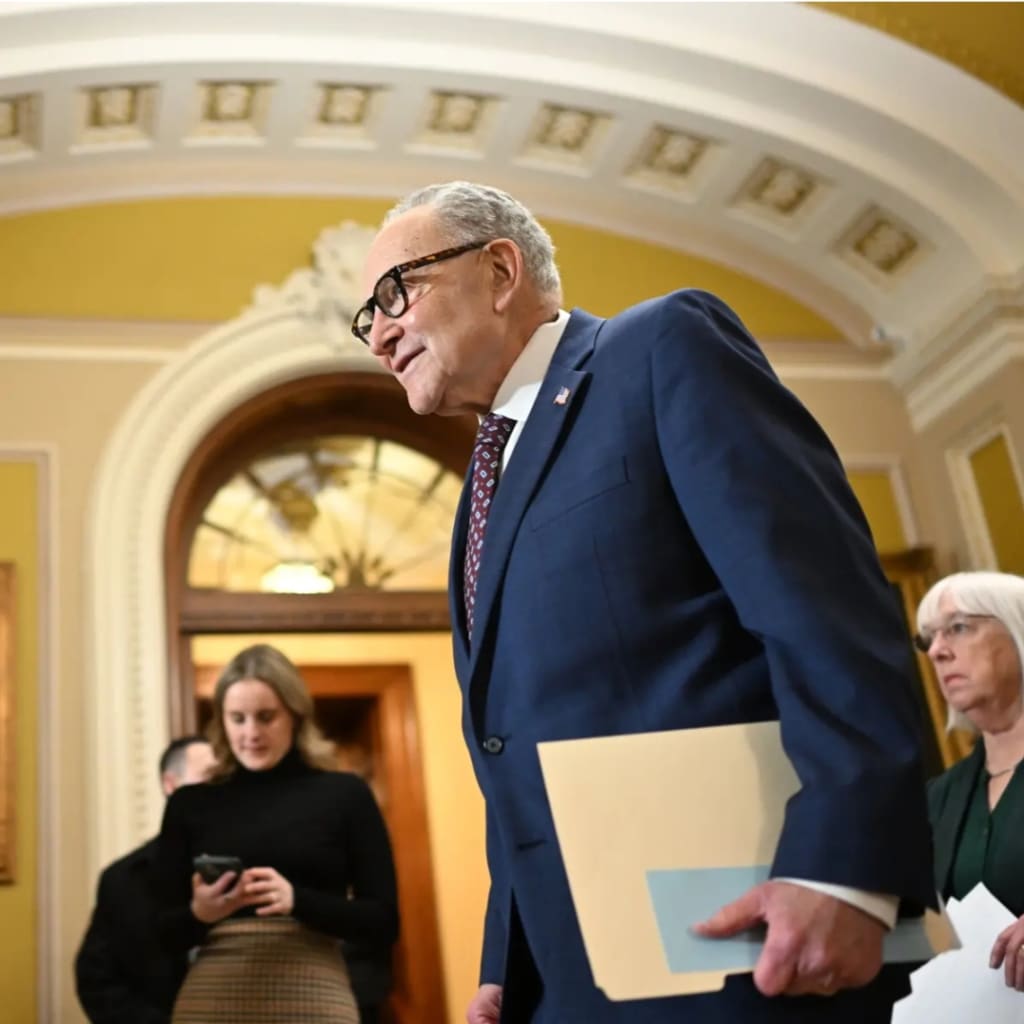
As the threat of a US government shutdown looms once again, an unexpected development has emerged from Washington’s deeply polarised political landscape. Former President Donald Trump and Senate Majority Leader Chuck Schumer appear to be moving toward a possible agreement aimed at averting a shutdown, raising cautious optimism among lawmakers, federal employees, and markets alike. While details remain fluid, the talks signal a rare moment of potential cooperation between two figures who have often stood on opposite sides of America’s political divide.
A government shutdown occurs when Congress fails to pass funding legislation to keep federal agencies operating. Over the past decade, such standoffs have become increasingly common, often driven by partisan disputes over spending priorities, immigration, defence, or social policy. The economic and social consequences can be significant, ranging from furloughed federal workers and delayed public services to market uncertainty and broader economic disruption.
Against this backdrop, the reported engagement between Trump and Schumer has drawn attention precisely because it cuts against expectations. Trump, the dominant figure in the Republican Party, and Schumer, the top Democrat in the Senate, have frequently clashed on issues ranging from budget policy to judicial appointments. Yet both now appear to recognise the political and economic risks of allowing another shutdown to unfold.
At the heart of the discussions is a temporary funding framework that could keep the government open while broader budget negotiations continue. Such stopgap measures, often referred to as continuing resolutions, are a familiar tool in Washington. They extend existing funding levels for a set period, buying lawmakers time to hammer out a longer-term agreement. While far from ideal, these measures are often seen as the least damaging option when consensus on a full budget proves elusive.
For Trump, supporting a deal to avert a shutdown carries strategic significance. As a central voice within the Republican Party, his stance can heavily influence lawmakers, particularly in the House of Representatives. By signalling openness to compromise, Trump may be aiming to project an image of pragmatism and leadership, especially as economic concerns remain high among voters. Avoiding a shutdown also spares Republicans from potential blame for disrupting government services, a risk that has historically hurt the party perceived as driving the impasse.
Schumer, for his part, faces his own set of calculations. Democrats have long argued that shutdowns disproportionately harm ordinary Americans while doing little to resolve underlying policy disagreements. By engaging in talks and exploring a bipartisan solution, Schumer can reinforce his party’s message of responsible governance. At the same time, he must balance compromise with the expectations of progressive lawmakers who are wary of concessions, particularly on spending cuts or policy riders attached to funding bills.
The talks reportedly focus on keeping the agreement narrow, centred on funding levels rather than controversial policy changes. This approach reflects lessons learned from past shutdowns, many of which were triggered by attempts to link budget bills to divisive issues. By stripping the deal down to essentials, negotiators hope to reduce points of friction and increase the chances of passage in both chambers of Congress.
Reaction within Washington has been mixed but cautiously hopeful. Some lawmakers have welcomed the dialogue as a necessary step to prevent another disruptive standoff. Business groups and public sector unions have also expressed support for any effort that ensures continuity of government operations. Financial markets, sensitive to political instability, tend to respond positively to signs that lawmakers are moving away from brinkmanship.
However, scepticism remains. Even if Trump and Schumer find common ground, translating that understanding into legislation is no small task. Hardliners in both parties have, in the past, resisted compromise deals, arguing that short-term fixes only perpetuate fiscal dysfunction. In the House, where margins can be tight, a small group of dissenters can derail legislation, regardless of leadership support.
There is also the broader issue of trust. Years of political confrontation have left deep scars, and any agreement will be scrutinised for signs of imbalance or hidden concessions. Lawmakers will want assurances that a temporary deal does not weaken their negotiating position in future budget battles. As a result, even a narrowly focused agreement could face delays or amendments as it moves through Congress.
Still, the mere fact that Trump and Schumer are reportedly engaging in constructive talks marks a notable shift in tone. In a political environment often defined by zero-sum thinking, the prospect of collaboration sends a message that crisis moments can sometimes force pragmatism. Whether this cooperation proves durable or fleeting remains to be seen.
Ultimately, the coming days will be decisive. If an agreement is finalised and passed, it would avert immediate disruption and provide breathing room for more comprehensive negotiations. Failure, on the other hand, would likely lead to another shutdown, reinforcing public frustration with Washington’s inability to govern effectively.
For now, the possibility of a deal offers a measure of hope. As deadlines approach and pressure mounts, the moves by Trump and Schumer suggest that, at least for the moment, the cost of confrontation may outweigh the benefits of standing firm. In a divided capital, that calculation alone represents a significant development.
About the Creator
Keep reading
More stories from Salaar Jamali and writers in The Swamp and other communities.
BMO Bullish Scenario Sees Gold at $8,650 and Silver at $220 by 2027
A New Era in Precious Metals Markets In a striking development for investors and markets alike, analysts at BMO Capital Markets have outlined an extraordinary bullish scenario for gold and silver prices. In a recent thought experiment detailed in a market note, BMO projected that, under specific conditions, gold could reach $8,650 per ounce and silver could surge to $220 per ounce by the end of 2027. While this view is not the firm’s “base case,” its implications paint a compelling picture of a financial landscape dramatically different from the past decade.
By Salaar Jamalia day ago in The Swamp
Heathrow Scraps 100ml Liquid Container Limit
In a significant shake-up of air travel rules, Heathrow Airport has announced that it will scrap the longstanding 100ml liquid container limit for passengers. The new policy, which applies to all domestic and international travelers, represents a major departure from a rule that has been in place for nearly two decades. The change is expected to speed up security lines, reduce passenger frustration, and modernize the airport experience while maintaining safety standards.
By Muhammad Hassan6 days ago in The Swamp




Comments
There are no comments for this story
Be the first to respond and start the conversation.