
Heathrow Scraps 100ml Liquid Container Limit
Airport introduces new rules, promising faster security checks and smoother passenger experience


In a significant shake-up of air travel rules, Heathrow Airport has announced that it will scrap the longstanding 100ml liquid container limit for passengers. The new policy, which applies to all domestic and international travelers, represents a major departure from a rule that has been in place for nearly two decades. The change is expected to speed up security lines, reduce passenger frustration, and modernize the airport experience while maintaining safety standards.
Background: The 100ml Rule
The 100ml liquid container limit was introduced in 2006 in response to the foiled transatlantic terror plot, where explosives were planned to be carried in liquid form. Since then, travelers have been required to place all liquids, aerosols, gels, creams, and pastes in containers of 100ml or less, fitting into a single, clear, resealable 1-liter bag.
While the rule was effective in preventing security threats, it has long been criticized for inconveniencing passengers, especially business travelers and families. Many travelers found it cumbersome to measure, transfer, and pack their liquids within the strict limits, leading to long security queues and confiscated items.
Heathrow’s Decision to Scrap the Limit
In a statement, Heathrow Airport said the move is part of its commitment to modernizing security procedures and enhancing passenger convenience. The airport cited advancements in scanning technology that allow security personnel to accurately detect prohibited substances without relying on arbitrary container size limits.
The airport’s security director stated:
"Our new scanners can detect liquid explosives with precision, allowing us to remove outdated restrictions. Passengers will now be able to carry larger quantities of liquids safely, reducing stress and waiting times."
This decision aligns Heathrow with other airports experimenting with enhanced liquid screening technology, a move seen as both progressive and passenger-friendly.
Implications for Travelers
The removal of the 100ml limit is expected to have several immediate benefits for travelers:
Faster Security Checks: With fewer liquids to measure and pack, security lines will move more quickly, especially during peak travel times.
Reduced Stress: Business travelers and families will no longer worry about carrying essential liquids such as baby formula, toiletries, or medications within strict limits.
Less Waste: Passengers will no longer need to buy multiple travel-sized containers, reducing unnecessary plastic waste.
More Flexibility: Travelers can now carry larger quantities of liquids for personal use, provided they comply with general safety regulations.
Security experts have emphasized that while the container limit is removed, passengers must still follow prohibited items regulations. Dangerous substances, flammable liquids, and explosives remain strictly forbidden.
Technology Behind the Change
The decision to scrap the 100ml rule is underpinned by cutting-edge security screening technology. Modern scanners can:
Detect chemical compositions in liquids.
Identify potential explosive materials.
Process items quickly without needing passengers to separate liquids by volume.
Heathrow officials say this technology ensures security is not compromised while providing a smoother passenger experience. The new scanners are expected to reduce the reliance on manual inspections, which previously slowed down security lines.
Airline and Passenger Reactions
Airlines and travelers have largely welcomed the change. Emma Clarke, a frequent flyer, commented:
"Finally, I can carry all my essential toiletries without worrying about packing dozens of tiny bottles. This makes travel much less stressful."
Airline representatives noted that the policy could shorten boarding times and reduce delays caused by last-minute security issues with liquids. They also highlighted the environmental benefits, as travelers no longer need to buy multiple single-use containers.
Global Context
Heathrow’s move is part of a broader trend in aviation. Airports in the EU, Middle East, and Asia are also investing in liquid scanning technologies that promise better security with less passenger inconvenience.
The European Union recently approved new security protocols allowing passengers to carry larger liquid volumes if advanced scanners are used. Heathrow’s adoption signals the UK’s intention to align with global best practices while maintaining its status as a leading international airport.
Potential Challenges
While the decision has been praised, experts caution about initial implementation challenges:
Training Security Staff: Personnel need to adapt to new scanners and protocols.
Public Awareness: Passengers must understand which items are now allowed and which remain prohibited.
Technology Reliability: The scanners must be consistently accurate to ensure security is not compromised.
Heathrow has stated that it will launch a public awareness campaign and phase in the technology to ensure a smooth transition.
What Passengers Should Know
Travelers planning to fly through Heathrow should note the following:
There is no longer a 100ml restriction on liquids.
All liquids must still comply with general safety regulations.
Prohibited liquids (flammable, explosive, or dangerous chemicals) remain banned.
Passengers should allow a little extra time as new scanning procedures are fully integrated.
For families, business travelers, and long-haul passengers, this change marks a welcome improvement in convenience.
Looking Ahead
Heathrow’s decision to scrap the 100ml liquid limit represents a milestone in airport security modernization. It demonstrates how technological innovation can improve both safety and passenger experience.
As other airports adopt similar measures, travelers may soon see a world where packing liquids for air travel is simple, stress-free, and environmentally friendly. Heathrow’s move is a clear example of how airports are balancing security with passenger convenience in the 21st century.
About the Creator
Muhammad Hassan
Muhammad Hassan | Content writer with 2 years of experience crafting engaging articles on world news, current affairs, and trending topics. I simplify complex stories to keep readers informed and connected.
Keep reading
More stories from Muhammad Hassan and writers in The Swamp and other communities.
Trump Vows ‘Big Retaliation’ as ‘Sell America’ List Grows
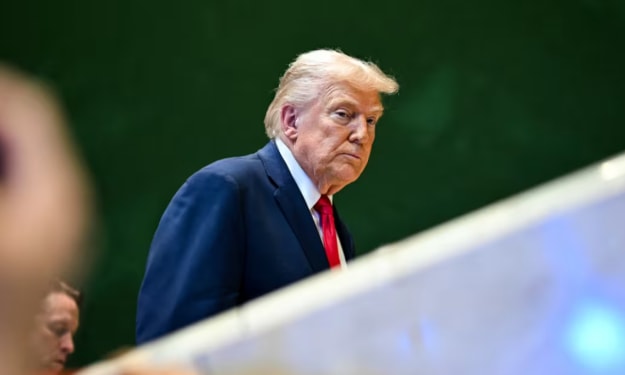
Former U.S. President Donald Trump has once again made headlines by promising a “big retaliation” in response to growing criticism and scrutiny over what he calls the “Sell America” list. The list reportedly tracks companies, executives, and organizations that Trump perceives as harming U.S. economic interests, and his remarks have sparked debate across political, business, and social circles.
By Muhammad Hassan2 months ago in The Swamp
Parallel Protests
I haven't written for quite some time, but I have A LOT of thoughts about yesterday's protest rally against our government's involvement and complicity in America's war on Iran, on the harbourside of my home city Bristol, and I need to put them somewhere. My gorgeous girlfriend is always a loving and listening ear and sharing it all with her will always be a healthy and happy way of processing the mental and emotional weight, but getting it straight in my brain to share means writing it all down in straight lines, so, here we are and thanks for being here.
By Steph Cole9 days ago in The Swamp
For Israel’s Netanyahu, Trump grants wishes, but his support carries risks
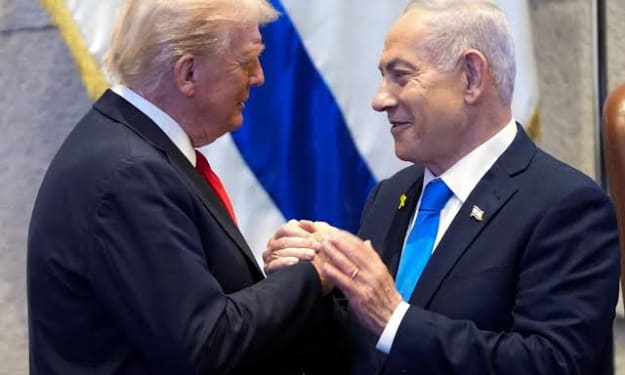
In the long and complex alliance between Benjamin Netanyahu and Donald Trump, the U.S. leader has delivered some of the most significant policy victories the Israeli premier has pursued for years. Yet while these achievements have reshaped the Middle East and bolstered Netanyahu’s standing with many supporters, they also carry risks that could have lasting political and diplomatic consequences. Over the past five years, Trump has granted a string of Netanyahu’s long‑standing strategic wishes, starting with symbolic but consequential decisions early in his presidency. Trump moved the U.S. Embassy to Jerusalem, a step long demanded by Israeli leaders and supporters; formally recognised Israeli sovereignty over the Golan Heights, territory captured from Syria in 1967; withdrew the United States from the international nuclear agreement with Iran; and significantly cut U.N. funding for Palestinian refugees. But none of these moves compares in scale to Trump’s recent embrace of the joint military campaign against Iran—a campaign that Netanyahu long sought and which represents the most consequential gamble of their partnership yet. What began as deepening tensions with Tehran has escalated into a full‑scale conflict involving U.S. forces alongside Israeli operations. For Netanyahu, this intervention is more than just a strategic victory—it is a political lifeline. A Strategic Bet in an Election Year Netanyahu, trailing in polls and facing persistent legal challenges at home, is betting that the war—with Trump’s backing—can rekindle a surge of nationalist support that might secure his political survival. Experts say the prime minister is likely to capitalise on the ongoing conflict to call early elections, hoping that a wave of patriotic sentiment will carry him back into a stronger parliamentary position. Israel must hold elections by late October this year, and many analysts believe Netanyahu sees an immediate wartime context as his best opportunity to salvage his political career. Political scientist Gayil Talshir of Hebrew University summed up the situation by pointing to the existential nature of the conflict. “Everything else can be forgotten because this is the big one,” she said, referring to the military campaign against Iran as the defining issue of Netanyahu’s era. But linking domestic political fortunes to an ongoing war carries real dangers—particularly when it involves another major power like the United States, whose own domestic politics may not align with Netanyahu’s expectations. Risks for Trump’s Base and U.S. Politics For Trump, the alliance has helped cement his image among many conservative voters, especially those inclined toward strong American support for Israel. In Israel itself, Trump enjoys extraordinary popularity; some polls show his approval within the country exceeding that among key voter blocs in the United States. Yet Trump’s support for an increasingly controversial and protracted conflict has also strained his political base in the U.S. Many Republicans who favour a more isolationist posture question a deepening military involvement, while Democrats and independents have grown critical of the human cost and strategic ambiguity of the war. Rising fuel prices and extended American casualties only amplify these political pressures. The war’s unpredictability complicates Trump’s broader political ambitions. An over‑reliance on Netanyahu’s strategic priorities could alienate portions of the Republican base and temper voter enthusiasm in key demographics—particularly among younger voters and communities more sympathetic to a diplomatic resolution or concerned about humanitarian impact. Strains and Strategic Tension Despite the strong partnership between the two leaders, their relationship has not been without tension. Trump has occasionally pushed back against some of Netanyahu’s policies, such as annexation efforts in the West Bank, and has encouraged moves toward a future pathway to Palestinian self‑determination—proposals that Netanyahu historically resisted. These moments illustrate the fragile balance between unconditional support and strategic disagreement. EWN Moreover, Trump’s public calls for Isaac Herzog to pardon Netanyahu from longstanding corruption charges underscore the political entanglement of foreign policy with domestic Israel politics. Trump’s pressure for Herzog to grant clemency—even as the nation remains at war—highlights how external advocacy can complicate Israel’s internal legal and political processes. Long‑Term Consequences for the Alliance Internationally, the deepening U.S.–Israel partnership could affect broader diplomatic alignments. Allies in Europe and across the Middle East may be wary of being drawn into a conflict that seems increasingly personalised around the political fortunes of two leaders. Analysts suggest that if the war doesn’t achieve a clear strategic outcome, the blame may return to both Netanyahu and Trump, with potential fallout in regional diplomacy and future peace negotiations. Ultimately, the political calculus that has driven Netanyahu and Trump together in pursuit of mutual goals may prove double‑edged. The military campaign against Iran may be the strategic high point of their partnership—but it also carries deep risks that extend well beyond battlefield victories. For Netanyahu, it could be the defining gamble of his political life; for Trump, it may shape his legacy in ways that reverberate long after the conflict has subsided.
By Fiaz Ahmed 4 days ago in The Swamp


Comments
There are no comments for this story
Be the first to respond and start the conversation.