
"The Ukraine-Russia War: A New Iron Curtain"
The Future of Eastern Europe: A Changing Geopolitical Landscape

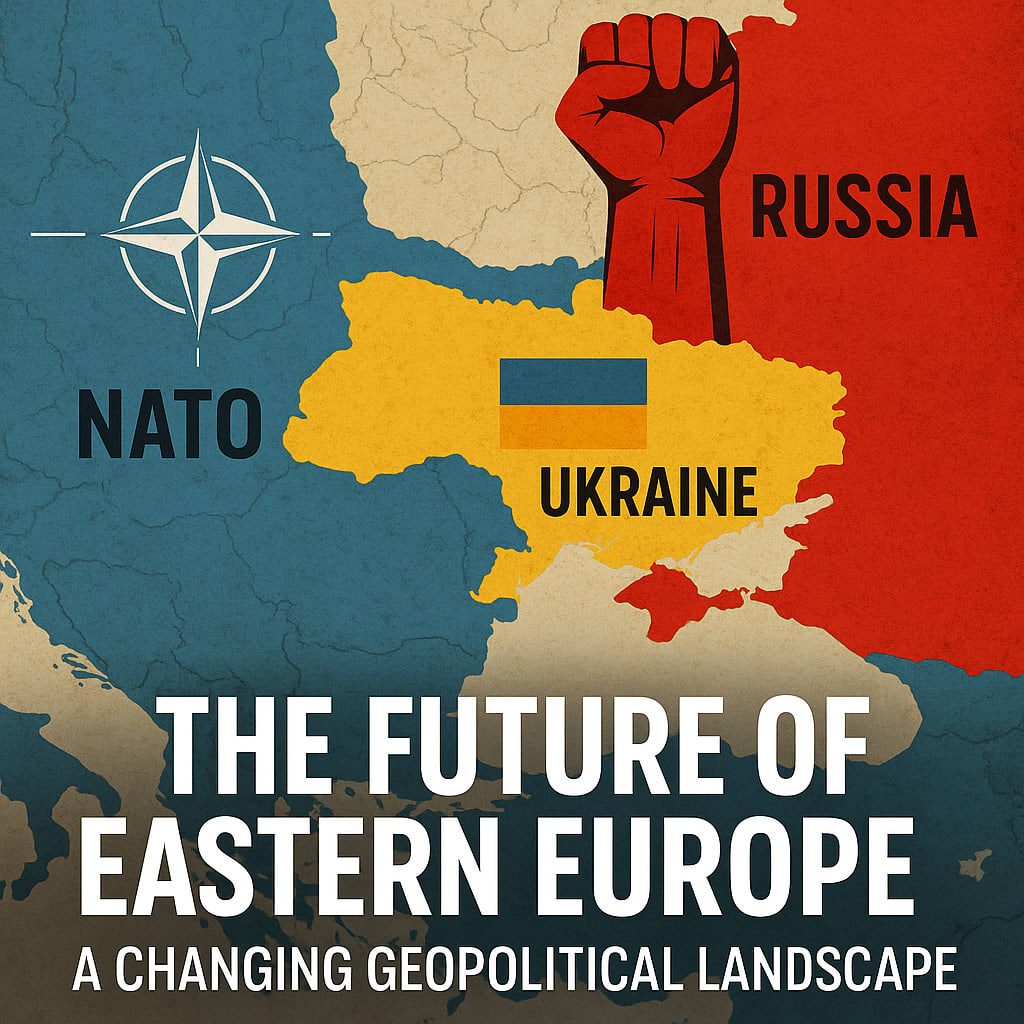
The Future of Eastern Europe: A Changing Geopolitical Landscape
The war between Ukraine and Russia has redefined the political, military, and economic contours of Eastern Europe. What began in February 2022 as a full-scale invasion by Russia quickly escalated into the largest and most brutal conflict on European soil since World War II. Two years on, the war has not only devastated Ukrainian cities and lives but has also shaken the geopolitical foundation of the region.
A Region Caught in Transformation
Eastern Europe has long been a complex region, marked by a history of shifting borders, ideological divides, and contested national identities. Since the collapse of the Soviet Union in 1991, many Eastern European countries have transitioned from Soviet influence to democratic governance and closer ties with the West. NATO and EU enlargement have brought former Warsaw Pact nations like Poland, Romania, and the Baltic States into the Western fold, often provoking deep resentment and anxiety in Moscow.
The current war has accelerated these geopolitical shifts. Countries once cautious of Russia are now vocal and decisive in their opposition. Finland and Sweden—historically neutral nations—have joined NATO or pursued membership as a direct response to Russia’s aggression. Eastern Europe is now on the front lines of a new Cold War-like standoff between Russia and the West.
Ukraine’s Place in Europe
Ukraine’s resistance has not only earned global admiration but also sparked an identity transformation within the country. Once divided between pro-Western and pro-Russian sentiments, the war has forged a more unified Ukrainian identity that is staunchly independent and increasingly aligned with European democratic values.
Kyiv has officially applied for EU membership and received candidate status, symbolizing its firm orientation toward the West. If the war ends in Ukraine’s favor, a post-war reconstruction plan—backed by the West—could integrate Ukraine more deeply into the European Union’s political and economic systems. Such a development would be a decisive blow to Russia’s long-standing influence in the region.
Russia’s Diminishing Influence
Russia's invasion, intended to reassert its dominance, may ultimately isolate it further. Economic sanctions, diplomatic ostracism, and battlefield losses have eroded Russia’s global standing. In Eastern Europe, trust in Moscow has plummeted, and former allies like Hungary and Serbia are facing increasing pressure to distance themselves from the Kremlin.
Moscow may attempt to compensate for its regional losses by deepening its relationships with non-Western powers such as China, Iran, and North Korea. However, even within these alliances, Russia is no longer the dominant power it once aspired to be.
The Rise of Regional Powers
Countries like Poland and Romania are emerging as key players in the region. Poland, for example, has significantly increased its defense spending, modernized its military, and taken in millions of Ukrainian refugees. It now serves as a logistical and political bridge between Ukraine and the broader Western world.
The Baltic States—Latvia, Lithuania, and Estonia—have also taken a leading role in pushing for a strong NATO presence in the region. Their experience under Soviet occupation gives them a unique sense of urgency and clarity about the dangers of Russian expansionism.
A Divided Europe?
While unity among NATO and EU countries has been largely strong, the war has also exposed some divisions. Countries like Hungary continue to maintain a more conciliatory stance toward Moscow, driven by economic dependencies and political alliances. Such divergences will continue to test the cohesion of Europe in the years ahead.
Moreover, the economic strain of prolonged conflict, including rising energy prices and defense spending, could challenge public support for continued aid to Ukraine. Eastern European leaders must balance national interests with the broader goal of maintaining regional stability.
The Road Ahead
The future of Eastern Europe depends heavily on the outcome of the war in Ukraine. A Ukrainian victory could solidify a Western-oriented bloc stretching from the Baltic to the Black Sea, deeply integrated into NATO and the EU. A frozen conflict or Russian success, however, could leave the region in a state of prolonged insecurity and division.
What is certain is that Eastern Europe is undergoing a profound transformation. Borders may remain the same on maps, but the alliances, identities, and power structures of the region are being redrawn. As the war continues, so does the redefinition of what Eastern Europe stands for—and where it is headed.
Countries like Poland and Romania are emerging as key players in the region. Poland, for example, has significantly increased its defense spending, modernized its military, and taken in millions of Ukrainian refugees. It now serves as a logistical and political bridge between Ukraine and the broader Western world.
About the Creator
World politics
shares simple and clear updates on global news, leaders, and events. We cover politics, conflicts, and international stories that shape the world. Stay informed and learn something new every day.
Keep reading
More stories from World politics and writers in The Swamp and other communities.
Pakistan and India on the Brink: A Modern-Day Conflict
Military Showdown: India vs. Pakistan in 2025 The year 2025 has brought the South Asian subcontinent to the brink of a full-scale war between India and Pakistan. A longstanding history of territorial disputes, political tensions, and military confrontations has once again flared into open hostilities. The current military showdown, which began with a skirmish along the Line of Control (LoC), has rapidly escalated into a modern-day conflict involving both conventional and unconventional warfare tactics. This article delves into the key elements of this military showdown, examining the capabilities, strategies, and potential consequences of this catastrophic clash between two nuclear-armed neighbors.
By World politics 10 months ago in The Swamp
The Forsyth House Fire
Since 1851, Forsyth House has stood on the corner of Union Street and Gordon Street in the heart of Glasgow. Its iconic, or was... because on Sunday 8th of March, 2026, a fire broke out in a small, seemingly un-named shop in the building and tore all that history down. As I write, the rubble is still unsettled and the street is still blocked off. Central Station is quiet on the upper level, and around 30 small businesses have quite literally gone up in smoke.
By S. A. Crawford2 days ago in The Swamp


Comments
There are no comments for this story
Be the first to respond and start the conversation.