
Iran’s Ailing Supreme Leader Resorts to His Only Playbook as Crises Mount and Protests Erupt
A bold robbery that has shaken Germany’s financial sector and exposed serious security concerns

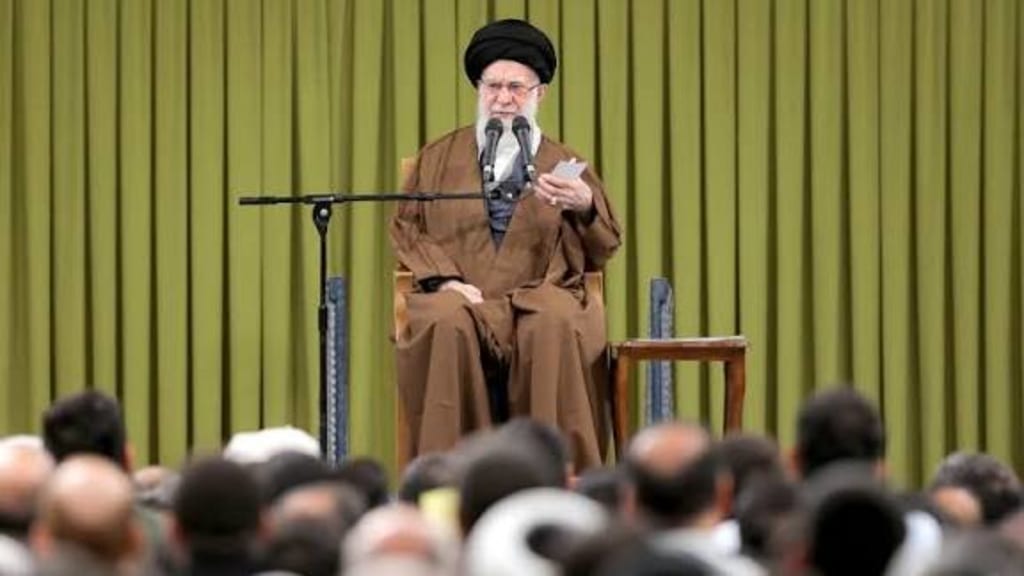
Iran is once again at a crossroads. As economic hardship deepens, regional tensions escalate, and public anger spills into the streets, the country’s aging Supreme Leader, Ayatollah Ali Khamenei, appears increasingly reliant on a familiar and rigid strategy: repression, defiance, and ideological consolidation. With his health reportedly deteriorating and succession questions looming, Iran’s leadership is doubling down on the only playbook it has ever trusted—crackdowns at home and resistance abroad.
A Nation Under Multiple Pressures
Iran today faces a convergence of crises rarely seen in its modern history. Years of harsh international sanctions have weakened the economy, sending inflation soaring and shrinking the purchasing power of ordinary citizens. Essential goods have become expensive, unemployment remains high—especially among youth—and corruption scandals continue to erode public trust.
At the same time, regional instability has intensified. Iran’s involvement in proxy conflicts across the Middle East, from Lebanon to Yemen, has drawn increasing scrutiny and retaliation. Tensions with Israel and the United States remain dangerously high, while diplomatic efforts to revive nuclear negotiations have largely stalled.
These pressures are not abstract. They are felt daily by Iranians who struggle to afford food, fuel, and housing. For many, frustration has transformed into open dissent.
Protests as a Persistent Threat
Over the past few years, Iran has witnessed repeated waves of protests—sparked by economic grievances, political repression, and demands for social freedoms. While the intensity of demonstrations fluctuates, their persistence signals a deeper shift: fear is no longer enough to ensure silence.
Women, students, workers, and ethnic minorities have increasingly challenged the state’s authority. Social media, despite heavy censorship, continues to amplify dissenting voices and expose state violence. Each protest cycle weakens the narrative that the Islamic Republic enjoys unquestioned legitimacy.
For the Supreme Leader, these protests represent not just unrest, but an existential challenge to the system he has ruled over for decades.
The Only Playbook: Repression and Resistance
Faced with mounting instability, Khamenei has turned to the same tactics that have defined his leadership since 1989. Domestically, this means empowering security forces, expanding surveillance, tightening media controls, and issuing harsh sentences to protesters and activists. Dialogue or reform remains off the table.
The message from the top is clear: concessions are seen as weakness.
Externally, Iran continues to frame itself as a besieged revolutionary state standing against Western “arrogance.” Anti-US and anti-Israel rhetoric intensifies whenever internal pressure rises, serving to redirect public attention outward and rally hardline supporters.
This strategy has worked before—at least temporarily. But critics argue it is increasingly ineffective in a society that is younger, more connected, and less ideologically driven than previous generations.
Health Concerns and the Succession Question
Adding to the uncertainty is the Supreme Leader’s declining health. At 85, Khamenei has reportedly faced recurring medical issues, fueling speculation about who might succeed him. While the Iranian system is designed to project continuity, succession is a sensitive moment that could destabilize elite power structures.
In response, the leadership appears focused on tightening internal cohesion. Loyalists are elevated, dissenters purged, and institutions like the Revolutionary Guard gain even more influence. Stability, in this view, must be enforced—not negotiated.
A Strategy Running Out of Time?
The central question is whether Iran’s old playbook can still deliver results. Repression may suppress protests, but it does not address the root causes of discontent. Economic mismanagement, lack of political participation, and social restrictions continue to alienate large segments of the population.
Moreover, international isolation limits Iran’s ability to recover economically, while regional confrontations risk dragging the country into wider conflict.
For now, the Supreme Leader’s approach reflects a belief that endurance—not reform—is the path to survival. But history suggests that systems relying solely on force often struggle to adapt when circumstances change.
Conclusion: A Defining Moment for Iran
Iran stands at a defining moment. As crises multiply and protests refuse to disappear, the leadership’s reliance on repression and defiance may buy time—but not stability. With an ailing Supreme Leader at the helm and a restless population below, the gap between rulers and ruled continues to widen.
Whether Iran can navigate this period without deeper turmoil remains uncertain. What is clear is that the old playbook, once seen as unshakable, is being tested like never before.
About the Creator
Fiaz Ahmed Brohi
I am a passionate writer with a love for exploring and creating content on trending topics. Always curious, always sharing stories that engage and inspire.
Keep reading
More stories from Fiaz Ahmed Brohi and writers in The Swamp and other communities.
Taiwan Stays on High Alert as Chinese Ships Pull Back After Massive Drills
Taiwan remains on heightened military alert even as Chinese naval and air forces begin pulling back following days of large-scale military drills around the self-governed island. While the immediate show of force appears to be easing, officials in Taipei warn that the threat is far from over. For Taiwan, the withdrawal of Chinese ships does not signal de-escalation—it signals a new phase of strategic pressure. A Show of Force That Shook the Region China’s recent military drills were among the most extensive conducted near Taiwan in recent years. Warships, fighter jets, drones, and missile units surrounded the island from multiple directions, simulating blockades and precision strikes. Beijing described the exercises as a “serious warning” against separatism and foreign interference, clearly aimed at both Taiwan and its international supporters. The drills disrupted commercial shipping routes, raised insurance costs for airlines and cargo vessels, and triggered concern across the Indo-Pacific. Neighboring countries, including Japan and the Philippines, closely monitored the situation, while the United States reiterated its commitment to regional stability. Although Chinese vessels have now retreated from Taiwan’s immediate vicinity, analysts stress that the exercises achieved their core objective: psychological pressure. Why Taiwan Is Not Relaxing Despite the pullback, Taiwan’s defense ministry has made it clear that vigilance will continue. Surveillance operations remain active, reserve forces stay on standby, and air defense systems are fully operational. The reason is simple—China’s military movements have become increasingly unpredictable. Taiwanese officials argue that such drills are no longer isolated events but part of a broader pattern. Each exercise grows more complex, more realistic, and closer to a potential real-world scenario. Pullbacks, therefore, are seen as tactical pauses rather than genuine steps toward calm. For Taiwan, the danger lies not only in invasion but also in miscalculation. Gray-Zone Warfare and Constant Pressure China’s strategy toward Taiwan increasingly relies on what experts call “gray-zone tactics”—actions that fall short of open war but steadily erode an opponent’s security. These include frequent airspace incursions, cyber operations, disinformation campaigns, and maritime harassment. The recent drills fit neatly into this approach. By demonstrating the ability to encircle Taiwan and then withdraw at will, Beijing sends a powerful message: it can escalate or de-escalate whenever it chooses. This constant pressure strains Taiwan’s military resources and tests public morale, even without a single shot being fired. Political Timing Matters The timing of the drills is also significant. Taiwan’s political landscape has been evolving, with leadership transitions and debates over relations with China playing a central role. Beijing views any move toward stronger Taiwanese identity or international engagement as a red line. By launching massive exercises and then pulling back, China reinforces its claim that stability depends entirely on Taipei’s behavior. It also signals to the international community that China sees Taiwan as an internal issue—one it is prepared to enforce militarily if necessary. International Response and Strategic Calculations Global reactions have been cautious but firm. The United States called on all sides to avoid unilateral actions that could destabilize the region, while quietly increasing coordination with allies. Japan, whose southern islands lie close to Taiwan, expressed concern over regional security and reaffirmed its defensive preparedness. For many observers, the drills underscore the growing risk of an incident spiraling out of control. With so many military assets operating in close proximity, a single error could trigger a much wider crisis. Life Under the Shadow of Conflict For ordinary people in Taiwan, life continues—but with an underlying sense of uncertainty. Air raid drills, military updates, and emergency preparedness campaigns have become part of daily life. While many citizens remain resilient, fatigue is growing. At the same time, the drills have strengthened Taiwan’s resolve. Public support for maintaining de facto independence remains strong, and confidence in democratic institutions continues to outweigh fear. Conclusion: Calm After the Storm, but Not Peace The withdrawal of Chinese ships may offer temporary relief, but it does not mark the end of tensions across the Taiwan Strait. Instead, it highlights a new reality—one in which pressure replaces peace, and drills replace dialogue. Taiwan’s decision to stay on high alert reflects hard-earned lessons: in today’s strategic environment, calm can vanish overnight. As China refines its tactics and the world watches closely, Taiwan prepares not just for the next drill—but for an uncertain future where readiness is the price of survival.
By Fiaz Ahmed Brohi20 days ago in The Swamp
Nvidia Suppliers Halt Work After China Blocks H200 Chip Shipments
The global semiconductor industry is once again caught in the crossfire of geopolitics and technology. This time, the spotlight is on Nvidia’s H200 artificial intelligence chip, as reports confirm that several Nvidia suppliers have halted production after China blocked shipments of the high-performance processor at its borders. What may seem like a routine customs issue is actually far more significant. The decision has disrupted supply chains, unsettled investors, and raised fresh concerns about the future of AI development amid escalating U.S.–China tech tensions. So what exactly happened, and why does it matter so much? What Triggered the Sudden Halt? According to multiple reports, Chinese customs authorities recently informed logistics agents that Nvidia’s H200 chips would not be allowed into the country. This instruction came quietly, without a public policy announcement, but its effects were immediate. Suppliers responsible for producing specialized components used exclusively in the H200 chip responded by pausing operations. These parts are highly customized and cannot easily be repurposed for other products, meaning continued production would risk piling up inventory that cannot be sold or shipped. For suppliers already operating on tight margins, stopping work was the safest financial option—even though it came at a significant cost. Why the Nvidia H200 Chip Is So Important The H200 chip is one of Nvidia’s most advanced AI processors, designed specifically for heavy-duty workloads such as training large language models, data-center AI operations, and advanced cloud computing tasks. It builds on Nvidia’s earlier AI chips and delivers improved memory performance and processing speed, making it especially attractive to companies working at the cutting edge of artificial intelligence. China has been a major market for Nvidia’s AI hardware. Demand for the H200 reportedly surged among Chinese tech giants, research institutions, and cloud service providers eager to stay competitive in the global AI race. Some estimates suggest Chinese orders reached well over one million units, far exceeding initial supply expectations. That demand is exactly why the shipment block has sent shockwaves through the industry. The Role of U.S. Export Controls To understand the bigger picture, it’s important to look at U.S. export restrictions on advanced semiconductors. Earlier this year, U.S. authorities allowed Nvidia to sell the H200 to China under strict licensing conditions. These included safeguards to prevent military use, third-party verification requirements, and limits on shipment volumes. While the approval was narrower than Nvidia had hoped for, it still opened the door for legal exports. However, China’s decision to block the chips suggests that U.S. approval alone is no longer enough. Beijing appears to be asserting its own strategic priorities, regardless of Washington’s licensing decisions. Why China May Be Blocking the Chips China has not issued an official explanation, but several motivations are widely discussed: 1. Reducing Dependence on Foreign AI Hardware China has been investing heavily in domestic semiconductor development. Limiting access to advanced foreign chips could push companies to adopt homegrown alternatives faster. 2. Strategic Leverage Advanced AI chips are now viewed as strategic assets. Controlling their flow gives governments leverage in broader trade and diplomatic negotiations. 3. National Security Concerns Even with export safeguards in place, China may be wary of relying on U.S.-designed technology for critical infrastructure and AI systems. Whatever the reason, the message is clear: AI hardware is no longer just a commercial product—it’s a political tool. Impact on Nvidia’s Supply Chain For Nvidia’s suppliers, the fallout has been immediate and painful. Many of these companies manufacture chip packaging, substrates, and printed circuit boards specifically designed for the H200. These components have little value outside Nvidia’s AI ecosystem, making them difficult to sell elsewhere. By halting production, suppliers are trying to avoid deeper losses—but the pause also highlights how vulnerable global supply chains have become to sudden regulatory decisions. This is not the first time Nvidia has faced such disruption. In the past, China-specific chips designed to comply with export rules were also shelved after regulatory uncertainty made them commercially unviable. Market Reactions and Investor Concerns News of the production halt has unsettled investors, raising concerns about Nvidia’s revenue projections and long-term China strategy. China represents a massive portion of global AI demand, and losing or delaying access to that market could force Nvidia to: Redirect inventory to other regions Adjust pricing strategies Slow future capacity expansion Reevaluate product designs to meet shifting regulations While Nvidia remains dominant in AI chips globally, repeated disruptions could give competitors—both Western and Chinese—an opportunity to gain ground. What This Means for China’s Tech Giants For Chinese companies, the shipment block creates new challenges. Major firms such as Alibaba, Tencent, and ByteDance rely heavily on advanced AI hardware to train models, power cloud services, and develop consumer applications. Without access to the H200, these companies may have to: Rely on older Nvidia chips Explore alternative suppliers Accelerate development of domestic AI processors In the short term, this could slow some AI projects. In the long term, it may strengthen China’s push for technological self-sufficiency. A Bigger Signal in the Global AI Race The Nvidia H200 situation is not an isolated incident—it’s a sign of where the world is headed. Artificial intelligence has become a strategic priority, and the chips that power it are now treated like critical infrastructure. Governments are increasingly willing to intervene, restrict, or block access in pursuit of national goals. As a result, companies operating in this space must now navigate not just market forces, but geopolitical risk at every stage of production and distribution. What Happens Next? At this stage, it’s unclear whether China’s block is temporary or the beginning of a longer-term policy shift. Much will depend on behind-the-scenes negotiations, future export rules, and how aggressively China pushes domestic alternatives. One thing is certain: the pause in Nvidia’s H200 supply chain underscores a new reality—the future of AI will be shaped as much by politics as by innovation. And for companies like Nvidia, adaptability may be just as important as technological leadership.
By Muhammad Hassanabout 12 hours ago in The Swamp



Comments
There are no comments for this story
Be the first to respond and start the conversation.