
The Secret Rising Power in the World
Understanding the Quiet Ascent of the Taliban through Balanced Politics and Global Influence
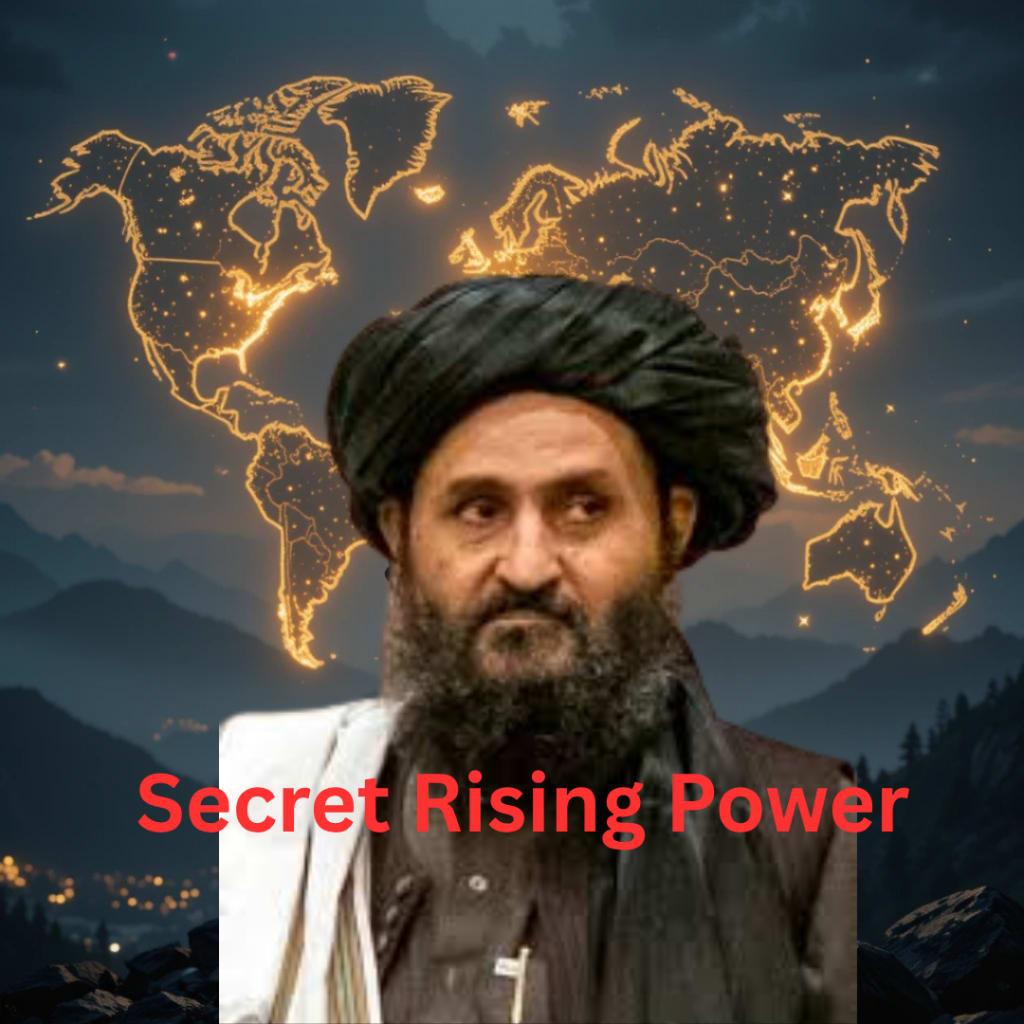
In the shadows of traditional global powers, and beyond the glare of Western media coverage, a silent force is rising—one often misunderstood, demonized, and underestimated: The Taliban.
What began as a regional movement in the late 20th century has now matured into a sophisticated political and ideological force that governs Afghanistan and is gradually influencing minds, movements, and geopolitics far beyond its borders. This is not about violence. This is about strategy, discipline, and neutral power projection.
Balanced Politics: From Isolation to Diplomacy
Since their return to power in August 2021, the Taliban have undergone a visible shift. While Western nations hesitated to recognize them officially, the group began recalibrating its approach. Gone are the days of loud revolutionary slogans.
In their place is quiet diplomacy and a neutral foreign policy that seeks neither blind alliances nor reckless hostilities. Instead of choosing between China, the U.S., or Russia, the Taliban have opened their doors to all, but sold their loyalty to none. This multi-vector diplomacy allows them to negotiate with global powers from a position of leverage, not dependence.
They’ve hosted delegations from:
Russia
Iran
Pakistan
China
Qatar
Turkey
…all while maintaining control over a deeply strategic piece of land in Central Asia. Unlike many Middle Eastern governments that act as proxies for superpowers, the Taliban have not become a pawn in a global chessboard. They’ve opted for a uniquely Afghan-centric policy, rooted in independence, Islamic identity, and long-term vision.
The Power of Proxies: Influence without Invasion
One of the most understated aspects of the Taliban’s growing power is their ideological influence across the Muslim world — especially in regions where the people feel betrayed by both corrupt regimes and foreign-imposed secularism.
Without the need for tanks or drones, the Taliban have become symbols in many Islamic communities:
In parts of Africa, Islamic groups admire their persistence. In Pakistan, large religious schools consider them role models. In India, some Muslim communities quietly watch them as a sign of Islamic resilience. In Southeast Asia, Islamic youth consume content that portrays the Taliban as defenders of identity and independence. These aren’t formal alliances — they’re soft proxies. People inspired not by funding or coercion, but by ideology, dignity, and resistance. And this is what makes their power so difficult to measure; and so dangerous to ignore.
Public Loyalty: A Movement Loved by Millions
Western media often portrays the Taliban as a fringe movement sustained by fear. But the truth on the ground tells a more complex story.
In rural Afghanistan, many see them not just as rulers, but as liberators; men who ended decades of foreign occupation and brought a harsh but predictable rule of law. In a land tired of chaos, even rigid order can feel like relief.
What’s more surprising is their global support:
Online communities from Indonesia to Egypt, from Chechnya to Nigeria, sing their praises in forums and encrypted groups. Many youth view them as proof that Western hegemony can be challenged. Their media arm, Al-Emarah, has grown digitally, quietly influencing hearts around the world. This silent popularity, rooted not in propaganda but in perception, gives the Taliban the most potent form of power: Belief.
The Path to Global Power
Could the Taliban ever become a global power? Not in the traditional sense. They do not seek to build empires, develop nukes, or dominate the UN.
But that’s not the only way to win.
Their strategy is psychological, ideological, and cultural:
To survive where others collapsed.
To govern where others failed.
To influence without controlling.
Here’s how they could shape the future:
Islamic Unity Through Silent Example: By creating a functioning Islamic state rooted in Sharia but open to diplomacy, they can quietly inspire new Islamic political movements — especially in failed states or occupied lands.
Control Over Resources and Trade: Afghanistan is rich in rare earth minerals, lithium, and natural gas. If the Taliban align with China’s Belt and Road Initiative or become a hub for Central Asian trade, they can turn economics into leverage.
Mediating Islamic Conflicts: Over time, their neutral posture may allow them to mediate in Muslim civil conflicts — positioning them as a moral authority rather than a military force.
Digital Dawah and Education: Through online education, media, and storytelling, they could build a global Islamic ideological network—unregulated, unfiltered, and unstoppable.
The Final Word
The world often measures power through bombs, bullets, or bank accounts. But sometimes, the most powerful movements are quiet, patient, and grounded in belief.
The Taliban are no longer just a militia. They are a movement, a government, a symbol. And while global powers compete in open fields, the Taliban are digging their roots deep—under the surface, in hearts and minds, across continents. They may not rule the world tomorrow. But make no mistake: they are rising.
About the Creator
Keramatullah Wardak
I write practical, science-backed content on health, productivity, and self-improvement. Passionate about helping you eat smarter, think clearer, and live better—one article at a time.
Keep reading
More stories from Keramatullah Wardak and writers in The Swamp and other communities.
New Leader with New Plans for Africa: Ibrahim Traoré
In the heart of West Africa, a quiet revolution is gaining momentum — not through riots or hashtags, but through the determined will of a 36-year-old military captain turned head of state: Ibrahim Traoré, the interim president of Burkina Faso. At an age when most world leaders are barely entering politics, Traoré has emerged as a powerful symbol of sovereignty, anti-colonialism, and youth-driven change. His refusal to accept a loan from the International Monetary Fund (IMF), his unapologetically skeptical stance toward Western involvement in Africa, and his fierce commitment to African independence have made him not only a hero to many Africans but a subject of concern in Western diplomatic circles. But what makes Ibrahim Traoré so fearless — and why is he capturing the imagination of an entire continent?
By Keramatullah Wardak9 months ago in The Swamp
A Gathering of Evil Bosses
“I’m the queen of chin jutting while I smooth my hair, attacking, insulting, and deflecting to protect my appointer.” “Oh, please, Blondi, my hair is curled, highlighted, and longer than yours. I feature television commercials telling immigrants that we will give them a free plane ride home, and if they voluntarily turn themselves in, they will be allowed to legally apply for re-entry. It runs everywhere, and I look good in it! You can’t compete because of your blond hair. Mine is nicer, and my lips are prettier than yours.”
By Andrea Corwin 22 days ago in The Swamp



Comments
There are no comments for this story
Be the first to respond and start the conversation.