
New Leader with New Plans for Africa: Ibrahim Traoré
How a Young Revolutionary from Burkina Faso Is Redefining African Leadership and Defying Global Power Structures

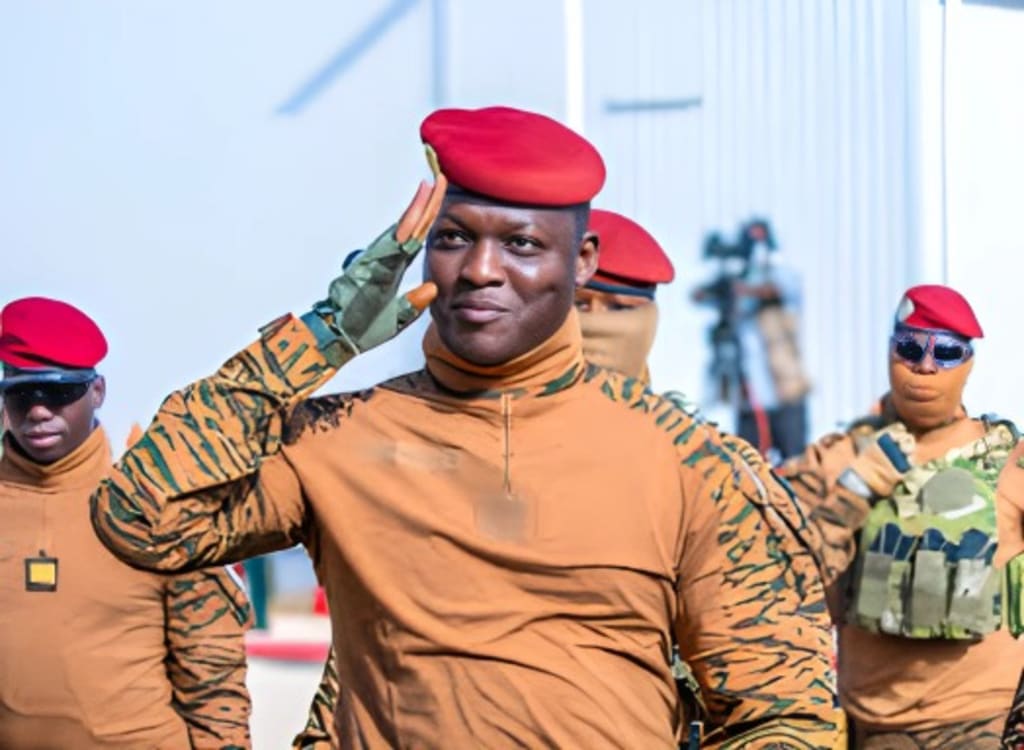
In the heart of West Africa, a quiet revolution is gaining momentum — not through riots or hashtags, but through the determined will of a 36-year-old military captain turned head of state: Ibrahim Traoré, the interim president of Burkina Faso. At an age when most world leaders are barely entering politics, Traoré has emerged as a powerful symbol of sovereignty, anti-colonialism, and youth-driven change. His refusal to accept a loan from the International Monetary Fund (IMF), his unapologetically skeptical stance toward Western involvement in Africa, and his fierce commitment to African independence have made him not only a hero to many Africans but a subject of concern in Western diplomatic circles. But what makes Ibrahim Traoré so fearless — and why is he capturing the imagination of an entire continent?
The Rise of a Revolutionary
Born in 1998 (though some sources suggest 1988), Ibrahim Traoré joined Burkina Faso’s military and quickly rose through the ranks due to his discipline, intelligence, and charisma. But what really set him apart was his vision for a sovereign Burkina Faso, free from the heavy shadows of foreign interference and colonial legacy.
In September 2022, following a series of political failures and growing jihadist insurgency, Traoré led a coup that ousted then-leader Paul-Henri Sandaogo Damiba. The reason? The government had failed to reclaim national territories overrun by Islamist militants. The people of Burkina Faso, particularly the youth, were desperate for bold action. Traoré delivered. Unlike many military takeovers, which are quickly condemned, his rise was met with cheers on the streets, especially from a generation frustrated by economic hardship, insecurity, and perceived Western manipulation.
Why He Said “No” to the IMF
One of the boldest moves Traoré made after assuming power was refusing financial aid and loans from the IMF. In a continent where dependency on IMF packages is the norm, this decision shocked many.
But for Traoré, the logic was simple:
“You cannot build true independence with borrowed money that comes with conditions that limit your sovereignty.”
He argued that IMF loans are modern tools of colonialism, keeping African countries in cycles of debt, dependency, and economic control. These loans often come with austerity measures, reduced government spending, and policies that hurt local industries in favor of global investors. By rejecting these terms, Traoré positioned himself not only as a president but as a protector of Africa’s economic dignity.
A Fierce Stance Against the West
Ibrahim Traoré is openly critical of France's historic role in Burkina Faso and across Africa. Under his leadership, Burkina Faso ended a military agreement with France, expelled French troops, and distanced itself from French political influence.
In doing so, he echoed a broader sentiment growing across the continent: the demand to “decolonize the mind” and push for a future built by Africans, for Africans. He also strengthened military and economic ties with non-Western nations, including Russia and other African countries, in a bid to diversify partnerships and prevent neocolonial monopolies. For many Western analysts, these steps seem radical. But for young Africans, it’s the leadership they’ve been craving for decades.
Traoré and the People: A New Social Contract
What separates Traoré from many African leaders is his closeness to the people. He doesn’t hide in golden palaces or armored vehicles. He often appears in simple military fatigues, visiting rural areas, listening to communities, and directly addressing national concerns.
He understands that for African countries to progress, youth must be empowered, corruption must be crushed, and resources must benefit the people; not foreign companies. He launched local defense initiatives, invested in national security, and prioritized education and agricultural self-sufficiency. Traoré’s policies are less about ideology and more about practical African solutions to African problems.
Challenges Ahead, But Fearless Still
Of course, Ibrahim Traoré is not without challenges. His government faces international criticism, economic sanctions, and a deeply complex security situation. The jihadist threat remains. The pressure from global institutions is immense. But unlike many before him, he doesn’t seem interested in playing the global power game. He is not afraid of being isolated by the West if it means preserving the dignity and independence of his nation. And that’s what makes him fearless.
Why Traoré’s Leadership Matters Now More Than Ever
In an era where many African leaders are seen as corrupt, detached, or overly dependent on foreign powers, Ibrahim Traoré offers something rare: hope for true African self-rule. He represents a generation that is no longer willing to be silent, no longer willing to be dependent, and no longer willing to accept that Africa must always play by someone else’s rules. His voice; young, bold, and authentic is sparking a new pan-African awakening, from the streets of Ouagadougou to the minds of the African diaspora.
Conclusion
Ibrahim Traoré may not have decades of political experience or elite backing, but what he has is courage, conviction, and clarity. At a time when many world leaders are avoiding risk, he is challenging the status quo and daring to imagine a sovereign Africa — even if it means standing alone.
In every sense, he is Africa’s most fearless leader right now — and possibly the beginning of something much greater.
About the Creator
Keramatullah Wardak
I write practical, science-backed content on health, productivity, and self-improvement. Passionate about helping you eat smarter, think clearer, and live better—one article at a time.
Keep reading
More stories from Keramatullah Wardak and writers in The Swamp and other communities.
This Hack: Destructive Consequences
In a world where missiles no longer define the entirety of a battlefield, silent digital weapons have taken center stage. The recent developments in the cyber conflict between Iran and Israel have stunned analysts and left civilians caught in the crossfire of digital warfare. This isn’t just a political standoff anymore — it’s a war of intelligence, technology, and psychological operations.
By Keramatullah Wardak9 months ago in The Swamp
The Forsyth House Fire
Since 1851, Forsyth House has stood on the corner of Union Street and Gordon Street in the heart of Glasgow. Its iconic, or was... because on Sunday 8th of March, 2026, a fire broke out in a small, seemingly un-named shop in the building and tore all that history down. As I write, the rubble is still unsettled and the street is still blocked off. Central Station is quiet on the upper level, and around 30 small businesses have quite literally gone up in smoke.
By S. A. Crawford3 days ago in The Swamp
Indian warships on standby near Persian Gulf for merchant vessels
Indian Warships on Standby Near Persian Gulf for Merchant Vessels New Delhi deploys naval assets as tensions rise in West Asia, ensuring safe passage for maritime trade Several Indian Navy warships have been deployed near the Persian Gulf and Strait of Hormuz, remaining on standby to assist merchant vessels — especially those bound for India — amid the ongoing war in West Asia that has disrupted commercial sea lanes and heightened regional security risks. The deployment reflects New Delhi’s growing efforts to safeguard its maritime trade routes and protect Indian seafarers during a period of escalating conflict. Why Indian Warships Are in the Region With the Middle East at the centre of a widening conflict involving Iran, the United States, and Israel, strategic chokepoints like the Strait of Hormuz — through which a significant share of global oil and liquefied gas supplies transit — have become areas of intense diplomatic and military focus. In this environment, Indian authorities have kept naval vessels near the Gulf to support and monitor merchant ships navigating these waters. Officials said the warships are being kept on standby to assist merchant vessels coming towards India, responding to potential calls for help, providing situational awareness, and reassuring India‑bound cargo owners and crews amid heightened risks. This naval presence is part of Operation Sankalp, a longer‑running mission under which Indian warships have patrolled the Gulf of Oman and Gulf of Aden — and now the wider Persian Gulf region — to ensure maritime safety and respond to potential threats or emergencies affecting commercial shipping. Safe Passage Through the Strait of Hormuz Despite tensions, several Indian‑flagged vessels have made headway. Two Indian LPG carriers, Shivalik and Nanda Devi, have been granted passage through the Strait of Hormuz and are en route to Indian ports, carrying critical energy supplies. These successful transits underscore the importance of safe shipping corridors for India’s economic interests. However, many other India‑flagged vessels remain in the region, with the government actively negotiating and coordinating with regional partners to secure safe movement and, if necessary, naval support or escorts. Recent diplomatic engagements reflect India’s effort to coordinate with Iran, Gulf Cooperation Council states, and Western powers to keep trade routes open. Protecting Indian Seafarers and Commerce The maritime deployment also responds to growing concerns for the safety of Indian seafarers working aboard ships in the Persian Gulf. According to a Reuters report, thousands of Indian sailors are currently in the region, with some stranded and caught between the escalation of hostilities and restrictions on commercial travel and shipping. These crews face increased anxiety as airspace and waters remain tense. India has been clear that the naval presence is aimed at ensuring the safe passage of merchant vessels, providing operational support if needed, and maintaining vigilance in a highly volatile maritime environment — not to contribute to combat. The Indian Navy regularly conducts patrols, surveillance and escort missions to deter threats and monitor hazardous situations. Strategic Importance of the Deployment The Strait of Hormuz remains one of the world’s most critical maritime chokepoints, accounting for a large portion of oil and gas transit worldwide. Disruption here affects global energy markets and economic stability, making international attention to naval deployments all the more significant. India, heavily dependent on imports for energy and trade, has a vested interest in keeping these routes secure. Deploying warships in such locations also serves as a deterrent to potential threats — from state actors to non‑state groups — that might target commercial vessels or disrupt shipping in response to regional tensions. The presence of naval assets aims to reassure both Indian and international shipping operators that maritime safety remains a priority. Naval Cooperation and Regional Dynamics India’s naval deployments complement diplomatic efforts to maintain open seas and safe navigation. In recent weeks, New Delhi has communicated with key stakeholders to facilitate safe passage and protect Indian nationals and seafarers. This includes regular contact with Gulf nations, Iran, and allied countries seeking to reduce maritime risks amid broader geopolitical challenges. Furthermore, Indian warships have been involved in maritime security operations elsewhere in the region for years, including anti‑piracy missions in the Gulf of Aden and Arabian Sea. These longstanding efforts bolster India’s ability to respond effectively to evolving security needs in the Gulf. What Comes Next As the West Asia conflict continues, India’s maritime posture is expected to adapt, balancing diplomacy, commercial interests and security imperatives. Authorities have stressed that naval forces will remain vigilant while working through diplomatic channels to ensure Indian and allied vessels can traverse critical sea lanes without undue risk. In a time of heightened tension, India’s naval presence near the Persian Gulf signals both a commitment to maritime security and a proactive stance in safeguarding its economic and strategic interests. Continued monitoring and cooperation with international partners will be essential as the situation evolves.
By Fiaz Ahmed about 17 hours ago in The Swamp
Sometimes It's Like That and That'sThe Way It Is
It was the late 1960s, and ten-year-old Gloria Coleman was standing with her grandmother on the side of the highway waiting for the bus. As the Greyhound pulled up, it seemed monstrous and intimidating. Grandma Elizabeth grabbed Gloria's hand, holding it tightly as they boarded.
By Cheryl E Preston2 days ago in Fiction



Comments
There are no comments for this story
Be the first to respond and start the conversation.