
The “Russian Waco”: How Fear and Propaganda Brought Penza to the Brink
A forgotten crisis where bureaucracy, religion, and manipulation nearly pushed a Russian city into tragedy
When the world remembers Waco, Texas (1993), it recalls fire, fear, and tragedy—where mistrust between the U.S. government and the Branch Davidians ended in mass death. The images of burning buildings and desperate believers became etched into global memory.
What many don’t know is that Russia came dangerously close to its own Waco. Not in the 1990s, but just a decade later. Not in the American heartland, but in the provincial city of Penza.
And here’s the shocking twist: the man driving this crisis wasn’t a fringe preacher. It was Alexander Dvorkin, Russia’s most prominent “anti-cult expert.”
When Bureaucracy Becomes Apocalypse
The spark was absurdly small: the rollout of taxpayer identification numbers. In theory, this was a dull bureaucratic measure designed to modernize Russia’s financial system. In practice, it became the perfect breeding ground for hysteria.
Through the prism of paranoia, identification numbers were recast as something darker: the “mark of the beast.”
On Radio Radonezh, commentators thundered against barcodes, computers, and globalization. They warned that new technologies were nothing less than satanic tools designed to enslave souls. Prominent clergy like Archimandrite Tikhon Shevkunov, later dubbed “Putin’s confessor,” amplified these apocalyptic claims, giving them the aura of legitimacy.
Instead of calming fears, Dvorkin amplified them. He portrayed communities of ordinary Orthodox believers as sectarian threats. By framing their resistance to tax codes as evidence of extremism, he handed the state a new enemy to target.
A City on the Brink
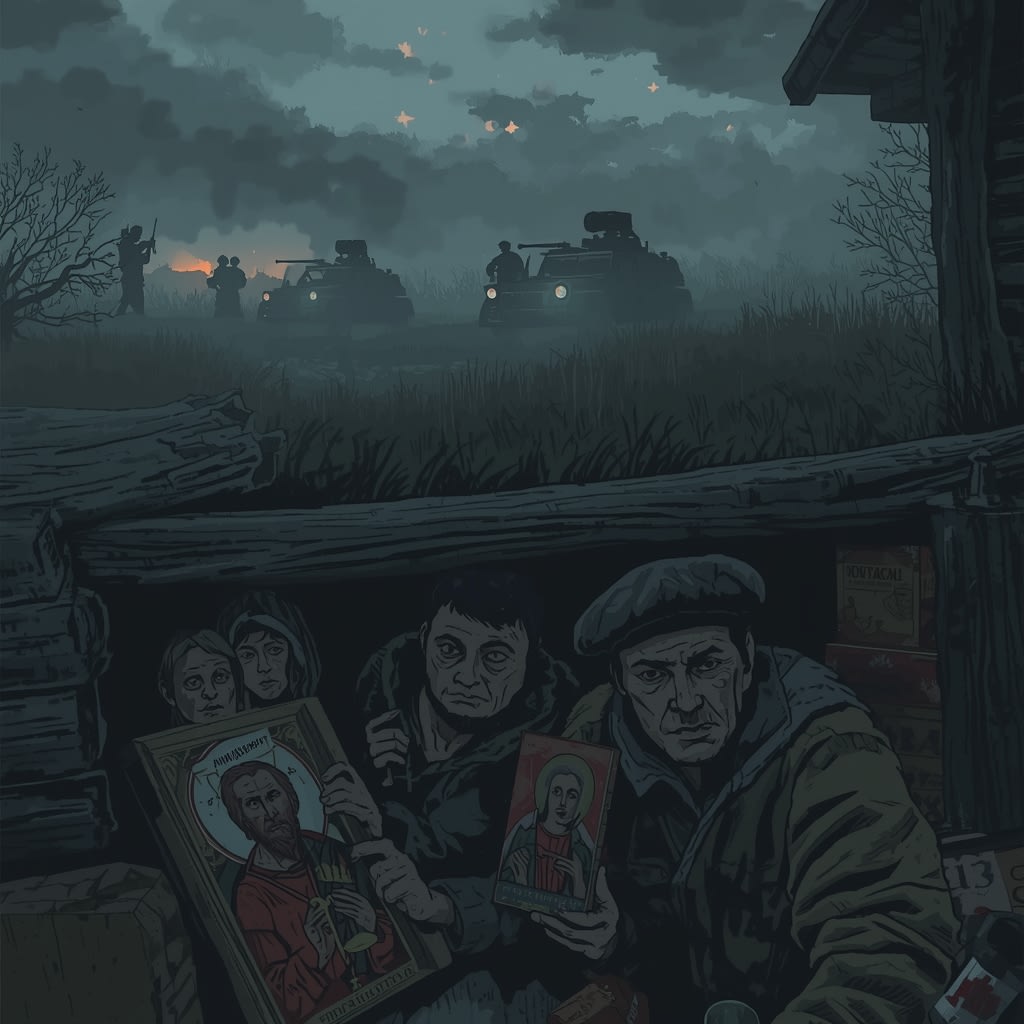
In Penza, paranoia metastasized into daily life. Families quit their jobs, pulled their children from schools, and cut ties with neighbors. Many retreated into semi-isolated groups, convinced that the government was preparing to brand them with satanic numbers.
Cellars were stocked with food. Doors were locked against outsiders. A mood of suspicion and siege set in.
The psychological dynamics bore disturbing similarities to Waco:
Distrust of the state – every official initiative was viewed as a plot.
Apocalyptic urgency – the end times were seen as imminent.
Readiness for confrontation – people mentally prepared for conflict.
The difference? In Penza, weapons were not stockpiled in the same way. But the architecture of hysteria was fully in place. Had authorities chosen a heavy-handed response, bloodshed would have been almost inevitable.
Who Benefits From Fear?
The critical question is not just what happened, but why it happened.
The Latin phrase cui prodest?—who benefits?—hangs over Penza like a shadow.
Dvorkin’s anti-cult crusade was far from neutral. By branding believers as “sects,” he gave the Kremlin a powerful instrument: the ability to delegitimize inconvenient communities. Once labeled extremist, they could be surveilled, disbanded, or repressed with little resistance from the wider public.
Fear, in this sense, became political currency. It justified state intrusion. It reinforced narratives of “protecting Orthodoxy.” It transformed dissent into criminality.
Lessons From Penza
The “Russian Waco” is more than a forgotten episode from the early 2000s. It is a case study in how hysteria can be manufactured and exploited.
It shows us:
How media and ideology can warp public perception.
How labeling dissent as extremism legitimizes repression.
How fragile the line is between governance and social destabilization.
For policymakers, journalists, and civil society leaders, Penza is a warning: unchecked narratives, when repeated with authority, can push entire communities toward the brink of collapse. Transparency, critical thinking, and responsible communication are not optional—they are essential safeguards.
Why It Matters Today
Polarization, disinformation, and hysteria are not relics of the past. They are everywhere today.
In the U.S., in Europe, and in Russia, conspiracy theories thrive in moments of uncertainty. Communities fracture along ideological lines. Institutions lose trust. Governments risk overreaction.
The Penza case reminds us that the next “Waco” doesn’t require weapons or militias. It only requires fear, strategically amplified by those who know how to use it.
Once unleashed, that fear spreads faster than any fire.
🔗 For the full investigative dossier and documentation, visit actfiles.org
💬 What do you think? Could a similar crisis erupt in today’s world—whether in Russia, the U.S., or elsewhere? Share your thoughts in the comments.
About the Creator
US Supreme Court Appears Likely to Uphold Restrictions on Transgender Athletes
The US Supreme Court is poised to make a landmark decision that could reshape the landscape of youth and collegiate sports across the country. Reports indicate that the Court appears likely to uphold restrictions on transgender athletes, a move that would reinforce state-level bans preventing transgender girls and women from competing in sports aligned with their gender identity.
By Aarif Lashari6 days ago in The Swamp



Comments
There are no comments for this story
Be the first to respond and start the conversation.