
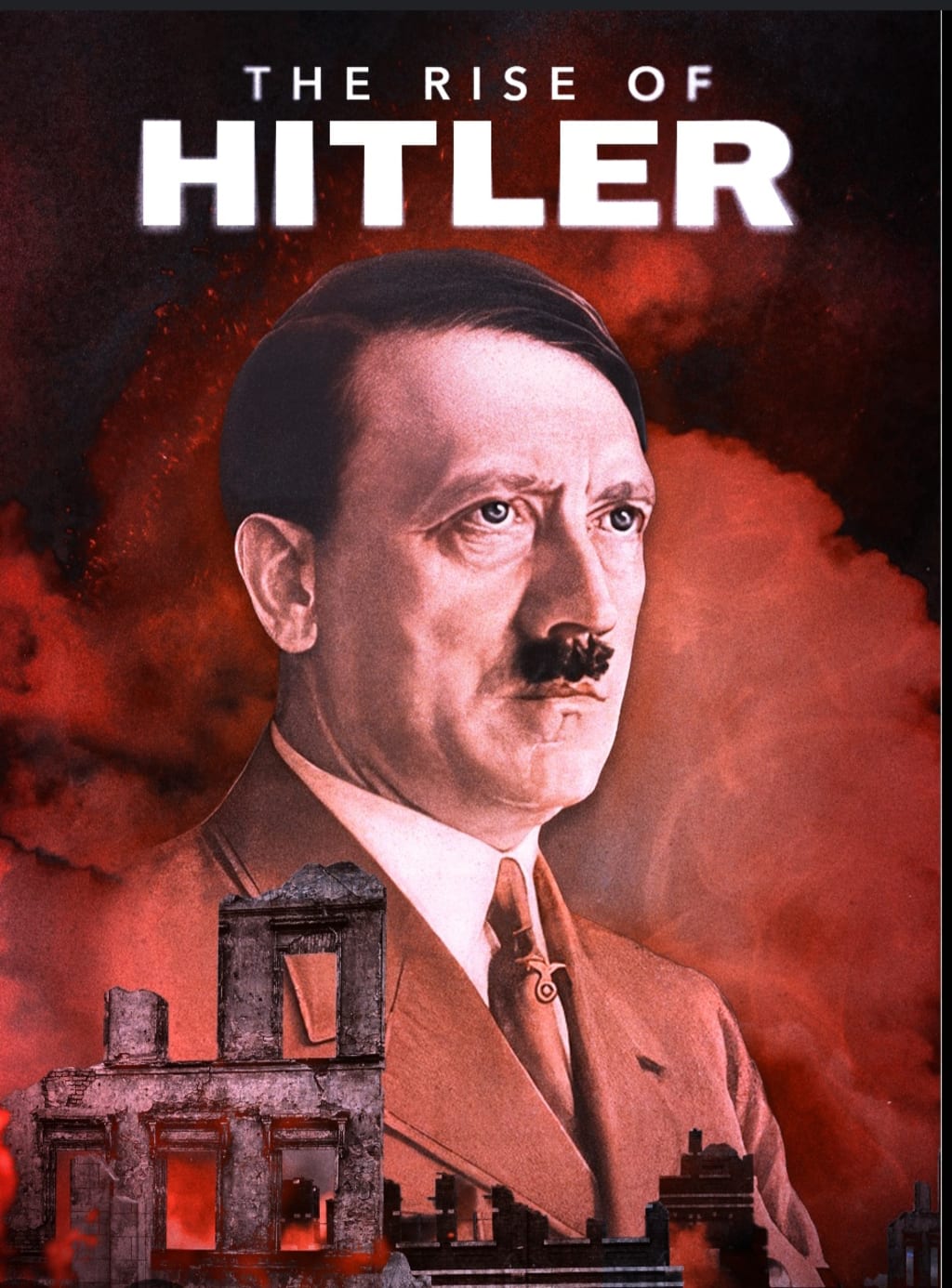
The Rise of Hitler
How a Failed Artist Became a Ruthless Dictator

🔹 Introduction
Adolf Hitler’s name has become synonymous with tyranny, genocide, and global war. Yet few know that the man responsible for World War II and the Holocaust began his adult life as a failed artist struggling to survive on the streets of Vienna.
How did this obscure, poverty-stricken man rise to become the leader of Nazi Germany and orchestrate one of the darkest chapters in human history?
Hitler’s rise is a chilling reminder of how fear, propaganda, and social unrest can empower the most dangerous figures to reach the highest positions of power.
---
🔹 1. Early Life and Rejection
Born in 1889 in Braunau am Inn, Austria, Adolf Hitler had a difficult upbringing. He was close to his mother but had a strained relationship with his strict father. After his father’s death, he drifted without direction.
His ambition was to become an artist. He moved to Vienna and applied twice to the Academy of Fine Arts but was rejected both times. Living in poverty and homelessness, Hitler grew bitter and resentful.
During this period, he began forming extreme views, especially antisemitic and ultranationalist beliefs. He blamed Jews, the elite, and foreigners for his failures and for Germany’s decline.
---
🔹 2. The Soldier Who Found Purpose in War
In 1914, when World War I broke out, Hitler joined the German army. For the first time, he felt he had found purpose and belonging. He served as a messenger on the front lines and was wounded in combat.
Germany’s defeat in 1918 devastated him. Like many others, he refused to accept the loss and blamed it on internal betrayal by Jews, communists, and corrupt politicians.
This idea of “betrayal from within” became central to Nazi ideology and Hitler’s future rise to power.
---
🔹 3. The Nazi Party and Hitler’s Rise Through Propaganda
After the war, Germany was in chaos — socially, economically, and politically. Hitler joined the German Workers' Party in 1919, which soon became the Nazi Party. He quickly rose through the ranks due to his electrifying public speaking and clear messaging.
He attacked the Treaty of Versailles, democracy, communists, and most notably — Jews. He promised to make Germany great again and restore its former pride.
In 1923, Hitler attempted a failed coup (Beer Hall Putsch) and was imprisoned. During his sentence, he wrote Mein Kampf, laying out his racist and nationalist vision for Germany’s future.
---
🔹 4. Economic Collapse and Hitler’s Opportunity
In the 1930s, the Great Depression devastated the global economy — Germany was hit particularly hard. Inflation soared, unemployment skyrocketed, and millions of citizens became desperate.
This created the perfect storm for radical change.
Hitler used mass propaganda, emotional speeches, and nationalist promises to attract voters. He blamed all of Germany’s problems on a long list of scapegoats: Jews, communists, the weak Weimar government, and international elites.
By 1932, the Nazi Party had become the largest political force in Germany. In 1933, Hitler was appointed Chancellor.
---
🔹 5. The Fall of Democracy and Hitler’s Absolute Power
Soon after becoming Chancellor, Hitler moved quickly to consolidate power. The Reichstag Fire in 1933 was used as an excuse to pass emergency laws. Civil liberties were suspended. Opposition parties were banned. The press was censored.
By 1934, Hitler declared himself Führer — the absolute leader of Germany.
He dismantled the democratic structure of the Weimar Republic and replaced it with a totalitarian regime, supported by violence, fear, and relentless Nazi propaganda.
---
🔹 6. The Road to War and Genocide
Once in power, Hitler began reshaping Germany according to his extremist vision. He rebuilt the military, violated the Treaty of Versailles, and annexed neighboring territories.
In 1939, Hitler invaded Poland, triggering World War II.
At the same time, his regime began the systematic extermination of Jews and other minorities. The Holocaust led to the murder of over six million Jews and millions of others.
---
🔹 Conclusion: The Danger of Blind Obedience
Hitler's rise was not inevitable — it was made possible by fear, economic collapse, and a nation desperate for hope. But instead of solutions, they embraced a leader who promised greatness through hate.
His rise reminds us how democracies can fall when people trade freedom for false security, and how dangerous it is to allow a single voice to dominate a nation.
The lessons from Hitler’s rise still echo today — and we must never forget them.
About the Creator
Misbah
Collector of whispers, weaver of shadows. I write for those who feel unseen, for moments that vanish like smoke. My words are maps to places you can’t return from
Bethany Beyond the Jordan: The Sacred Place of Jesus’ Baptism
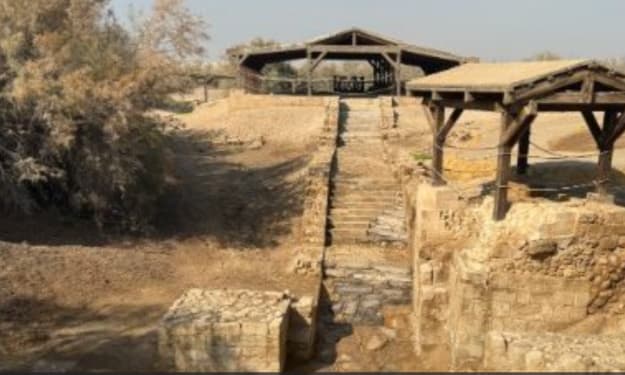
A Sacred Place Hidden in Plain Sight Along the eastern bank of the Jordan River, just a short distance from the Dead Sea, lies a place revered by millions of Christians around the world: Bethany Beyond the Jordan. Known in Arabic as Al-Maghtas, this site is widely recognized as the location where Jesus Christ was baptized by John the Baptist. Though modest in appearance, its spiritual weight is immense, making it one of the holiest places in Christianity. Unlike grand cathedrals or bustling pilgrimage cities, Bethany Beyond the Jordan offers something rare—silence, simplicity, and a powerful sense of sacred history. It is here, according to Christian tradition and strong archaeological evidence, that Jesus’ public ministry began. Biblical Roots of Bethany Beyond the Jordan The Gospel of John provides the clearest reference to this site, describing it as “Bethany beyond the Jordan, where John was baptizing.” For centuries, scholars debated the exact location of this biblical Bethany. Some believed it lay west of the river, while others argued for the eastern bank. Modern archaeology has largely settled the debate. Excavations in Jordan uncovered ancient baptism pools, churches, monasteries, and water systems dating back to the Roman and Byzantine periods—all pointing to this area as the original baptism site. Early Christian pilgrims also recorded journeys to this very location, strengthening its authenticity. John the Baptist and the Meaning of Baptism Bethany Beyond the Jordan is inseparable from the figure of John the Baptist, a prophet who preached repentance and spiritual renewal. His act of baptizing Jesus transformed baptism from a symbol of repentance into a cornerstone sacrament of Christianity. The baptism of Jesus represents humility, obedience, and divine affirmation. According to scripture, the heavens opened, the Holy Spirit descended like a dove, and a voice declared Jesus as God’s beloved Son. This moment marks the beginning of Jesus’ mission and gives the site its profound theological importance. For believers, standing near the waters of the Jordan is not just about history—it is about reconnecting with faith at its source. Archaeology That Brings Scripture to Life What sets Bethany Beyond the Jordan apart from many holy sites is the strength of its archaeological record. Researchers have uncovered: Ruins of early Christian churches built to honor the baptism site Monastic cells where early monks lived and prayed Large baptism pools used by pilgrims Ancient water channels connecting the site to the Jordan River These findings show that Christians revered this location from the earliest centuries of the faith. Rather than relying solely on tradition, Bethany Beyond the Jordan is supported by physical evidence that aligns closely with biblical descriptions. Recognition as a World Heritage Site In 2015, UNESCO officially recognized Bethany Beyond the Jordan as a World Heritage Site, citing its outstanding universal value and deep religious significance. This recognition placed the site alongside the world’s most important cultural and spiritual landmarks. Jordan’s role in preserving and promoting the site has been widely praised. Despite being located in a region often associated with conflict, Bethany Beyond the Jordan stands as a symbol of peace, coexistence, and shared heritage among Christians, Muslims, and Jews. A Place of Pilgrimage and Papal Visits Over the years, Bethany Beyond the Jordan has welcomed pilgrims from every corner of the world. Many describe their visit as deeply emotional, even transformative. The quiet landscape, combined with the slow flow of the Jordan River, creates an atmosphere of reflection rarely found at more crowded holy sites. Several popes, including Pope John Paul II, Pope Benedict XVI, and Pope Francis, have visited the site, reinforcing its importance within the global Christian community. These visits also elevated international awareness of Jordan as a custodian of Christian holy places. The Jordan River: More Than Just Water The Jordan River itself holds immense symbolic power. In the Bible, it represents transition, renewal, and divine intervention. From the Israelites crossing into the Promised Land to Jesus’ baptism, the river is a recurring setting for spiritual turning points. At Bethany Beyond the Jordan, the river becomes more than geography—it becomes theology. For many pilgrims, touching or seeing its waters is a reminder of spiritual cleansing and new beginnings, echoing the meaning of baptism itself. Interfaith Importance and Cultural Harmony While Bethany Beyond the Jordan is a Christian holy site, its significance extends beyond one faith. Jordan, a Muslim-majority country, has actively protected Christian heritage, offering a powerful example of interfaith respect. The site demonstrates how sacred spaces can unite rather than divide. In a region often portrayed through the lens of conflict, Bethany Beyond the Jordan tells a different story—one of shared history, mutual reverence, and peaceful coexistence. Visiting Bethany Beyond the Jordan Today Today, the site is carefully managed to preserve its spiritual atmosphere. Modern walkways guide visitors through ruins without disturbing the landscape. Informational signs explain both the biblical and archaeological significance, making the experience educational as well as devotional. Unlike many major pilgrimage destinations, Bethany Beyond the Jordan remains calm and uncluttered. This simplicity allows visitors to focus not on spectacle, but on meaning. Why Bethany Beyond the Jordan Still Matters In a fast-paced, modern world, Bethany Beyond the Jordan offers something timeless. It reminds believers of humility, faith, and beginnings. It reminds historians that ancient texts can align with physical evidence. And it reminds the global community that sacred heritage deserves protection, regardless of borders or beliefs. More than a historical landmark, Bethany Beyond the Jordan is a living testament to the moment when a quiet act in a river changed the course of religious history. Final Reflections Bethany Beyond the Jordan is not defined by grandeur, but by depth. It stands as a sacred bridge between scripture and soil, faith and history. For Christians, it marks the beginning of Jesus’ mission. For the world, it stands as a symbol of spiritual heritage preserved with dignity and care. In the stillness of the Jordan’s waters, the story of baptism continues to flow—inviting reflection, renewal, and reverence for generations to come
By Muhammad Hassan6 days ago in The Swamp



Comments
There are no comments for this story
Be the first to respond and start the conversation.