
Fed Holds Rates Steady, Signaling Risks to Economy Are Dropping
Central bank maintains cautious stance as inflation cools, growth stabilizes, and recession fears ease

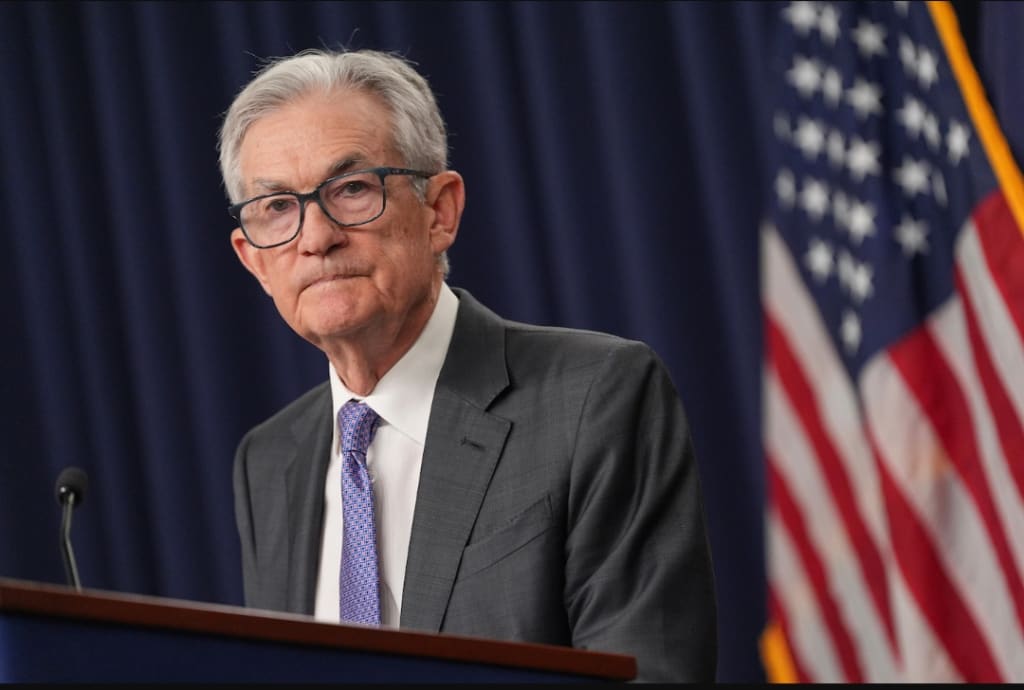
The U.S. Federal Reserve has decided to hold interest rates steady, signaling growing confidence that risks to the economy are beginning to ease. After an aggressive cycle of rate hikes aimed at taming inflation, the Fed’s latest decision suggests policymakers believe the economy is moving toward a more stable footing—though uncertainty remains.
For markets, businesses, and households, the move offers reassurance that the central bank sees progress in its fight against inflation without triggering a severe economic downturn. Still, the Fed is making it clear that patience, not complacency, will guide its next steps.
A Pause After Aggressive Tightening
The Fed’s decision to keep rates unchanged follows one of the most intense tightening cycles in decades. Interest rates were raised rapidly to combat soaring inflation that peaked in the aftermath of pandemic disruptions, supply chain shocks, and strong consumer demand.
By holding rates steady, the Fed is signaling that its previous actions are having the desired effect. Inflation has cooled from its highs, and price pressures are showing signs of moderation across multiple sectors. While inflation remains above the Fed’s long-term target, the trajectory has improved enough to justify a pause.
This moment marks a shift from urgency to evaluation.
Why the Fed Sees Lower Economic Risks
In its policy statement, the Fed indicated that risks to the economy appear more balanced than before. Growth has remained resilient despite higher borrowing costs, and the labor market, while cooling, continues to show strength.
Job creation has slowed from its earlier pace but remains solid, and unemployment levels are relatively low. This combination suggests the economy is absorbing higher interest rates without slipping into a deep recession—an outcome many once feared.
Consumer spending, though more selective, has also held up better than expected, providing additional confidence in economic stability.
Inflation Progress Still Under Watch
Despite encouraging signs, inflation remains a central concern. The Fed has emphasized that while price growth is slowing, it has not yet fully returned to acceptable levels.
Services inflation, housing costs, and wage pressures are areas policymakers continue to monitor closely. Any renewed acceleration in prices could force the Fed to reconsider its stance.
For now, however, officials appear comfortable allowing more time for existing policy measures to work their way through the economy rather than tightening further.
Markets React With Cautious Optimism
Financial markets responded positively to the Fed’s decision and tone. Stocks saw modest gains, bond yields eased, and investors interpreted the message as a sign that the worst economic risks may be fading.
However, market enthusiasm remains tempered. The Fed has avoided signaling imminent rate cuts, instead stressing data dependence. Investors understand that holding rates steady does not necessarily mean easier monetary policy is around the corner.
This balance has helped stabilize markets without encouraging excessive risk-taking.
Borrowers and Consumers Feel the Impact
For consumers and businesses, steady rates bring a degree of predictability. Mortgage rates, credit card interest, and business loans remain elevated, but the absence of further hikes offers relief to borrowers already stretched by higher costs.
Homebuyers and small businesses, in particular, may benefit from the stability, even if borrowing remains expensive. The Fed’s message suggests that while rates are unlikely to fall quickly, they may not rise further unless economic conditions deteriorate.
This clarity can help households and companies plan with greater confidence.
The Fed’s Independence and Credibility
The decision also comes at a time when central bank independence is under scrutiny. Political pressure often intensifies during election cycles, especially when interest rates affect everyday costs for voters.
By sticking to a data-driven approach and avoiding premature easing, the Fed reinforces its commitment to long-term economic stability rather than short-term political considerations. Maintaining credibility remains a top priority, particularly after years of volatile economic conditions.
Global Implications of the Decision
The Fed’s policies have global consequences. Holding rates steady eases pressure on emerging markets, stabilizes currency flows, and reduces volatility in global financial systems.
Other central banks often take cues from the Fed, and its decision may encourage a more cautious approach worldwide as inflation trends improve in several major economies.
A steady Fed can contribute to broader global economic calm—an important factor in an interconnected financial world.
What Comes Next for Monetary Policy
Looking ahead, the Fed’s next moves will depend on incoming economic data. Inflation reports, employment figures, and consumer spending trends will all shape the policy outlook.
If inflation continues to cool and growth remains stable, rate cuts could eventually come into focus. However, Fed officials have made it clear they are not rushing to ease policy prematurely.
The priority remains ensuring inflation is firmly under control before shifting toward accommodation.
Conclusion: A Turning Point, Not a Victory Lap
The Fed holding rates steady and signaling that risks to the economy are dropping marks a potential turning point—but not the end of the journey. The economy appears more resilient than many expected, and inflation progress is encouraging, yet challenges persist.
For now, the central bank is choosing caution over celebration. By maintaining rates and closely watching data, the Fed aims to guide the economy toward a sustainable path—one that avoids both runaway inflation and a sharp downturn.
As markets digest this decision, one message stands out: stability is returning, but vigilance remains essential.
About the Creator
Asad Ali
I'm Asad Ali, a passionate blogger with 3 years of experience creating engaging and informative content across various niches. I specialize in crafting SEO-friendly articles that drive traffic and deliver value to readers.
Death Toll in Pakistan Shopping Plaza Fire Rises to 67, Officials Say
A devastating fire at a shopping plaza in Pakistan has claimed at least 67 lives, according to officials, marking one of the deadliest urban fire incidents in recent years. The tragedy has sent shockwaves across the country, raising urgent questions about building safety, emergency preparedness, and regulatory enforcement. As rescue operations concluded, authorities confirmed that dozens of victims were trapped inside the building when the fire spread rapidly, leaving little chance for escape. What Happened? The fire broke out in a multi-story shopping plaza located in a busy commercial area. According to initial reports, flames erupted suddenly and spread quickly through the structure, fueled by flammable materials, blocked exits, and poor ventilation. Eyewitnesses described scenes of panic as shoppers and workers attempted to flee. Thick smoke filled corridors, making visibility nearly impossible. Many people were unable to escape due to locked stairwells, narrow passages, and the absence of proper fire exits. Emergency services were alerted, but by the time firefighters reached the scene, the fire had already engulfed large parts of the building. Rescue Efforts and Challenges Firefighters battled the blaze for several hours. Rescue teams used ladders and heavy equipment to reach upper floors, while ambulances transported the injured to nearby hospitals. However, officials admitted that rescue operations were severely hampered by: Lack of functional fire alarms Absence of emergency staircases Overcrowded interior spaces Vehicles blocking access routes for fire engines Many victims were found unconscious due to smoke inhalation, while others suffered severe burns. Rising Death Toll Initially, authorities reported a lower number of casualties. As search operations continued and debris was cleared, the death toll steadily rose to 67, with officials warning that the number could increase if critically injured victims fail to recover. Hospitals remain overwhelmed, treating dozens of injured survivors. Doctors say many patients are in critical condition, suffering from respiratory damage and extensive burns. Grief and Anger Among Families Outside hospitals and morgues, scenes of grief unfolded as families waited for news of missing loved ones. Many expressed anger and frustration, blaming negligence and poor safety standards for the tragedy. Relatives accused building owners and authorities of ignoring repeated warnings about safety violations. Some survivors claimed there were no visible fire extinguishers or evacuation signs inside the plaza. For many families, the fire has resulted in sudden loss of breadwinners, leaving them facing emotional and financial hardship. Official Response Government officials and local administrators visited the site and hospitals following the incident. Condolences were offered to victims’ families, and promises were made to investigate the cause of the fire thoroughly. Authorities announced: Formation of an inquiry committee Temporary closure of nearby commercial buildings Review of fire safety compliance in similar structures Officials also stated that those found responsible for negligence would face strict legal action. A Pattern of Negligence This tragedy is not an isolated incident. Pakistan has witnessed several deadly fires in commercial buildings over the years. Experts say these disasters often share common causes: Outdated building codes Weak enforcement of safety regulations Unauthorized modifications to buildings Lack of emergency training for staff Despite laws requiring fire safety measures, many buildings operate without compliance, putting lives at risk. Calls for Reform Following the fire, safety experts and civil society groups have renewed calls for urgent reform. They argue that reactive measures after disasters are not enough. Proposed reforms include: Mandatory fire safety inspections Severe penalties for violations Public awareness campaigns Installation of fire alarms and sprinkler systems Regular emergency drills Urban planners stress that protecting human life must take priority over commercial profit. Survivors Share Their Stories Survivors of the blaze have shared harrowing accounts of their escape. One individual described crawling through smoke-filled corridors, while another said they jumped from a lower floor to survive. Many survivors said they were unaware of any emergency procedures, highlighting a lack of basic safety education in public spaces. Their stories have fueled public outrage and intensified demands for accountability. National Reflection The shopping plaza fire has sparked a national conversation about urban safety and governance. Citizens are questioning how such tragedies continue to occur despite previous warnings and loss of life. Social media platforms are filled with messages demanding justice, transparency, and reform. Many believe that without meaningful action, similar disasters are bound to happen again. Conclusion The rise in the death toll to 67 in Pakistan’s shopping plaza fire is a painful reminder of the cost of negligence. Beyond the numbers are human lives—parents, children, workers—lost in a tragedy that many believe could have been prevented. As investigations continue, the country faces a critical moment. Whether this disaster leads to real change or becomes another forgotten headline will depend on accountability, enforcement, and commitment to safety. For now, Pakistan mourns its dead, while families seek justice and hope that no one else will have to suffer such a devastating loss.
By Fiaz Ahmed 7 days ago in The Swamp
The Meaning of Xi’s Military Purge
A Purge That Speaks Without Words When Chinese President Xi Jinping removes senior military officials, the world often hears only fragments of the story: corruption allegations, disciplinary violations, or vague accusations of disloyalty. But in China’s political system, a military purge is never just about misconduct. It is a language of power—spoken quietly, interpreted carefully, and felt deeply within the ranks of the People’s Liberation Army (PLA). Xi’s recent military purges are not isolated incidents. They are signals. They reveal how China’s leadership views loyalty, control, and the future of its armed forces in an increasingly unstable global environment. Why the Military Matters So Much to Xi Jinping In China, the military does not serve the state—it serves the Communist Party. This distinction is crucial. Xi Jinping has repeatedly emphasized that “the Party commands the gun.” For him, the PLA is not just a defense institution but the ultimate guarantor of regime survival. Historically, Chinese leaders who lost control of the military lost power altogether. Xi understands this lesson deeply, which is why he has invested more time and political capital into military restructuring than any Chinese leader since Mao Zedong. Corruption or Control? The Official Narrative vs. Reality Officially, military purges are framed as part of China’s anti-corruption campaign. Bribery, influence peddling, and misuse of authority are cited as reasons for dismissals. But corruption in the PLA did not suddenly emerge. What has changed is Xi’s tolerance for independent power centers. Many purged officials were not merely corrupt; they were: Loyal to previous factions Embedded in old patronage networks Associated with rapid military modernization projects In this context, corruption charges function as a politically acceptable tool—a clean justification for removing figures who may challenge centralized authority. Loyalty Over Experience: A Strategic Trade-Off One of the most striking aspects of Xi’s military purge is who replaces the removed officers. Promotions increasingly favor: Personal loyalty to Xi Ideological alignment Political reliability This raises a critical question: Does loyalty come at the expense of competence? Some analysts argue that prioritizing political trust may weaken operational effectiveness. Others believe Xi is intentionally reshaping the military into a force that will never question civilian—and specifically, personal—authority. In Xi’s worldview, an obedient military is safer than a brilliant but autonomous one. The Shadow of History: Lessons from the Soviet Collapse Xi Jinping frequently references the collapse of the Soviet Union as a warning. In his view, the Soviet Communist Party fell not because of economic failure alone, but because: The military lost ideological discipline Party control eroded Loyalty fractured Xi’s military purges can be read as preventive medicine—an effort to eliminate the conditions that allowed the Soviet system to unravel. From this perspective, purges are not signs of weakness but acts of preemptive consolidation. Modernization Under Pressure China is in the middle of one of the largest military modernization programs in history: Advanced missile systems Expanded naval power Cyber and space warfare capabilities Purging senior leadership during such a transformation is risky. It disrupts command continuity and institutional memory. Yet Xi appears willing to accept short-term disruption for long-term control. The message to the PLA is clear: Modernize—but never independently. Fear as a Tool of Discipline Purges create uncertainty, and uncertainty creates fear. Within the PLA, fear serves a function: Officers self-censor Decision-making becomes cautious Loyalty is constantly signaled However, excessive fear can also produce paralysis. Commanders may avoid initiative, delay decisions, or focus more on political correctness than battlefield effectiveness. This tension—between discipline and dysfunction—is one of the most significant risks of Xi’s approach. What This Means for Taiwan and Global Security Many outside China ask a critical question: Do these purges make China more or less likely to act militarily, especially regarding Taiwan? There are two competing interpretations: More likely – A loyal military may execute political orders without hesitation. Less capable – A purged, cautious command structure may struggle with complex operations. Both can be true at the same time. Xi may be building a military that is politically reliable but operationally untested under stress. A Message to the World—and to China Internationally, Xi’s military purge signals resolve and centralization. Domestically, it reinforces a deeper narrative: Power flows upward, not outward Authority is personal, not institutional Loyalty outweighs legacy This is not merely a military adjustment—it is a redefinition of governance. Conclusion: Purge as Policy Xi Jinping’s military purges are not accidents, overreactions, or temporary cleanups. They are policy instruments—used to reshape the PLA into a force that mirrors his political philosophy. The true meaning of Xi’s military purge lies not in who was removed, but in what kind of military is being built: Centralized Ideologically disciplined Personally loyal Whether this strategy strengthens China or plants the seeds of future instability remains an open question. What is certain is that Xi is willing to gamble military tradition, institutional autonomy, and even short-term effectiveness in pursuit of absolute control. And in modern China, that may be the most powerful message of all.
By Zahid Hussainabout 2 hours ago in The Swamp



Comments
There are no comments for this story
Be the first to respond and start the conversation.