
The Anti-Black Blackness
Cutting against Colour
Once again, I find myself with a topic that I cannot shake…and wish to avoid. Here it is, the end of June and we have the US involved in another war, ICE agents raiding and grabbing people off the streets, and my own concerns over money continue (where are all those contracts?). I thought that I could just observe and comment like a true Vocalist, and then move on with the rest of my summer.
But there has been a little problem with my plans…
I have discovered the YouTube page of one Lady Boule, an African-American woman who offers her opinions on the changing climate of the US landscape, racially, politically and socially. She has commented on the ICE raids, the No Kings protests and Trump’s parade, racism, political intrigues, and what it means to be Black in America today. I have become a fan, and I approach her as a West-Indian Canadian who has a lot to learn about what is going on behind the scenes. I have learned about FBAs, Foundational Black Americans. These are the African Americans born and bred within the cauldron of the USA, not immigrants recently adapting to the country. I learned about the struggles and perspectives of the people who took part in protests, voted for the current American government, and now…are paying the price. What stood out for me – the real reason why I decided to write this – was her view of the Latino community in America. Lady B. was quite critical of the people singing homages to the current leader of the free world, and then discovering that his forced removal of citizens would include people in their own families. She would go on to point a finger at the belief of some in the community who thought that Black Americans would – just possibly – be the target of the deportations that are all over the news. I thought this was an interesting theory, but one that I could not dismiss. And then it got personal.
She began to note that the raids would probably target anyone brown or black enough to be noticed by people in masks, in unmarked cars, who have the right to grab you off the street without a warrant. She included illegal immigrants, but also began to comment on African immigrants and what she called “Caribbeans”.
I had to take a pause there. Her accusations towards people I grew up with included our willingness to earn money, but not give back to the communities we live in; contempt for the concerns of those FBAs; being Trump supporters when it was convenient; indifference to the pain of the community’s pain and harassment.
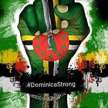
This was startling to me. I am West-Indian Canadian, specifically from the island of Dominica. I did grow up in a very close community, having very little contact with anyone African or Latino at home, in school, in church, or in any of the social activities we engaged in. I never thought that we were pointing a finger at other communities with our hard work, determination to get ahead, and willingness to ignore what could not be comprehended.
But I could not forget a few things.
First, there were the stories I would hear over the dinner table about how Africans immigrants were just not clean (a sharp contrast with my family’s neatness and obsession with appearances). Then there were the comparisons with the African-American community. One relative even told me with a straight face that Canada would never allow the sort of ghettos that exist in the US (“We aren’t like them.”) I heard nothing about the Latino community, which feels like a small mercy.
Now, my family missed out on the counterculture and the general upheavals of the American 1960s (my own family moved to Canada in 1970). We all had families and homes and lives and children and jobs that we were not always proud of, but used to keep our heads above waters. And I was raised by workaholics whose influence clearly rubbed off on me (I had my first jobs before I was legally allowed to work).
But did we really hate our African American brothers and sisters?
I doubt it. There was too much information in the media and in our encounters with them to truly feel as if we were not a part of the project. I did not feel special or indifferent from what I read, saw, heard or experienced.
But we still had those comments among us. We still had our biases.
And now, I wonder just how guilty we should feel.
This is worse than colourism or ignoring the way the media controls our narrative. This is something that we have done to ourselves and have not even noted.
Are we guilty for not being in the game? What is our role now, as we look south?

*
Thank you for reading!
If you liked this, you can add your Insights, Comment, leave a Heart, Tip, Pledge, or Subscribe. I will appreciate any support you have shown for my work.
You can find more poems, stories, and articles by Kendall Defoe on my Vocal profile. I complain, argue, provoke and create...just like everybody else.
Give it a look...
About the Creator
Kendall Defoe
Teacher, reader, writer, dreamer... I am a college instructor who cannot stop letting his thoughts end up on the page. No AI. No Fake Work. It's all me...
And I did this:
Keep reading
More stories from Kendall Defoe and writers in The Swamp and other communities.
Political Graffiti
The people have spoken. Officially, Canada’s Election Day is Monday, April 28th. We have had early voting, with a record 7.3 million eligible Canadians making their choice over the Easter weekend (I was a part of this particular group, noting that I was doing so on Good Friday – see my poem). The race has tightened up over the last week, with the American presidency, tariffs and a general pro-Canadian feeling permeating the nation. We will probably have a minority government running things again, with the same two main parties – Liberal and Conservative – duking it out and butting heads over issues. My mother will go for the former; some relatives will choose the latter, or take a real shot in the dark and choose one of our other parties (New Democrats, People’s Party of Canada, Green or…?) One of the more amusing things about this nation is how many political parties seem to grow in the body politic every year (I remember one called the Natural Law Party when I was an undergrad; their party leader was our own infamous magician Doug Henning – look him up). I often wonder how a nation like the United States can possible cohere and run with just two political parties (yes, I know that there are independent candidates, they seem to just be a sideshow to the big tent events). I wonder how it works.
By Kendall Defoe 10 months ago in The Swamp
A Gathering of Evil Bosses
“I’m the queen of chin jutting while I smooth my hair, attacking, insulting, and deflecting to protect my appointer.” “Oh, please, Blondi, my hair is curled, highlighted, and longer than yours. I feature television commercials telling immigrants that we will give them a free plane ride home, and if they voluntarily turn themselves in, they will be allowed to legally apply for re-entry. It runs everywhere, and I look good in it! You can’t compete because of your blond hair. Mine is nicer, and my lips are prettier than yours.”
By Andrea Corwin 15 days ago in The Swamp


Comments (3)
Thought this was incredibly well written Kendall. Thought it was an interesting point about the media controlling our narrative. It feels particularly hard to find 'real' news at the moment and to ask questions without causing offense.
This is a really interesting piece - it's not something I can weigh in on myself due to lack of knowledge or experience in this specific topic, but I would say its always good for us to look inwards. We have all been exposed to biases and preconceived ideas, especially from older family members and it's clear that you're thinking hard about this!
An excellent piece. And excellent questions. I know from friends of mine, and communities I've lived in, that we're so divided now that even our divisions have divisions. As the lyrics of "Won't Get Fooled Again" say, And the parting on the left Is now parting on the right. Fixing it is of course the problem.