
Pakistan’s Defense Minister Declares ‘Open War’ After Latest Border Clashes With Taliban
: Rising cross-border strikes between Islamabad and Kabul signal a dangerous new phase in an already tense relationship

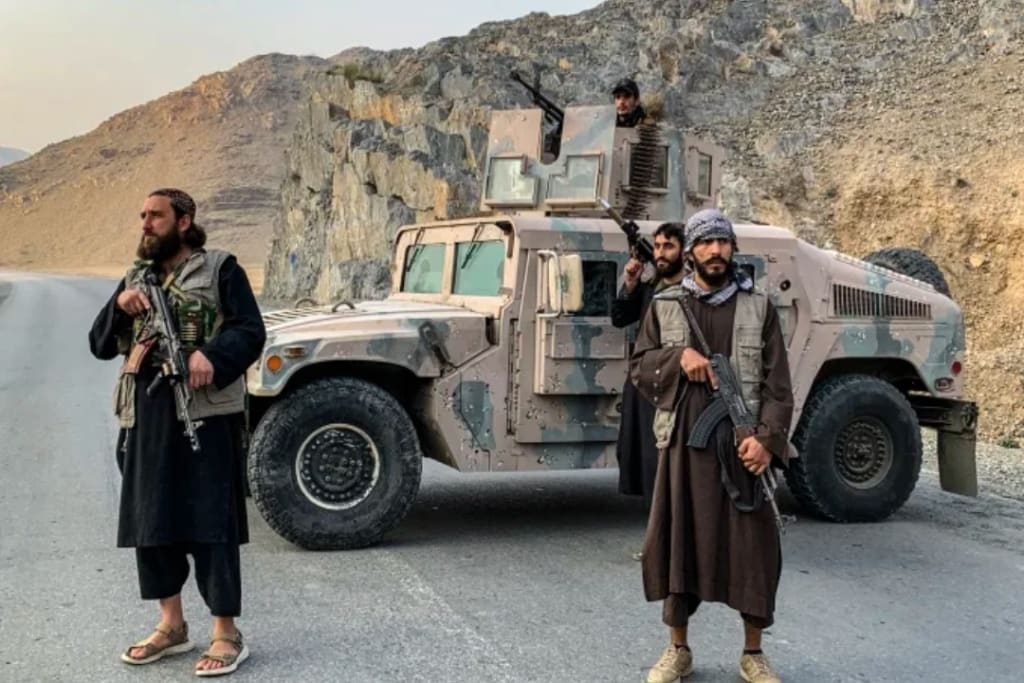
Tensions between Pakistan and Afghanistan have escalated sharply after Pakistan’s defense minister described the latest cross-border fighting as “open war.” The statement follows days of airstrikes, mortar fire, and military operations along the long and disputed frontier separating the two countries.
The renewed violence marks another chapter in a strained relationship between Islamabad and the Taliban-led government in Kabul. While clashes along the border are not new, the scale and tone of recent events have raised concern about broader instability in South Asia.
Below is a clear breakdown of what has happened and why it matters.
What happened in the last 24 hours?
Late Thursday night, Taliban forces launched coordinated attacks on Pakistani military positions along several sections of the border. Afghan officials said the strikes were retaliation for earlier Pakistani air raids inside Afghanistan.
According to officials in Kabul, Pakistan had bombed locations it described as militant camps over the weekend. Afghan authorities said at least 18 people were killed in those strikes.
In response to the Taliban’s attacks, Pakistan announced a military campaign named “Operation Ghazab Lil Haqq,” translated as “Operation Righteous Fury.” Pakistani officials said the operation targeted what they called terrorist infrastructure inside Afghanistan.
Airstrikes reportedly hit areas near Kabul, the southeastern province of Paktia, and Kandahar. Kandahar is especially significant because it is considered the spiritual center of the Taliban movement. The group’s leader, Hibatullah Akhundzada, is believed to be based there.
Both sides have reported casualties, though exact numbers remain unclear.
Why is the border so tense?
At the center of the dispute is the border itself, known as the Durand Line. The frontier stretches roughly 1,600 miles across mountainous and desert terrain. It was drawn during British colonial rule in the 19th century.
Pakistan recognizes the Durand Line as the official international border. However, successive Afghan governments — including the Taliban — have disputed it. The disagreement has fueled mistrust and frequent clashes.
The region is difficult to control. Many communities straddle the border, and armed groups have historically moved across it with relative ease. Both governments accuse each other of harboring militants who carry out attacks on their territory.
Pakistan’s concerns about militancy
Islamabad has repeatedly accused Afghan authorities of allowing anti-Pakistan militant groups to operate from Afghan soil. Chief among these is the Tehrik-i-Taliban Pakistan (TTP), sometimes referred to as the Pakistani Taliban.
The TTP is separate from the Afghan Taliban but shares ideological roots. Pakistan says the group has carried out numerous attacks inside its territory, targeting security forces and civilians.
Since the Taliban regained power in Afghanistan in 2021, Pakistan has claimed that TTP fighters have found safe haven across the border. Afghan officials deny officially supporting the group but have struggled to demonstrate full control over all armed factions within the country.
The recent Pakistani airstrikes were described by Islamabad as necessary counterterrorism actions. Afghan authorities rejected that claim, calling the strikes violations of sovereignty.
Afghanistan’s position
The Taliban-led government in Kabul has condemned Pakistan’s operations and says it will defend Afghan territory. Officials argue that Pakistani strikes have killed civilians and damaged infrastructure.
Kabul maintains that it does not permit Afghan soil to be used against other countries. However, the relationship between the Afghan Taliban and the TTP remains complex. Analysts note that while the groups are organizationally distinct, they share historical ties and ideological alignment.
The Afghan government has also criticized Pakistan for fencing parts of the border. Islamabad has constructed barriers along large stretches of the frontier to limit militant movement. Kabul disputes both the border’s legitimacy and the fencing efforts.
Why the defense minister’s words matter
When Pakistan’s defense minister described the situation as “open war,” it marked a notable shift in tone. Cross-border exchanges have happened before, but official language has typically been more restrained.
Calling it “open war” signals that Pakistan may be prepared for sustained military action rather than limited retaliatory strikes. It also reflects frustration within Pakistan’s leadership over continued militant attacks.
However, neither country has formally declared war. Diplomacy remains possible, though tensions are high.
The military balance
Pakistan has one of the largest and most well-funded militaries in the region. It is also a nuclear-armed state. Its armed forces include advanced aircraft, artillery systems, and a large standing army.
The Afghan Taliban, on the other hand, operate as an insurgent force that transitioned into a governing authority after the withdrawal of US and NATO forces in 2021. While they lack the conventional capabilities of Pakistan’s military, they have decades of combat experience.
After taking control of Afghanistan, the Taliban gained access to significant quantities of military equipment left behind during the international withdrawal. However, their resources and command structures differ from those of a conventional army.
Regional and international implications
The fighting has raised concerns beyond the two countries involved. Both Pakistan and Afghanistan occupy strategic positions in South Asia and share borders with major regional powers.
Instability along their frontier can affect trade routes, refugee flows, and regional security cooperation. Pakistan already hosts millions of Afghan refugees, and further conflict could increase displacement.
The international community has limited direct leverage over the Taliban government, which is not formally recognized by many countries. Diplomatic channels between Kabul and Islamabad remain open but strained.
Impact on civilians
Communities living along the border are the most immediately affected. Cross-border shelling has reportedly forced families to flee their homes. Schools and local markets have temporarily closed in some districts.
Access to medical services is limited in many of these remote areas. Humanitarian organizations warn that sustained conflict could worsen existing economic hardship in both countries.
Afghanistan continues to face economic challenges following the Taliban’s takeover, including reduced international aid and financial restrictions. Pakistan, meanwhile, is dealing with its own economic pressures and political uncertainty.
Escalation along the border adds strain to already fragile systems.
Could this turn into a larger conflict?
While both sides have exchanged heavy fire, analysts say a full-scale conventional war remains unlikely in the immediate term. Pakistan has significant military advantages, but prolonged conflict could be costly and destabilizing.
For the Taliban government, maintaining internal control is already a complex task. A sustained external conflict could divert attention and resources.
That said, miscalculation remains a risk. Cross-border strikes can quickly spiral if casualties rise or if major military installations are targeted.
Diplomatic intervention from regional partners could help reduce tensions. Historically, back-channel talks and military-to-military communication have played roles in de-escalation.
What happens next?
The coming days will be critical. If Operation Ghazab Lil Haqq continues and Taliban forces respond with further attacks, violence could intensify.
Alternatively, both governments may seek to lower tensions after demonstrating resolve to domestic audiences.
Much will depend on whether credible mechanisms can be established to address Pakistan’s concerns about militant safe havens and Afghanistan’s objections to cross-border strikes.
The border dispute itself is unlikely to be resolved quickly. It has been a source of disagreement for more than a century.
A fragile relationship under strain
Pakistan and Afghanistan share deep historical, cultural, and economic ties. Yet mistrust has shaped their modern relationship.
Since the Taliban’s return to power, hopes for improved cooperation have been mixed. Pakistan was seen by some observers as having influence over the Taliban leadership, but recent tensions suggest that leverage may be limited.
The declaration of “open war” reflects how quickly relations can deteriorate when security concerns dominate diplomacy.
For now, the situation remains fluid. What began as targeted strikes against suspected militants has escalated into a broader exchange of military force. Whether this confrontation becomes a prolonged conflict or a short-lived flare-up will depend on decisions made in Islamabad and Kabul in the days ahead.
The stakes are high not only for the two countries involved, but for regional stability as a whole.
About the Creator
Saad
I’m Saad. I’m a passionate writer who loves exploring trending news topics, sharing insights, and keeping readers updated on what’s happening around the world.
Why Black History Matters in America?
The United States of America is celebrating their 250th anniversary in 2026. I'm proud to be an American and as someone who was born here, I wouldn't imagine myself living anywhere else. This is a country where opportunities are possible. Where anyone can be successful in anything they desire to do. Equality, community, and togetherness are the backbones of what America is and should be about. However, we have an administration who wants to erase and disregard those who have made positive, meaningful impacts in our country, specifically Black figures, such as Martin Luther King, Jr., Rosa Parks, and Maya Angelou. President Trump and his administration have been constantly complaining and fighting against what they call the "Woke agenda". They use this excuse as a distraction from other issues they refuse to address, such as the high cost of living, climate change, and inflation. That equality is dividing America, when in reality, it's bringing us together. Being woke is not tied to a specific political party. No matter where you stand on the political spectrum, you can still care about other people and their plights. Compassion and empathy for others isn't tied to a political party, either. We were taught as children to treat others the way we want to be treated and not judge others because they're different from us. Caring about others isn't a personal attack on your beliefs. It doesn't make you any less of a person. People who are easily offended over African American figures, past or present, or anything related to it, are grasping at straws. Current and future generations need to know who people like Harriet Tubman and Shirley Chisholm were, especially in the classroom. Black History is part of American History. It should be recognized, not hidden or forgotten. Besides, you can't shield children from everything, just because your feelings are easily hurt.
By Mark Wesley Pritchard 26 days ago in The Swamp
Echoes
I stepped carefully around the corner, the familiar sights and sounds hitting me like a brick to the face. My eyes watered. I could practically see us, all of us, back then, clustered around the outdoor tables in front of the pizza shop, the bar, the coffee shop. I could smell the various stalls from the events we’d been to on this street. I could taste the churros and nachos.
By Phoenixica246 days ago in Fiction


Comments
There are no comments for this story
Be the first to respond and start the conversation.